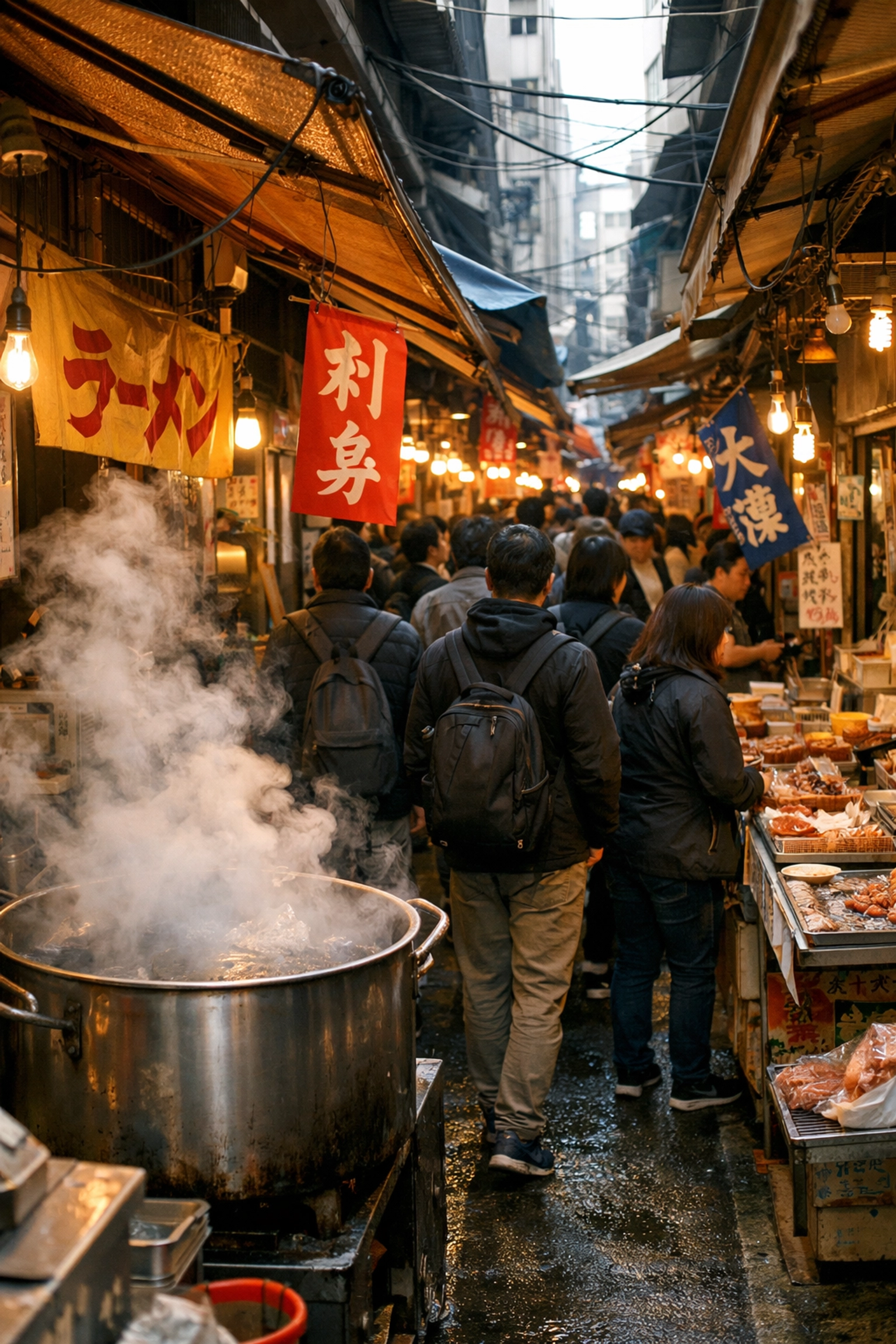
Welcome to day four of our 14-day deep dive into the culinary heartbeat of Tokyo! If you missed yesterday, we were busy dodging neon lights and eating our weight in themed cafe treats in Akihabara. Today, we’re pivoting from high-tech maid cafes to the salt-sprayed, historic streets of the Tsukiji Outer Market.
Now, before we get into the nitty-gritty, let's clear up a common misconception: the "inner market" (where the famous tuna auctions happen) moved to Toyosu back in 2018. But the Outer Market? It’s alive, well, and frankly, a lot more delicious than a sterile warehouse in the bay.
Tsukiji is a sensory overload. It’s the smell of roasted green tea mixing with freshly blow-torched scallops; it’s the sound of vendors shouting prices and the sight of wagyu beef so marbled it looks like art. But it’s also a place where tourists commit some serious social and culinary crimes. To make sure you don't end up as "that guy" on your trip, Edin and I have put together this guide to the seven biggest mistakes people make at Tsukiji, and how you can fix them like a pro.
1. The "I’ll Just Sleep In" Blunder
I get it. You’re on vacation. You want to sleep in, enjoy your hotel’s fluffy pillows, and wander out for brunch at 11:30 AM. If you do that at Tsukiji, you’ve already lost.
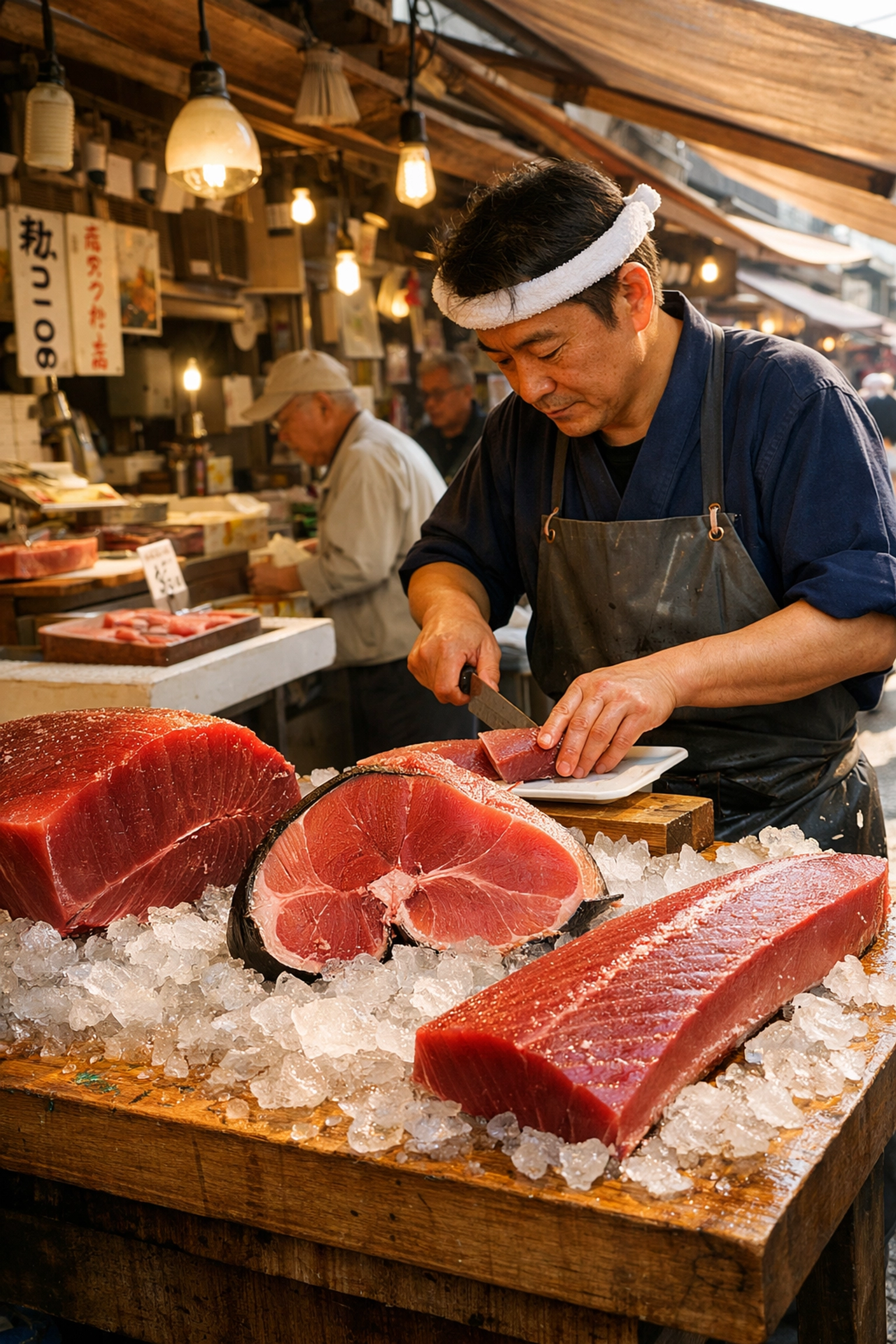
By noon, the best stuff is gone. Many of the most legendary stalls start closing their shutters by 1 PM, and the ones that stay open are often picked over or catering specifically to the late-arriving tourist crowd. If you want the freshest uni (sea urchin) or the most succulent fatty tuna, you need to be there early.
How to Fix It: Aim to arrive around 8:00 AM. This is the sweet spot where the market is fully awake, the chefs have received the morning's best catch from Toyosu, and the energy is buzzing. Plus, if you're a photographer, the morning light hitting the narrow alleys makes for some incredible shots. Just make sure you’ve packed your essential photography gear so you can capture those vibrant red tuna cuts in all their glory.
2. Treating the Streets Like a Buffet Line
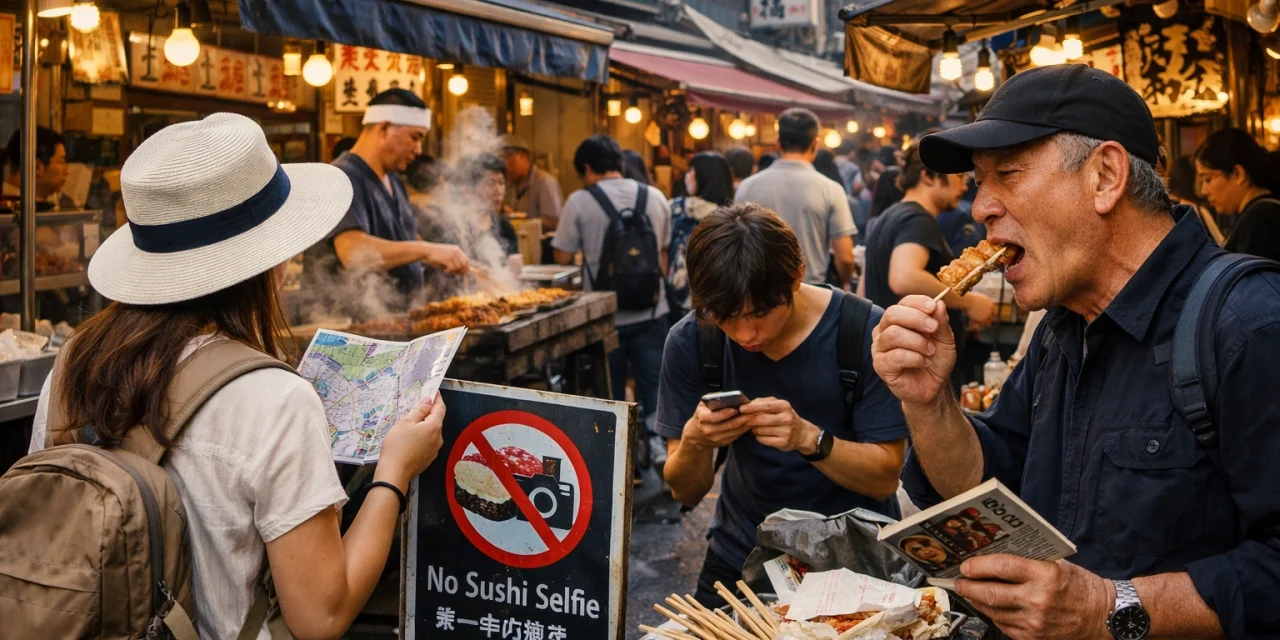
In many parts of the world, street food means "eat while you walk." In Japan, and specifically in Tsukiji, this is a major faux pas. The market's alleys are incredibly narrow, and the crowds are dense. If you’re walking around with a dripping skewer of grilled eel, you are essentially a mobile hazard to everyone’s clothing.
How to Fix It: When you buy food from a stall, stay there. Most vendors have a small designated area to the side or a tiny counter where you can stand and eat. Not only is it more polite, but it also allows you to actually savor the food instead of focusing on not poking a stranger with a bamboo stick. Once you’re done, hand your trash back to the vendor, finding a public trash can in Tokyo is like finding a needle in a haystack.
3. Being a "Weekend Warrior"
If you visit Tsukiji on a Saturday, may the odds be ever in your favor. It’s not just tourists; locals flock there too, and the queues for popular spots like Tsukiji Donburi Ichiba can stretch into two-hour marathons. It becomes dangerously overcrowded, and the "casual stroll" you envisioned becomes a high-stakes game of bumper cars.
How to Fix It: Visit on a Tuesday, Wednesday, or Thursday. You’ll have room to breathe, the vendors will be less stressed (and more likely to chat), and you won’t spend half your day standing in a line that moves at the speed of a tectonic plate. If you’re planning your trip, we recommend checking out our photography booking experience to see how we can help you capture your Tokyo journey without the stress of the crowds.
4. Relying Solely on Your Credit Card
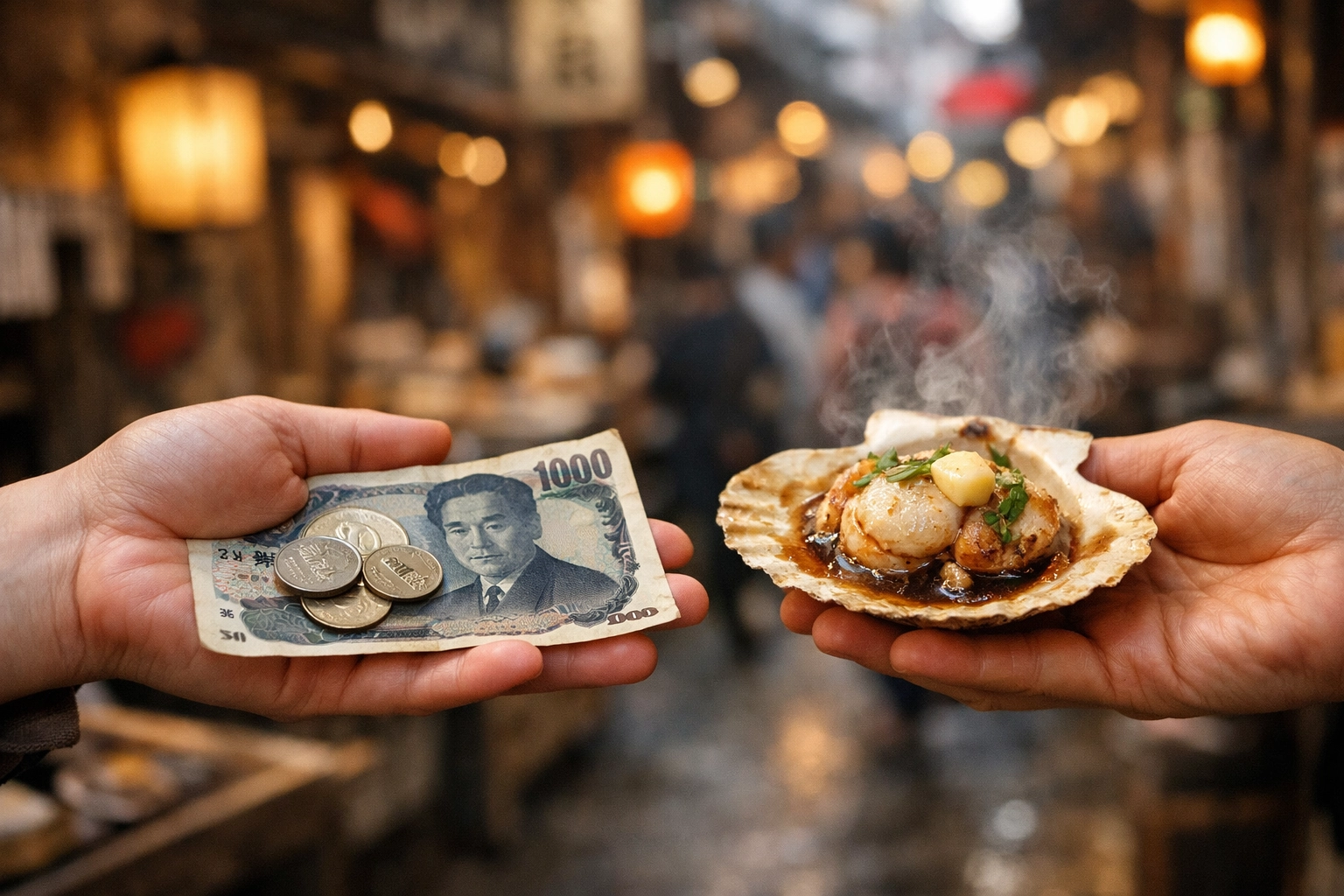
Japan is a land of contradictions. They have robots that make coffee and toilets that sing, but when it comes to the Tsukiji Outer Market, cash is still the undisputed king. Many of the best, most authentic stalls are small, family-run operations that haven't changed their business model since the 1950s. They don’t want your Apple Pay; they want yen.
How to Fix It: Hit the ATM before you arrive. Make sure you have plenty of small bills and coins. Trying to pay for a 300-yen tamagoyaki (rolled omelet) with a 10,000-yen bill is a quick way to get a very polite but very firm side-eye from a busy vendor.
5. Falling for the "Tourist Wagyu" Tax
You’ll see it everywhere: glistening sticks of A5 Wagyu being torched with a butane flame. It looks great on Instagram, and don't get me wrong, it tastes delicious. But some stalls charge astronomical prices, think 5,000 to 8,000 yen for a tiny skewer, targeting tourists who don't know any better.
How to Fix It: Know your prices. A reasonable price for a high-quality wagyu skewer (about 100 grams) should be in the 1,500 to 3,000 yen range. If you see something significantly higher, you’re paying a "clueless tourist tax." Look for the shops that have signs in Japanese as well as English, and see where the locals are hovering. If you want a deeper dive into finding the best food without the traps, you should definitely book a food tour through Viator. Having a local guide who knows exactly which stalls are legit and which are just for show is worth every penny.
6. Ignoring the Non-Seafood Legends
Yes, Tsukiji is a seafood market. But if you only eat raw fish, you’re missing out on some of the best flavors in Tokyo. From the iconic fluffy tamagoyaki at Yamacho to the legendary deep-fried corn fish cakes, there is a whole world of "other" stuff to try.
One of our favorite stops is Maruyama Nori, a shop that has been around since 1850. Their seaweed is used by some of the top Michelin-starred sushi chefs in the world. Buying a pack of high-end nori here is a game-changer for your home cooking.
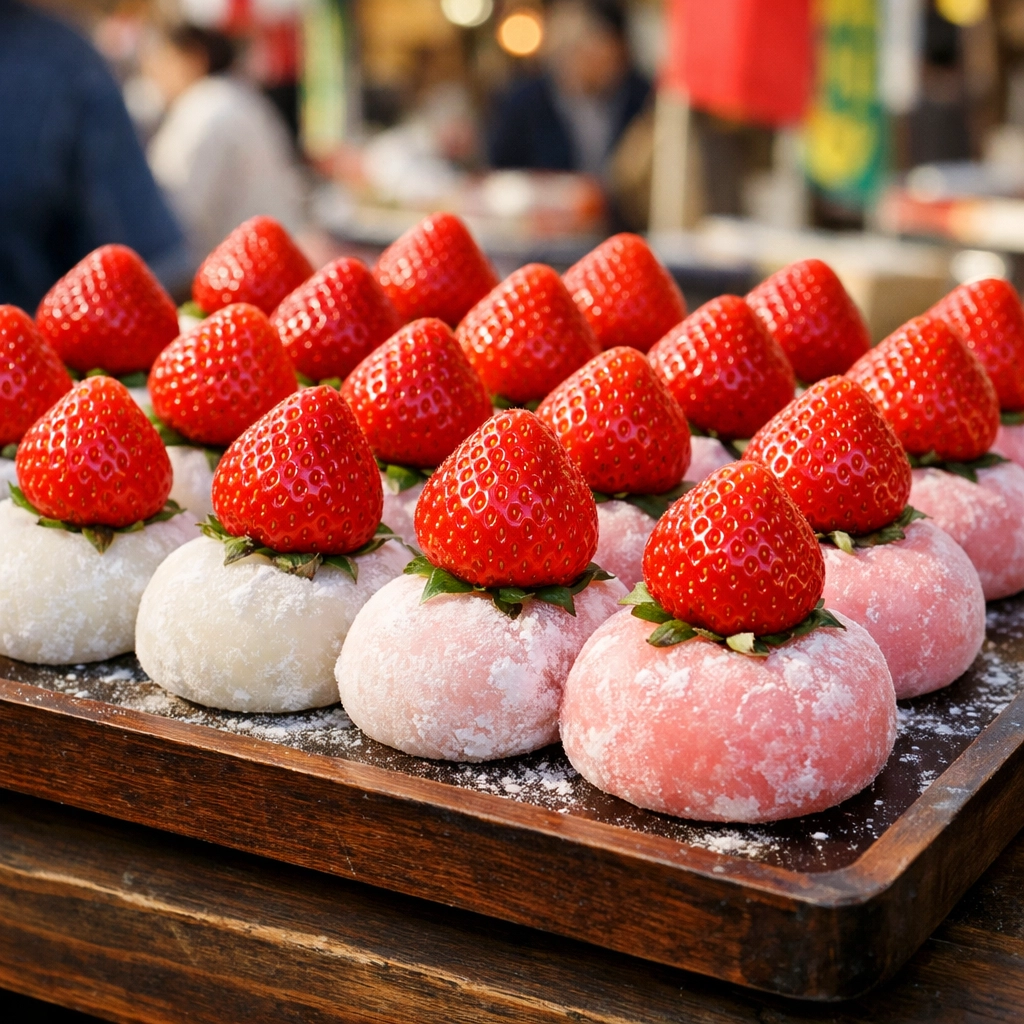
How to Fix It: Branch out! Try the strawberry mochi (the ones with the giant berries on top), grab a bowl of curry ramen at Naka-no-ya, or try the roasted green tea. Tsukiji is a complete culinary ecosystem, not just a sushi bar. If you’re a fan of exploring hidden gems like this, you might also enjoy reading about Miami's hidden speakeasies, we love finding the spots most people walk right past!
7. Thinking You Can "Wing It"
The Outer Market is a labyrinth of over 400 shops. It’s easy to get overwhelmed, end up at a mediocre stall, and leave feeling like it was "just okay." To truly see the soul of Tsukiji, you need a plan, or better yet, a guide.
The market has its own secret language, its own flow, and its own hidden gems that aren't on Google Maps. There are tiny shops tucked away in "building basements" that serve some of the best kaisendon (seafood bowls) you'll ever have.
How to Fix It: Do your research beforehand, but honestly? The best way to experience Tsukiji is with an expert. We always tell our readers that if you really want to get under the skin of a city’s food culture, booking a food tour through Viator is the way to go. They’ll take you to the 100-year-old shops you’d never find on your own, explain the history of the knife shops, and make sure you’re eating the absolute best of the day.
Bonus Tip: The Photography Angle
As a photography company, we can’t let you go without a tip for your camera. Tsukiji is a high-contrast environment. You have bright, outdoor stalls and very dark, indoor alleys. If you're shooting on your phone, use the "portrait mode" to blur out the busy backgrounds and make that piece of sushi the star of the show. If you’re using a DSLR or mirrorless, bring a fast prime lens (like a 35mm or 50mm) to handle the lower light in the narrow backstreets.
If you’re looking for more tips on how to make your travel photos pop, check out our educational category for some deep dives into technique.
Wrapping Up Day 4
Tsukiji is one of the most rewarding places in Tokyo if you respect the rules and show up with an open mind (and an empty stomach). Avoid these seven mistakes, and you’ll have an experience that’s way beyond the typical tourist path.
Stay tuned for tomorrow, where we’re heading to Ginza to see what happens when sushi meets high fashion. It’s going to be fancy, it’s going to be expensive, and yes, it’s going to be delicious.
Until then, happy eating! If you need a break from the Tokyo hustle and want to dream of something a bit more laid back, why not check out some cheap weekend getaways or the best breakfast places in Cape Coral?