
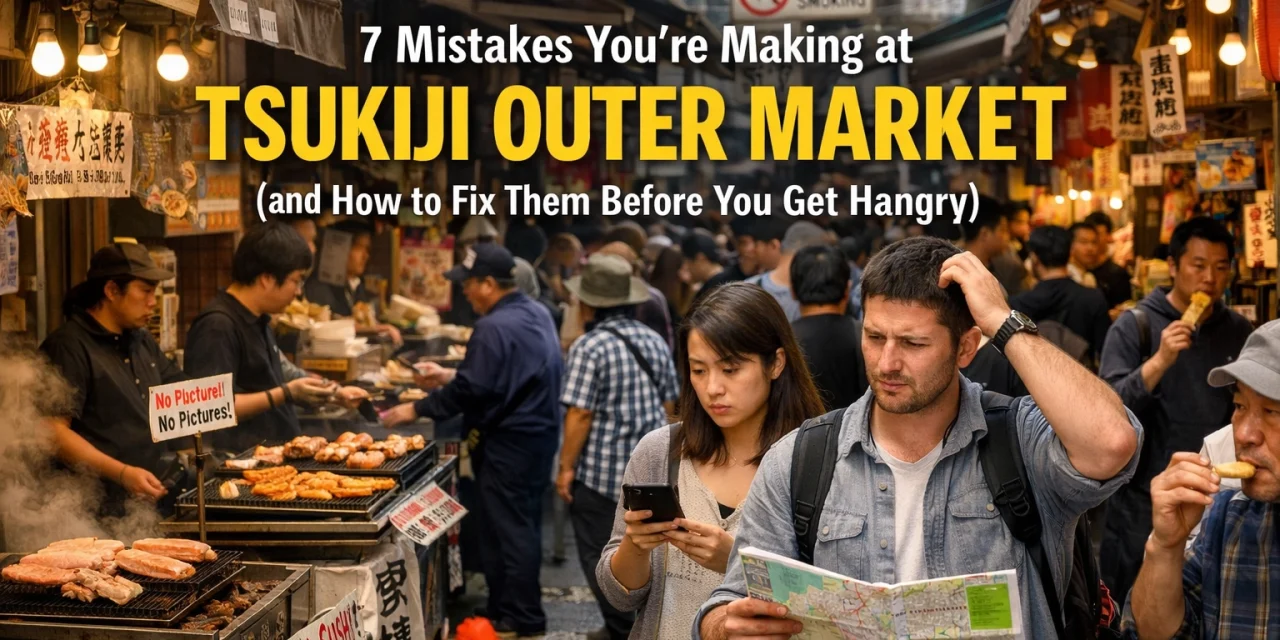
Welcome back to day four of our 14-day Tokyo food odyssey! I’m Edin Chavez, CEO of Photoguides, and while I usually spend my time obsessing over aperture settings and light leaks, today I’m obsessing over something much more important: Bluefin tuna.
If you’ve been following along, we’ve already tackled the neon-soaked themed cafes of Akihabara. Today, we’re heading to the holy grail of seafood: Tsukiji Outer Market. Now, there’s a common misconception that since the "inner" wholesale market moved to Toyosu a few years back, Tsukiji is dead. Let me tell you, that’s a lie. Tsukiji is thriving, loud, delicious, and incredibly easy to mess up if you don’t know what you’re doing.
I’ve seen too many travelers wandering the narrow alleys looking lost, frustrated, and, worst of all, hungry. To make sure you don't end up eating a mediocre convenience store sandwich because you couldn't handle the market, I’ve rounded up the seven biggest mistakes people make at Tsukiji and how to fix them.
1. The Early Bird Catches… Nothing (Arriving Too Early)
The old-school advice for Tsukiji was to show up at 3:00 AM to see the tuna auction. Since the auction moved to Toyosu, that advice is officially obsolete. However, people still think they need to arrive at the crack of dawn to get the "good stuff."
Here is the reality: Before 9:00 AM, the Outer Market is a high-speed workplace for professional chefs and commercial buyers. They are moving heavy crates, driving turret trucks, and they have zero patience for a tourist trying to get the perfect bokeh shot of a scallop.
The Fix: Arrive after 9:00 AM. By then, the pros have finished their business, and the vendors are ready to pivot to retail customers. You’ll have more room to breathe, and you won’t get run over by a motorized cart. If you really want the best experience without the stress of navigating the crowds on your own, I highly recommend booking a food tour through Viator. Having a guide who knows the vendors is a total game-changer.
2. Falling for the "Guidebook Famous" Sushi Lines
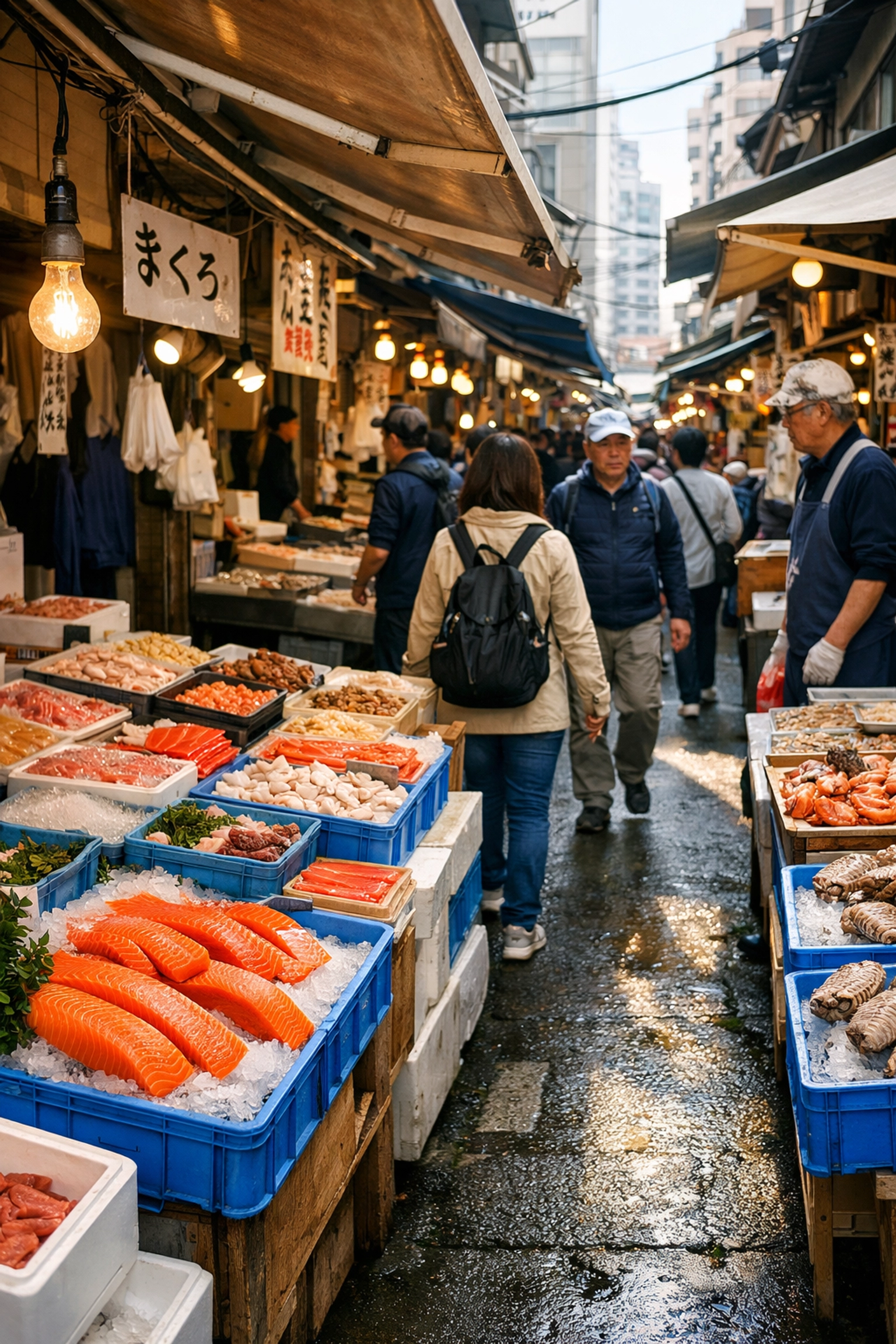
We’ve all seen the YouTube videos and the blog posts pointing to one specific sushi stall with a line wrapping around three blocks. You see people standing there for three hours, looking miserable, just to pay ¥4,000 for a set menu.
Mistake! Tsukiji is a dense ecosystem of incredible fish. The quality floor here is exceptionally high. The "famous" spots are often famous because they were the first ones to get a Yelp review in English ten years ago, not necessarily because they are better than the shop ten feet away.
The Fix: Explore the side streets. If you see a tiny shop with four seats and a master chef who looks like he’s been slicing fish since the Edo period, go there. You can often find a bowl of kaisen-don (sashimi over rice) for ¥1,000 to ¥1,500 that is just as fresh as the hyped spots. If you want to see what we look for when evaluating quality, check out some of our photography and experience reviews to see how we spot the real deal.
3. Getting "Wagyu-ed" Without a Price Check
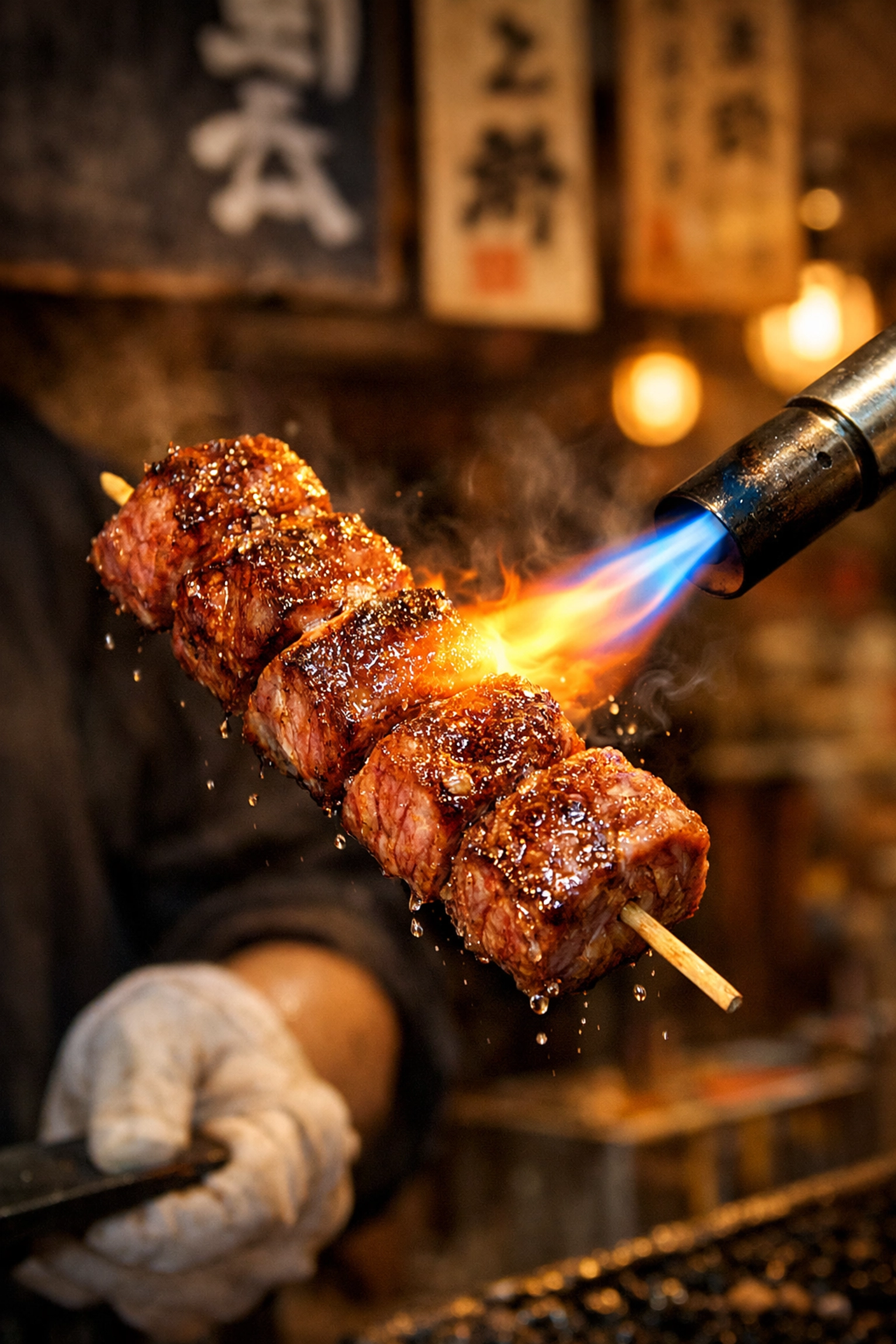
Tsukiji isn’t just about fish anymore; the wagyu beef stalls have become a massive attraction. There is nothing quite like the smell of A5 wagyu being torched right in front of you. But here’s the catch: some vendors take advantage of the "vacation brain" and charge astronomical prices for small portions.
I’ve seen tourists drop ¥8,000 on a single skewer of beef without even blinking. While wagyu is expensive by nature, you shouldn't be getting fleeced.
The Fix: Know the market rate. A reasonable price for high-quality wagyu at a street stall is typically between ¥1,500 and ¥3,000 per 100 grams. If a stall doesn't have clear pricing or looks a bit too "tourist-trappy" with giant neon signs in English, keep walking. There are plenty of reputable butchers in the market who sell top-tier beef at fair prices.
4. Treating the Market Like a Flea Market
In many parts of the world, haggling is part of the fun. In Tsukiji? It’s a great way to get a very polite, very firm "no" and a cold shoulder. The vendors here are incredibly proud of their products. They know the value of their uni, their dried seaweed, and their handmade knives.
When you try to haggle without understanding what you're buying, it comes across as disrespectful to their craft.
The Fix: Instead of asking for a discount, ask for education. Ask them about the difference between the types of nori (seaweed) or why one knife is priced higher than another. If you show genuine interest and respect, they might offer you a "service" (a small extra or a slight discount) on their own, especially if you are buying in bulk. Speaking of which, if you’re looking to upgrade your travel gear before your next trip, take a look at our essential photography gear recommendations, no haggling required!
5. Dressing for a Fashion Show (or a Gala)
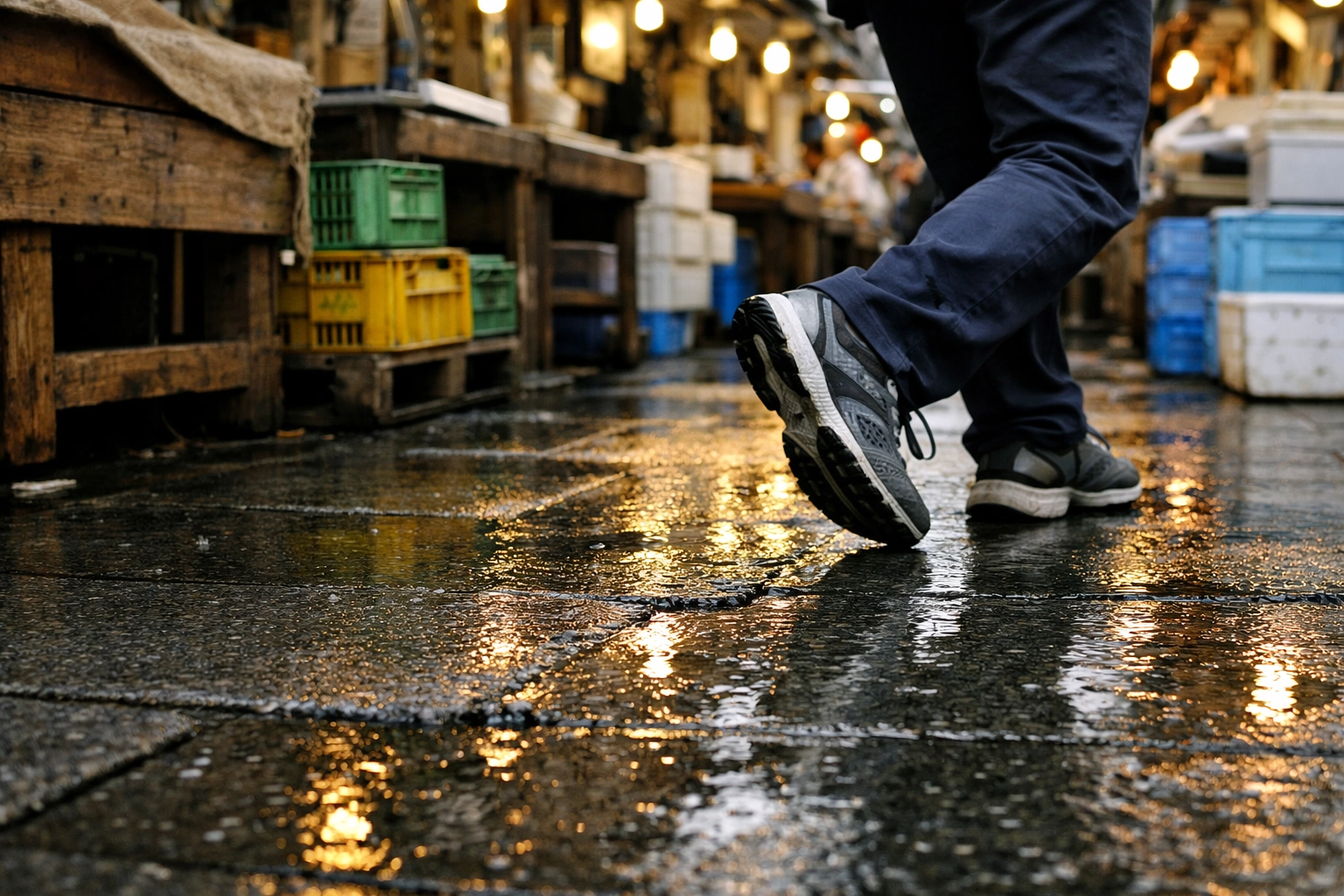
I get it. You want to look good for the 'gram. But Tsukiji is a working market. There is water on the floor, fish scales flying, and the occasional splash of soy sauce. If you show up in your finest silk dress or suede loafers, you’re going to have a bad time.
Furthermore, the locals and vendors tend to be a bit wary of people who look like they’re just there for a photo op rather than the food.
The Fix: Dress casual and wear closed-toe, washable shoes. Not only will you be more comfortable navigating the uneven, often wet pavement, but you’ll blend in better. You want to be mobile. If you’re worried about how to take great photos while dressed like a casual traveler, we have some great educational resources on how to capture the vibe of a location without needing a full production crew.
6. Bringing the Kitchen Sink (Large Luggage and Strollers)
The aisles of Tsukiji are narrow. When I say narrow, I mean "two people can barely pass each other" narrow. I have seen people trying to navigate these crowds with full-sized Samsonite suitcases or double-wide strollers. It is a nightmare for you, a nightmare for the vendors, and a nightmare for everyone behind you.
The Fix: Use the coin lockers! Almost every major subway station in Tokyo (including Tsukiji and Higashi-ginza) has coin lockers. Drop your bags there. If you have a stroller, see if you can use a baby carrier for the morning. You’ll be 100% more agile and will actually be able to reach the counters to get your food. Trust me, the "hangry" level rises exponentially when you're stuck behind a suitcase.
7. Ignoring the Power of Bulk Buying
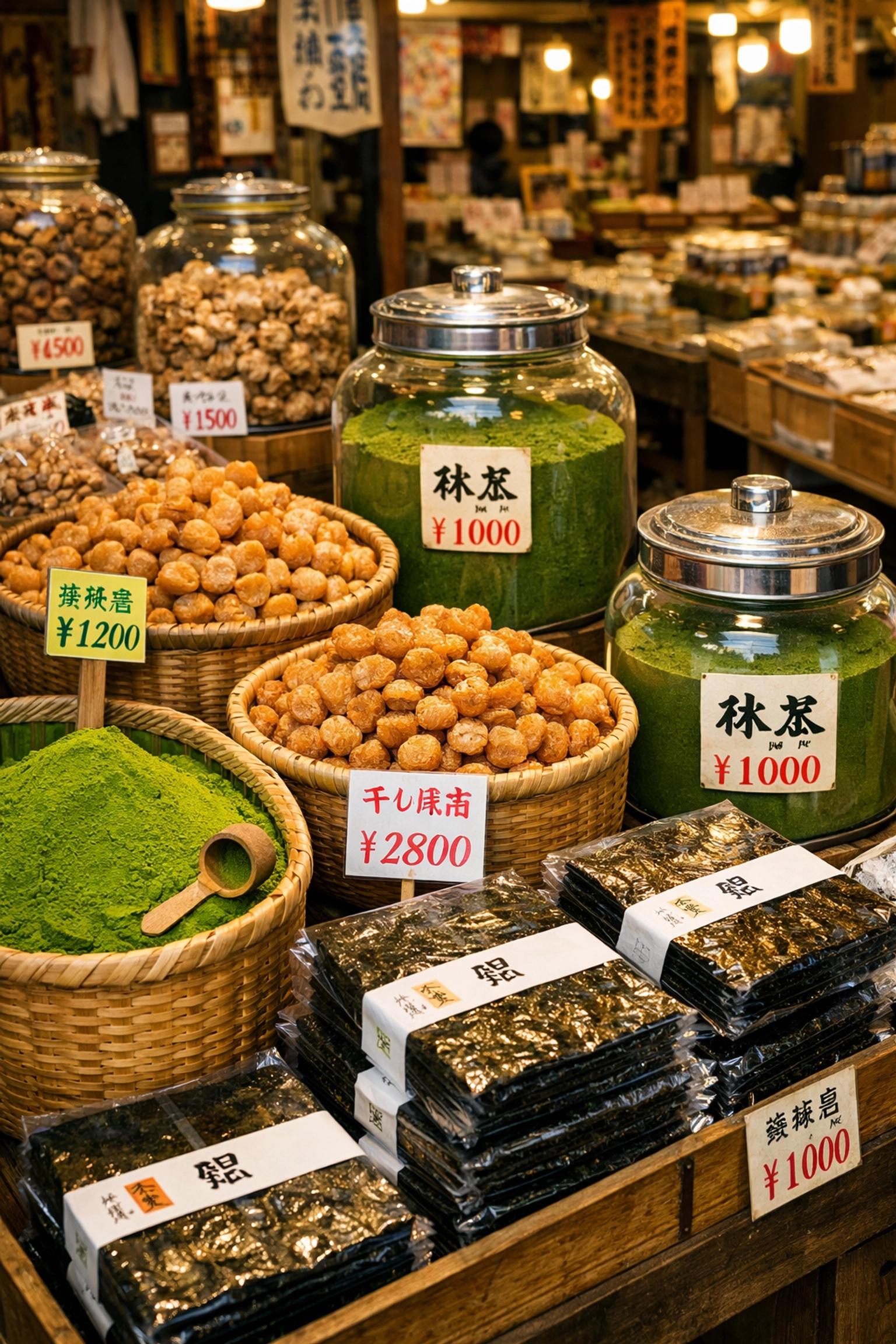
Because Tsukiji has its roots in wholesale, many vendors are still set up to move volume. You’ll see giant bags of dried scallops, huge containers of miso, and stacks of high-quality tea. Most tourists buy one tiny souvenir and move on.
The Fix: If you find something you love, like a specific type of green tea or dried fruit, buy it in bulk. Vendors often have "hidden" discounts for larger quantities that aren't always advertised. It’s the best way to get high-end Japanese pantry staples at a fraction of what you’d pay at a department store in Ginza. Just make sure you leave enough room in your suitcase!
A Note on Etiquette: Eat Where You Buy
One final tip from your friendly neighborhood photographer: Japan has a "no eating while walking" culture. At Tsukiji, this is strictly enforced because of the crowds. If you buy a skewer of grilled eel or a strawberry mochi, stand in front of the stall to eat it. Most stalls have a small designated area or a trash can for their customers. Don't be the person dripping sauce on someone's expensive camera bag while walking through a crowd.
Make the Most of Your Visit
Tsukiji is one of the most vibrant places on earth. It’s a sensory overload of smells, sounds, and tastes. If you’re feeling overwhelmed by the choices, the best thing you can do is join a guided food tour via Viator. It takes all the guesswork out of it, and you’ll get to try things you might have been too intimidated to order on your own.
And hey, if you find yourself wanting to capture the perfect shot of that glistening fatty tuna, remember to keep your shutter speed high: it’s crowded and fast-moving in there! For more tips on travel and capturing the world, check out our photography booking experiences.
Stay tuned for tomorrow, where we’re heading to Ginza for some high-end sushi that will make your taste buds weep with joy. See you then!













