

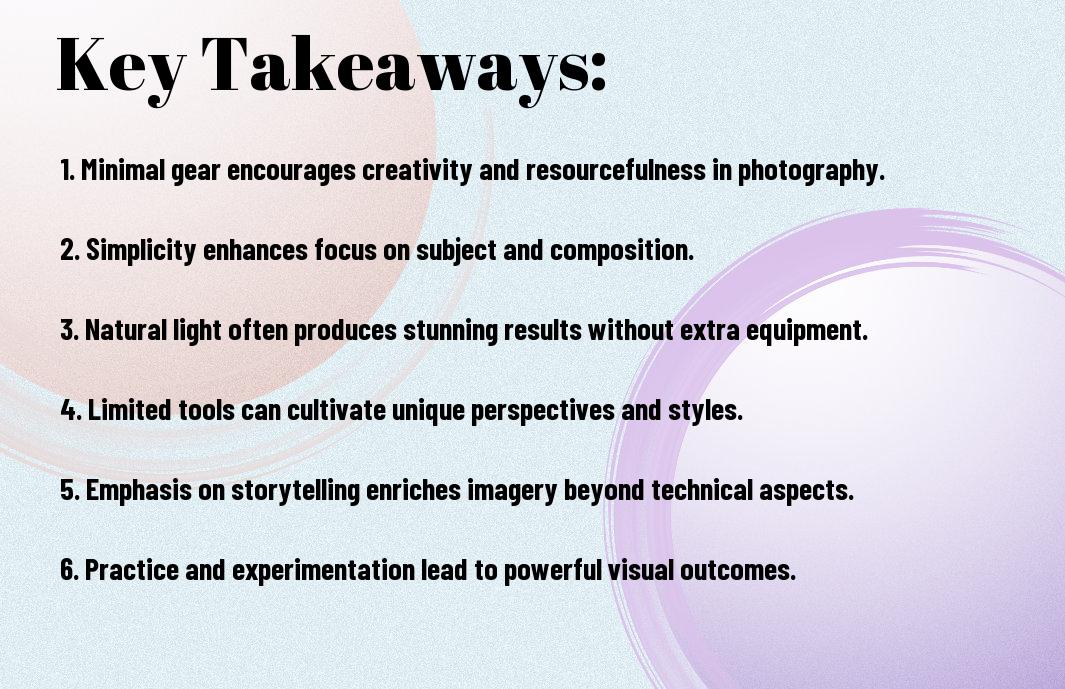
It’s often said that less is more, especially in the world of photography. You may wonder if simplicity can truly lead to stunning imagery while relying on minimal gear. In this post, you’ll discover how focusing on fundamental techniques, composition, and light can elevate your photography game without the distractions of extensive equipment. Embracing a minimalist approach not only streamlines your workflow but also encourages creativity, allowing you to capture striking visuals that resonate with your audience.
The Power of Simplicity
A refined approach to photography often leads you to discover the power of simplicity. Stripping away the clutter allows for a clearer vision, enabling you to focus on the imperatives of composition and storytelling. When you embrace minimalism, you find that your images can resonate more profoundly, inviting your viewers to engage with the beauty in the uncomplicated. This simplicity fosters creativity, making it accessible for you to capture striking imagery with minimal gear.
Defining Minimalism in Photography
Among the many definitions of minimalism in photography, the essence lies in reducing elements to their barest forms. This art form encourages you to eliminate distractions, honing in on the subject matter that truly captivates your audience. It allows you to create visually compelling images that speak volumes without the need for excessive detail, propelling your photographic journey towards a more intentional experience.
The Aesthetic Appeal of Less
Behind each striking minimalist image lies an undeniable aesthetic appeal that draws the viewer’s eye. You often find that the use of negative space and simple composition not only creates a sense of harmony but also invites deeper contemplation. The clean lines and balanced designs allow your subjects to stand out, making a powerful statement that transcends the image itself.
Due to the emphasis on simplicity, your photos can command attention and evoke emotion without overwhelming your audience. This minimalist approach can enhance your storytelling, offering a fresh perspective that encourages viewers to interpret the imagery in their unique way. The absence of clutter invites them to focus, reflecting on the nuances that might otherwise go unnoticed, ultimately creating a more intimate connection with your work.
Essential Gear for Striking Imagery
Now that you understand the power of simplicity, it’s time to focus on the imperative gear that can help you capture remarkable images. While you may be tempted to go all out, effective photography doesn’t require an extravagant setup. With just a few quality pieces of equipment, you can elevate your imagery and create art that resonates. The key lies in choosing tools that complement your vision while keeping your kit minimalistic.
Choosing the Right Camera
Choosing the right camera is the first step toward minimalist photography. You don’t need the latest model; instead, focus on a camera that suits your style and offers you the flexibility to explore different genres. A compact mirrorless camera or a reliable DSLR can serve you well, providing good image quality without the bulk. Evaluate factors like ease of use, weight, and compatibility with lenses to make an informed decision.
Must-Have Lenses for Minimalist Photography
Between the body of the camera and the lenses you choose, lenses play an imperative role in the type of imagery you can create. A versatile prime lens, such as a 50mm or 35mm, is invaluable for capturing sharp, detailed images with creamy backgrounds. Additionally, a wide-angle lens can expand your creative horizons, allowing you to capture breathtaking landscapes and architectural shots. Ultimately, having a couple of quality lenses in your toolkit enables you to adapt to various shooting scenarios while keeping your gear straightforward.
Lenses shape the quality and creativity of your photographs. A fast lens with a wide aperture allows you to shoot in low light and create beautiful bokeh—ideal for isolating subjects in striking imagery. Conversely, a versatile zoom lens gives you the freedom to frame your shots without changing lenses constantly. When curating your collection, consider your predominant style of photography, and aim for lenses that best reflect your vision. With the right lenses, you can achieve a balance of simplicity and artistic expression, capturing stunning visuals with minimal distractions.

Techniques to Enhance Imagery
For photographers seeking to elevate their visuals, understanding and applying specific techniques can make a significant difference. With minimal gear, you can focus on creativity and artistry by mastering a few vital practices. From composition to lighting, these techniques will help you transform ordinary scenes into compelling images that resonate with viewers.
Composition Fundamentals
By grasping the basics of composition, you set a strong foundation for your photography. Utilize techniques such as the rule of thirds, leading lines, and framing to guide the viewer’s eye and create dynamic images. Experimenting with angles and perspectives will enhance your storytelling capability, making your photos more engaging.
Utilizing Natural Light Effectively
By harnessing the power of natural light, you can dramatically improve the quality of your images. Observing how light interacts with your subject enriches your photos, allowing textures and colors to come alive. Aim to shoot during the golden hours—shortly after sunrise or before sunset—when the light is soft and warm, lending a magical quality to your imagery.
Fundamentals of using natural light include understanding the direction and intensity of light. You can create depth and dimension by positioning your subject strategically in relation to the sun. Overcast days provide a soft, diffused light that minimizes harsh shadows, perfect for portraiture. Pay attention to natural reflectors, such as water or sand, which can add a unique touch to your shots. Embrace the ever-changing qualities of natural light to enhance your artistic expression.

Post-Processing with Minimal Tools
After capturing your images, the next step is post-processing, which can enhance your shots while keeping your toolkit minimal. Utilizing simple editing software allows you to elevate your photographs without the need for complex setups. Focus on refining your work by adjusting exposure, contrast, and colors, ensuring that your edits maintain the original essence of your image.
Software Options for Simplistic Editing
The options for editing software are abundant, even when aiming for simplicity. Popular choices like Lightroom, Snapseed, or even built-in apps on your smartphone allow you to make quick adjustments effortlessly. These tools often feature user-friendly interfaces that cater to both beginners and seasoned photographers alike.
Techniques for Natural Enhancement
A few basic techniques can transform your images while keeping them true to your vision. Try subtle tweaks like adjusting shadows and highlights, enhancing colors without oversaturation, and applying noise reduction to maintain clarity. Focus on bringing out the best in your composition rather than altering its essence.
A natural enhancement approach allows you to highlight your subject without overwhelming it. For instance, increasing sharpness can help define details, while slight adjustments to white balance can create a more inviting atmosphere. You should also consider using graduated filters to add dimension, ensuring that the viewer’s eye is drawn to the focal points of your image. By maintaining a light editing hand, your unique style will shine through, showcasing your creativity while working with minimal gear.
Case Studies of Minimalist Photography
All minimalist photography showcases how simplicity can yield profound imagery. Here are some notable case studies:
- 1. Ansel Adams: Captured stunning landscapes using just a camera and tripod, focusing on composition and light.
- 2. Hiroshi Sugimoto: Utilized simple elements—like vast seas and horizon lines—to create striking, contemplative images.
- 3. Michael Kenna: Known for his monochromatic landscapes that rely on minimal gear yet deliver powerful emotions.
- 4. Kiyoshi Suzuki: Explores urban scenes with minimal details, highlighting the beauty of isolation in crowded spaces.
Successful Photographers Embracing Simplicity
On your journey into minimalist photography, you can find inspiration from renowned photographers who have embraced this style. Their work teaches you the value of simplicity, often relying on limited equipment to craft compelling narratives through their images.
Analyzing Impactful Minimalist Images
Among the most impactful minimalist images, the common thread is a strong composition that evokes emotion. These images often strip away unnecessary distractions, allowing the viewer to focus on vital elements that tell a story.
Consequently, analyzing these images reveals the effectiveness of using light, shadow, and space strategically. By studying how each element interacts within the frame, you can develop a keen eye for creating your own striking minimalist compositions. This exploration encourages you to redefine what makes a powerful image, emphasizing the power of simplicity in your photography endeavors.

Challenges and Misconceptions
Despite the appeal of simplicity in photography, many face challenges and misconceptions that hinder their progress. The belief that high-end gear is imperative for creating striking imagery can deter you from pursuing your creative instincts. Additionally, the pressure to constantly acquire new equipment can lead you astray from developing your skills and vision. Acknowledging these hurdles is the first step in embracing a more minimalistic approach to photography.
Overcoming Gear Acquisition Syndrome
An effective way to enhance your photography is to resist the lure of Gear Acquisition Syndrome. This psychological trap can distract you from honing your craft, leading you to believe that new equipment will automatically improve your results. Instead, focus on maximizing the potential of the gear you already possess. Challenge yourself to create captivating images with limited tools by exploring different techniques and perspectives.
Debunking Minimalism Myths
Beside the notion that minimalism means settling for less, it is imperative to understand that it is more about prioritization and intentionality in your gear choices.
In addition, minimalism in photography does not imply that you must strip down to the bare imperatives without a clear vision. It encourages you to invest in versatile equipment that serves multiple purposes. This approach enables you to elevate your creativity while reducing clutter and distractions. By embracing this mindset, you can dispel myths surrounding minimalism and focus on the artistry behind your photography rather than the tools you use. It’s about choosing quality and purpose, which ultimately leads to more compelling images.
Final Words
Considering all points, you can indeed cultivate striking imagery with minimal gear. By focusing on composition, lighting, and perspective, your creativity can shine through regardless of the equipment you use. Embracing simplicity allows you to develop a unique style and become more attuned to your surroundings. Ultimately, it’s your vision that will transform ordinary scenes into compelling photographs, proving that less can indeed be more in the art of photography.













