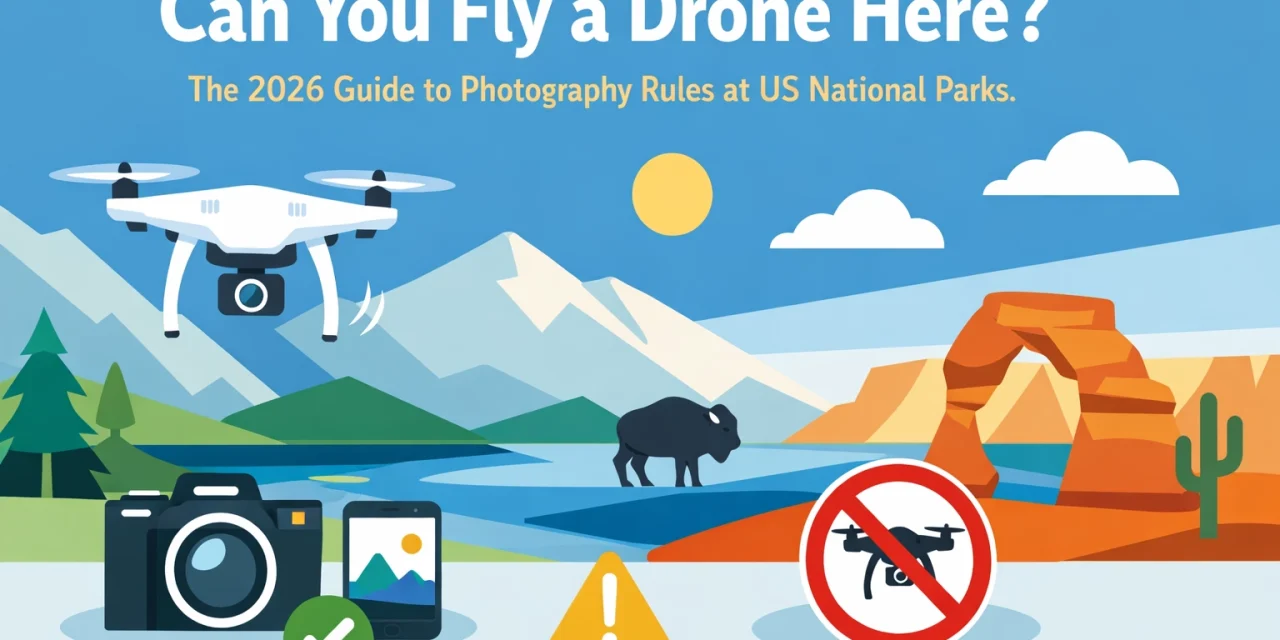
So you've packed your drone, planned your epic National Park trip, and you're ready to capture some jaw-dropping aerial footage. But before you launch that quadcopter into the sky above Yellowstone or the Grand Canyon, there's something you really need to know: flying drones in US National Parks is prohibited without special permission.
Yeah, I know. It's a bummer. But stick with me here, I'll walk you through everything you need to know about drone rules in National Parks for 2026, how to potentially get approval if you absolutely need it, and where you can fly legally nearby. Let's make sure your adventure doesn't end with a hefty fine or worse.
The Short Answer: No Drones Allowed
Here's the deal: The National Park Service (NPS) has banned recreational drone use across all 63 National Parks and over 400 other sites they manage. This means you can't launch, land, or operate a drone within park boundaries without prior authorization.
This rule has been in place since 2014, and it's still going strong in 2026. The ban covers everything from tiny toy drones to professional cinema rigs. If it flies and you control it remotely, it's covered by the restriction.
Why Are Drones Banned in National Parks?
Look, I get it. Aerial photography can be absolutely stunning, and National Parks offer some of the most beautiful landscapes on Earth. But the NPS didn't make this decision lightly. Here's why drones are prohibited:
Wildlife Disruption: Drones create noise and movement that can seriously stress wildlife. Birds have abandoned nests, bighorn sheep have scrambled across dangerous terrain, and countless other animals have been disturbed by well-intentioned photographers who just wanted a cool shot.
Visitor Experience: Part of the magic of National Parks is the sense of wilderness and tranquility. The buzzing of a drone overhead can shatter that experience for everyone else trying to enjoy nature.
Safety Concerns: Drones have crashed into geysers at Yellowstone (yep, that actually happened), come close to hitting tourists, and even attempted to land on the faces of Mount Rushmore. These incidents put both people and irreplaceable natural features at risk.
Resource Protection: Some of the incidents have been pretty wild. Drones have been lost over the edge of the Grand Canyon, crashed into hot springs, and disturbed sensitive archaeological sites.
What Are the Penalties?
Okay, so what happens if you ignore the rules and fly anyway? The penalties are serious. Violating the drone ban is a misdemeanor offense. You could face up to six months in jail and a $5,000 fine. On top of that, depending on what you do with the drone, you might also get cited for wildlife harassment, disorderly conduct, or other violations.
Park rangers take this stuff seriously, and they're trained to spot drones. It's just not worth the risk.
Can You Get Permission? (Spoiler: It's Really Hard)
There are three official pathways to get approval for drone use in a National Park, but they're all geared toward specific professional or research purposes:
1. Scientific Research and Collecting Permit: If you're conducting legitimate scientific research in the park, you can request drone permission as part of your research permit. This is primarily for academics and scientists.
2. Approval from the Associate Director of Visitor and Resource Protection: This pathway is mainly for administrative purposes, typically when you're working in partnership with NPS staff on official projects.
3. Special Use Permit: For other approved uses, like commercial film production with proper permitting.
Here's the reality: These permits aren't granted for personal vacation footage or even most commercial photography projects. The bar is extremely high, and the application process can take months. If you're just a photographer looking to add some aerial shots to your portfolio, you're probably not getting approved.
Also, even if by some miracle you do get NPS approval, you still need a Federal Aviation Administration (FAA) Remote Pilot Certificate to legally operate any drone in the United States. You can get this by passing the FAA's Part 107 exam.
National Forests: Your Drone-Friendly Alternative
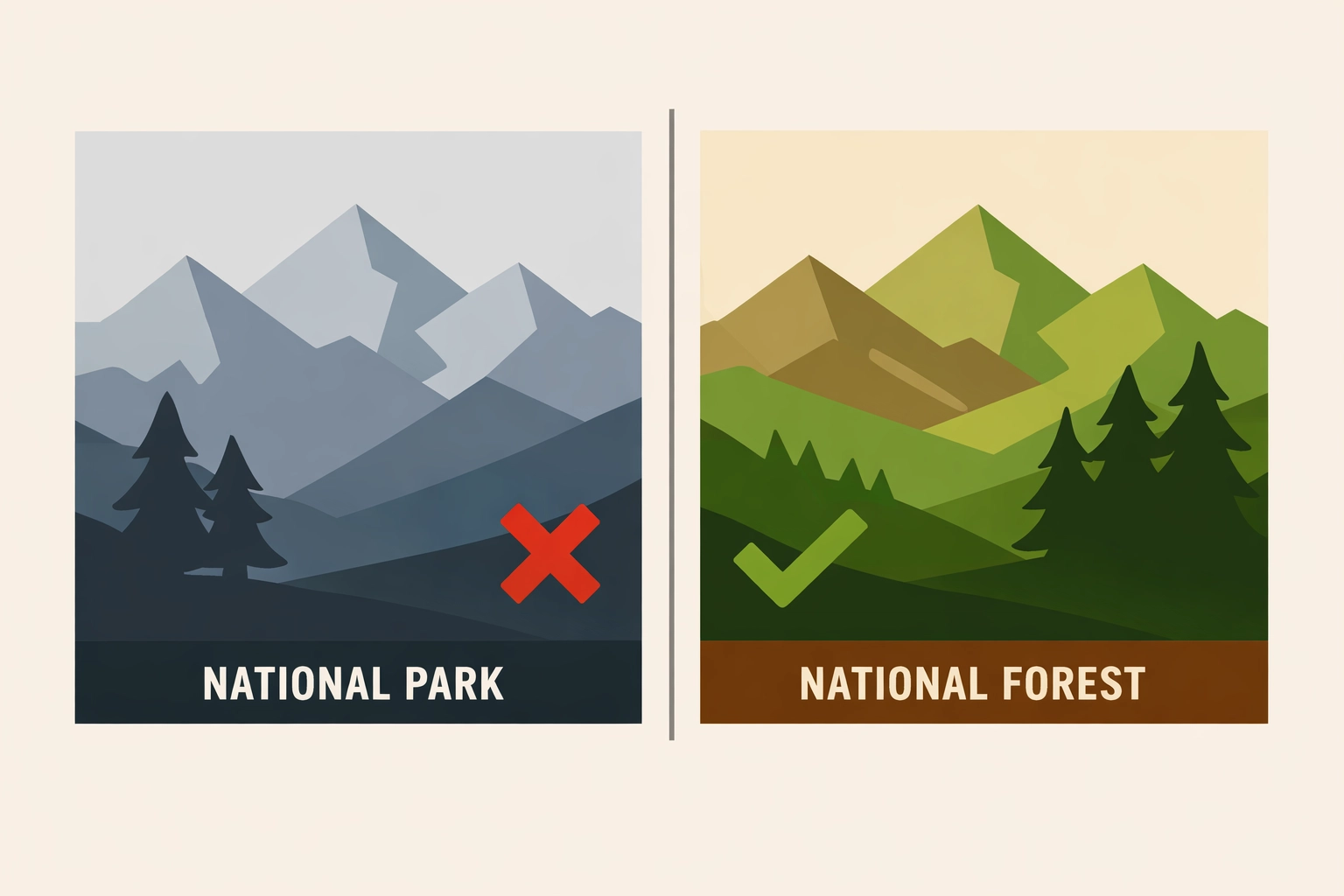
Here's some good news: National Forests generally allow drone use, unlike National Parks. This is where Photoguides can really help you scout locations that offer similar landscapes without the restrictions.
National Forests cover huge areas of public land, often adjacent to or near National Parks. For example, you can't fly in Grand Teton National Park, but the surrounding Bridger-Teton National Forest and Caribou-Targhee National Forest offer incredible mountain scenery where drones are typically permitted.
However, there are a few important things to remember:
- Always contact the specific Forest Service office before you go to confirm local regulations
- Some individual forests or areas within forests may have temporary or permanent drone restrictions
- You still need to follow all FAA regulations for drone flight
- Be aware of wilderness areas within National Forests, which may have additional restrictions
- Respect wildlife and other visitors, even where drones are legal
Smart Alternatives for Getting Amazing Shots
Just because you can't use a drone doesn't mean you can't capture incredible imagery in National Parks. Here are some alternatives:
Use a Telephoto Lens: A good telephoto lens can give you compressed perspectives that feel almost aerial. Shooting from viewpoints with a 70-200mm or even longer lens can create stunning images.
Hike to High Vantage Points: Many parks have trails that lead to elevated viewpoints. Yeah, it takes more effort than flying a drone, but the shots can be just as spectacular, and you'll have earned them.
Try Panoramic Stitching: Modern cameras and software make it easy to shoot panoramas that capture the epic scale of these landscapes.
Work with Licensed Commercial Operators: Some commercial tour companies have the proper permits for aerial photography. If you absolutely need aerial footage, this might be your option: though it won't be cheap.
Tips for Scouting Drone-Legal Locations Nearby
If aerial photography is essential to your project, here's how to find legal locations near the parks you want to shoot:
-
Research Adjacent National Forests: Use tools like Photoguides to identify National Forests near the parks you're interested in.
-
Check Bureau of Land Management (BLM) Areas: BLM land is often drone-friendly and can offer stunning landscapes similar to nearby National Parks.
-
Look for State Parks: Many state parks allow drones with proper notification or permits that are much easier to obtain than NPS approval.
-
Scout Private Land: If you're working on a commercial project and can get permission from private landowners, this gives you more flexibility.
-
Use Planning Tools: Platforms like Proshoot.io can help you coordinate shoots in legal locations and understand local regulations.
Before You Fly Anywhere: Know the FAA Rules
Even outside National Parks, you need to follow FAA regulations. Here's a quick rundown for 2026:
- Register your drone if it weighs between 0.55 and 55 pounds
- Keep your drone within visual line of sight
- Don't fly higher than 400 feet above ground level
- Don't fly over people or moving vehicles
- Don't fly in controlled airspace without authorization
- Fly only during daylight hours (or twilight with proper lighting)
- Get your Part 107 certificate for commercial operations
The FAA has gotten much better about streamlining airspace authorizations through the LAANC (Low Altitude Authorization and Notification Capability) system, which can give you near-instant approval in controlled airspace areas where it's permitted.
Real Talk: Is It Worth Trying to Bend the Rules?
Short answer: absolutely not.
I know the temptation is real. You see all these incredible aerial shots on Instagram, and you think, "I'll just fly for a few minutes early in the morning when no one's around." But here's the thing:
Park rangers are savvier than ever about spotting drones. They know the common launch spots, they recognize the sound, and many parks now use technology to detect drones in restricted airspace. You're very likely to get caught.
Beyond the legal penalties, there's the ethics angle. Those wildlife protection rules exist for good reasons. The short-term thrill of getting a cool shot isn't worth contributing to the long-term degradation of these precious places or stressing out animals that are just trying to live their lives.
Plus, if you're trying to build a professional photography career, a misdemeanor conviction for violating park rules isn't exactly great for your reputation.
Plan Ahead for Success
The key to a successful photography trip involving drones is planning ahead. Don't show up at a National Park with your drone and hope for the best. Instead:
- Research which nearby areas allow drones before you leave home
- Mark legal flying locations on your map
- Get all necessary permits and certifications in advance
- Build extra time into your itinerary to visit drone-friendly alternatives
- Focus on the unique ground-level opportunities that National Parks offer
Remember, Photoguides exists to help photographers like you navigate these challenges and find amazing locations that work within the rules. And for more complex commercial shoots, Proshoot.io can help coordinate all the logistics and permissions you need.
The Bottom Line
National Parks are off-limits for drones in 2026, and that's not changing anytime soon. But that doesn't mean you can't capture incredible imagery or enjoy these spectacular places. It just means you need to be creative, respectful, and willing to work within the rules.
Plan ahead, scout legal alternatives nearby, and remember that sometimes the best shots come from putting in the work to hike to that perfect viewpoint rather than taking the easy route. Your photography will be better for it, the parks will be protected, and you won't have to worry about that $5,000 fine.
Now get out there and shoot something amazing: just leave the drone in the car when you enter a National Park. Happy shooting!