
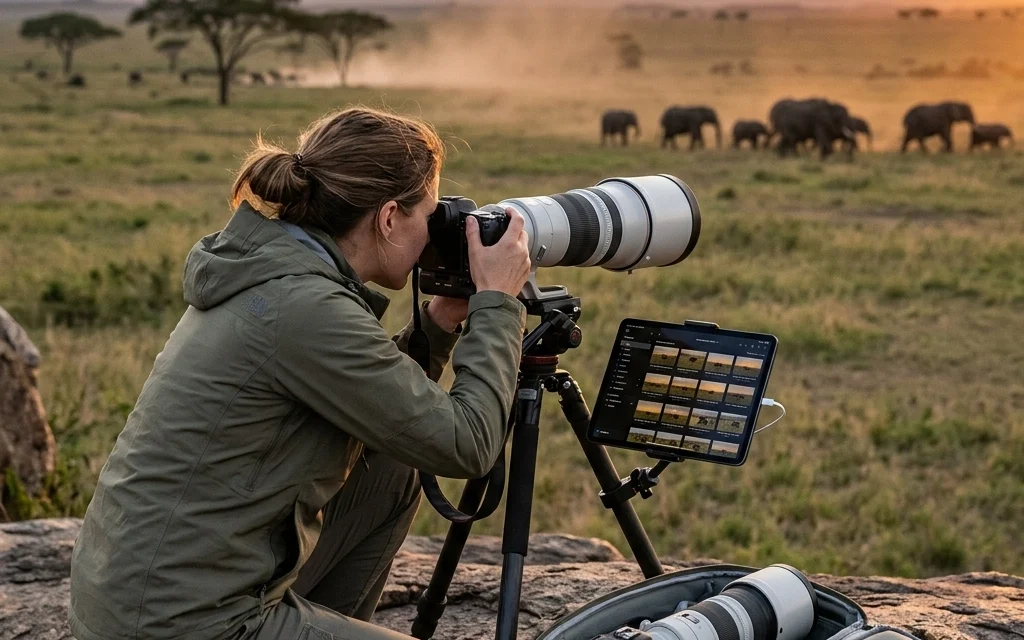
It’s hard to believe we’re already well into 2026. It feels like only yesterday we were debating whether AI was a passing fad or a threat to our creative souls. If you’re reading this today, you already know the answer: AI didn’t replace us, but it definitely changed the locks on the doors of the industry.
For the professional photographer working today, the question isn't "Should I use AI?" but rather, "Is my AI workflow fast enough to keep me profitable?" At Photoguides, we’ve seen the shift firsthand. Whether you’re shooting high-end weddings, chasing the Aurora in remote corners of the globe, or capturing Miami's hidden speakeasies for a travel editorial, your workflow is your lifeline.
So, let’s get into the weeds. Does AI workflow really matter in 2026? Here is the absolute truth about where we stand.
The Death of the "Editing All-Nighter"
Remember the days of sitting in a dark room with a massive pot of coffee, manually clicking through 3,000 RAW files from a Saturday wedding? In 2026, that’s not "paying your dues", it’s a business failure.
The most significant impact of AI photography trends has been the near-total automation of the "boring stuff." Tools like Aftershoot and the latest iterations of Lightroom AI have turned culling from a six-hour nightmare into a ten-minute coffee break. The AI now understands composition, focus, and even human emotion. It knows which shot has the "perfect" smile and which one has a stray hair across the face.
By delegating these tasks to a machine, you aren't losing your "artistic touch." You’re reclaiming your life. When you spend less time behind a monitor, you have more time to study advanced techniques or plan your next big trip.

Authenticity vs. AI Art: The Great Balance
There has been a lot of noise about "AI-generated art" vs. "Authentic photography." In 2026, the line is both clearer and blurrier than ever. High-end clients, the ones who hire us for our vision, value authenticity more than ever. They want to know that the sweat, the light, and the moment were real.
However, they also expect that "real" moment to look perfect. This is where the hybrid workflow shines. We’re using AI for noise reduction that allows us to shoot at ISO 12,800 and still produce prints for Edin Fine Art that look like they were shot on medium format film. We’re using AI sky replacement tools to save a shoot when the weather doesn’t play ball, and we’re using sky overlays to add that missing drama to an otherwise flat landscape.
The truth is, the "soul" of the photo is in the capture. The AI is just the world’s most sophisticated darkroom assistant. If you aren't using it to enhance your authentic work, you’re simply leaving quality on the table.
Gear in 2026: More Than Just Sensors
If you look at our essential photography gear guide, you’ll notice a shift. It’s no longer just about megapixels or burst rates. In 2026, the "best" camera is the one with the best onboard processing.
Current camera models now feature dedicated AI chips that handle subject tracking with spooky accuracy. Whether you’re using an iPhone for high-end mobile work or a flagship mirrorless body, the integration of AI into the hardware has made "missing the shot" almost impossible. Even legacy glass is getting a second life; products like the Module 8 lens adapter allow us to pair vintage character with modern, AI-driven focus systems.
For more detailed breakdowns on what to buy this year, check out our camera reviews. You’ll find that the top-rated gear isn't just about the glass; it’s about how well the internal software talks to your external workflow.
Travel Photography: Efficiency on the Road
For those of us who live for travel photography tips and exploring best photography locations, AI has been a game-changer for "on-the-go" editing.
Imagine you’re on a cheap weekend getaway or scouting hidden gems in the Dominican Republic. In the past, you’d have to wait until you got home to really see what you captured. Now, mobile AI workflows allow you to cull, color-grade, and deliver high-res selects to a client before your flight home even touches the tarmac.
This level of efficiency is what separates the hobbyist from the pro in 2026. If you can provide a wedding photography insight or a "sneak peek" gallery to a client within two hours of the event ending, your value triples. AI is the only way to make that happen without burning out.

The "Admin" AI: Running the Business Side
Let's be real, most photographers hate the business side. We want to shoot, not write emails or optimize SEO. But in 2026, your AI workflow should extend beyond Photoshop.
AI assistants are now handling:
- Initial Client Inquiries: Crafting personal, reassuring responses that lead to a better photography booking experience.
- SEO & Content: Helping you rank for keywords like "photo spots near me" or "best photography locations" by analyzing search trends in real-time.
- Social Media: Automating the cropping and scheduling of vertical video (Reels/TikToks) from your horizontal landscape shots.
If you are an Atlanta event photographer or running a studio in any major city, these administrative automations are the difference between having a weekend off and being buried in spreadsheets.
Why "Reassuring" Technology is the Future
At Photoguides, we believe technology should be reassuring, not intimidating. The transition to a heavy AI workflow doesn't mean you have to become a computer programmer. It means the tools are finally becoming smart enough to understand what you want.
Whether you're looking for breakfast places in Cape Coral to fuel up before a sunrise shoot or you're trying to figure out if you should upgrade your kit by reading camera reviews from 2024 to see how far we've come, the goal is always the same: better images, more time, and a sustainable career.

The Verdict: Does it Really Matter?
So, back to the original question: Does AI workflow really matter in 2026?
Yes. Absolutely. 100%.
It matters because the market has adjusted to it. Clients now expect faster turnarounds, cleaner edits, and more creative variations. If you are still working the way you did in 2022, you are likely working twice as hard for half the profit.
But here is the reassuring part: AI can't replace your eye. It can't replace the way you connect with a couple during a portrait session. It can't replace the feeling of standing on a cliffside at 4:00 AM waiting for the light to hit just right. What it can do is make sure that when you get home, the technical side of your job is as smooth and effortless as possible.
If you're ready to dive deeper into modern techniques, head over to Shut Your Aperture to join the community discussion on where gear is headed next.
The "Truth" for professional photographers in 2026 is simple: The AI is the tool, but you are still the craftsman. Master the tool, and you’ll master the market.
Don’t get left behind: embrace the workflow, reclaim your time, and get back to what you love: taking incredible photos. If you need a starting point, check out our downloads section for tools that can jumpstart your 2026 workflow today.













