

Many aspiring photographers often seek ways to elevate their travel photos beyond the ordinary. By employing unique techniques and creative approaches, you can capture stunning images that truly reflect the essence of your adventures. In this guide, we will explore a variety of strategies to infuse artistry into your photography, ensuring your memories are not just snapshots but captivating stories. Prepare to discover how to unleash your creativity with practical tips that will transform your travel photography skills.

Essential Photography Equipment for Travelers
The right photography equipment can make all the difference in capturing stunning travel memories. From cameras to accessories, having the right tools ensures that you can adapt to any situation you encounter on your adventures. By thoughtfully selecting your gear, you enhance your ability to shoot high-quality images while keeping your travel experience light and enjoyable.
Camera Selection: DSLR vs. Mirrorless vs. Smartphone
Now, choosing the best camera for your travels is vital for achieving great results. DSLR cameras offer outstanding image quality and versatility, but they tend to be bulky and heavy. Mirrorless cameras strike a balance between size and performance, boasting excellent autofocus and portability. On the other hand, modern smartphones come equipped with advanced camera technology, making them an incredibly convenient option for casual shooters who prioritize ease of use and everyday accessibility.
Must-Have Accessories for Different Travel Scenarios
Accessories enhance your photography by catering to specific needs, so you’ll want to ensure you have the right gear for various situations. A sturdy tripod is great for landscape shots and night photography, while an external flash can improve your indoor and low-light images. Don’t forget extra batteries and memory cards to keep your camera running smoothly, as well as a lens cleaning kit to maintain clear images during dusty travels.
Equipment like ND filters can help you manage light in bright environments, allowing for longer exposure shots for creativity. A camera bag with weather protection ensures your gear remains safe from the elements. A portable external hard drive enables you to back up your photos on the go, guaranteeing nothing is lost. With these accessories, you are well-prepared to tackle various photography scenarios and make the most of your travel experiences.
Mastering Technical Fundamentals
While mastering the technical fundamentals of photography is crucial for capturing captivating travel images, it also allows you to express your artistic vision. By improving your understanding of how your camera works and the key settings, you can elevate your travel photography from ordinary snapshots to stunning visual stories. Set aside time to practice and explore each aspect deeply, and soon enough, you’ll feel more confident and in control behind the lens.
Understanding Exposure: Aperture, Shutter Speed, and ISO
While getting familiar with exposure is key to taking well-exposed photos, it involves knowing how aperture, shutter speed, and ISO work together. By mastering these three components, you can manipulate the light entering your camera to create the mood and depth you desire in your photos. Understanding how to balance these settings will make a significant difference in achieving the desired effects in your travel captures.
Composition Techniques That Transform Ordinary Scenes
For your travel photography to stand out, employing composition techniques can turn mundane scenes into captivating images. Techniques such as the Rule of Thirds, leading lines, and framing help create visual interest and draw the viewer’s eye into your photograph. By strategically arranging elements within your frame, you can enhance the narrative and emotion of your capture.
The use of composition techniques can significantly elevate the impact of your photographs. When you apply the Rule of Thirds, for instance, you guide the viewer’s eye naturally through your image. Leading lines can draw attention to your main subject and create a sense of depth, while framing elements can provide context and enhance the storytelling aspect. Experimenting with these techniques allows you to discover unique perspectives and helps transform everyday scenes into powerful visual statements that resonate with your audience.
Capturing Authentic Cultural Moments
Unlike staged photographs, authentic cultural moments showcase the true essence of a place and its people. To capture these instances, immerse yourself in your surroundings, allowing spontaneity to reveal itself. Engage with your environment and remain observant, ready to press the shutter when unique interactions unfold. Your objective is not just to take pictures, but to forge connections that translate into compelling stories through your lens.
How to Approach and Photograph Locals Respectfully
If you want to photograph locals, start by approaching them with genuine interest and courtesy. Engaging in conversation can build trust, and asking for permission before taking their picture demonstrates respect for their space and culture. Authenticity in your interactions will lead to more memorable photographs, capturing the essence of the moment.
Tips for Documenting Cultural Events and Traditions
Photograph cultural events by choosing the right moments to capture their vibrancy and significance. Here are some tips to enhance your documentation:
- Arrive early to familiarize yourself with the event’s flow.
- Use natural light to highlight the atmosphere.
- Focus on expressions and interactions to convey emotions.
- Be unobtrusive, allowing the moments to unfold naturally.
Thou shall seek to understand the traditions behind the events you document, bringing depth to your images.
Respectfully navigate cultural events by keeping your presence low-key while being engaged in your surroundings. Feel free to adopt these strategies:
- Communicate with organizers to know the schedule.
- Capture candid moments instead of posed ones.
- Be mindful of cultural sensitivities during your photography.
- Share your work with the community afterward; it fosters goodwill.
Thou shall prioritize honoring the culture while telling its story through your photography.

Landscape Photography Techniques
Now, capturing breathtaking landscape images requires attention to detail and a few technical techniques. From composition to lighting, approaching your landscape photography with creativity can elevate your work. Mastering these elements will provide you with striking images that resonate with viewers and capture the essence of your travels.
Golden Hour and Blue Hour: Timing Factors for Stunning Shots
Golden hour and blue hour are the perfect times to elevate your landscape photography. These magical moments offer soft, warm light and striking blue tones that enhance colors and textures. To make the most of these periods, consider the following tips:
- Plan your shoots around sunrise and sunset.
- Scout your locations in advance to understand the light direction.
- Have your gear ready to capture fleeting moments quickly.
The beauty of these hours can significantly amplify your landscape images.
How to Use Filters and Long Exposures for Dramatic Effects
Landscape photography often benefits from using filters and long exposures to create dramatic effects. You can enhance your scenes by employing ND filters to increase exposure time without overexposing your shot. This technique allows for the blurring of water and clouds, giving your images a smooth, ethereal quality. Filters also help control reflections and enhance color saturation.
Hour-long exposures, when applied correctly, provide mesmerizing effects, like the ghostly movement of clouds or the silky flow of water. You’ll achieve striking landscapes by incorporating these methods, and your images will reflect a dynamic atmosphere that captivates viewers and invites them into your travel experiences.

Urban Travel Photography
Keep your camera ready as urban environments are bursting with dynamic scenes and intriguing details. From bustling streets to quiet alleyways, the city offers endless opportunities for creativity. Look for unique perspectives, interesting compositions, and the interplay of light and shadow to capture the essence of city life.
Street Photography Tips for Capturing City Life
Photography in urban settings thrives on spontaneity. When aiming to capture the vibrant heartbeat of a city, consider these tips:
- Be patient; wait for the perfect moment to unfold.
- Engage with locals for more intimate visuals.
- Experiment with angles to find unique viewpoints.
- Utilize natural light to enhance your shots.
Knowing how to blend into the environment will also allow you to capture candid moments that tell compelling stories.
Architectural Photography Approaches for Urban Environments
Photography of urban architecture requires an artistic eye to showcase the subject’s individuality. Focus on the details, such as patterns, lines, and textures, to bring your images to life. Additionally, consider time of day, as the golden hour can dramatically change the mood of your shots and highlight architectural features.
To elevate your architectural photography, experiment with different focal lengths and perspectives. Shooting from low angles can emphasize the grandeur of towering buildings, while looking for reflections in glass can add depth to your composition. Incorporate elements of the surrounding environment, such as people or nature, to create a balanced photograph that tells a story about the place. Your unique interpretation will give your urban photography a personal touch that resonates with viewers.
Post-Processing Your Travel Images
All great travel photography often requires post-processing to elevate your images above the ordinary. Enhancing colors, correcting exposure, and refining details can transform a simple snapshot into a visually stunning piece of art. Utilizing software like Lightroom or Photoshop can make these adjustments straightforward, allowing you to showcase the beauty of your experiences in their best light.
Essential Editing Workflows for Travel Photographers
With a well-defined editing workflow, you can streamline the post-processing of your travel images. Begin by organizing your photos into folders based on location or theme, then prioritize images that stand out. Use batch processing for similar images to save time, and focus on key edits such as cropping, color correction, and sharpening to maintain consistency across your portfolio.
How to Develop a Consistent Style Across Your Travel Portfolio
Now, developing a cohesive style in your travel photography can significantly impact the overall aesthetic of your portfolio. Start by selecting a specific editing style or filter that resonates with you and use it consistently across all your images. This uniformity not only strengthens your brand but also creates a recognizable visual narrative that speaks to your unique perspective.
Plus, consistency doesn’t just apply to editing; consider how you frame your photographs, the subjects you choose, and the time of day you shoot in. Stick to a specific color palette or mood across different locations, so your viewers can easily identify your work. Over time, this intentional approach will help develop a signature style that distinguishes your travel photography, inviting viewers to engage deeply with your journey and experiences.
Conclusion
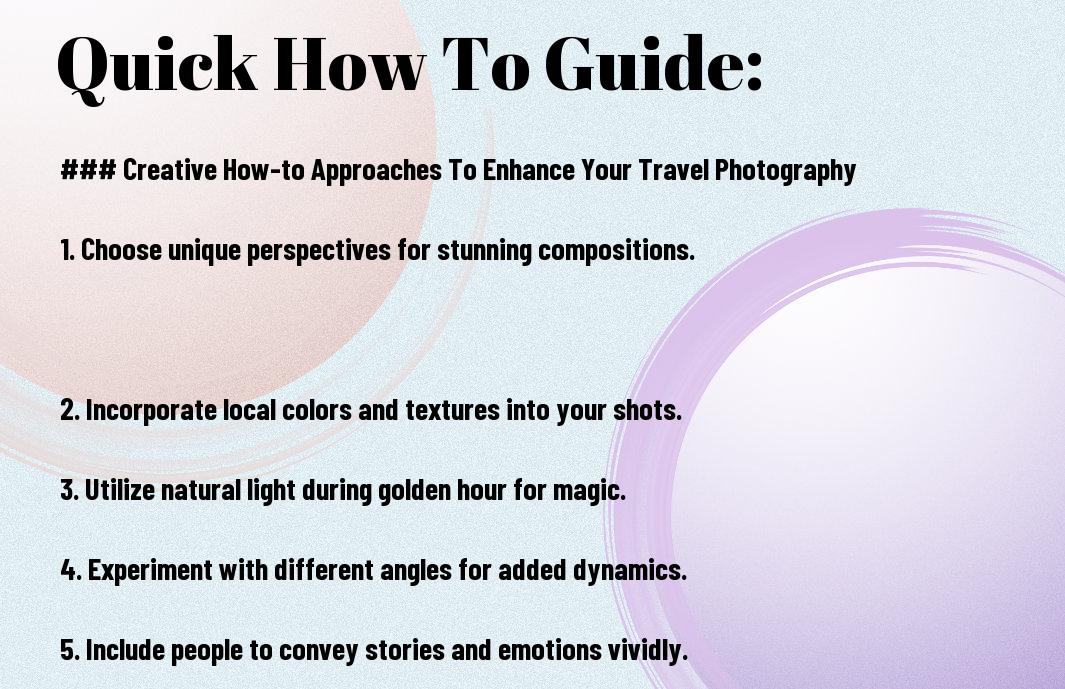
Presently, enhancing your travel photography involves embracing creative how-to approaches that inspire both you and your audience. By exploring unique perspectives, experimenting with light and composition, and engaging with locals, you can transform ordinary scenes into captivating stories. Utilize storytelling techniques and stay open to spontaneity, allowing your personal experiences to shine through your lens. As you apply these strategies, your travel photos will not only capture moments but also evoke emotions, elevating your photography to new heights.













