
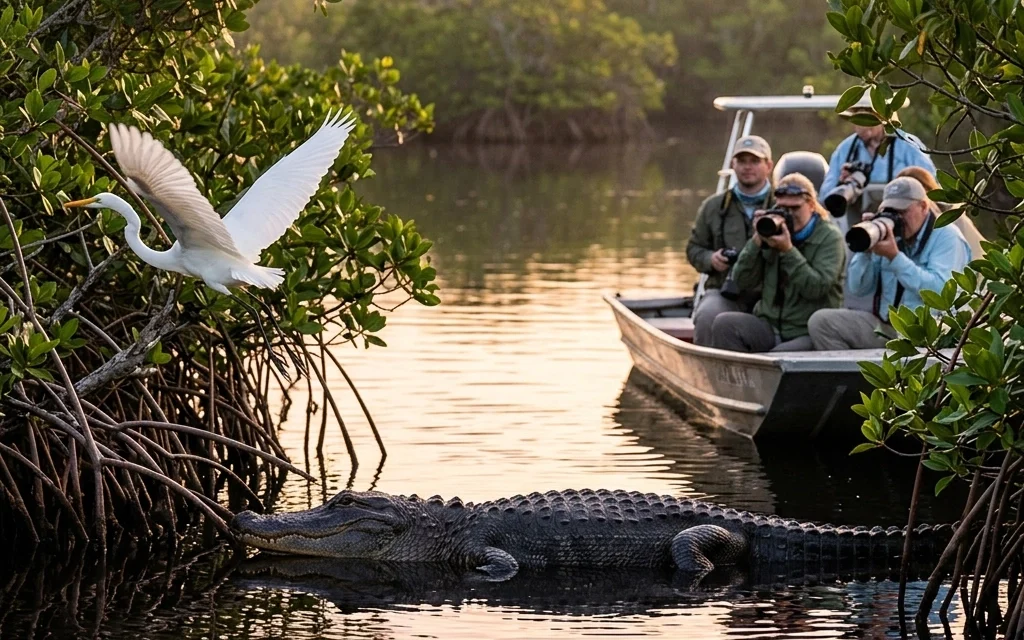
If you’ve ever stood on a boardwalk in the Everglades and watched a heron glide in like it owns the place, you already get it: this park is made for wildlife photography. The tricky part isn’t finding wildlife: it’s choosing the right Everglades wildlife photography tour so you’re in the right spot at the right time with the right setup.
This guide compares the main Everglades tour styles (boat, airboat, kayak, walking, and multi-day workshops), what they’re best for, what they typically cost, and how to tell if a tour is actually photographer-friendly: or just tourist-friendly.
If you want a shortcut to locations, timing, and what to shoot where, grab the Everglades Photography Guide here: https://blog.edinchavez.com/product/everglades-photography-guide/. It’s the resource I wish everyone had before they start booking tours.
Quick comparison: which Everglades photo tour style fits your goals?
| Tour type | Best for photographing | Biggest upside | Biggest downside | Who it’s for |
|---|---|---|---|---|
| Walking / boardwalk | Wading birds, gators at close range, environmental shots | Stable, tripod-friendly, cheap | Limited distance coverage | Beginners + anyone wanting reliable shots |
| Boat (stable platform) | Birds, dolphins/manatees (depending on area), sunrise/sunset scenes | Longer reach + better angles than shore | Can be crowded, boat vibration | Intermediate shooters chasing variety |
| Airboat | Fast access, wide habitat coverage, “adventure” photos | Gets you into shallow areas | Loud, windy, tough for long lenses | If you want the experience + occasional shots |
| Kayak / canoe | Low-angle bird shots, intimate scenes, quiet wildlife | Silent approach, unique perspective | Less room for gear, stability varies | Minimalist photographers + patient shooters |
| Photo workshop (half/full day or multi-day) | Portfolio-level variety + technique help | Instruction + curated locations | Higher cost and time | Serious hobbyists, first-time Everglades visitors |
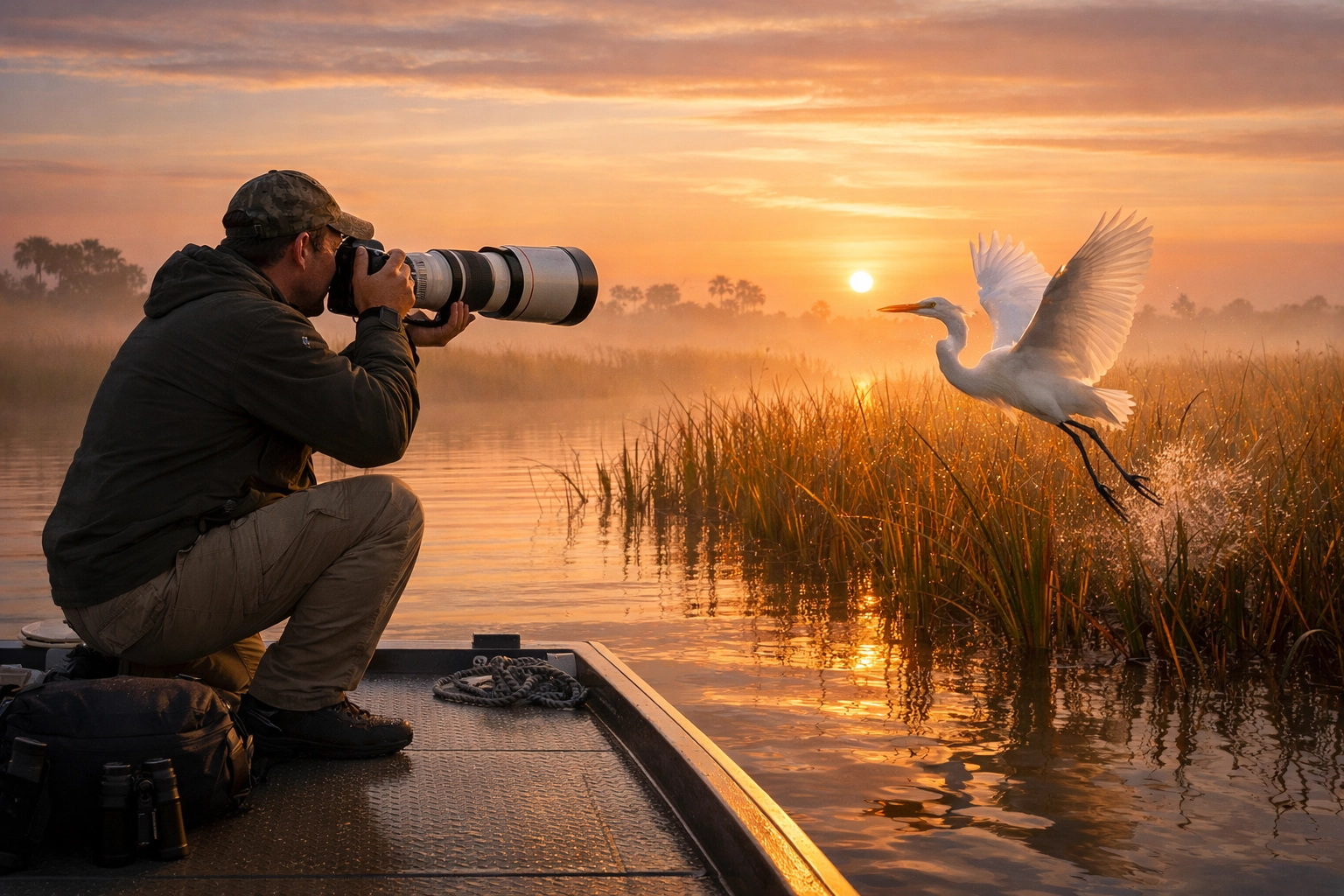
1) Start with your “must-photograph” list (it changes the tour choice)
Before you compare prices, decide what you actually want to come home with. In the Everglades, a tour that’s amazing for one goal can be mediocre for another.
Common photo goals: and the tour styles that usually deliver:
- Close-up bird portraits (egrets, herons, anhingas, spoonbills): walking/boardwalk, stable platform boats, photo workshops
- Action (birds taking off, fishing behavior, gators lunging): walking/boardwalk (predictable perches), workshops with instruction on settings
- Big scenes (sunrise fog, sawgrass horizons, silhouettes): sunrise boat or walking sessions, longer tours that time golden hour
- Alligators up close: walking/boardwalk (often the most consistent), some boat tours
- Manatees/dolphins/sea turtles: depends on location: more likely on certain coastal/estuary routes than inland trails
If you’re not sure what’s realistic season-to-season, the Everglades Photography Guide breaks down where to go, what’s there, and when it’s most consistent: https://blog.edinchavez.com/product/everglades-photography-guide/
2) Tour format matters more than most people realize (boat vs airboat vs kayak vs walking)
Walking/boardwalk tours (the “most dependable” for keepers)
If you want the highest odds of sharp, clean wildlife shots: especially birds: walking routes and boardwalks are hard to beat. You’re stable, you can stop when you want, and you can wait for behavior (preening, hunting, feeding chicks).
Look for tours that:
- spend time on known wildlife corridors (not just “a stroll”)
- start early (sunrise-ish) or late afternoon for better light
- cap the group size so you’re not shooting through a crowd
Best for: beginners, bird photographers, anyone who hates fighting a moving platform.
Boat tours (choose “photographer-friendly” boats when possible)
Boat tours can be incredible: if the boat setup matches your gear. A stable, flat-decked boat can feel like a floating tripod platform. A standard tourist boat can mean cramped rails, constant movement, and limited angles.
Green flags for photographer-friendly boat tours:
- stable deck space (you’re not wedged shoulder-to-shoulder)
- slower pace with planned stops for shooting
- guide understands photography (not just “that’s a bird”)
- clear policies on movement (so the boat doesn’t lurch every 10 seconds)
Best for: variety, covering more ground, and getting angles you can’t from shore.
Airboat tours (fun, but usually not ideal for long-lens work)
Airboats access shallow areas and cover distance quickly. That’s the upside. The tradeoffs: wind, vibration, noise, and fewer “quiet moments” where wildlife behaves naturally close to you.
Airboats can still work if you:
- treat it as a scouting or experience tour (with some shots as a bonus)
- bring a smaller setup (like a 70–200 or 100–400)
- protect gear from wind + spray
Best for: the experience, wide habitat coverage, occasional wildlife opportunities.
Kayak/canoe tours (quiet, intimate, but gear-limited)
Quiet paddling is a cheat code for natural behavior: if you can manage your gear safely. Kayak tours are often more about patience and positioning than rapid-fire shooting.
Best for: photographers who pack light and want a unique, low-angle perspective.
3) Group size: the “hidden” quality factor
Group size determines:
- how often you get a clean angle
- whether wildlife gets spooked
- how much personal help you get with settings/composition
A practical way to decide:
- Private tours: best if you’re chasing a specific species/behavior, or you want to move at your pace (more expensive, but efficient).
- Small groups: usually the sweet spot for learning + cost.
- Large groups: okay for sightseeing; can be frustrating for photography when everyone crowds the same rail.
If the operator can’t clearly tell you max group size, treat that as a yellow flag.
4) Timing beats gear (and the best tours respect light)
Everglades wildlife is most active when the light is best anyway:
- Early morning: soft light, cooler temps, more activity
- Late afternoon: warm light, better shadows, dramatic skies
Midday tours can still work for certain scenes (gators, harsh-contrast storytelling shots), but if your goal is portfolio-grade wildlife photos, timing matters.
When comparing tours, ask:
- What time do we launch/start?
- How long are we actually in “wildlife zones” (not commuting)?
- Is there flexibility to stay longer if the action is good?
The Everglades Photography Guide is built around this exact reality: timing + location beats random luck: https://blog.edinchavez.com/product/everglades-photography-guide/
5) What “photography tour” should include (and what’s just marketing)
Some tours slap “photo” in the name because someone once brought a camera. A true wildlife photography tour or workshop usually includes at least a few of these:
The real checklist
- Stops for shooting, not constant motion
- Guide who knows behavior (nesting, feeding windows, flight patterns)
- Basic technique help (AF modes, shutter speed guidance, exposure support)
- Ethical practices (no baiting, no harassing wildlife, distance respected)
- Gear-friendly logistics (space, stability, safe storage)
Questions that instantly reveal quality
- “Do you regularly work with photographers using 400–600mm lenses?”
- “How often do you stop and let people shoot for a few minutes?”
- “What’s your cancellation/weather policy?” (South Florida weather is real.)
- “Is this tour more sightseeing or photography instruction?”
6) Budget: what you’re actually paying for
Everglades wildlife photo tours vary a lot in price because you’re paying for different things: boat type, permits, group size, and how specialized the guide is. Private options often run significantly higher (commonly several hundred dollars), while group tours can be much more affordable.
A helpful way to think about it:
- Lower cost: you’re paying for transportation + general guiding
- Mid-range: smaller group + better timing + more stops
- Higher cost: private customization or full-on instruction/workshop structure
If you’re on the fence, a smart move is to do:
- one affordable tour to learn the vibe, then
- one targeted tour (private or workshop) once you know what you want
7) Gear considerations that should influence your tour choice
You don’t need a massive setup to get great Everglades images: but your gear does affect which tours feel comfortable.
Lens guidance (simple and realistic)
- 70–200mm: environmental wildlife, larger birds close to trails, storytelling
- 100–400mm / 200–600mm: the Everglades sweet spot for birds and gators
- Prime 500/600mm: amazing reach, but you’ll want stability and space (choose your tour accordingly)
Support: tripod, monopod, or handheld?
- Walking tours: monopod/tripod can work well if the route allows it
- Boat tours: tripod-friendly boats exist, but many situations favor handheld + higher shutter speeds
- Airboats: usually handheld only, with fast shutter speed
- Kayaks: handheld, minimalist, secure straps recommended
If you’re refreshing your kit before a trip, you can also browse our gear roundups here (useful for tour planning): https://photoguides.org/essential-photography-gear
And if you want a broader photography community + technique discussions, https://www.shutyouraperture.com is a solid rabbit hole (in a good way).
8) The easiest way to “compare” tours: score them on 6 factors
When you’re looking at two similar tours, give each a 1–5 score on:
- Light timing (sunrise/sunset > midday)
- Group size (smaller = better angles)
- Stop-and-shoot pace (do you actually get time?)
- Stability/space for gear (especially with longer lenses)
- Guide expertise (wildlife behavior + photography help)
- Wildlife fit (does the route match your target species?)
The best tour is rarely the cheapest: it’s the one that maximizes opportunities per hour.
9) A practical “pick this tour if…” cheat sheet
Pick a walking/boardwalk-focused tour if…
- you want the most consistent bird opportunities
- you’re newer and want a stress-free setup
- you’re bringing a longer lens and want stability
Pick a stable platform boat photo tour if…
- you want variety (birds + landscapes + different angles)
- you want golden-hour light on the water
- you’re comfortable shooting handheld on a moving platform
Pick an airboat tour if…
- the experience matters as much as the photos
- you want to cover lots of habitat fast
- you’re okay with fewer “patient moments” for behavior
Pick a kayak tour if…
- you pack light and want quiet, intimate encounters
- you’re comfortable managing gear in a smaller craft
- you want low-angle perspectives other tours can’t give
Pick a dedicated photo workshop if…
- you want instruction and a curated plan (not guesswork)
- you want to level up fast (settings, composition, behavior)
- you’re visiting once and want the best odds of a strong portfolio
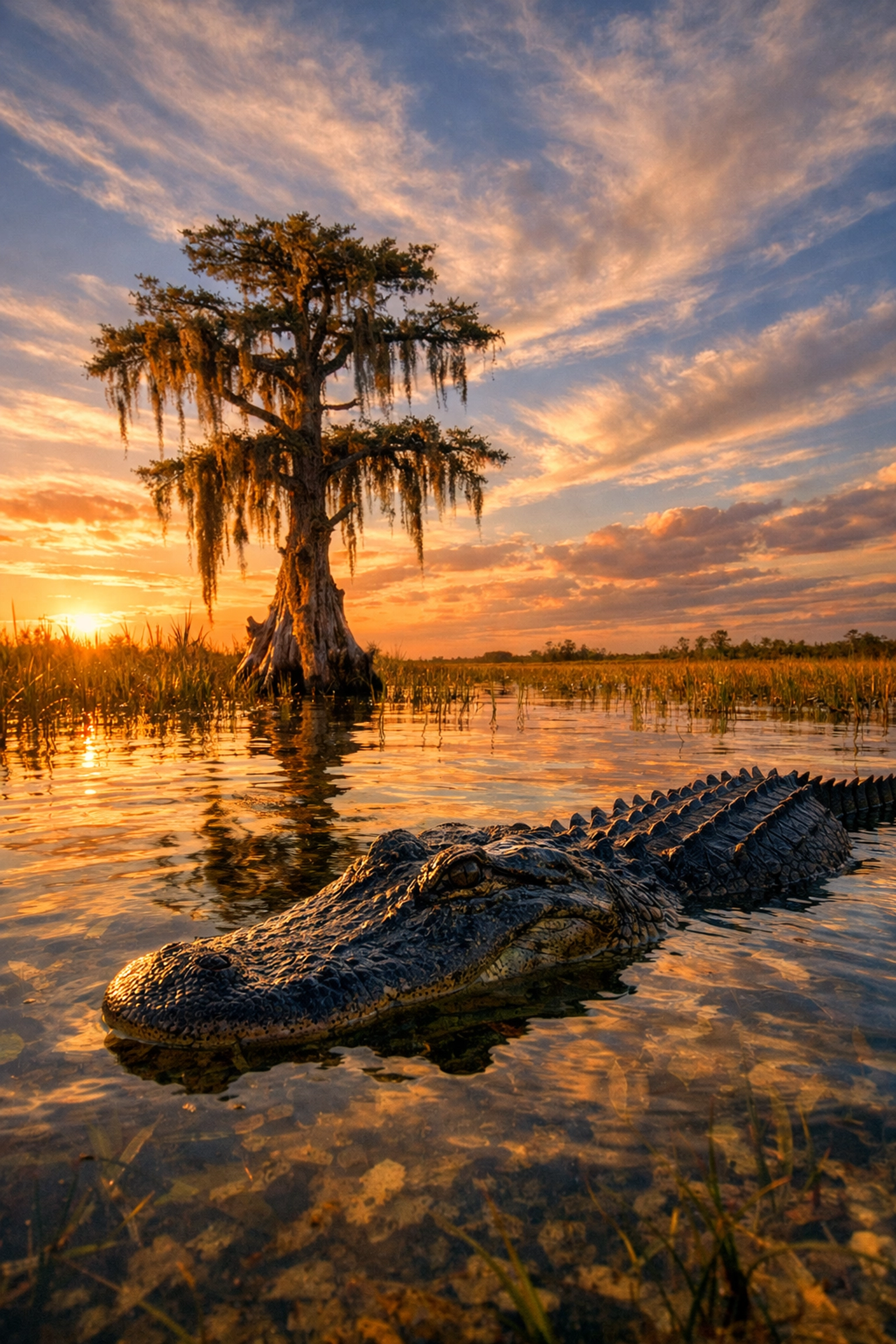
10) Make your Everglades tour better before you even arrive (simple prep)
A few small prep moves make a big difference:
- Set your camera to back-button AF (if you use it) and practice tracking birds at home.
- Know your baseline settings: start around 1/2000 for birds in flight, adjust from there.
- Bring lens cloths + rain protection: humidity, spray, and sudden showers happen.
- Scout your “Plan B” spots: if weather ruins a boat tour, you can still get great shots from accessible trails.
That last piece: having a real plan: is exactly why the Everglades Photography Guide exists. It’s a practical, photographer-first roadmap for the area (locations, timing, and what you can realistically photograph):
https://blog.edinchavez.com/product/everglades-photography-guide/
If you want more photography resources and guides in general, you can also explore https://www.blog.edinchavez.com and see fine-art wildlife/landscape work at https://www.edinfineart.com (helpful for visual inspiration when you’re planning your own shot list).
The bottom line: choose the tour that matches your shooting style
If you want calm, consistent keepers: go walking/boardwalk or a photographer-focused boat.
If you want a unique perspective: kayak.
If you want the thrill and scouting: airboat.
If you want the biggest leap in results: a workshop built around light, behavior, and shooting time.
And if you want to book smarter (and shoot smarter) without overthinking it, start here: https://blog.edinchavez.com/product/everglades-photography-guide/













