
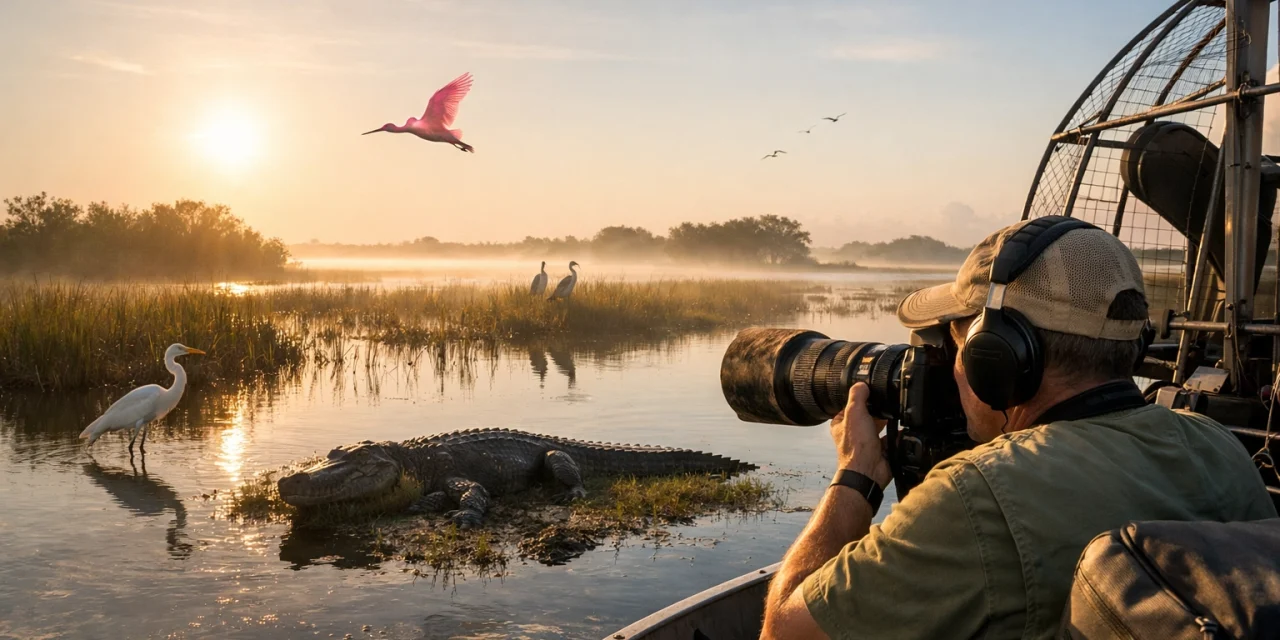
If you’ve ever scrolled through stunning images of a Great Blue Heron poised in golden light or an alligator’s eye peering through the duckweed, chances are those shots were taken in the Florida Everglades. It’s a place that feels prehistoric, a massive "River of Grass" that offers some of the most spectacular wildlife photography opportunities on the planet.
But here’s the thing: the Everglades is huge. It covers over 1.5 million acres of wetlands, sawgrass prairies, and mangrove forests. If you just drive in and hope for the best, you might end up with a few shots of a distant bird and a lot of mosquito bites. That’s why so many photographers opt for an Everglades wildlife photography tour.
Before you book your trip and pack your long lens, there are a few things you should know to make sure you get the shots you’re dreaming of. At Photoguides, we want to make sure your experience is as rewarding as possible. Whether you are a seasoned pro or just picking up a camera for the first time, here are 10 things you need to know about Everglades photography tours.
1. The Biodiversity is Mind-Blowing
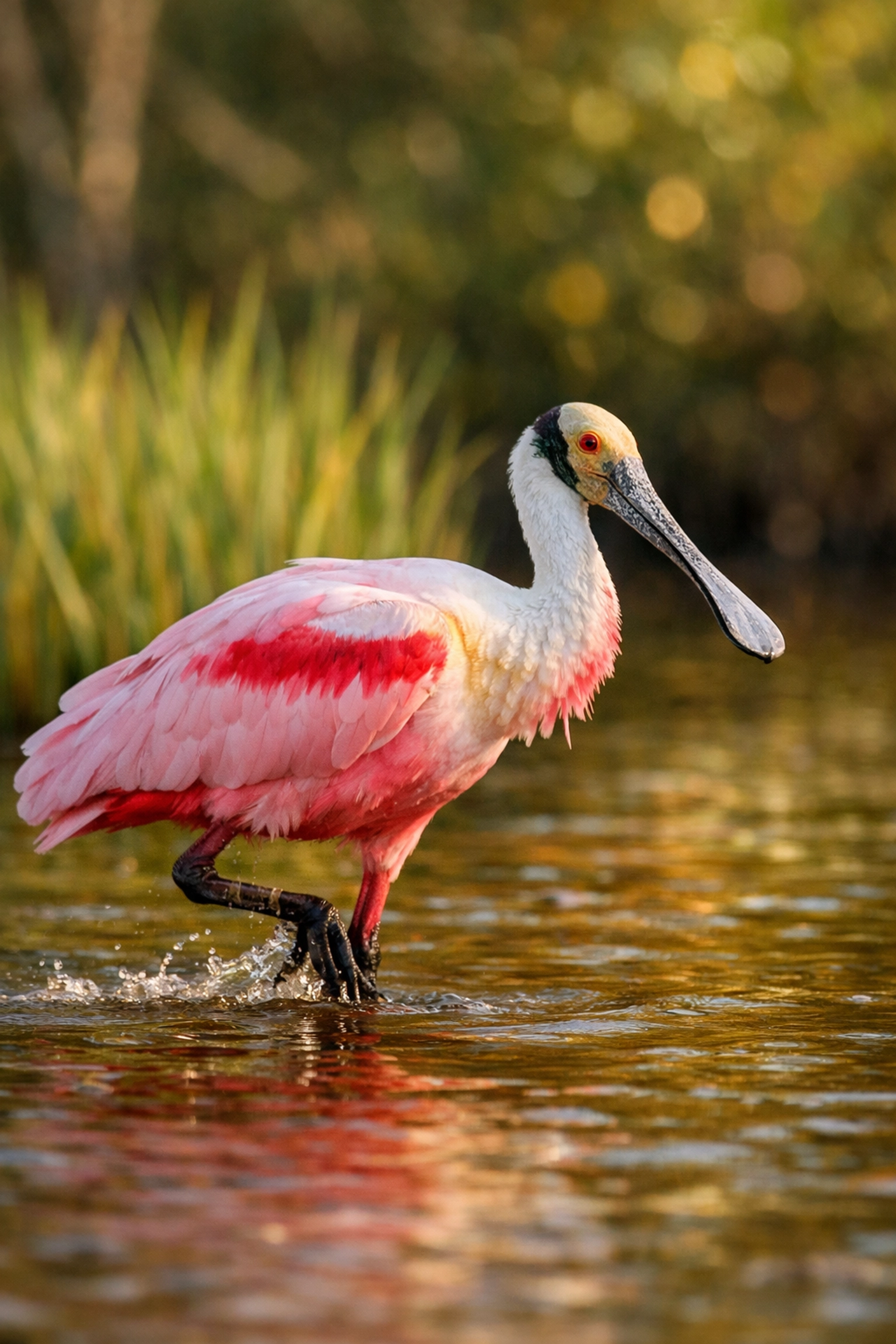
The Everglades isn’t just about alligators: though you’ll definitely see plenty of those. It’s a sanctuary for over 360 species of birds, including the iconic Roseate Spoonbill, Wood Storks, and various herons and egrets. If you’re lucky, you might even spot manatees, river otters, or the elusive Florida panther.
Because many of these animals are accustomed to humans in specific areas, you can often get remarkably close. We’re talking full-frame shots without needing a telescope-sized lens. Understanding the behavior of these animals is key, and a good tour guide will help you anticipate the action before it happens.
2. Timing is Everything: The Winter Advantage
If you’re looking for the best light and the most wildlife, winter is your season. From December through April, Florida experiences its "dry season." As the water levels drop, the wildlife congregates around the remaining deep-water holes. This makes spotting animals much easier.
Additionally, the weather is much more comfortable. The humidity drops, the temperatures are mild, and most importantly, the mosquitoes are far less aggressive. If you visit in the summer, you’ll be fighting heat and bugs, which can distract you from your craft. For more travel inspiration, check out our guide on cheap weekend getaways to plan your next trip.
3. Tour Pricing Reflects the Experience
When you start looking at tour options, you’ll notice a wide range in pricing. Short, 3-hour group excursions might start around $220, while private, multi-day intensive workshops can go upwards of $500 to $1,500 depending on the level of personalization.
You get what you pay for. A private tour means the boat stops exactly where you want, for as long as you want. If you’re serious about your portfolio, investing in a specialized photography safari is worth every penny. For those who want to master the area on their own terms, our Everglades Photography Guide is the perfect companion to help you navigate the best spots without the price tag of a private guide every day.
4. Specialized Boats are a Game Changer
A standard airboat tour is loud and fast: great for tourists, but terrible for photography. Professional photography tours use specialized vessels. These are often flat-decked pole boats or electric-powered skiffs that move silently through the water.
Stability is key. You want a platform where you can set up a tripod or a gimbal head without the boat rocking every time someone moves. These stable platforms allow you to capture sharp images even in the lower light of dawn and dusk.
5. You’re There for the Instruction, Not Just the Ride
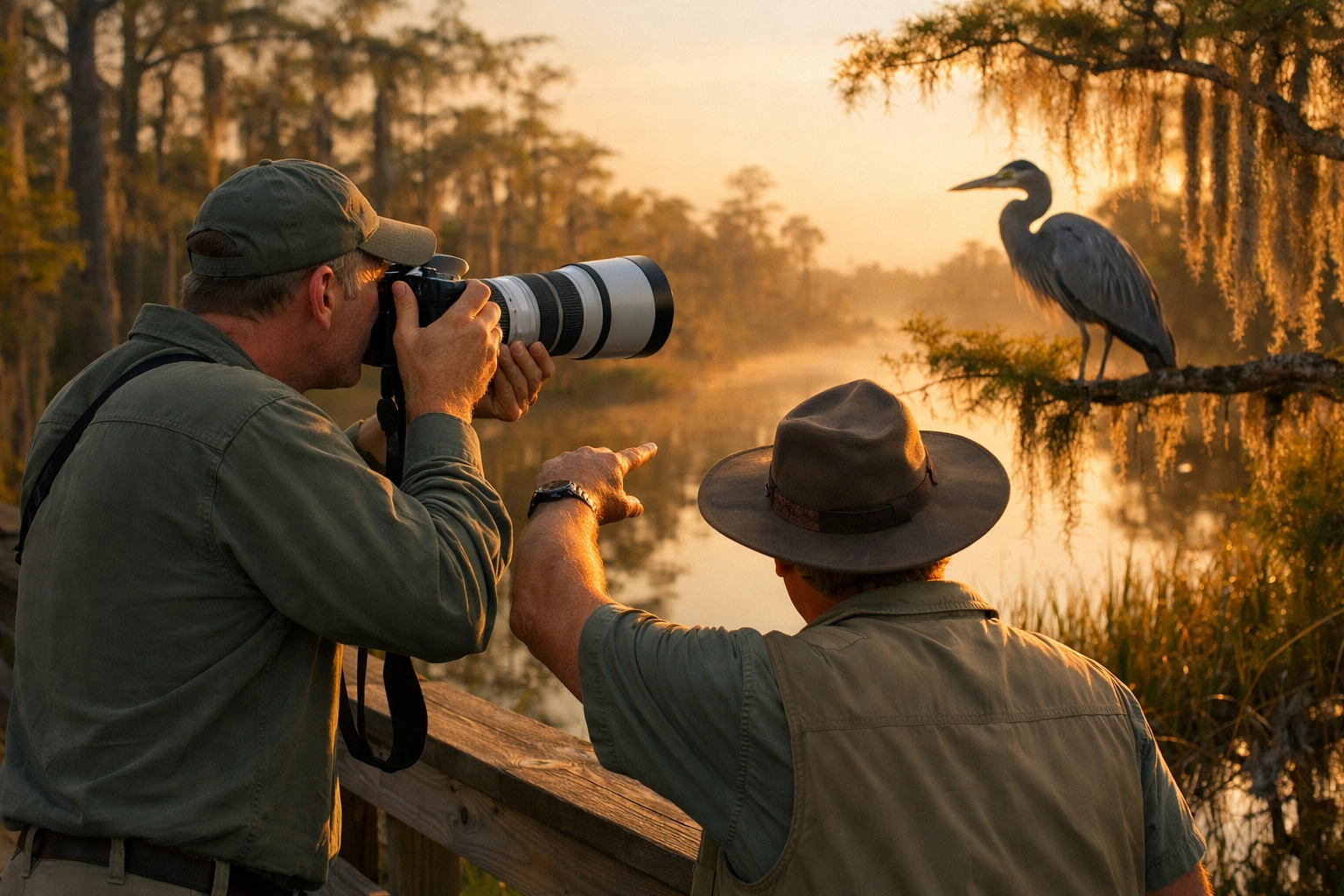
One of the biggest benefits of a photography-specific tour is the access to expert instruction. Many guides in the Everglades are professional photographers themselves with decades of experience in the Florida wilderness.
They won't just point at a bird; they’ll help you with your exposure settings, talk you through composition, and teach you how to track birds in flight. If you want to brush up on your skills before you head out, explore our educational category for more tips.
6. All Skill Levels are Welcome
Don’t feel intimidated if you aren't a "pro." Whether you’re shooting with the latest mirrorless flagship or a high-end point-and-shoot, a good guide will tailor their advice to your gear and your experience level.
The Everglades is a fantastic place to learn. The abundance of subjects means you have plenty of "tries" to get the settings right. If you’re curious about what gear is currently leading the pack, take a look at our camera reviews 2024 to see what’s trending.
7. The Everglades is More Than One Ecosystem
People often think the Everglades is just one big swamp. In reality, it’s a mosaic of habitats. A comprehensive tour might take you through Shark Valley’s sawgrass prairies, the cypress domes of Big Cypress National Preserve, or the coastal mangroves of the Ten Thousand Islands.
Each ecosystem offers different lighting and different subjects. The Anhinga Trail is world-famous for close-ups, while the Flamingo area is better for vast landscapes and crocodiles. To really understand how to navigate these diverse spots, I highly recommend checking out Edin Chavez’s blog for deep dives into specific Florida locations.
8. Pack for Success (Gear and Comfort)
What you bring can make or break your day. Here’s a quick checklist:
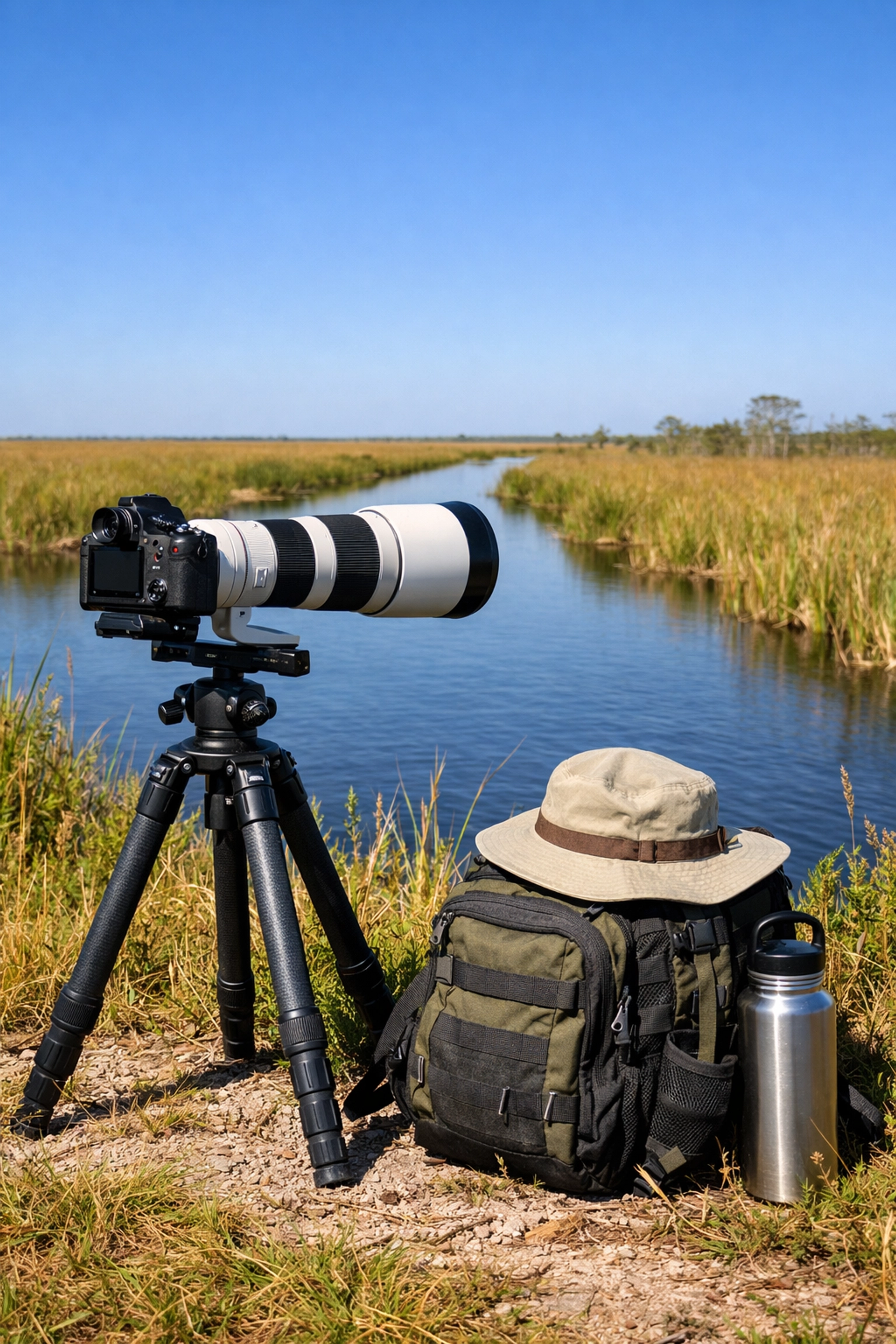
- Lenses: A versatile zoom (like a 100-400mm or 200-600mm) is ideal for wildlife, while a wide-angle is great for those epic Florida sunsets.
- Tripod/Monopod: Essential for low-light shots.
- Extra Batteries: The heat and constant autofocus can drain power quickly.
- Clothing: Think layers. It can be chilly at sunrise and roasting by noon. Wear closed-toe shoes and a hat.
For a full breakdown of what we recommend for any shoot, visit our essential photography gear page.
9. Small Groups Mean Better Photos
If you see a tour advertising 20 people on a boat, run the other way. In wildlife photography, silence and space are your best friends. The best tours limit their group size to 4-7 people, or even fewer for private safaris.
Small groups ensure that everyone has a clear line of sight and that the guide can provide one-on-one attention. It also reduces the "footprint" of the group, meaning you’re less likely to scare away the wildlife before you can get the shot. If you’re interested in how we handle professional bookings, you can read about our photography booking experience.
10. The Golden Hour is Non-Negotiable
Most professional tours start before the sun even comes up. Why? Because the "Golden Hour": that first hour of light: is magic in the Everglades. The light is soft, warm, and creates a beautiful glow on the feathers of the birds.
This is also when wildlife is most active. Birds are leaving their roosts to hunt, and alligators are moving to their morning basking spots. A tour that starts at 10:00 AM is a tour that has already missed the best action. If you love the look of dramatic skies, you might also find our sky overlays helpful for your post-processing.
Why You Need the Everglades Photography Guide
Taking a tour is a fantastic way to see the park, but if you really want to master the Everglades on your own schedule, you need the right intel. Our Everglades Photography Guide is designed to be your ultimate resource.
It covers everything from specific GPS coordinates of the best "secret" spots to seasonal birding charts and technical advice for shooting in the unique Florida light. It’s the result of years of trekking through the muck and waiting for the perfect light. Whether you use it to prepare for a tour or as your solo roadmap, it’s the best investment you can make for your Florida trip.
Ready to Capture the Wild?
The Everglades is a place of mystery, beauty, and raw nature. It can be challenging, but the rewards are unlike anything else in the world of photography. By knowing what to expect from a tour and coming prepared with the right knowledge and gear, you’ll walk away with more than just photos: you’ll have stories to tell for a lifetime.
If you’re looking for more inspiration or want to see the kind of fine art that can be produced in these wild places, take a look at Edin Fine Art. Seeing the possibilities is the first step toward creating your own masterpieces.
Safe travels, and happy shooting! We can't wait to see what you capture in the River of Grass. For more reviews and tips, don't forget to browse our reviews category to stay up to date on the latest industry standards.













