
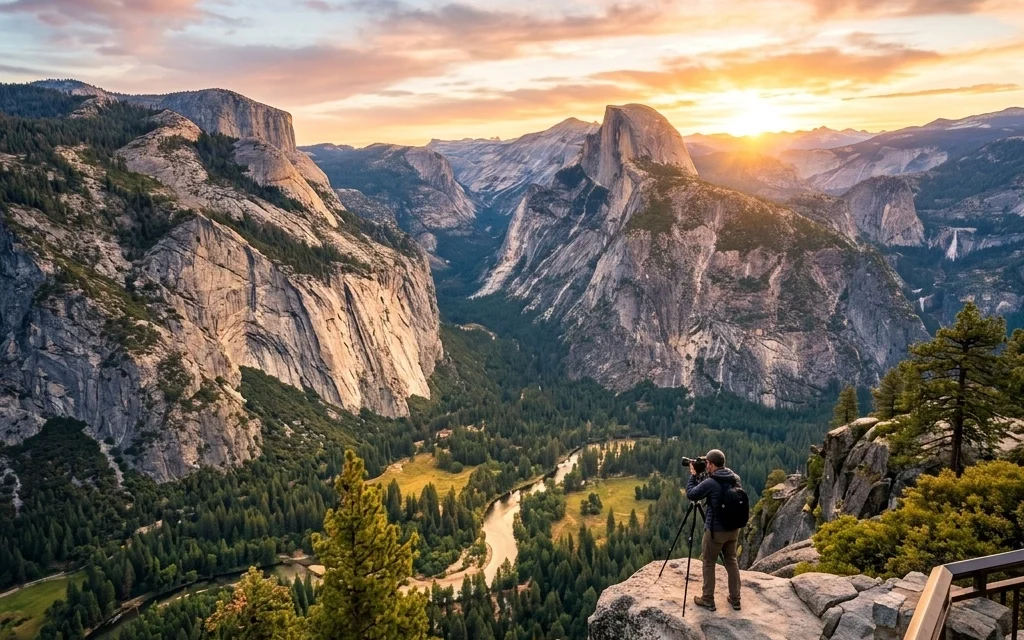
There is something deeply spiritual about standing on the edge of a canyon or deep within a temperate rainforest, camera in hand, waiting for that perfect sliver of light to hit the horizon. If you’re anything like me, you’ve probably spent hours scrolling through maps and Instagram feeds trying to find the best photography locations to fill your portfolio.
The United States National Park system is arguably the greatest gift to landscape photographers. From the jagged peaks of the Tetons to the ethereal "sailing stones" of Death Valley, there are 63 unique playgrounds waiting for your lens. As we kick off this comprehensive series on all 63 parks, I want to share the most iconic, "bucket-list" spots that every photographer needs to experience at least once.
Whether you’re a seasoned pro or just starting your journey, this guide will help you find the best sunrise spots and the most dramatic landscape photography locations in the country.
The Southwest: A Study in Red Rock and Light
The American Southwest is home to some of the most recognizable landscapes on the planet. This is where light and shadow play a high-stakes game every single morning.
Arches National Park, Utah
Arches is a playground for wide-angle lovers. The most iconic spot is, of course, Delicate Arch. While most people hike up for sunset, I actually prefer the soft, subtle gradients of the rock at sunrise. If you’re looking for those rich, fiery oranges, head to the Windows Section or Balanced Rock during the golden hour. For the night owls, Arches is an International Dark Sky Park, making it one of the premier landscape photography locations for capturing the Milky Way arching over a natural stone bridge.
Bryce Canyon National Park, Utah
Don't let the name fool you: Sunset Point is actually one of the best sunrise spots in the park. Watching the sun crest over the horizon and illuminate the thousands of orange hoodoos from the top down is a core memory for any photographer. Inspiration Point offers a wider perspective of the amphitheater, while Bryce Point provides a deeper look into the maze of fins and spires.
Zion National Park, Utah
Zion is all about scale. If you’re brave enough to tackle the heights, Angels Landing offers a view like no other, but for the classic "Zion shot," head to the Canyon Overlook Trail at sunrise. If you want that iconic glowing red wall, the Watchman Overlook at sunset is where you need to be.
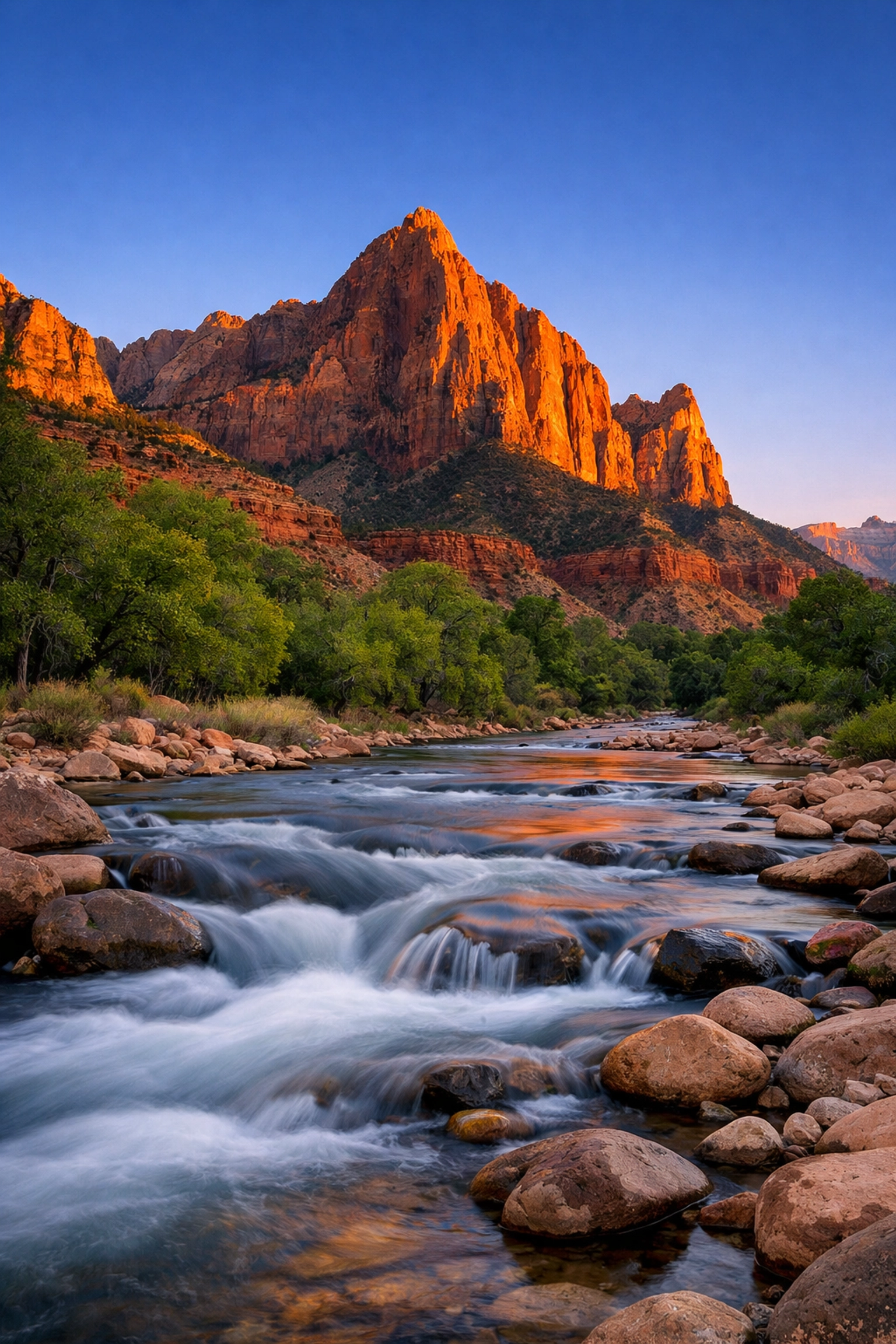
Alt Text: An ultrarealistic wide-angle shot of the Watchman at Zion National Park during sunset, with the Virgin River flowing in the foreground and the peaks glowing in deep orange and red hues.
The East Coast: Granite Peaks and Atlantic Sunrises
While the West gets a lot of the glory, the East Coast holds its own, especially when the seasons change.
Acadia National Park, Maine
Acadia is the crown jewel of the North Atlantic. Cadillac Mountain is famous for being one of the first places in the U.S. to see the sunrise during certain parts of the year. The pink granite rocks reflecting the early morning light are a dream to shoot. For something more moody, head to Bass Harbor Head Lighthouse during the blue hour. The way the waves crash against the jagged rocks provides a perfect foreground for long-exposure shots.
If you’re planning a trip to Maine or any of these coastal spots, make sure you have the right tools. I often use specialized sky overlays to enhance those gray, overcast Atlantic mornings when the sun refuses to peek through.
The Desert Frontiers: Joshua Tree and Death Valley
The desert isn't just empty space; it’s a masterclass in minimalism and texture.
Joshua Tree National Park, California
The Cholla Cactus Garden at sunrise is nothing short of magical. The way the light catches the needles of the cacti makes them look like they are glowing from within. For a more classic desert vibe, Arch Rock and Keys View provide expansive vistas that really capture the "Old West" feel. If you're looking for more inspiration on how to capture these unique textures, check out some of my work at Edin Fine Art.
Death Valley National Park, California
Death Valley is a land of extremes. Zabriskie Point is the place to be for sunrise; the golden ripples of the badlands look like a frozen stormy sea. For those looking for something truly unique, the Mesquite Flat Sand Dunes offer endless opportunities for abstract photography, especially when the low sun creates long, dramatic shadows across the ripples.
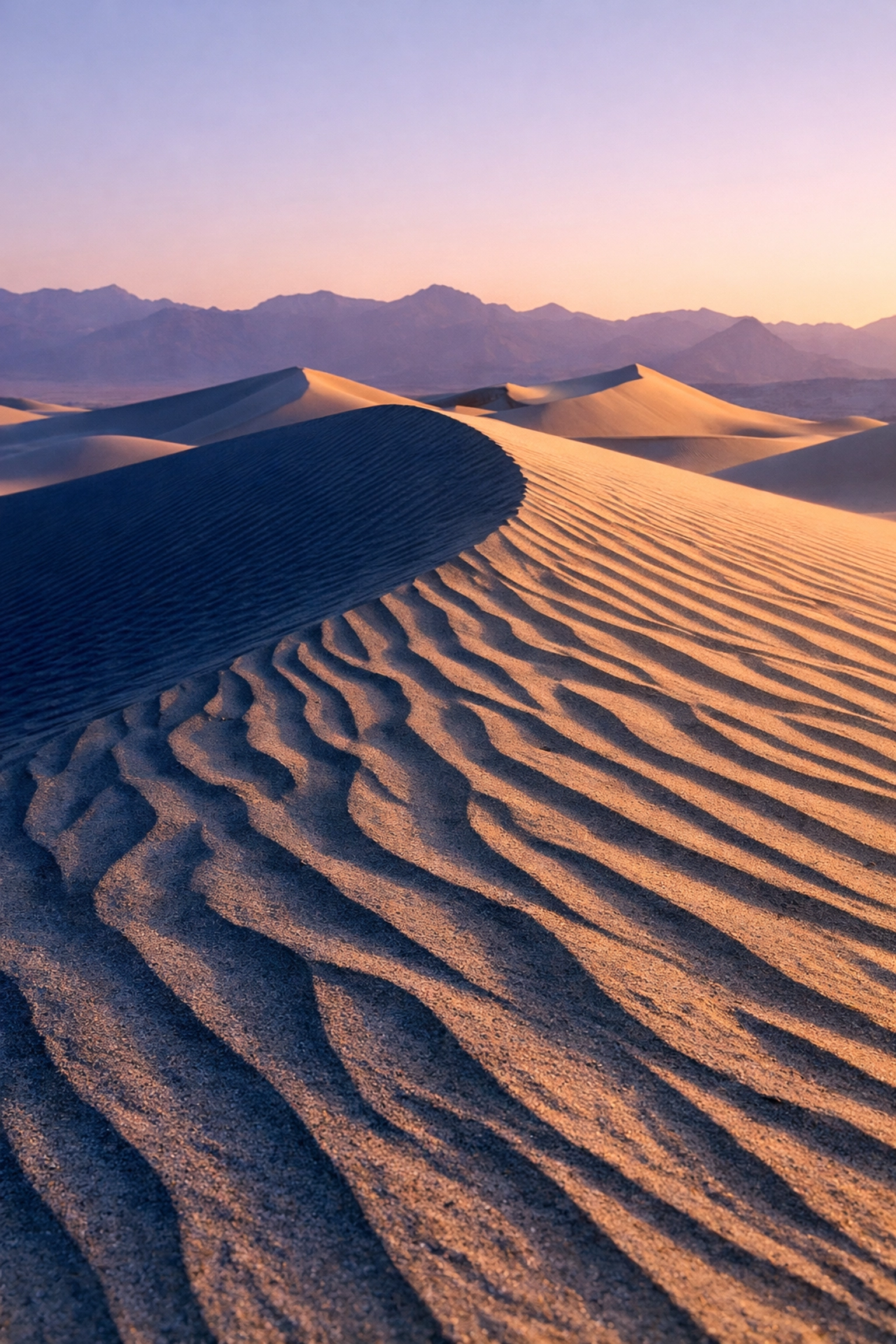
Alt Text: A breathtaking ultrarealistic shot of the Mesquite Flat Sand Dunes in Death Valley at dawn, showing intricate sand ripples and deep shadows with the purple mountains in the distant background.
The Florida Wilderness: More Than Just Swamps
People often overlook Florida when talking about National Parks, but that's a mistake.
Everglades National Park, Florida
The Everglades is a wildlife photographer’s paradise. The Anhinga Trail is arguably the best spot for close-up shots of alligators and exotic birds. If you're looking for landscapes, the Pa-hay-okee Overlook gives you a sense of the "River of Grass" that defines this ecosystem. Capturing the humidity and the lush greens requires a bit of a different approach to post-processing, which we often discuss over at Shut Your Aperture.
Tips for the Ultimate National Park Photo Trip
Going to these locations is only half the battle. To really come home with "wall-worthy" shots, you need to be prepared.
- Gear Matters: You don't need the most expensive camera, but you do need the right accessories. A sturdy tripod is non-negotiable for sunrise and sunset. I’ve put together a list of essential photography gear that I never leave home without.
- Timing is Everything: Use apps to track the sun’s position. The difference between a "good" shot and a "great" shot is often just five minutes of light.
- Research the Conditions: Every park has its quirks. For example, some roads in Glacier National Park don't open until late June. I always recommend checking out my deeper dives into specific parks on the Edin Chavez Blog before you book your flights.
- Consider a Pro Experience: If you really want to level up your skills while visiting these spots, looking into a photography booking experience can save you years of trial and error. Having a pro guide you to the exact spot at the exact time is a game-changer.
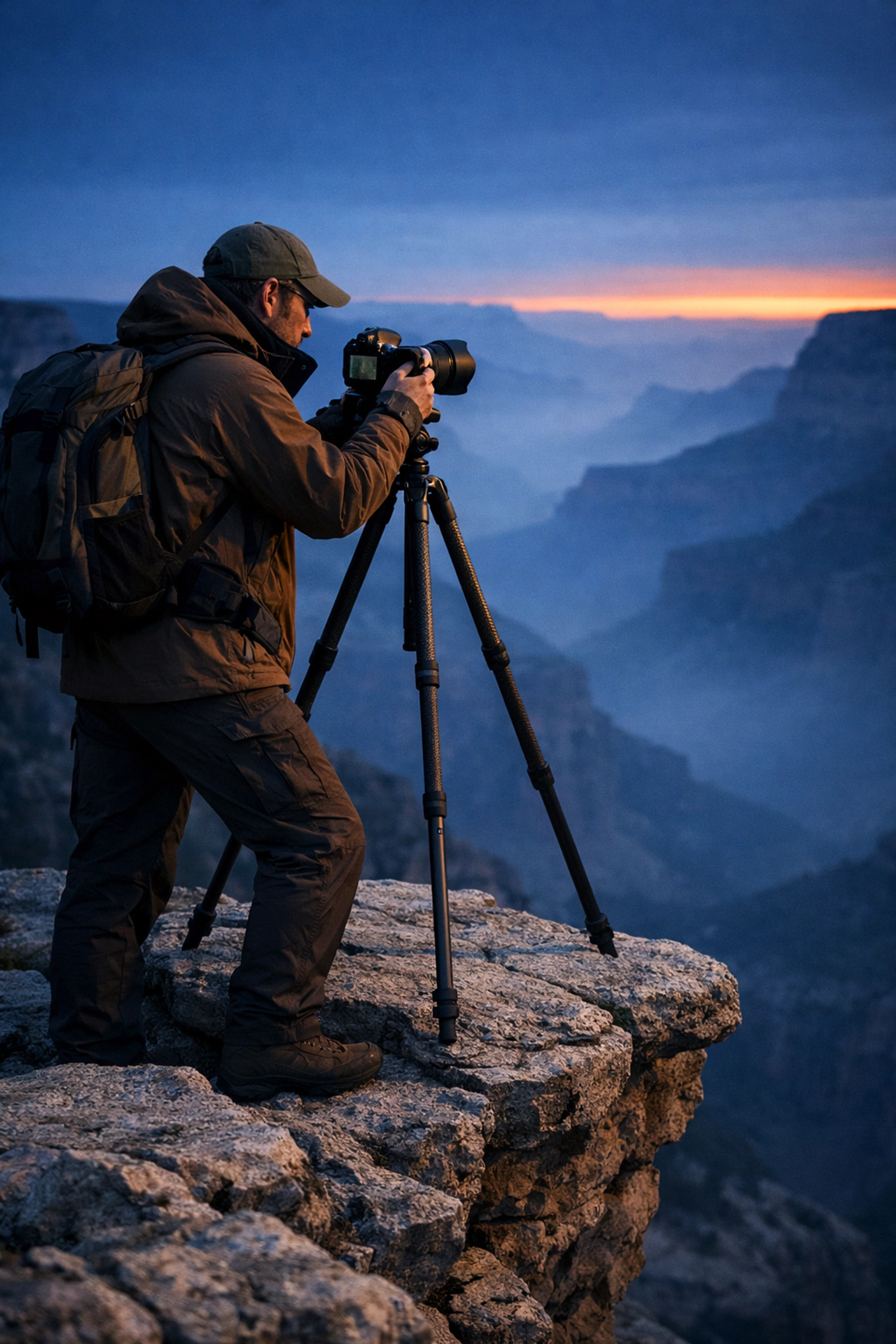
Alt Text: A professional photographer setting up a tripod on a rocky ledge overlooking a vast canyon during the blue hour, symbolizing the preparation needed for high-end landscape photography.
The Remote Wonders: Alaska and Beyond
While the "lower 48" have incredible spots, the parks in Alaska like Denali and Gates of the Arctic offer a scale that is hard to wrap your head around. In Denali, shooting Wonder Lake with the reflection of the mountain is a rite of passage for landscape photographers. These remote areas require significantly more planning, but the rewards are unmatched solitude and raw, untouched beauty.
Final Thoughts
The journey to photograph all 63 National Parks isn't just about the photos; it’s about the connection you build with the land. Whether you are capturing the first light on Cadillac Mountain or the last light on the Watchman, these moments remind us why we picked up a camera in the first place.
Stay tuned as we continue this series, breaking down every single park in the system with specific coordinates, gear recommendations, and more travel tips. In the meantime, if you're looking for more educational content to hone your craft, head over to our educational category.
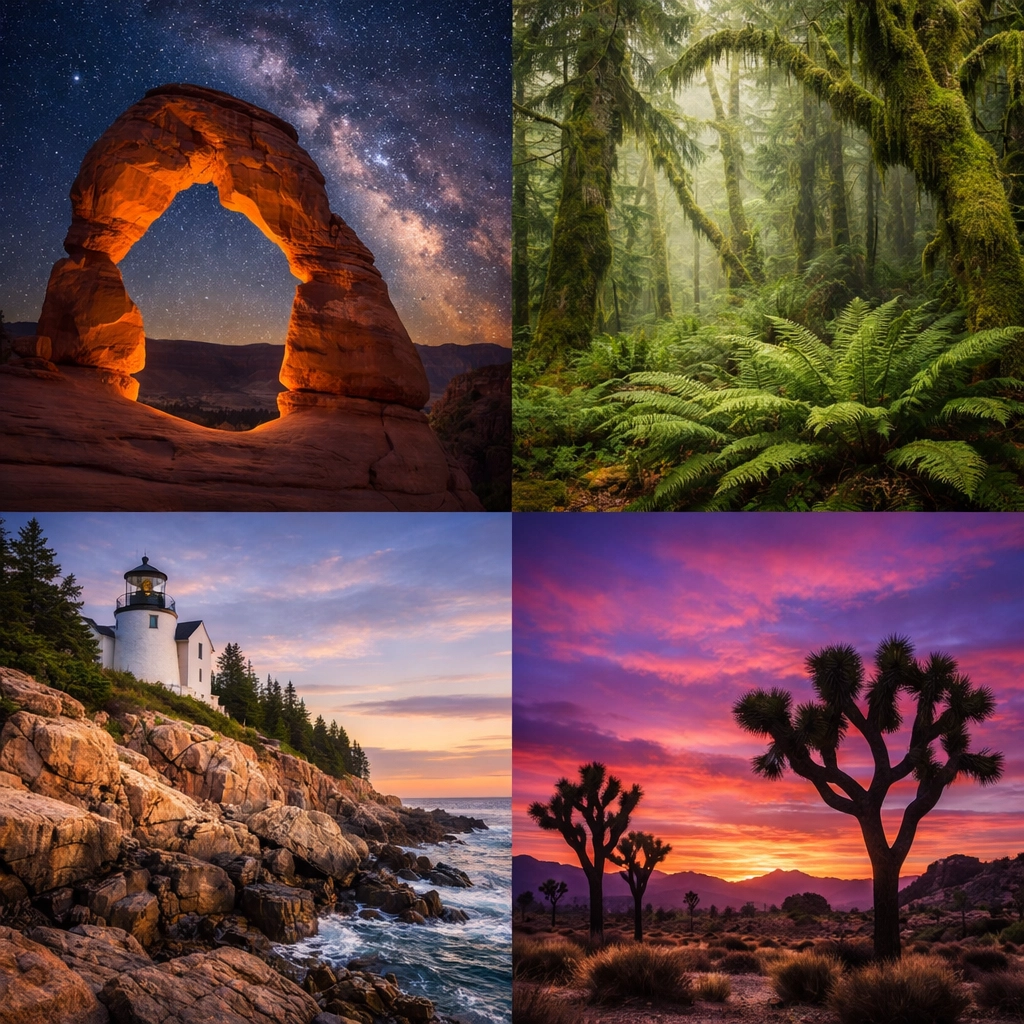
Alt Text: A collage of four distinct National Park landscapes: the red arches of Utah, the lush green forests of the Pacific Northwest, the granite peaks of Maine, and the desert dunes of California.
Now, grab your gear, check your batteries, and I’ll see you out there on the trails! Remember, the best photography locations are the ones where you feel the most inspired. Happy shooting!













