
Category: Photo Guides
If you’ve ever stood at the edge of the Florida Everglades, you know it’s a place that feels ancient, vast, and maybe a little bit intimidating. To the untrained eye, it looks like a never-ending field of grass. But for those of us with a camera in hand, it’s a sprawling treasure chest of biodiversity, dramatic light, and some of the most prehistoric-looking wildlife on the planet.
As the CEO of Photoguides and someone who has spent countless hours navigating these marshes, I can tell you that the Everglades is one of my favorite places to shoot. But it’s not the kind of place where you can just hop out of your car and find a masterpiece in five minutes. You need a plan.
Whether you’re coming for a dedicated wildlife photography tour or you’re just a weekend warrior with a passion for birds, here are 10 things you absolutely need to know to find the best photography locations in the Everglades.
1. The Anhinga Trail is the Ultimate "First Stop"
If you only have half a day in the park, the Anhinga Trail at Royal Palm is where you go. It’s located near the Homestead entrance and is basically a photography playground. Because the wildlife here is used to the boardwalk, you can get incredibly close to anhingas (obviously), herons, egrets, and more alligators than you can count.
The trick here is to arrive before the sun does. Early morning light hitting the mist over the sawgrass marsh is pure magic. This is where you’ll get those classic shots of an anhinga drying its wings with a soft, golden background. If you want to dive deeper into the technical settings for this trail, my Everglades Photography Guide breaks down exactly how to handle the high-contrast light often found here.
2. Timing Isn't Just Everything, It’s the ONLY Thing
In the Everglades, the light changes faster than you’d think. Different locations excel at very specific times of the day. For example:
- Sunrise: Head to Anhinga Trail or the Pahayokee Overlook. The overlook gives you an unobstructed view of the "River of Grass," which turns shades of purple and gold as the sun breaks the horizon.
- Mid-Day: This is usually "scouting time," but if you must shoot, head into the shadows of Mahogany Hammock where the canopy provides some relief from the harsh sun.
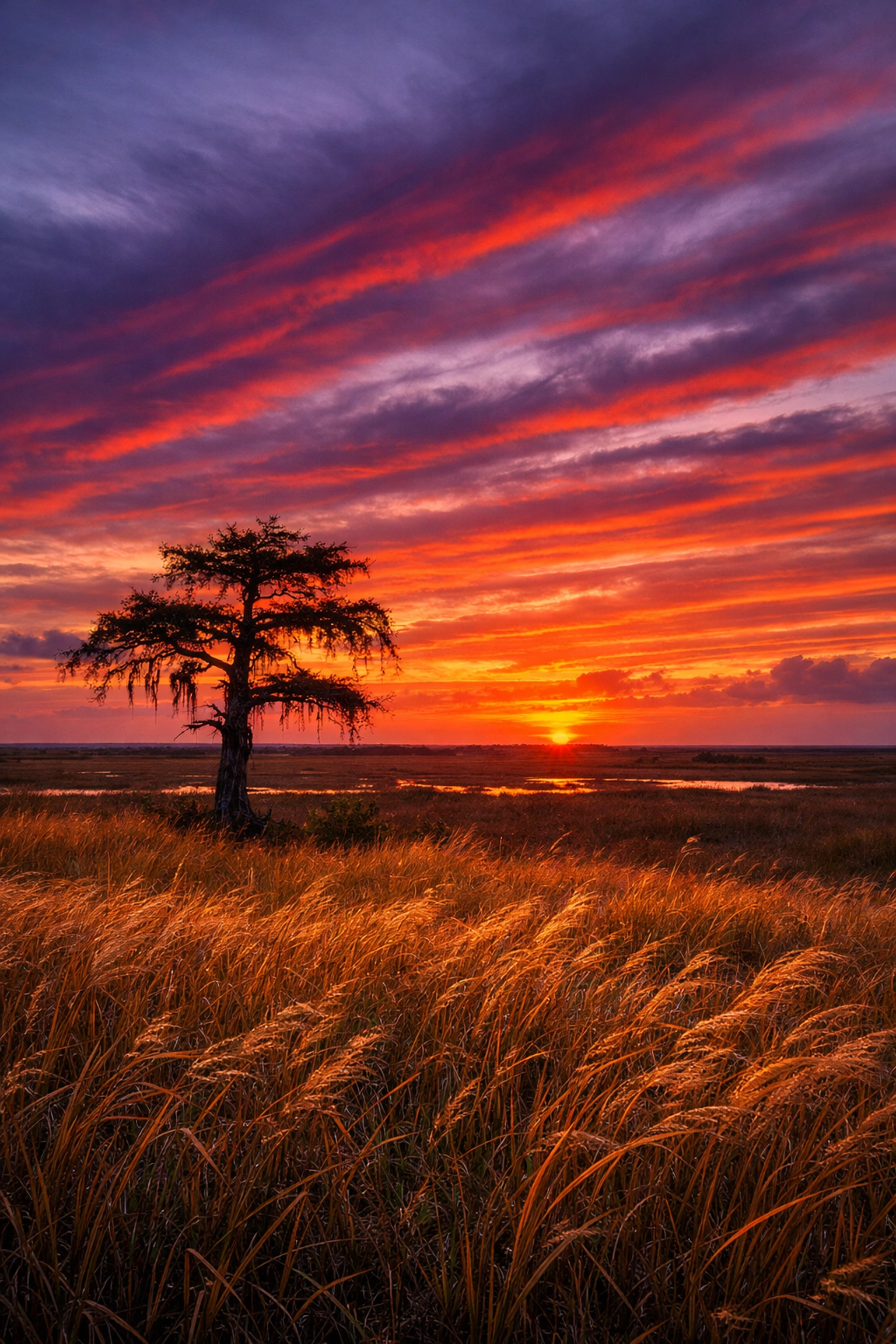
- Sunset: Sisal Pond and Pahayokee Trail are your best bets. The cypress trees create dramatic silhouettes against the fiery Florida sky.
3. Shark Valley: The Panoramic Powerhouse
Located on the Tamiami Trail, Shark Valley offers a 15-mile loop that is fantastic for wide-angle landscape shots and bird-in-flight photography. You can rent a bike or take the tram, but for photographers, I always recommend the bike. It allows you to stop exactly where the action is.
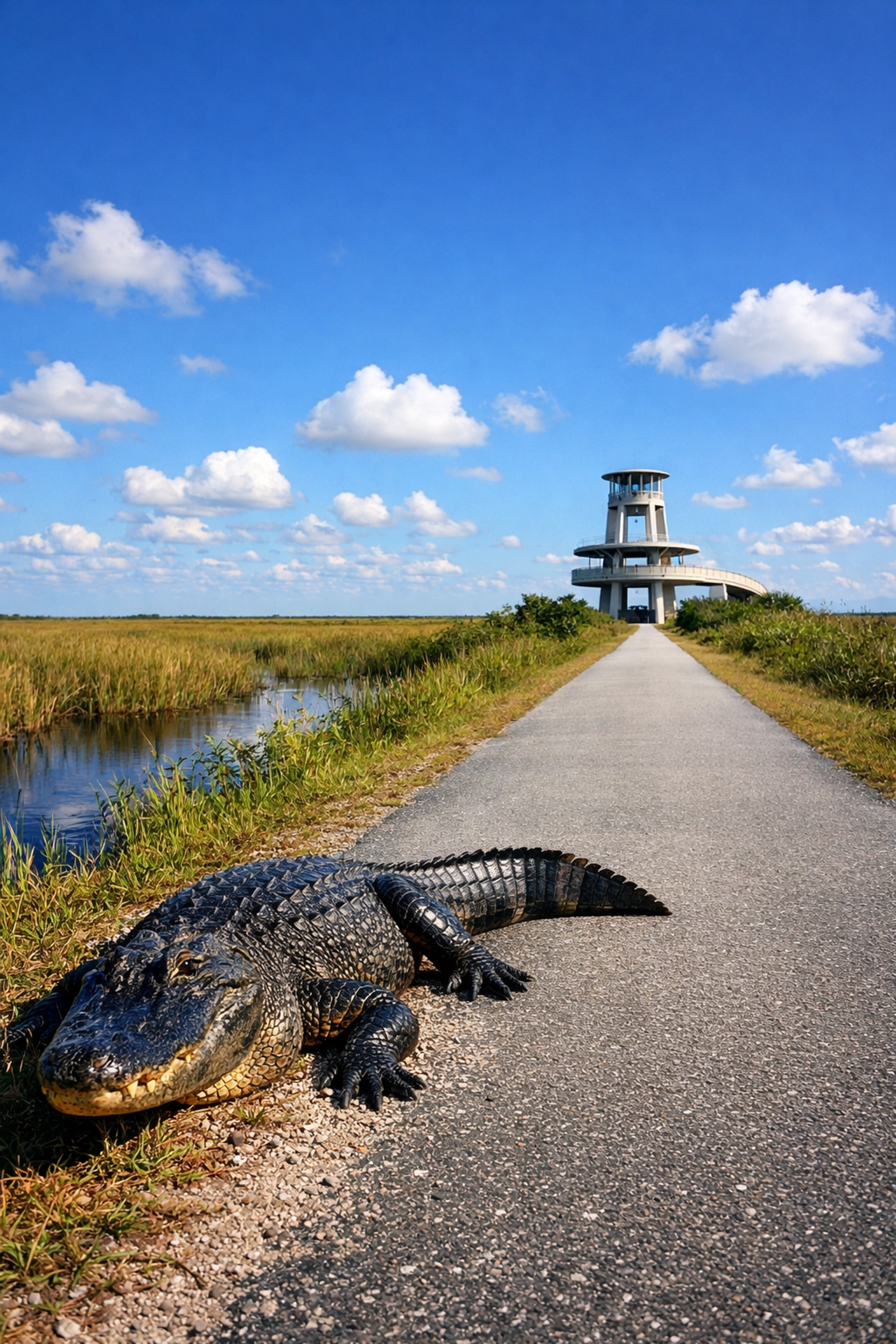
The observation tower at the halfway point gives you a bird’s-eye view of the ecosystem. It’s a great spot to practice your panoramas. Just be prepared, alligators love to sunbathe right on the asphalt path. They won't bother you if you don't bother them, but they certainly make for a great foreground element!
4. Big Cypress is the Everglades’ Rugged Cousin
Technically a separate preserve, Big Cypress National Preserve is right next door and offers a completely different vibe. If the Everglades is about open sawgrass, Big Cypress is about moody cypress domes and rare orchids.
I love taking my workshops down the 24-mile Loop Road or Turner River Road. It’s much less crowded than the main park, giving you the solitude to wait for a Barred Owl to blink or a Florida Panther to (maybe!) cross the road. For fine art lovers, the textures of the cypress bark and the dark swamp water make for incredible black-and-white conversions. You can see some of my favorite fine art examples at Edin Fine Art.
5. You Need to Choose Your Glass Wisely
The Everglades is a lens-heavy environment. If you’re shooting at Rock Reef Pass, you’ll want a 150-600mm telephoto to reach those American White Ibis. However, if you’re at Sisal Pond during sunset, a wide-angle is non-negotiable.
I always suggest bringing a 70-200mm as your "workhorse" lens. It’s versatile enough for wildlife that is close (like on the Anhinga Trail) but also lets you compress landscape layers. For a full list of what I carry in my bag, check out our guide on essential photography gear and join the discussion over at Shut Your Aperture to see what other pros are using this season.
6. The Water Perspective: Nine Mile Pond
To really "get" the Everglades, you have to get off the land. Nine Mile Pond offers a canoe and kayak trail that takes you through mangrove tunnels and open prairies. Photographing from a kayak gives you a low-angle perspective that makes your wildlife shots look much more intimate.
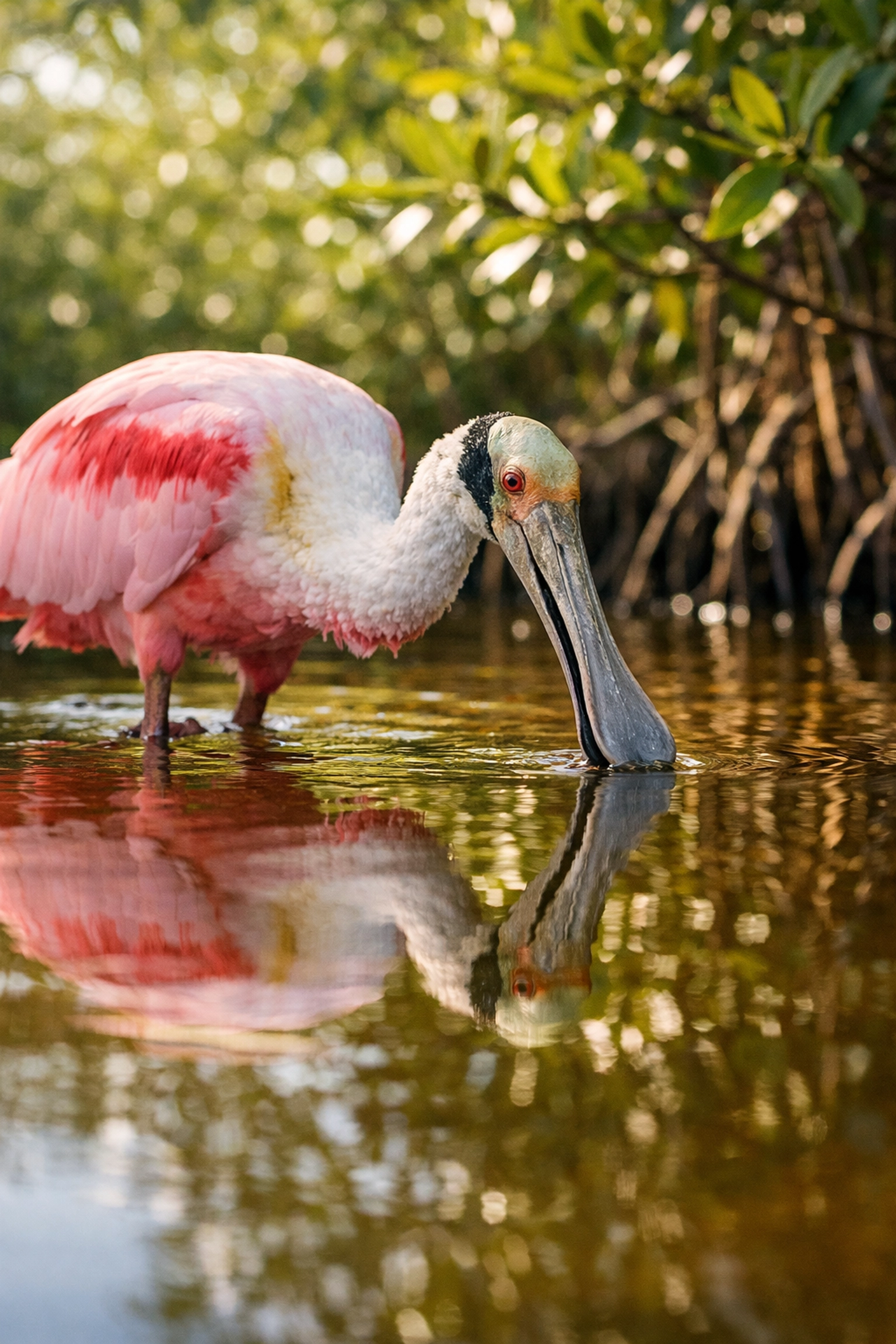
Imagine being eye-level with a Roseate Spoonbill as it sifts through the water. It’s a game-changer. Just make sure you have a good dry bag for your gear, accidents happen, and salt-brackish water is not a camera’s friend!
7. Hunting for Specific Species
Not every bird is everywhere. If you have a "shot list," you need to know where to go:
- Roseate Spoonbills: Your best bet is Eco Pond near the Flamingo area, especially during the dry season.
- Barred Owls: Look deep into the branches at Mahogany Hammock. Their camouflage is incredible, so move slowly and listen for their distinctive "who-cooks-for-you" call.
- Purple Gallinules: These colorful beauties love the lily pads along the Anhinga Trail.
- Snail Kites: Often seen over the marshes along Tamiami Trail.
8. The "Cheat Code": Wakodahatchee Wetlands
Okay, this one is a bit of a local secret. While it’s technically in Delray Beach and not inside the National Park boundaries, Wakodahatchee is built on a series of percolation ponds that attract every bird in South Florida.
If you’re frustrated by the vastness of the Everglades, come here. The boardwalk puts you inches away from nesting herons and wood storks. It’s the perfect place to warm up your skills before heading into the wilder parts of the park. If you're looking for more photography tips and location deep-dives, browse through Edin’s photography blog.
9. Landscape Is More Than Just Grass
Many photographers overlook the "landscape" aspect of the Everglades because it’s so flat. But the beauty is in the details and the sky. Use the dramatic Florida clouds as a focal point. Use the leading lines of a boardwalk or the "finger glades" to create depth.
Pahayokee Overlook is particularly great for this. The way the dwarf cypress trees dot the horizon creates a sense of scale that is hard to find anywhere else. If you want to learn how to edit these sky-heavy shots to make them pop, we have some great sky overlays and tutorials available.
10. Respect the Seasons (and the Bugs)
The Everglades has two seasons: Wet and Dry.
- Dry Season (November – April): This is the best time for photography. As the water levels drop, wildlife congregates around the remaining deep-water holes, making them very easy to find. Plus, the mosquitoes aren't trying to carry you away.
- Wet Season (May – October): It's hot, it's buggy, and the wildlife disperses because water is everywhere. However, the afternoon thunderstorms create some of the most epic, moody landscapes you’ll ever see.
If you choose the wet season, bring the strongest bug spray you can find and plenty of water. It’s a challenge, but the rewards are unique.
Ready to Master the Marsh?
The Everglades is a place that rewards patience and preparation. You can spend a lifetime here and still find something new every morning. But if you're visiting for a short time and want to make sure you don't miss the "money shots," I highly recommend grabbing a copy of my Everglades Photography Guide.
It’s the culmination of years of shooting in these swamps, packed with GPS coordinates, specific gear recommendations for each spot, and the best times of year to catch elusive species. Don't leave your trip to chance: know exactly where to stand to get the shot.
Happy shooting, and I’ll see you out in the glades!













