
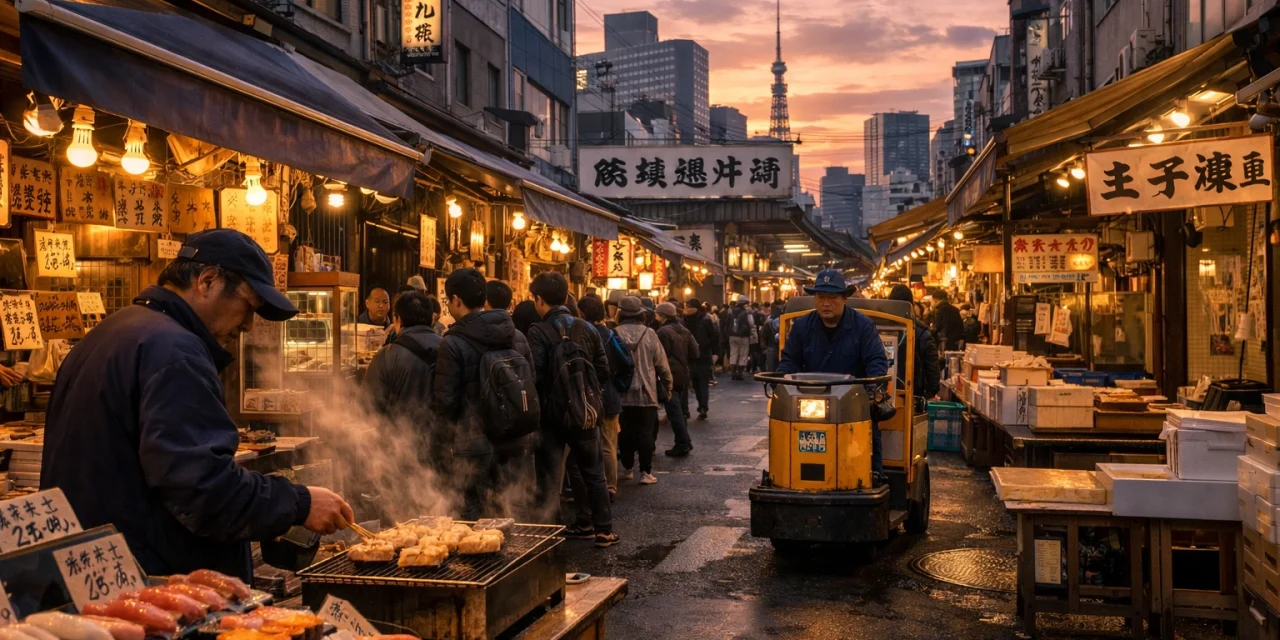
Welcome back to day four of our 14-day deep dive into the culinary heartbeat of Tokyo. If you joined us yesterday, we were busy dodging neon lights in Akihabara's themed cafes. Today, we’re trading the glow of arcade screens for the pre-dawn mist of the Tsukiji Outer Market.
I know what you’re thinking: "Edin, it’s 4:30 AM. Why am I standing on a street corner in Chuo City when I could be dreaming about ramen?" Because, my friend, the best bites in Tokyo don't wait for your alarm clock. While the famous inner wholesale market moved to Toyosu years ago, the Tsukiji Outer Market remains the spiritual (and literal) home of Tokyo street food. It’s gritty, it’s chaotic, and it’s delicious.
But before you charge into the narrow alleys with your camera swinging, there are a few things you need to know to navigate this seafood labyrinth like a local. Here are 10 things you should know before the sun even thinks about hitting the horizon.
1. The Inner Market Moved, But the Soul Stayed
Let’s clear up the biggest misconception first. Yes, the famous tuna auction moved to Toyosu in 2018. However, the Outer Market (Jogai Shijo) stayed put. This is where the retail magic happens. You’ll find over 400 stalls packed into a few square blocks, selling everything from $500 knives to $5 sea urchin buns. It’s a sensory overload that requires a bit of strategy.
If you’re feeling overwhelmed by the sheer scale of it, I highly recommend booking a food tour through Viator. Having a local guide explain exactly what’s in that mystery skewer makes the experience much more reassuring.
2. The 5:00 AM Golden Rule
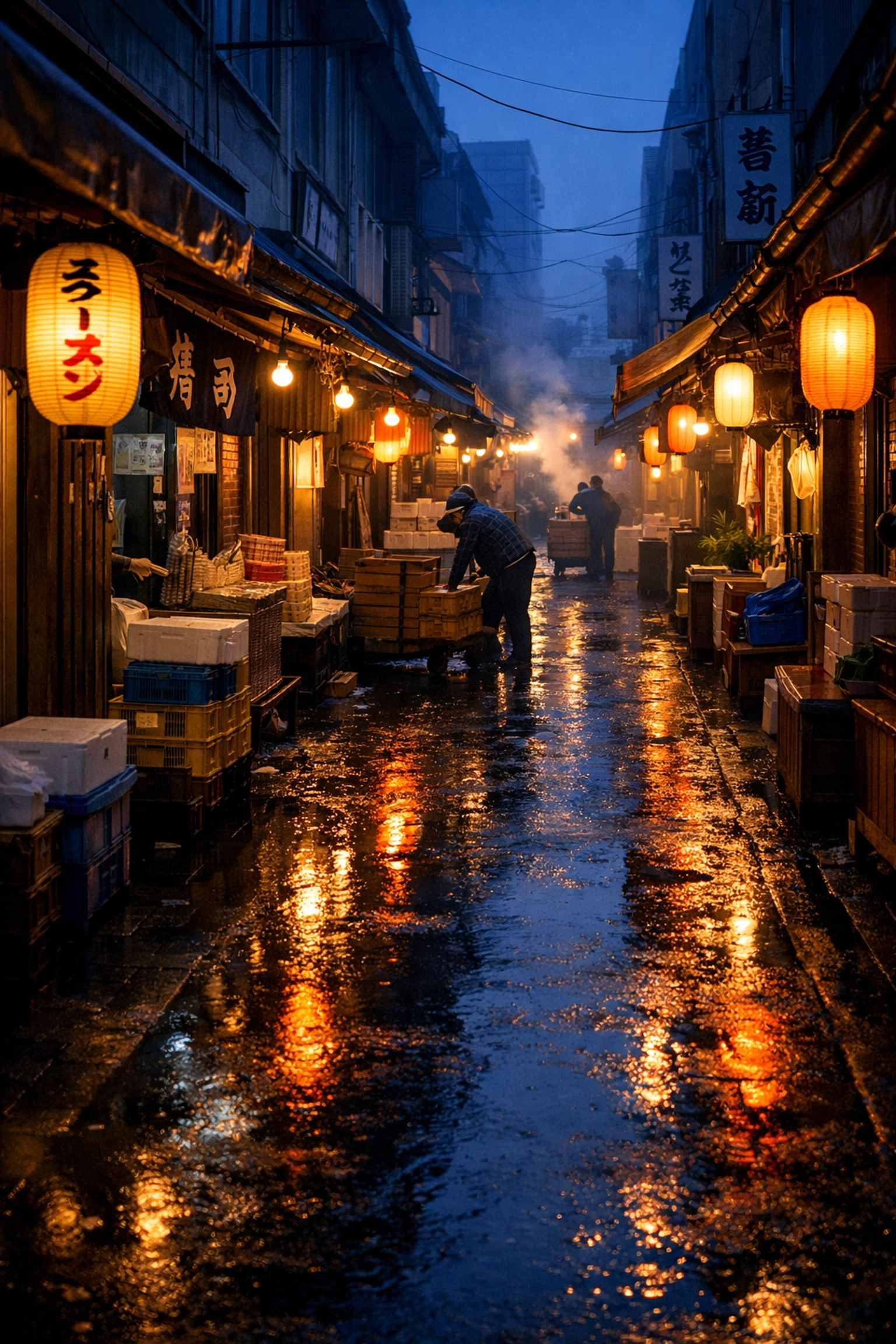
If you show up at 10:00 AM, you’re not visiting Tsukiji; you’re visiting a crowded tourist attraction. To see the market in its rawest form: vendors shouting, local chefs sourcing their daily catch, and the freshest seafood hitting the stalls: you need to be there early.
Places like Onigiriya Marutoyo open their doors at 5:00 AM. Arriving before sunrise gives you that quiet, blue-hour atmosphere that is a dream for photography. Speaking of which, if you’re looking to capture these moments, make sure you check out my guide on essential photography gear before you pack your bag.
3. Seek Out the "Uni Bun" at Maruichi Hamada Shoten
If you think you don’t like sea urchin (uni), the Uni Bun at Maruichi Hamada Shoten might just change your life. It’s a black, squid-ink-infused steamed bun filled with a creamy Japanese white sauce and topped with fresh, briny sea urchin. It’s rich, buttery, and surprisingly approachable for those who are a bit squeamish about raw seafood. At around 860 yen, it’s a luxury bite that fits in the palm of your hand.
4. The "Offal" Truth About Kitsuneya
There is a permanent line at Kitsuneya, and for good reason. They specialize in horumon-don: a bowl of steaming rice topped with beef offal simmered in a dark, rich Hachinohe miso. It’s hearty, salty, and exactly what you need on a chilly Tokyo morning. Don’t let the word "offal" scare you off; this is soul food at its finest. Just look for the giant iron pot bubbling away at the front of the stall.
5. Tamagoyaki is the Breakfast of Champions
You’ll see several stalls with windows looking onto the street where masters are flipping rectangular yellow omelets with surgical precision. This is tamagoyaki. It’s slightly sweet, incredibly fluffy, and usually served on a stick for about 100 to 150 yen. It’s the perfect palate cleanser between savory seafood bites. Every shop has its own secret recipe: some more sweet, some more dashi-heavy: so try a few and pick your favorite.

6. Onigiri Bigger Than Your Fist
Back to Onigiriya Marutoyo. This isn't your average 7-Eleven rice ball. These things are massive and come in about 30 different varieties. While the salmon and plum are classics, look for the more adventurous ones like oyster or fried shrimp. It’s a great option if you need to carb-load for a day of walking around Tokyo. If you're planning more trips like this, you might also find my list of cheap weekend getaways useful for your next itinerary.
7. Skewer Everything
Tsukiji is the king of the "food on a stick" game.
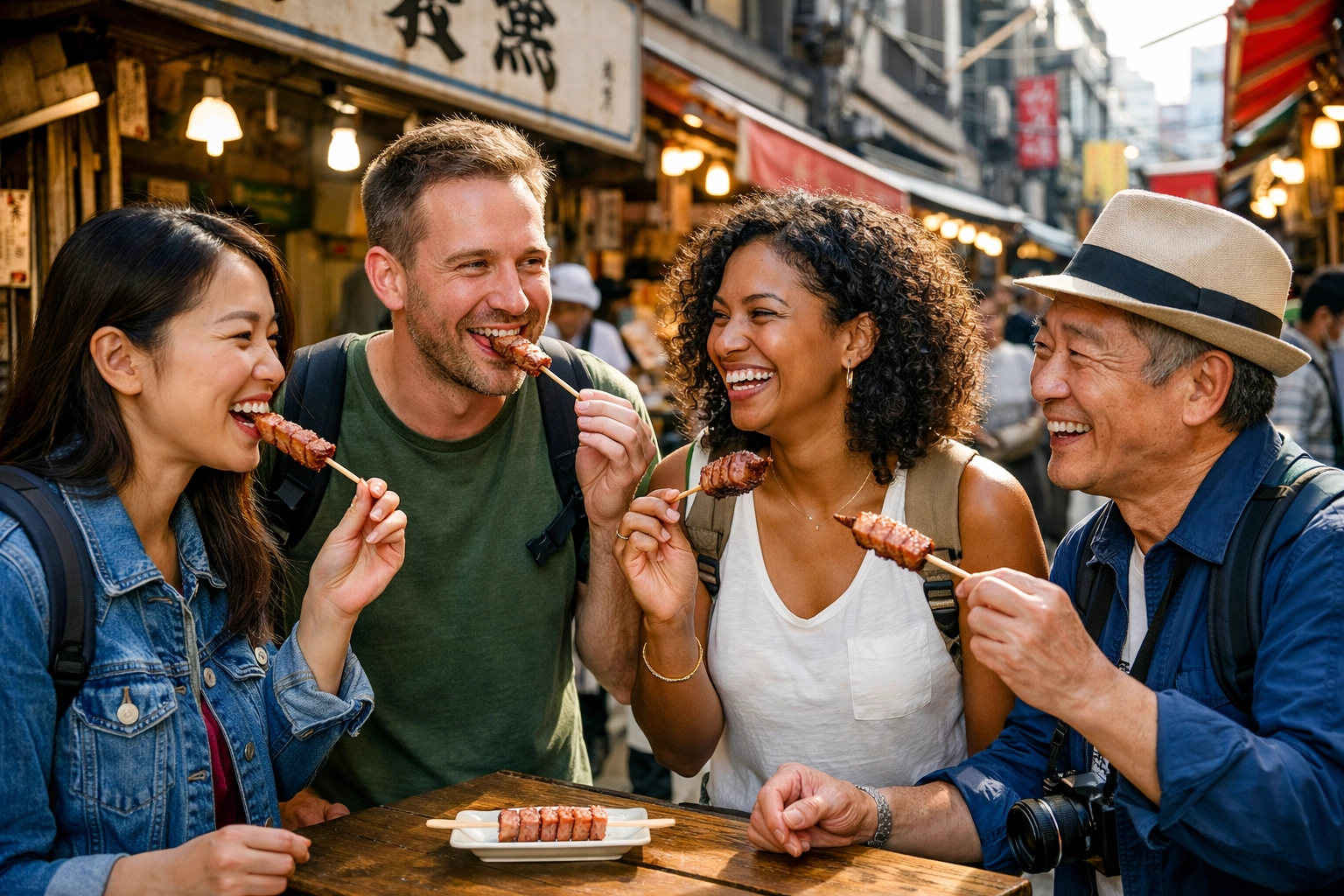
- Tonboya: Get the grilled fatty tuna (otoro) skewer. They sear it with a blowtorch right in front of you and finish it with a splash of soy sauce.
- Ajino Hamato: Try the corn fishcake skewer. It’s a sweet, savory, and crunchy snack that’s surprisingly addictive.
- Yoshizawa Shoten: If you’ve had enough fish, grab a Matsusaka Beef fried meat patty. It’s premium Wagyu for a fraction of the price you’d pay at a sit-down restaurant in Ginza.
8. Mind Your Manners (The No-Walking Rule)
This is the most important tip for staying on the good side of the locals. In Japan, and especially in Tsukiji, walking and eating is a big no-no. When you buy food from a stall, stand in their designated area to eat it. Most stalls have a small standing space or a trash can nearby. Once you’re finished, hand your trash back to the vendor. It keeps the narrow streets clear and shows respect for the craft.
If you’re worried about navigating these social nuances alone, booking a food tour through Viator is a great way to ensure you're following the local etiquette while hitting all the best spots.
9. Photography Etiquette for Foodies
As a photographer, I know the urge to get the perfect shot of a glistening piece of tuna is strong. However, remember that Tsukiji is a place of business.
- Ask before you click: A simple "Sumimasen" (excuse me) and a gesture to your camera goes a long way.
- Don't block traffic: The aisles are narrow. If you stop to set up a tripod, you’re going to get run over by a turret truck (and you’ll deserve it).
- Keep it quick: Grab your shot and move on.
For more tips on how to handle high-traffic environments, check out my photography booking experience page or browse my latest camera reviews.
10. The Dessert Finisher: Strawberry Daifuku & Tuna Taiyaki
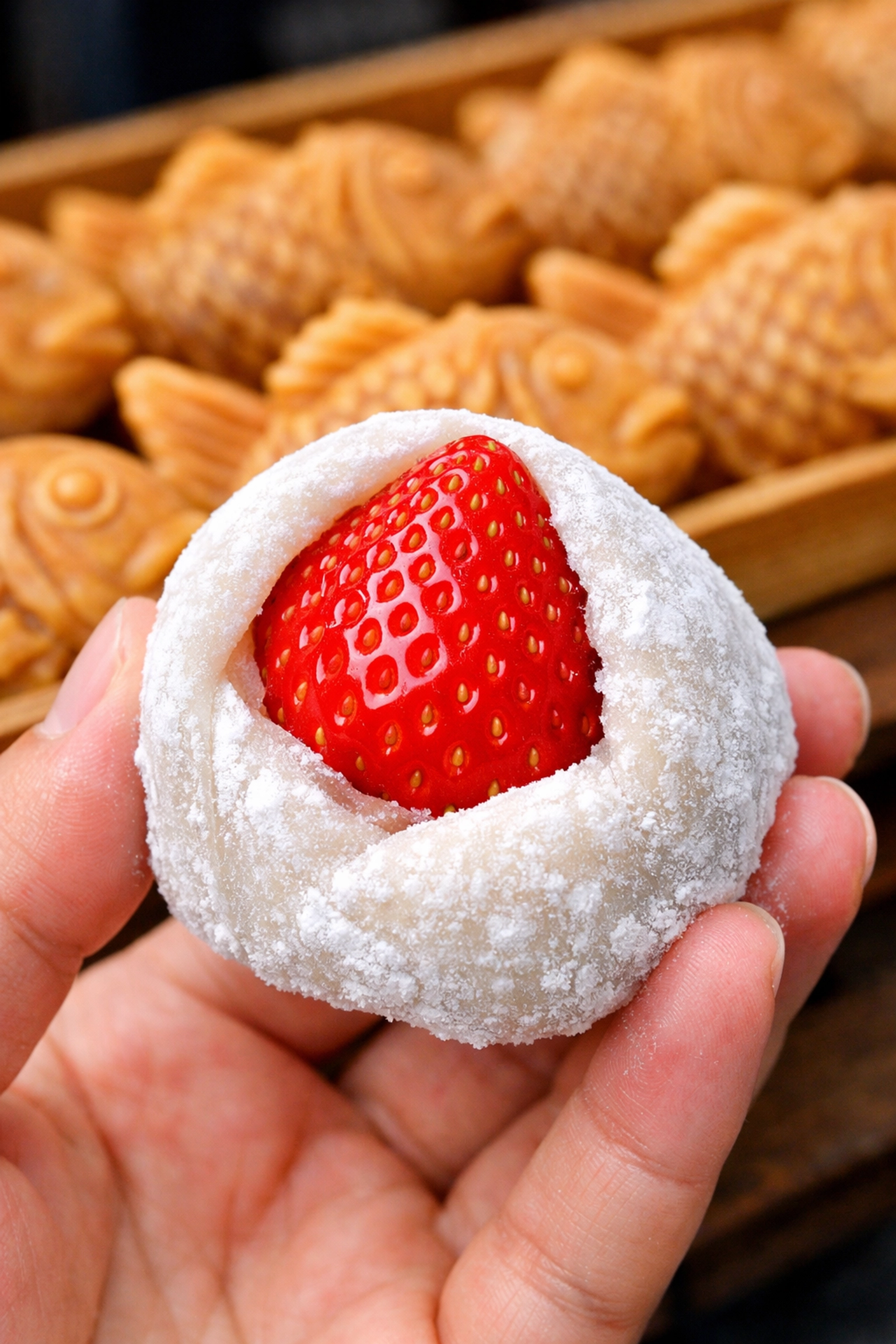
No food crawl is complete without something sweet. Look for Tsukiji Sanokiya, where they make taiyaki (fish-shaped cakes) but in the shape of a tuna rather than the traditional sea bream. The "Maguro-yaki" comes with a crispy exterior and is stuffed with sweet red bean paste or custard. Alternatively, grab a strawberry daifuku: a giant, juicy Japanese strawberry wrapped in sweet bean paste and soft, chewy mochi. It’s the perfect end to a morning of savory indulgence.
Wrapping Up the Morning
By the time the rest of the world is waking up and looking for a Starbucks, you’ve already conquered one of the greatest food markets on the planet. You’ve tasted the ocean, dodged a few delivery carts, and probably have a memory card full of incredible shots.
If you enjoyed this early morning adventure, stick around. We’re only on day four of our Tokyo series. Tomorrow, we’re heading to the high-end district of Ginza to see what $300 sushi looks like (spoiler alert: it’s beautiful).
If you want to make sure your photos from Tsukiji look as professional as the ones on my Fine Art site, don’t forget you can download my custom sky overlays to give your travel shots that extra pop.
For more travel and food inspiration, keep an eye on my blog. Now, go get some coffee: you’ve earned it.
Category: Foodies













