
Category: Photo Guides
If you’ve ever stood on the edge of a sawgrass prairie as the sun begins to dip below the horizon, painting the sky in hues of violet and gold, you know that the Everglades is a place like no other. It’s not just a swamp; it’s a living, breathing masterpiece of biodiversity. But for a photographer, it can be as intimidating as it is beautiful.
When you’re looking for the best wildlife photography tours, you aren’t just looking for a boat ride, you’re looking for an experience that puts you in the right place at the right time with the right light. As someone who has spent years trekking through these wetlands, I want to make sure your trip is nothing short of legendary.
Before you pack your gear and head south, here are 10 things you absolutely need to know about photography in the Everglades.
1. It’s All About the Boat (and the Stability)
Most people think of airboats when they think of the Everglades. While airboats are iconic and fun, they aren't always the best platform for serious photography. They are loud, they vibrate, and they can spook the very wildlife you’re trying to capture.
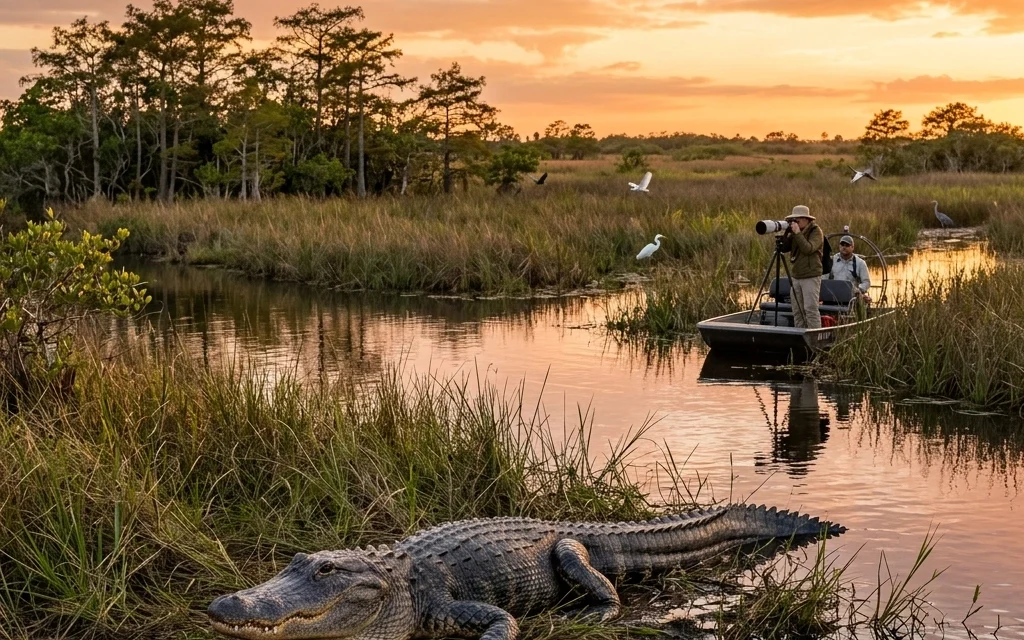
The best wildlife photography tours use stable, flat-decked boats specifically designed for photographers. You want a platform where you can set up a tripod if needed, or at least have enough room to pivot your long lens without knocking into someone else’s elbow. Hands-free stability is the secret sauce to getting those razor-sharp shots of a Reddish Egret mid-dance.
2. Timing is Everything: The Winter Advantage
If you show up in July, you’re going to be hot, sweaty, and probably eaten alive by mosquitoes. The "Dry Season", which runs from November to April, is the undisputed champion for Everglades photography.
During these months, the water levels drop, forcing wildlife into concentrated pools. This makes finding subjects much easier. Plus, the weather is gorgeous. You get those crisp, clear mornings and manageable afternoons. If you are looking for more tips on timing your trips, check out our photography booking experience to see how we handle the logistics of the perfect shoot.

3. You’ll See Way More Than Just Alligators
Yes, the alligators are the stars of the show, and they are incredible subjects. Their prehistoric textures and cold, calculating eyes make for stunning portraits. But the Everglades is home to over 360 bird species.
From the vibrant pink of the Roseate Spoonbill to the majestic flight of the Snail Kite, the avian opportunities are endless. You might even spot a Manatee or, if you’re incredibly lucky, the elusive Florida Panther. When you join a dedicated tour, the guides know the rookeries and the "secret" spots that the average tourist would drive right past. For a deeper look at the fine art side of these creatures, I often share my favorite captures over at Edin Fine Art.
4. Don’t Skimp on the Focal Length
Wildlife in the Everglades can be surprisingly bold, but "bold" for an alligator still means you want to keep a respectful distance. For birds, you’re going to want reach.
A 100-400mm or a 200-600mm lens is the sweet spot for these tours. It gives you the flexibility to shoot a wide landscape of the "River of Grass" and then zoom in tight for a profile of a Great Blue Heron. If you’re wondering if your current kit is up to the task, take a look at our essential photography gear guide to see what we recommend for the field.
5. Professional Guides vs. General Tours
There is a massive difference between a "nature tour" and a "photography tour." A general tour guide might point at an alligator and keep driving. A photography guide understands "the shot."
They understand lead room, backlighting, and the "decisive moment." They will position the boat so the sun is at your back and wait patiently while you wait for that Osprey to dive. This level of expertise is what separates a gallery-worthy photo from a blurry snapshot. I always tell my students that a good guide is the best piece of gear you can "buy."

6. The Light Changes Fast
In the Everglades, the "Golden Hour" isn’t just a suggestion; it’s a requirement. The way the light interacts with the water and the mist rising off the sawgrass is magical. However, because the landscape is so flat, once the sun is up, it gets harsh quickly.
The best tours start early: sometimes before the sun even breaks the horizon. Be prepared for early call times. It’s worth it when you capture that first light hitting the dew on a spiderweb or the golden rim-light on a floating alligator. You can see more of these lighting techniques discussed in our community at Shut Your Aperture.
7. You Need to Protect Your Gear
The Everglades is a harsh environment for electronics. It’s humid, it’s salty (especially in the 10,000 Islands area), and there’s always a chance of a sudden afternoon rain shower.
I always recommend bringing a high-quality rain cover for your camera and a dry bag for your extra lenses. Even a simple microfiber cloth is a lifesaver for wiping away humidity fog from your front element. For more reviews on the latest weather-sealed bodies and lenses, keep an eye on our camera reviews 2024 section.
8. Explore Different Ecosystems
The "Everglades" is a massive umbrella term for several different environments. You have the freshwater marl prairies, the cypress domes, and the saltwater mangroves of the 10,000 Islands.
The best wildlife photography tours will often specialize in one or offer a variety. If you want wading birds, the freshwater marshes are your best bet. If you want dolphins and ospreys, you want the coastal mangroves. Each ecosystem requires a different approach and offers a different aesthetic.

9. Patience is Your Best Lens
I’ve seen photographers get frustrated because an alligator didn't "do something" within five minutes. Wildlife photography is a waiting game. The best tours aren't the ones that zip around to ten different locations; they are the ones that find a promising spot and wait for the action to happen.
Whether it’s waiting for a heron to strike or a cloud to move to reveal the perfect light, patience is what gets the shot. This is why a private or small-group tour is so much better: you aren't at the mercy of twenty other people who want to move on to the next gift shop.
10. You Need a Plan Before You Land
The Everglades is over 1.5 million acres. You can’t just "wing it" and expect to see the best spots. This is exactly why we created the Everglades Photography Guide.
It’s a comprehensive resource that takes the guesswork out of your trip. We cover the best locations, the best times to go, and the specific settings you’ll need to capture the soul of the Florida wild. Having this guide is like having me in your camera bag, pointing you in the right direction every step of the way.

Why We Love the Everglades
There is a certain reassurance in the wildness of the Everglades. It’s a place that reminds us of the world as it used to be. For a photographer, it’s a masterclass in texture, color, and behavior. Every time I go out, I see something I’ve never seen before.
If you’re looking to sharpen your skills, don’t forget to browse our educational category for more tips on composition and post-processing. And if you’re looking for more general travel inspiration or stories from the field, my personal blog at Edin Chavez is full of behind-the-scenes content.

Final Thoughts
A wildlife photography tour in the Everglades is an investment in your craft. By knowing what to look for: the right boat, the right guide, and the right gear: you’re setting yourself up for success. The Everglades is waiting to tell its story; you just need to be there with your camera ready to listen.
Ready to start planning? Don't leave home without the Everglades Photography Guide. It’s the ultimate shortcut to professional results in one of the most challenging and rewarding locations on the planet. See you out on the water!













