

This guide will equip you with the important techniques and insights to elevate your travel photography. You will learn how to capture not just the sights but the emotions and stories that each destination holds. By focusing on composition, light, and the essence of the moment, you can create images that resonate with viewers and evoke a sense of wanderlust. Let’s explore how to make your travel photographs not just snapshots, but compelling visual narratives that invite others to join you on your adventures.
Understanding Evocative Photography
As you examine evocative travel photography, it’s important to grasp its essence. This type of photography transcends mere visuals; it encapsulates emotions, nostalgia, and stories. Your images should invite viewers to experience the world through your lens, sparking their imagination and connecting them to the places you’ve explored. Embracing this mindset will help you create powerful photographs that resonate deeply with your audience.
The Concept of Evocative Imagery
One way to think about evocative imagery is to consider how it influences the viewer’s perception. By focusing on elements like composition, color, and subject matter, you can evoke feelings that transcend the moment captured. Aim to depict moments that tell a story, allowing your audience to connect with your experiences and share in the journey.
The Emotional Impact of Travel Photography
Photography captures the essence of a moment, but it also has the power to evoke profound emotions in your audience. Through your images, you can transport viewers to distant lands, allowing them to feel the warmth of the sun, the chill of the breeze, or the bustling energy of a crowded market. By conveying the atmosphere of your experiences, you invite onlookers to form a personal connection, prompting them to reflect on their own journeys.
Understanding the emotional impact of travel photography is vital for crafting evocative images. When you capture candid moments or unique details, you invite viewers to connect with the emotions tied to those experiences. Invest time in studying how light, shadows, and color affect mood, and use these elements to enhance the feelings you want to evoke. By focusing on emotionally charged scenes, you’ll create a narrative that resonates, allowing your audience to experience your adventures alongside you.
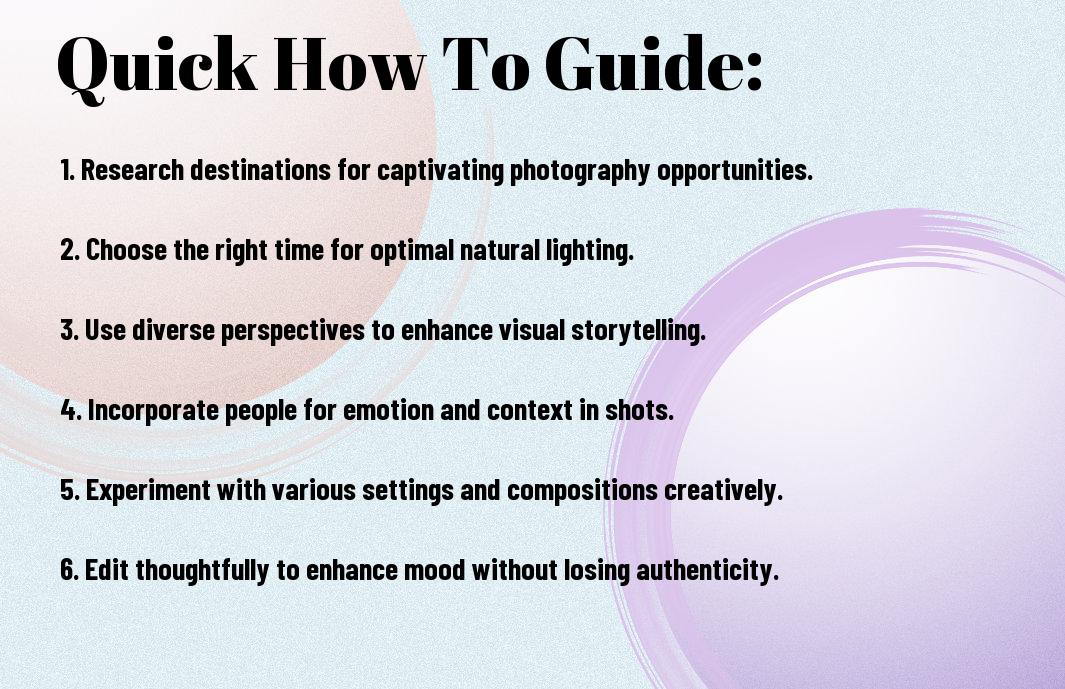

Essential Tips for Mastering Techniques
Some key techniques can elevate your travel photography to new heights. Focus on these tips:
- Practice shooting during golden hour for soft, warm lighting.
- Experiment with different perspectives to find unique angles.
- Use leading lines to guide the viewer’s eye.
- Pay attention to your surroundings for unexpected elements.
- Utilize manual settings to gain complete control over your shots.
Any of these techniques can radically transform your photography and make them more evocative.
Choosing the Right Equipment
One of the first steps in mastering travel photography is selecting the right equipment that fits your style and needs. Consider a camera that balances quality with portability, allowing you to capture high-resolution images without being burdened by heavy gear. Lenses are also vital; versatile zoom lenses can provide flexibility while prime lenses may help you capture sharp images in low light. Don’t forget accessories like tripods, filters, and additional memory cards to ensure you’re always prepared.
Composition and Framing Techniques
Choosing effective composition and framing techniques is imperative to highlight the stories behind your travel images. Focus on the rule of thirds, placing your subject at the intersection of imaginary lines to create a balanced shot. Layering elements in the foreground, middle ground, and background can add depth and interest, while negative space can help emphasize your subject. Experiment with symmetry and reflections for captivating visuals that draw viewers in.
Tips for improving your composition include scouting locations to envision shots before snapping, understanding the light direction, and adjusting framing continuously. Try incorporating various elements, like locals interacting in the environment, to add a storytelling dimension. Stay adaptable, as sometimes the best framing happens spontaneously. Ultimately, be intentional about composition to evoke emotion and connection in your travel photography.
Lighting and Timing Factors
Many photographers underestimate the impact of lighting and timing on their travel photography. Consider these factors to elevate your imagery:
- Natural light quality
- Time of day
- Weather conditions
- Direction of sunlight
- Shadows and highlights
Knowing how to harness these elements significantly enhances the emotional impact of your photographs.
Utilizing Natural Light
For stunning travel photos, utilizing natural light can make all the difference. Learning to work with ambient light allows you to highlight the unique features of your surroundings, revealing textures and colors that artificial lighting often masks. Pay attention to how natural light interacts with your subjects and adjust your shooting angle accordingly.
The Importance of Golden Hour
One of the best times to capture compelling images is during the golden hour, those precious moments shortly after sunrise or before sunset. The soft, warm light creates a magical atmosphere that dramatically enhances the mood of your photographs. This transformative light not only bathes your subject in a flattering glow but also adds depth and dimension, making every shot more evocative.
The golden hour is beloved by photographers for good reason. This time of day produces long shadows and rich colors, allowing you to convey a sense of warmth and intimacy in your images. To capture the essence of this fleeting period, plan your shoots around these hours, and be prepared to adapt as conditions change. The effort you invest in timing will pay off with stunning photographs that resonate emotionally with your audience.

Connecting with Your Subject
After you’ve selected your travel destination, the next step is connecting with your subject. Building a genuine relationship with the people and places you photograph will result in more evocative imagery. Approach your photography as a storytelling journey, where each moment and interaction adds depth to your narrative. By immersing yourself in the culture and environment, you foster a connection that reflects in your images, bringing them to life.
Building Rapport with Locals
Rapport is an necessary part of creating compelling travel photographs. Take the time to engage with locals on a personal level; this might involve learning a few words of their language or asking questions about their lives. When you show genuine interest, you’ll be met with warmth and openness, allowing for more intimate and meaningful captures that truly reflect the spirit of the place.
Capturing Authentic Moments
To seize genuine moments, you must be patient and observant. Look for opportunities that go beyond posed shots—moments of laughter, gestures of kindness, and daily rituals reveal the true essence of a culture. By being present and adapting to the environment, you can anticipate moments that convey emotion and story, making your images resonate with viewers.
It takes practice to capture authentic moments, but the rewards are invaluable. Try to blend into your surroundings; less intrusive techniques will create a comfortable atmosphere for your subjects. Pay close attention to the interactions around you, as unscripted moments often carry the most impact. Whether it’s a child’s laughter or whispered conversations between friends, these real-life instances offer a glimpse into the soul of your destination, enriching your storytelling through visual imagery.

Post-Processing Tips
Unlike capturing the perfect shot in-camera, post-processing is your opportunity to enhance and refine your travel photography. It’s vital to strike a balance between improvement and authenticity. Here are some imperative tips:
- Choose the right software for your needs.
- Adjust exposure and contrast for a balanced look.
- Enhance colors to bring out the vibrancy of your scenes.
- Crop strategically to improve composition.
- Apply sharpening, but don’t overdo it.
Recognizing the power of post-processing can greatly elevate your travel imagery.
Enhancing Your Images
To truly bring your travel photos to life, consider making adjustments that enhance the visual appeal while maintaining the essence of the moment. Utilize tools to tweak brightness, shadows, and clarity to create an inviting atmosphere. Add selective color adjustments to draw attention to focal points, ensuring your story remains engaging. The right enhancements can transform an already good image into an extraordinary one that resonates with viewers.
Keeping it Natural vs. Creative Edits
Enhancing your travel photos doesn’t mean sacrificing authenticity. Striving for a natural look can often make your images more relatable, while creative edits can inject a personal flair into your work. Both approaches have their merits, so it’s worth experimenting to find what reflects your unique vision.
The line between natural and creative edits can be thin, yet it’s significant. Opting for natural edits allows your subjects to shine, making viewers feel connected to the scene as it originally appeared. On the other hand, creative edits can push boundaries, allowing you to explore artistic interpretations of your experiences. Finding this balance not only showcases your skills as a photographer but also helps convey the essence of your travels in a powerful way.
Sharing and Showcasing Your Work
Your journey doesn’t end with capturing stunning photos; sharing and showcasing your work is vital for building your audience and enhancing your craft. Utilize social media platforms, photography websites, and blogs to present your work in a way that reflects your unique style and narrative. Engage with your followers by discussing your experiences and the stories behind your images, and encourage interaction to build a community around your passion for travel photography.
Best Platforms for Travel Photography
Even with a plethora of platforms available, choosing the right ones can make a significant difference in how your work is perceived. Instagram and Pinterest are visually-driven spaces ideal for showcasing your imagery, while photography-centric websites like 500px and Flickr allow for deeper engagement with fellow enthusiasts. Additionally, creating a personal blog or website can serve as a portfolio to showcase your best work and share your travel narratives.
Engaging Your Audience
There’s no better way to connect with your audience than through storytelling. Share the emotions and experiences tied to your photographs as this enhances their journey, making your work more relatable and memorable. Encourage dialogue by asking questions that invite response, and consider using polls or contests to engage your followers actively. Cultivating a genuine community around your travel photography practice will not only help to grow your audience but also foster a deeper appreciation for your craft.
Showcasing your travel photography is about more than just presenting beautiful images; it’s an opportunity to tell your story and connect with others. Use captivating captions to contextualize your visuals, and don’t shy away from sharing behind-the-scenes moments. Engage with your audience by asking for their thoughts or encouraging them to share their travel stories, creating a two-way dialogue that fosters community and connection. By making your audience feel included in your journey, you’ll cultivate a loyal following eager to see where your next adventure takes you.
Final Words
From above, mastering the art of evocative travel photography is within your reach through understanding composition, light, and storytelling. By actively engaging with your surroundings and capturing genuine moments, you can create images that resonate emotionally with your audience. Dedicate time to practice, experiment with various techniques, and develop your unique style. As you embrace these principles, your journey will not only enhance your photography skills but also enrich your travel experiences, leaving a lasting impact on both you and those who view your work.













