
Category: Photo Guides
Let’s be real for a second: The Metropolitan Museum of Art (or just "The Met" for those of us who like to pretend we’re local New Yorkers) is massive. It’s not just a museum; it’s a labyrinth of human history, culture, and, if you aren't careful, a place where you can easily hit 20,000 steps before you even find the exit. But you aren’t here for a workout; you’re here for the shots.
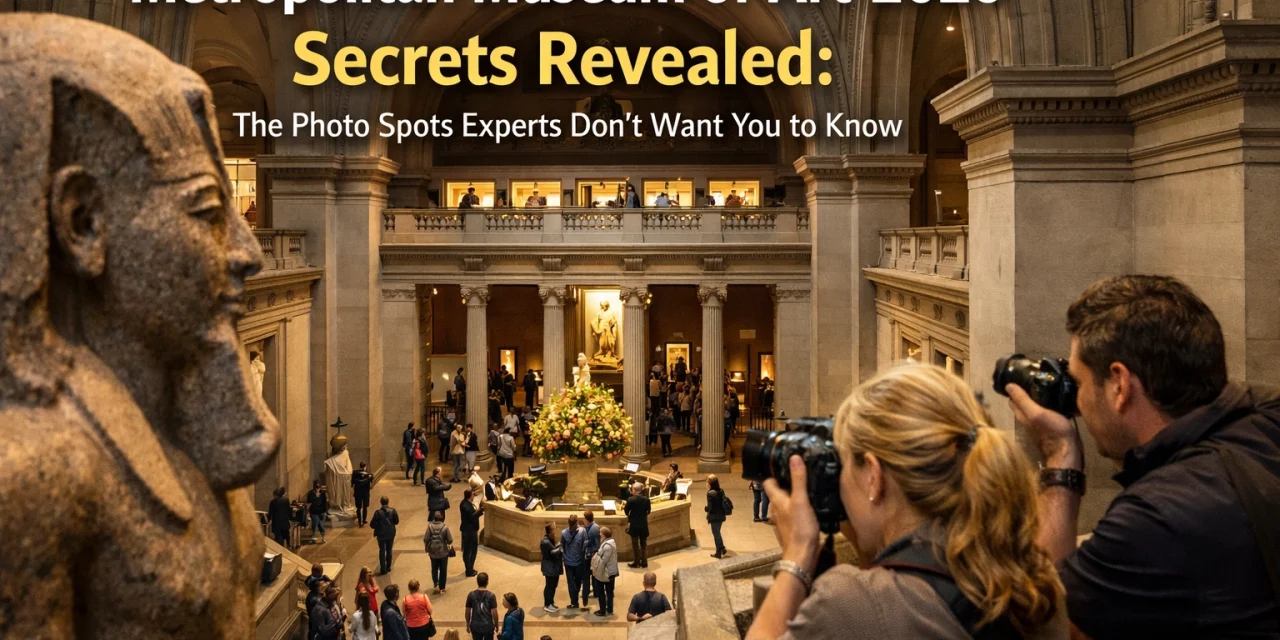
As we dive into 2026, the Met remains one of the best photography locations in the world. Whether you’re shooting on a high-end mirrorless or just trying to make your smartphone look like it belongs in a gallery, the Met offers lighting and architecture that you simply can't find anywhere else. However, with millions of visitors every year, getting that "clean" shot requires a bit of strategy and a lot of patience.
Before we get into the nitty-gritty of the secret spots, if you’re looking to level up your entire photography game this year, make sure to check out our Mastering Photography: The Ultimate 2026 Guide for Every Skill Level. It’s the foundation you need before tackling a beast like the Met.
The Ground Rules (Don't Get Kicked Out)
First things first: the Met is pretty chill about photography, but they have boundaries. For personal use, you are good to go in most permanent collection galleries. However, leave the tripod and the monopod at home. They are strictly forbidden. Flash is also a big no-no: it ruins the vibe and, more importantly, it can damage the art.
You’ll be relying entirely on natural light and the high-ISO capabilities of your camera. If you're wondering if your gear is up to the task, take a look at some camera reviews over at Shut Your Aperture to see what’s currently killing it in low-light environments.
1. The Temple of Dendur: The Crown Jewel
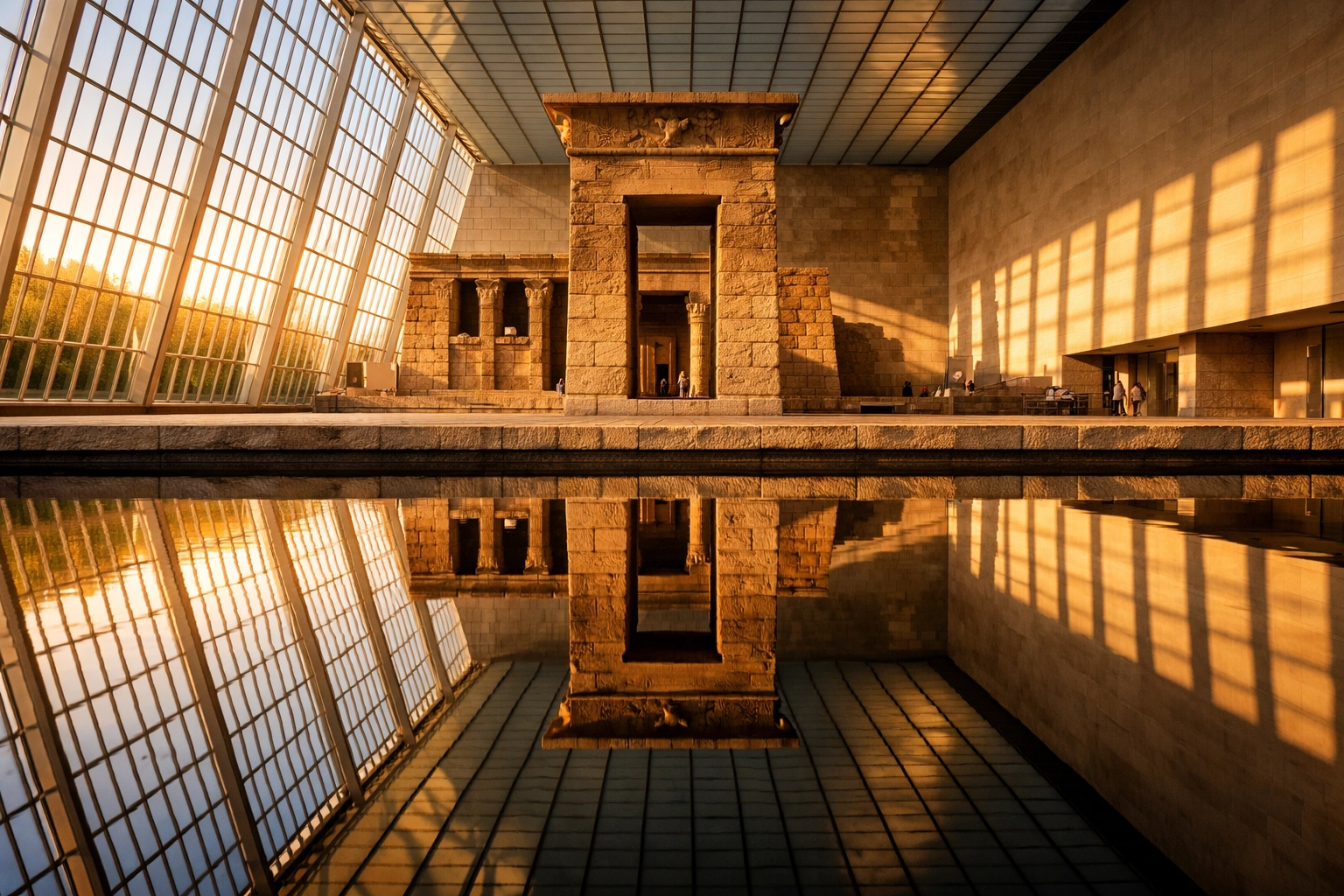
If there is one spot that defines "iconic" at the Met, it’s the Temple of Dendur in the Sackler Wing. This Roman-era Egyptian temple is housed in a massive glass-walled room that overlooks a reflecting pool.
The Secret: Most people stand right in front of the temple and take a standard eye-level shot. Don't be that person. To get one of the best photo spots in the building, head to the far corners of the pool. Crouch down low to capture the temple's reflection in the water.
In 2026, the natural light coming through those massive windows is still the best free lighting designer in Manhattan. Aim for mid-morning or late afternoon. The "Golden Hour" inside the Sackler Wing is legendary. The light hits the sandstone and turns everything into a warm, glowing masterpiece.
2. The Great Hall: Drama from Above
When you first walk in, the Great Hall hits you with its scale. It’s busy, it’s loud, and it’s full of people checking their maps. Most photographers try to shoot from the floor, but the real magic happens when you head up to the second-floor balcony.
From the landing of the grand staircase, look down. You can use the massive arches as natural frames for the chaos below. Use a wide-angle lens to capture the symmetry of the domes. If you’re patient, you can time your shot for when the crowd forms a natural pattern. It’s one of those best photography locations that rewards the patient observer.
If you’re planning your trip to NYC and want to make sure you hit all these spots without the stress of navigating the subway, consider booking a guided experience through Viator. Sometimes having a pro lead the way saves you hours of wandering.
3. The Astor Court: The Hidden Zen
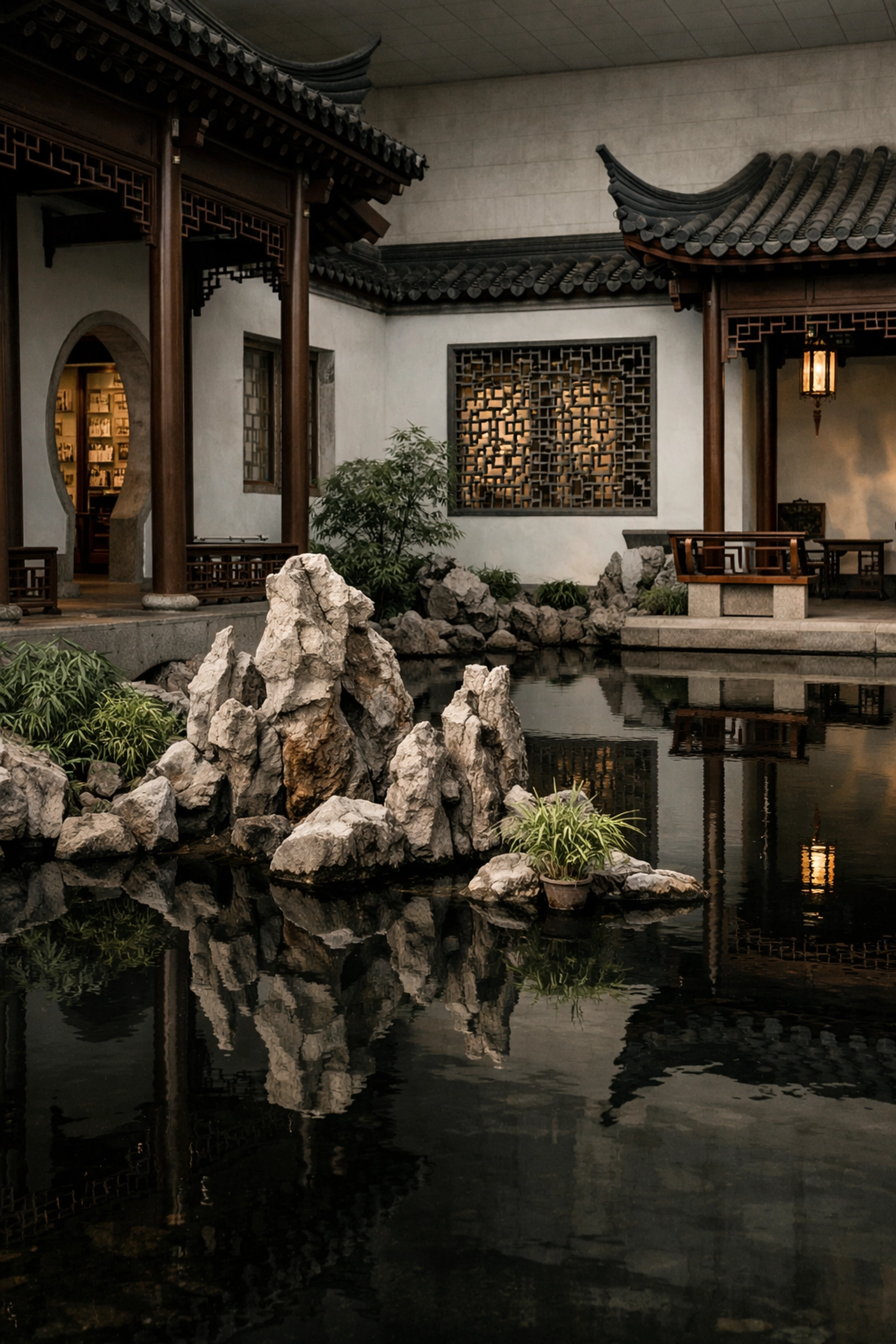
If the Great Hall is the "loud" part of the Met, the Astor Court (Chinese Garden Court) is the "whisper." It is a Ming-style garden nestled inside the museum, and it is easily one of the most serene photo spots in New York City.
The courtyard features traditional Chinese architecture, weathered rocks, and a small pond. The light here is soft and diffused, making it perfect for detail shots. Focus on the textures of the wood, the patterns in the lattice windows, and the way the light hits the koi pond.
Pro Tip: Because this area is tucked away, it’s often much quieter than the Egyptian or European wings. It’s the perfect place to practice your composition without a tourist bumping into your elbow. For more tips on finding quiet moments in busy cities, Edin often shares his personal travel stories on his blog.
4. The Cantor Roof Garden: Skyline Magic
Since it’s currently April 2026, you’re in luck! The Cantor Roof Garden is open for the season. This is where the museum meets the Manhattan skyline. Every year features a new contemporary art installation, providing a fresh foreground for your shots of Central Park and the surrounding skyscrapers.
The contrast between the modern art on the roof and the classic NYC skyline is a photographer's dream. Sunset is the obvious choice here, but don’t sleep on a moody, overcast day. The gray skies over Central Park can provide a beautiful, flat light that makes colors pop.
Check out Edin Chavez’s fine art collection to see how professional cityscapes are framed: you might get some inspiration for your own roof garden shots.
5. The European Sculpture and Decorative Arts Wing
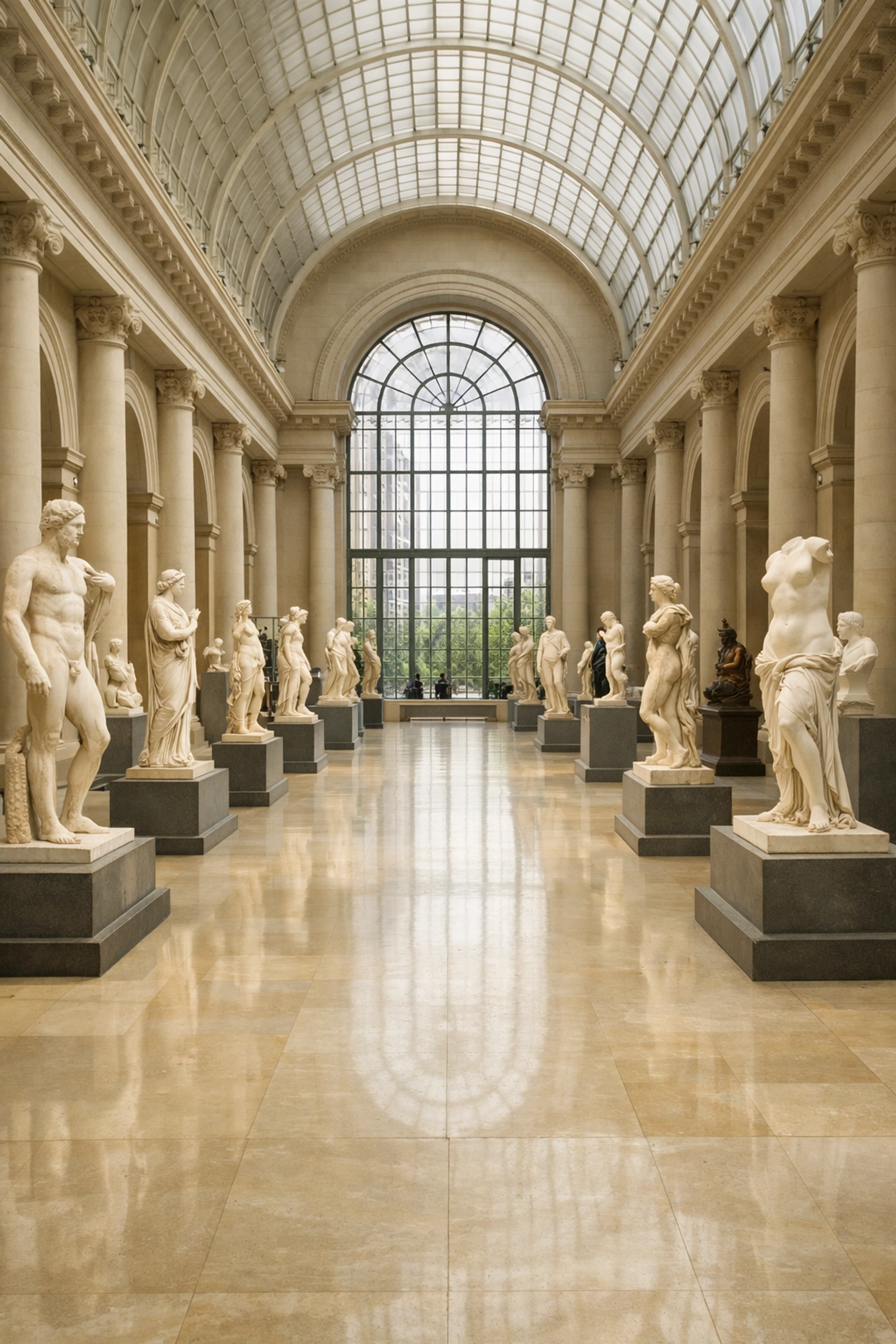
Walking through the Petrie Court feels like walking through a palace in Europe. The high ceilings and massive windows flood the white marble sculptures with beautiful, soft light.
This is the place to practice your "leading lines." Use the long hallways and the rows of statues to draw the viewer’s eye through the frame. Because the walls are generally light-colored, you can get away with a slightly lower ISO here than in the darker painting galleries. If you're worried about your settings, check out our essential photography gear guide to make sure you've got the right glass for these indoor spaces.
6. The Egyptian Wing (Beyond Dendur)
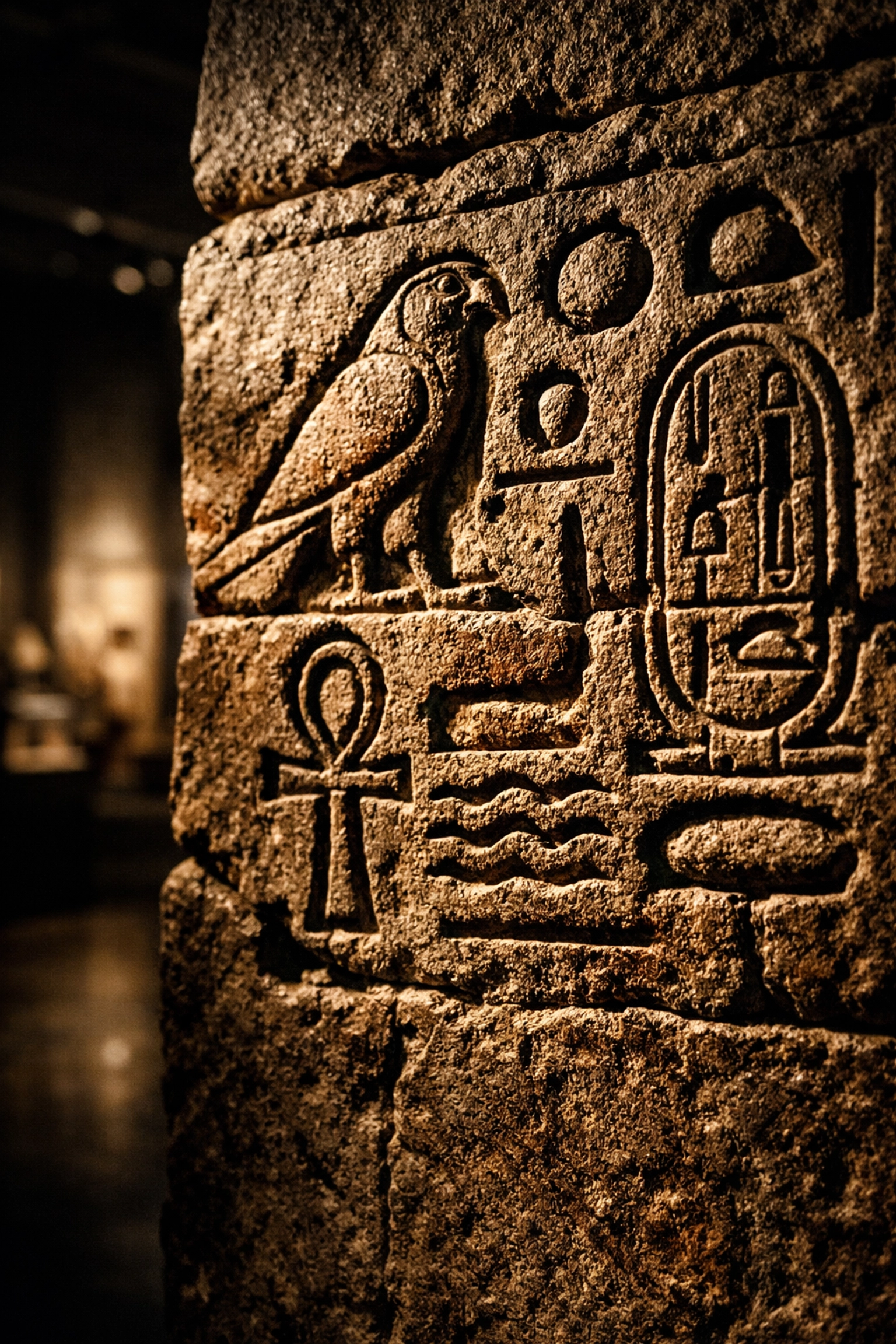
While everyone is hovering around the temple, wander back into the smaller tomb rooms. The lighting here is theatrical: dark shadows with bright spotlights on the artifacts. It’s a great place to play with "Chiaroscuro" (the contrast between light and dark).
Capture the hieroglyphics with a shallow depth of field to make the ancient carvings really stand out. It adds a level of mystery and depth to your portfolio that a standard wide shot just can't match.
Making the Most of Your Visit
To truly capture the Met, you need to arrive early. Being there the moment the doors open gives you a solid 20-minute window before the "crowd crush" begins. Start at the Temple of Dendur and work your way back.
If you’re looking for a more personalized way to see the city, look into the photography booking experiences we offer. Having a local pro show you the hidden angles of NYC can turn a good trip into a legendary one.
Quick Tips for 2026 Photography at the Met:
- Wear comfortable shoes: You will walk miles. Trust me.
- Check the weather: The Roof Garden is outdoor-only. If it’s raining, focus on the interior courts like the Astor Court.
- Battery Life: All that "searching for focus" in low light eats battery. Bring a spare.
- Be Respectful: It’s a museum first, a photo studio second. Don't block walkways.
The Met is a place that changes every time you visit. The way the light hits a certain statue in April is completely different from how it looks in October. That’s the beauty of it. It’s a living, breathing archive of our world, and in 2026, it remains one of the most rewarding challenges for any photographer.
So, grab your camera (and leave the tripod at the hotel), head to 1000 Fifth Avenue, and start exploring. Whether you’re shooting for your own walls or for the 'gram, the Met will never disappoint.
For more inspiration on where to go next, check out our guide on cheap weekend getaways that are perfect for a quick photo mission. Happy shooting!













