
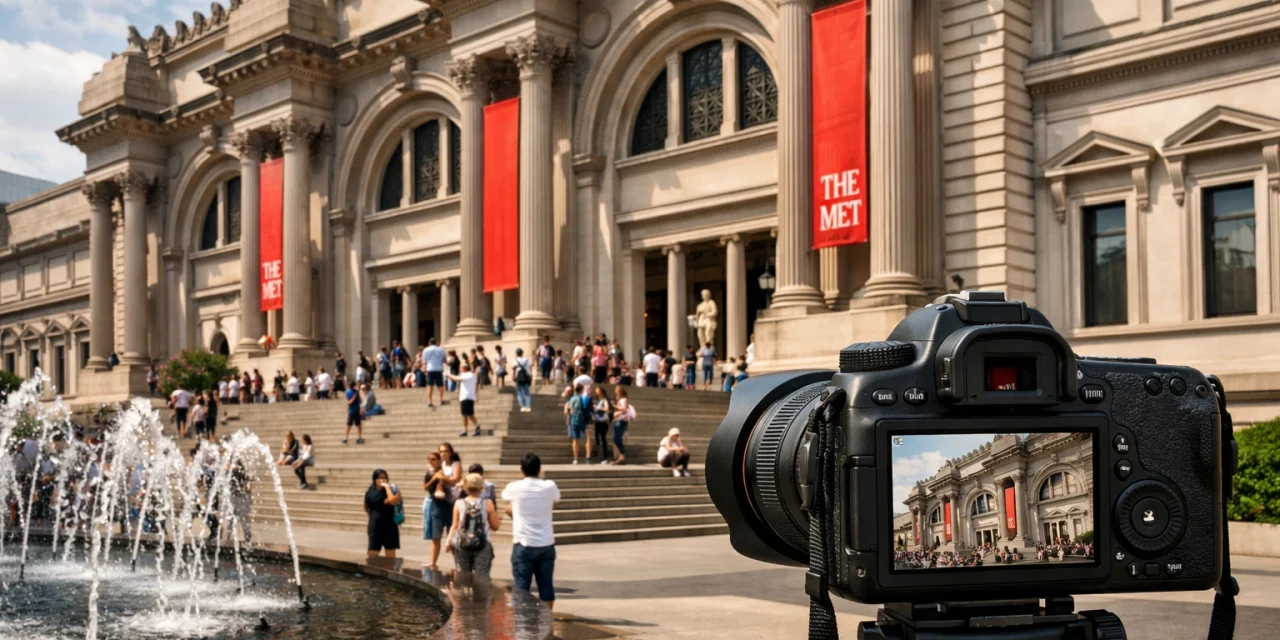
So, you’ve decided to tackle the big one. The Metropolitan Museum of Art, or "The Met" for those of us who don't want to spend ten minutes saying the whole name, is a beast. It’s one of the world’s greatest treasure chests, and if you’re heading there in 2026, you’re in for a visual feast.
But here’s the thing: The Met is huge. It’s "I-accidentally-walked-into-ancient-Egypt-and-now-I’m-lost-in-18th-century-France" huge. If you go in without a plan, you’ll end up with 400 blurry photos of pottery and a very sore pair of feet. As someone who has spent way too many hours wandering these halls, I’m here to help you find the best photography locations without losing your mind (or your lens cap).
Before we dive into the specific photo spots, make sure you’ve brushed up on your technical skills. If you’re still figuring out your ISO from your elbow, check out Mastering Photography: The Ultimate 2026 Guide for Every Skill Level. It’ll give you the foundation you need to handle the tricky lighting we’re about to discuss.
The Ground Rules (The "Don't Get Kicked Out" Section)
Let’s get the boring-but-important stuff out of the way. The Met is pretty chill about photography, but they have a few "hard nos" that will get a security guard moving toward you faster than a New York minute.
- No Flash: Seriously, just don't. It ruins the art, it annoys the other visitors, and it makes your photos look like garbage anyway.
- No Tripods or Selfie Sticks: Unless you have a press pass and a very fancy letter, leave the three-legged beasts at home. You need to be mobile and handheld.
- Personal Use Only: You can post your shots on Instagram or your personal blog, but you can’t sell them to a gallery without permission.
- Watch the Signage: Some special exhibitions have strict "no-photo" rules because of loan agreements. Look for the little camera icon with a slash through it.
If you’re looking to upgrade your kit before the trip, I always recommend checking out Shut Your Aperture for the latest gear talk. You’ll want a camera that handles high ISO like a champ.
The Best Photography Locations Inside the Met
The Met has over two million square feet of space. You can't shoot it all in a day. Here are the spots that will actually make your portfolio pop.
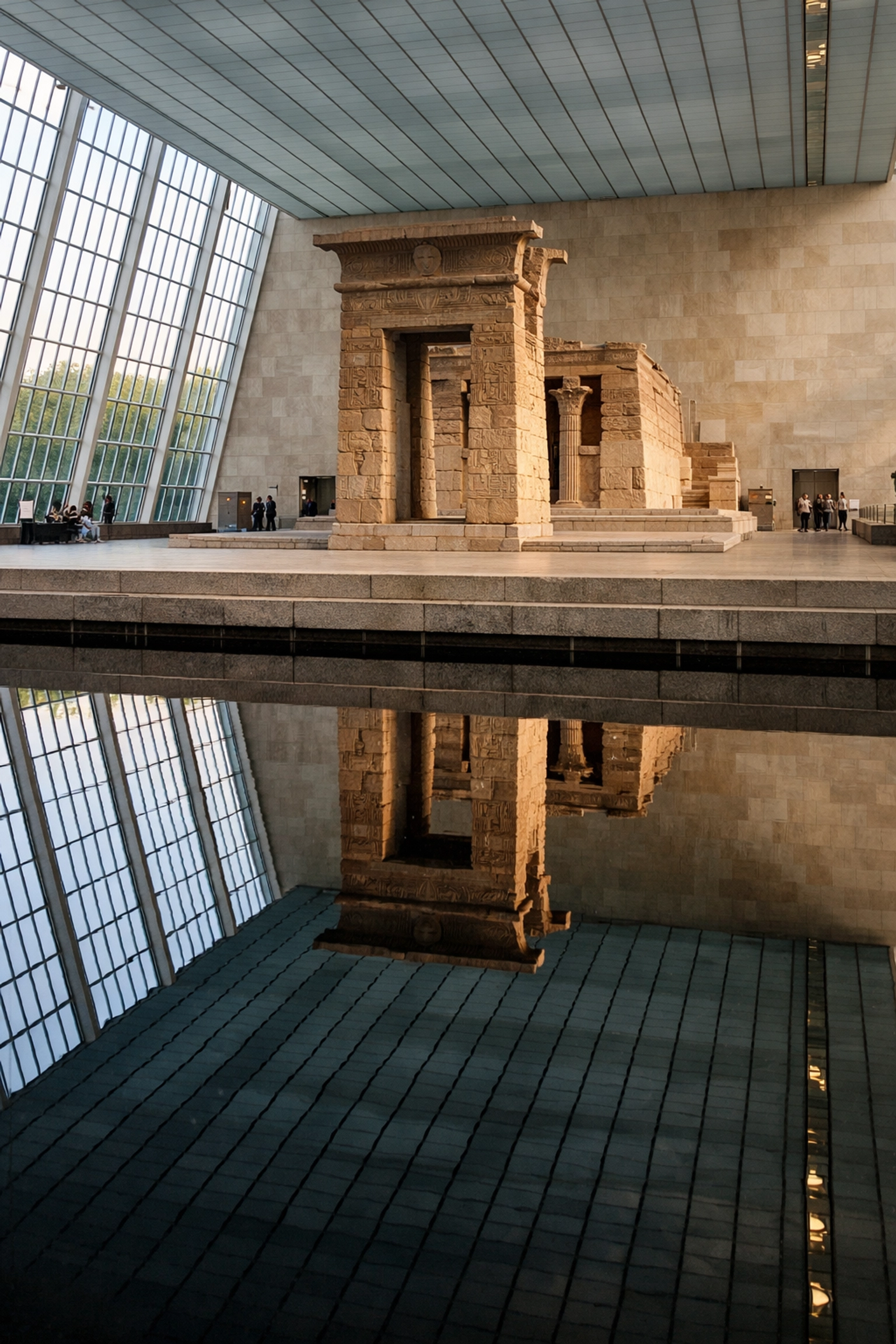
1. The Temple of Dendur (The Sackler Wing)
This is the crown jewel of Met photo spots. An entire Egyptian temple relocated into a massive, glass-walled room. The light here is legendary. In the morning, it’s soft and ethereal. In the late afternoon, the shadows get dramatic.
Pro Tip: Use the reflection in the water in front of the temple to create a symmetrical composition. If you’re lucky, you can catch the Manhattan skyline through the glass behind the temple for a "New York meets Ancient Egypt" vibe.
2. The Charles Engelhard Court (The American Wing)
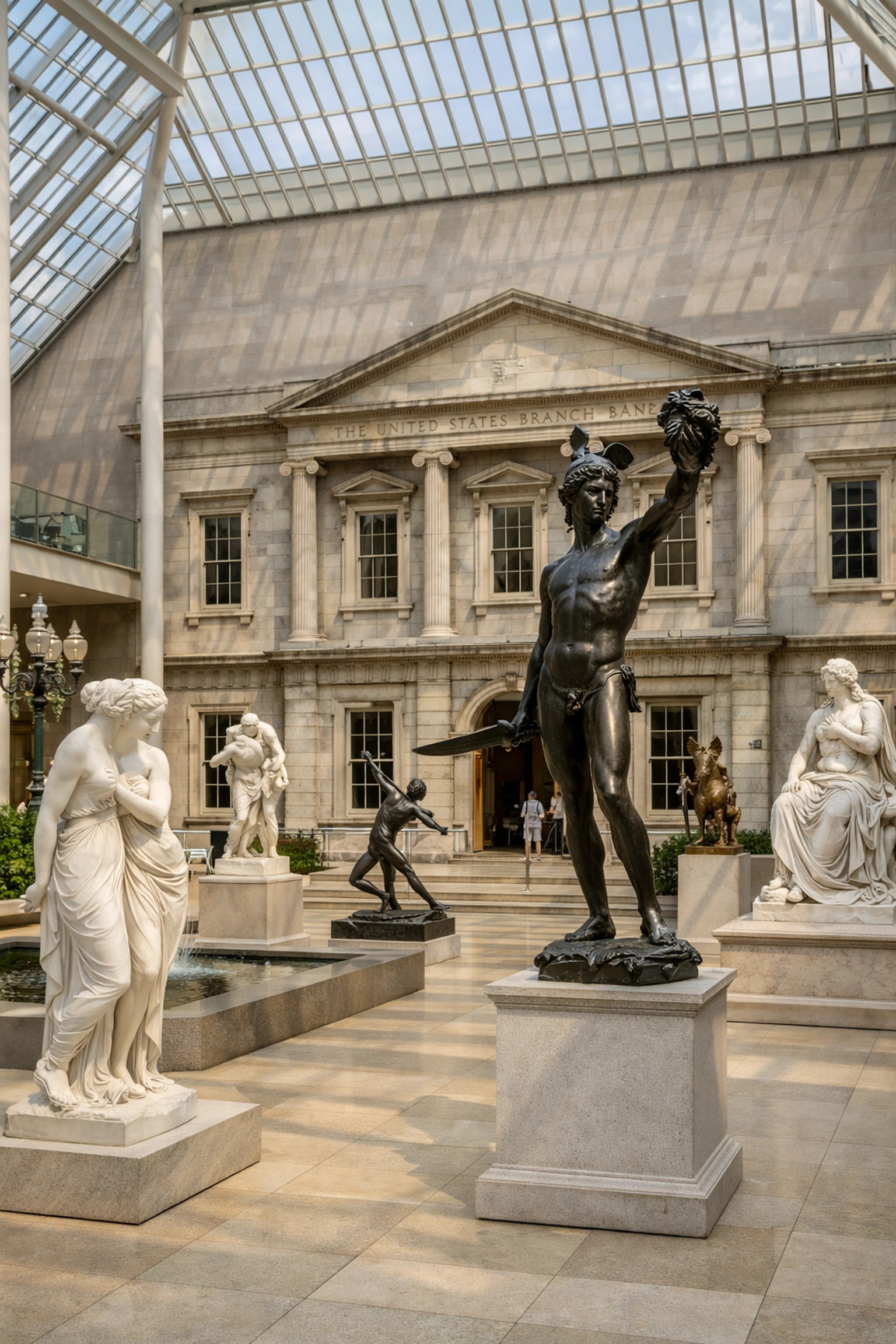
If you love architecture and light, this is your heaven. It’s a massive, airy courtyard filled with sculptures, stained glass (including some incredible Tiffany pieces), and the facade of the old United States Branch Bank.
The natural light coming through the ceiling makes this one of the best photography locations for capturing texture and scale. It’s also a great place to sit for a minute and realize how many more miles you have to walk. If you want to see how the pros capture fine art and architecture, take a look at some of the prints over at Edin Fine Art.
3. The European Paintings (1250–1800)
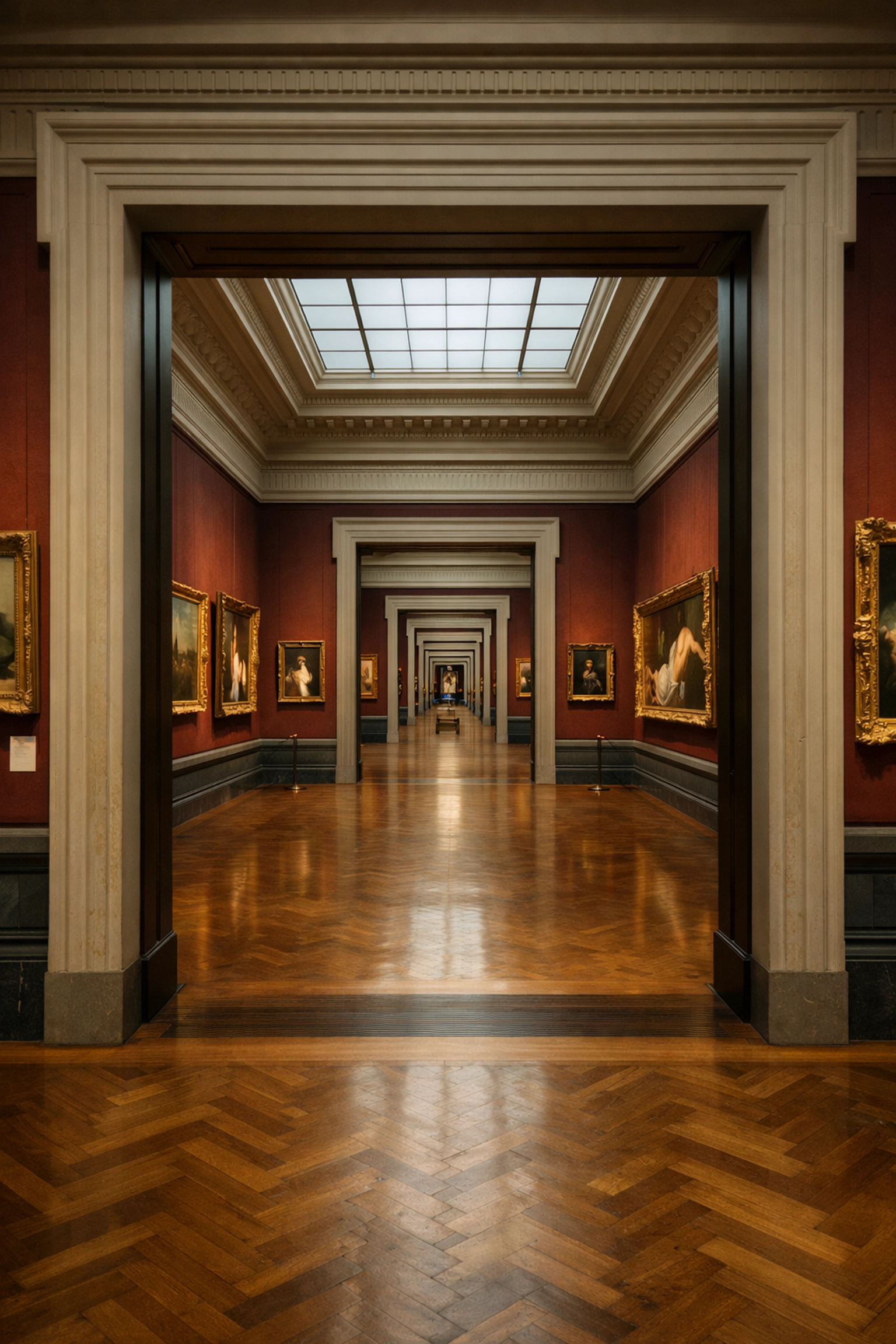
Walking through the grand galleries of European paintings feels like walking through a movie set. The skylights in these rooms were recently renovated (shout out to the 2026 tech!), and the light quality is now better than ever.
Focus on the "vanishing point" in the long galleries. The way the doorways frame the next room creates a sense of infinite history. Just remember: these rooms are often crowded. Patience is your best friend here.
4. The Cantor Rooftop Garden (Seasonal)
If you’re visiting between May and October, the rooftop is mandatory. Not only do they usually have a cool modern art installation, but the view of Central Park against the Midtown skyline is unbeatable. It’s the perfect place to switch from "museum mode" to "landscape mode."
Since it’s outdoors, the rules are a bit more relaxed, but it gets packed at sunset. If you want to skip the lines and get a guided experience of the city’s best views, I highly recommend booking a tour via this Viator link.
5. The Great Hall
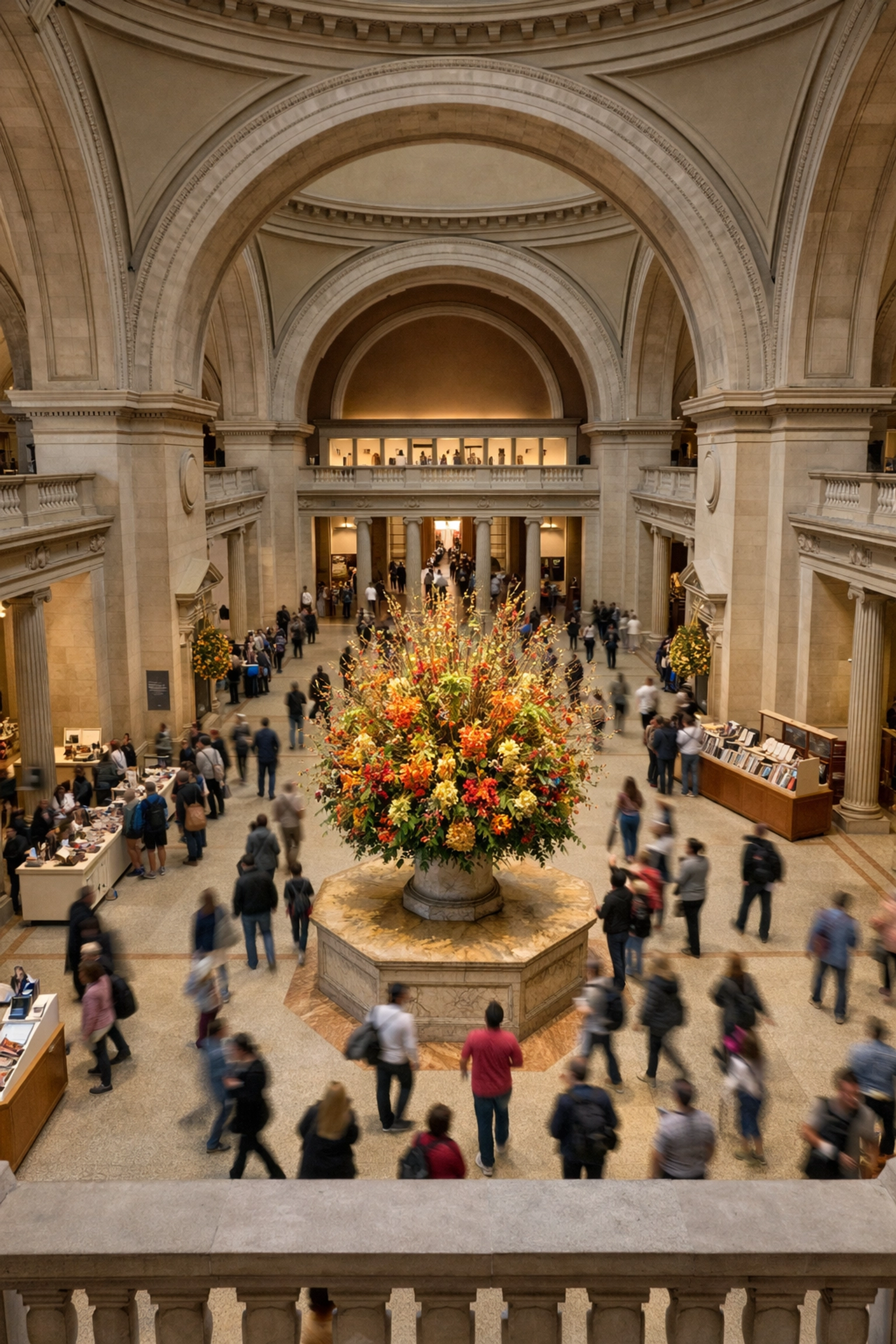
Don't just rush through the entrance. The Great Hall itself, with its massive domes and flower arrangements, is a masterpiece. Try shooting from the balcony on the second floor looking down. The movement of the crowds below can create a great long-exposure effect if you can hold your camera steady enough.
Gear Talk: What to Pack
Since tripods are a no-go, your gear choice is everything. You can find more detailed advice on our essential photography gear page, but for the Met specifically, here’s my 2026 kit list:
- A Fast Prime Lens: A 35mm or 50mm f/1.8 is your best friend. The wide aperture lets in more light so you don't have to crank your ISO to the moon.
- Wide-Angle Zoom: Something like a 16-35mm is great for the Temple of Dendur and the Rooftop Garden.
- Extra Batteries: The Met's massive scale means you'll be there for hours. Don't let a dead battery end your day early.
- A Lens Cloth: You’ll be shooting through a lot of glass display cases. Smudges are the enemy.
For more deep dives into what cameras are killing it this year, check out our 2024-2026 camera reviews.
Composition and Lighting Secrets
The Met isn't just about the art; it's about the vibe. Here’s how to capture it:
Embrace the Low Light: Some galleries are kept dark to protect the textiles and paintings. Instead of fighting it, use it. Look for pools of light falling on a statue and let the rest of the frame fall into shadow. It creates a moody, "Night at the Museum" feel.
Frame Your Shots: Use the doorways and arches to frame your subjects. The Met is full of classical architecture that acts as a natural frame for the art within.
People are Part of the Story: Sometimes, a photo of a person staring intensely at a painting is more interesting than a photo of the painting itself. It adds scale and emotion. Just be respectful and don't be a "paparazzo."
If you find yourself getting overwhelmed by the technical side of things while traveling, I’ve shared some more personal tips on my own photography blog.
Making the Most of Your NYC Trip
The Met is just one piece of the New York puzzle. If you’re planning a whole weekend of shooting, you might want to look into some cheap weekend getaways around the city or check out other photography booking experiences to fill your schedule.
And hey, if you’re a wedding photographer or an event pro looking for inspiration on how to handle difficult indoor lighting, the Met is basically the ultimate training ground. I’ve picked up so many tricks here that I use in my wedding photography insights.
Final Thoughts
The Metropolitan Museum of Art is a place where you can lose track of time and space. In 2026, it remains the ultimate destination for anyone who loves beauty, history, and the challenge of low-light photography.
Take your time. Don't try to see it all. Pick three or four wings and really focus on capturing them well. And most importantly, remember to put the camera down every once in a while and just look at the art. It’s been there for thousands of years; it’s not going anywhere.
Happy shooting! If you manage to get that perfect shot of the Temple of Dendur, tag us: we’d love to see it. And if you need more tips on how to edit those moody museum shots, don't forget to check out our sky overlays to add some extra drama to your rooftop skyline photos.
Enjoy the Met! It’s an experience like no other.













