
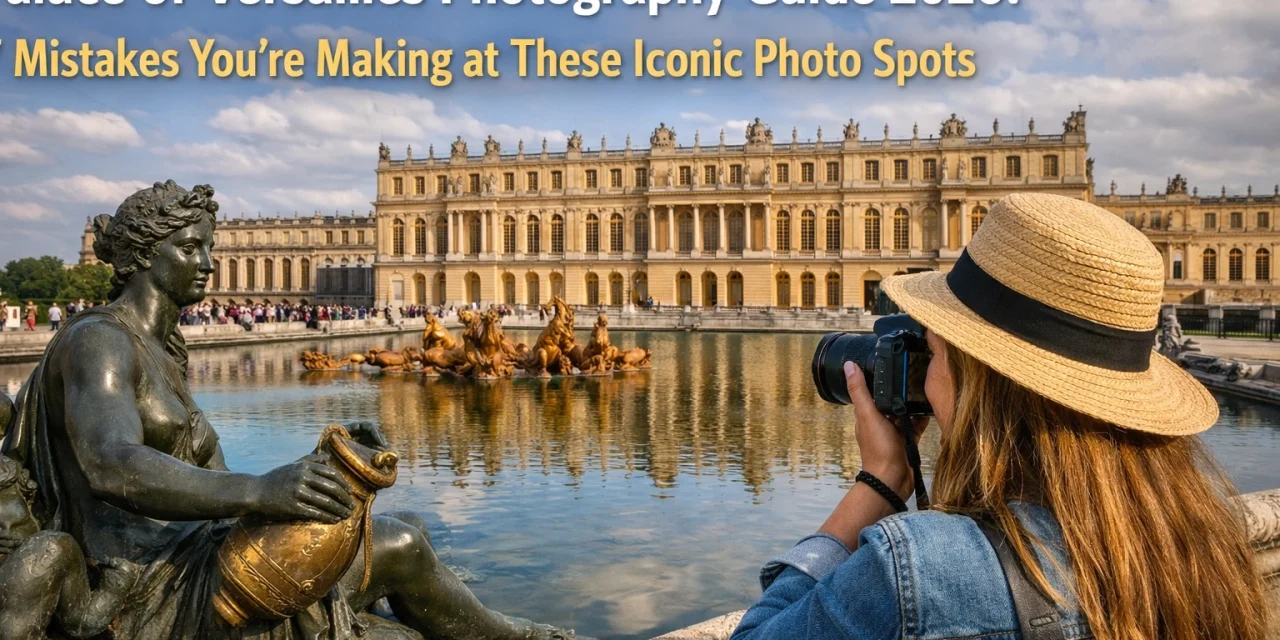
Let’s be real: if you’re heading to France and don’t have the Palace of Versailles on your itinerary, are you even doing France right? It’s the ultimate flex in European architecture: a sprawling, gold-leafed testament to the fact that King Louis XIV definitely didn't believe in the concept of "less is more."
But here’s the problem. In 2026, Versailles is busier than a Parisian café during Fashion Week. Everyone with a smartphone and a dream is trying to capture that perfect, ethereal shot of the Hall of Mirrors. If you aren't careful, you’ll end up with a memory card full of tourists' heads and blurry ceilings.
At Photoguides, we want you to walk away with more than just a selfie. Whether you’re a pro or just looking to level up your Instagram game, this guide will help you navigate the best photography locations at Versailles without losing your sanity. To really sharpen those skills before you go, check out our pillar post, Mastering Photography: The Ultimate 2026 Guide for Every Skill Level.
Now, let’s dive into the seven mistakes that are currently ruining your Versailles photo ops.
1. The "I’ll Sleep In" Trap (Timing is Everything)
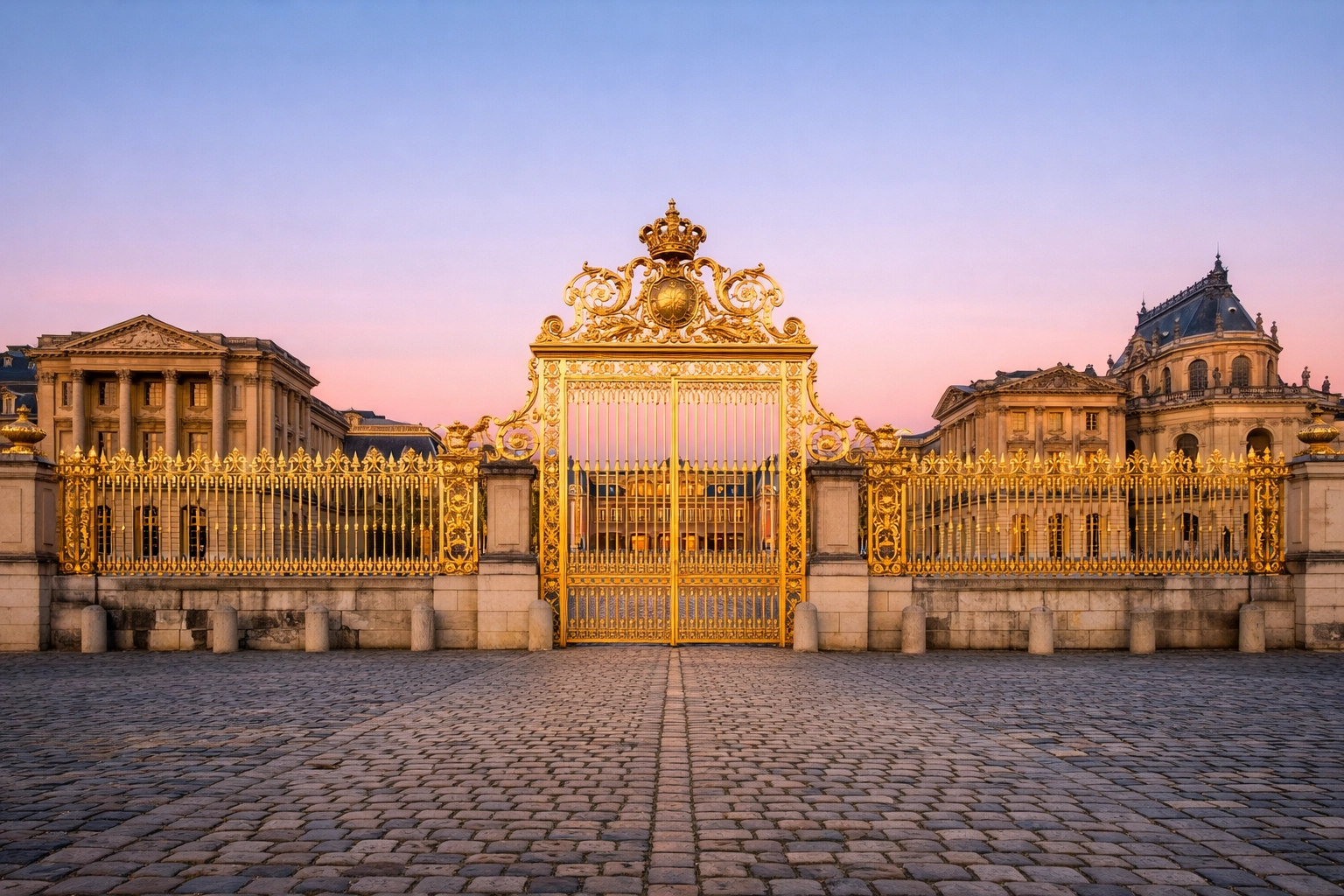
If you roll up to the gates at 11:00 AM, you’ve already lost the battle. By midday, the Palace of Versailles becomes a sea of selfie sticks and tour groups. Your dreams of a clean, empty Hall of Mirrors shot will vanish faster than a croissant at a bakery.
In 2026, the crowds are more intense than ever. The biggest mistake is not being the first person in line. Aim to arrive at least 30 to 45 minutes before the gates open. Most people rush straight to the King’s State Apartments. If you’re savvy, you’ll head straight to your high-priority photo spots first.
Pro Tip: If you want to avoid the headache of logistics, consider booking a timed-entry tour via Viator to ensure you get in as early as possible.
2. Blasting the Flash (The Royal Vibe Killer)
Nothing screams "amateur" louder than a pop-up flash firing off in the middle of the Queen’s Grand Apartment. Not only is it usually forbidden (for good reason: light damage is real, folks), but it also creates harsh, flat lighting that kills the rich textures of the silk wallpapers and gilded moldings.
Instead of relying on a flash, push your ISO. Modern cameras in 2026 can handle ISO 1600 or even 3200 with minimal noise. Open your aperture to f/2.8 or f/4 to let in as much natural light as possible. If you need a gear refresh to handle these low-light conditions, take a look at our essential photography gear recommendations.
3. Bringing the "Iron Giant" (The Tripod Mistake)
I get it. You want that perfectly sharp, long-exposure shot of the ceiling. But inside the Palace, your full-sized tripod is about as welcome as a revolutionary in 1789. Security will shut you down faster than you can say "Marie Antoinette."
Tripods are generally banned inside the chateau to protect the floors and manage foot traffic. If you try to sneak one in, you’ll likely have to check it at the cloakroom.
The Solution: Use the "human tripod" technique. Lean against a sturdy doorframe or use a railing to stabilize your camera. If you’re shooting in the gardens, you might have better luck with a small travel tripod, but even then, keep it low-profile. For more professional tips on shooting without heavy gear, check out Edin Chavez’s personal blog for his latest travel hacks.
4. Using the Wrong Glass (The Lens Dilemma)
Many photographers make the mistake of bringing a massive telephoto lens and nothing else. While a zoom is great for capturing the intricate details of a statue's face, you’ll find it nearly impossible to capture the scale of the rooms.
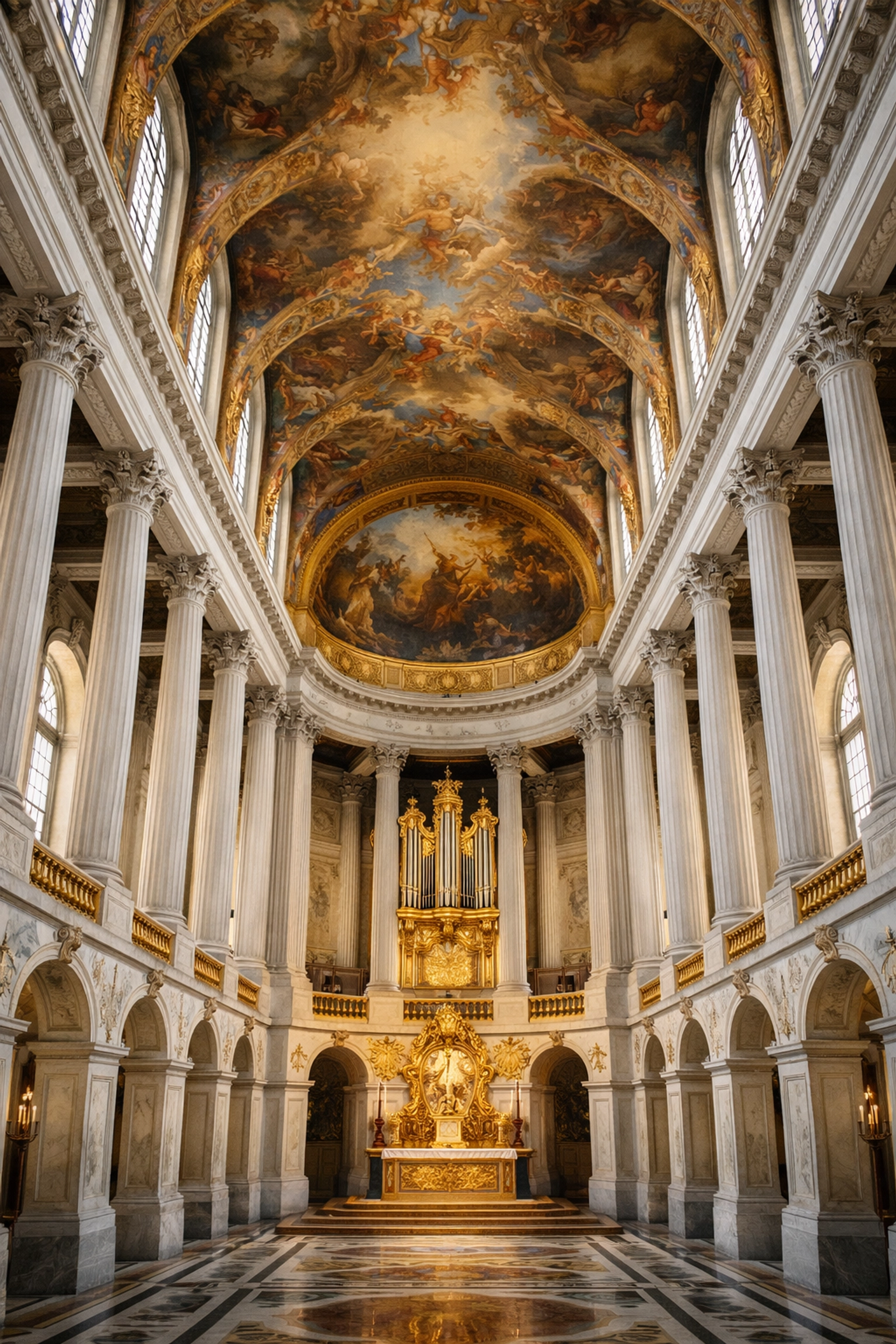
Versailles is all about grandeur. To capture the best photography locations like the Hall of Mirrors or the Royal Chapel, you need a wide-angle lens (think 16-35mm on a full-frame sensor). This allows you to get those sweeping floor-to-ceiling shots that make the Palace look as massive as it actually is.
If you are looking for fine art inspiration on how to frame these massive spaces, browse the galleries at Edin Fine Art to see how the pros handle architectural scale.
5. The "Frozen Fountain" Fiasco
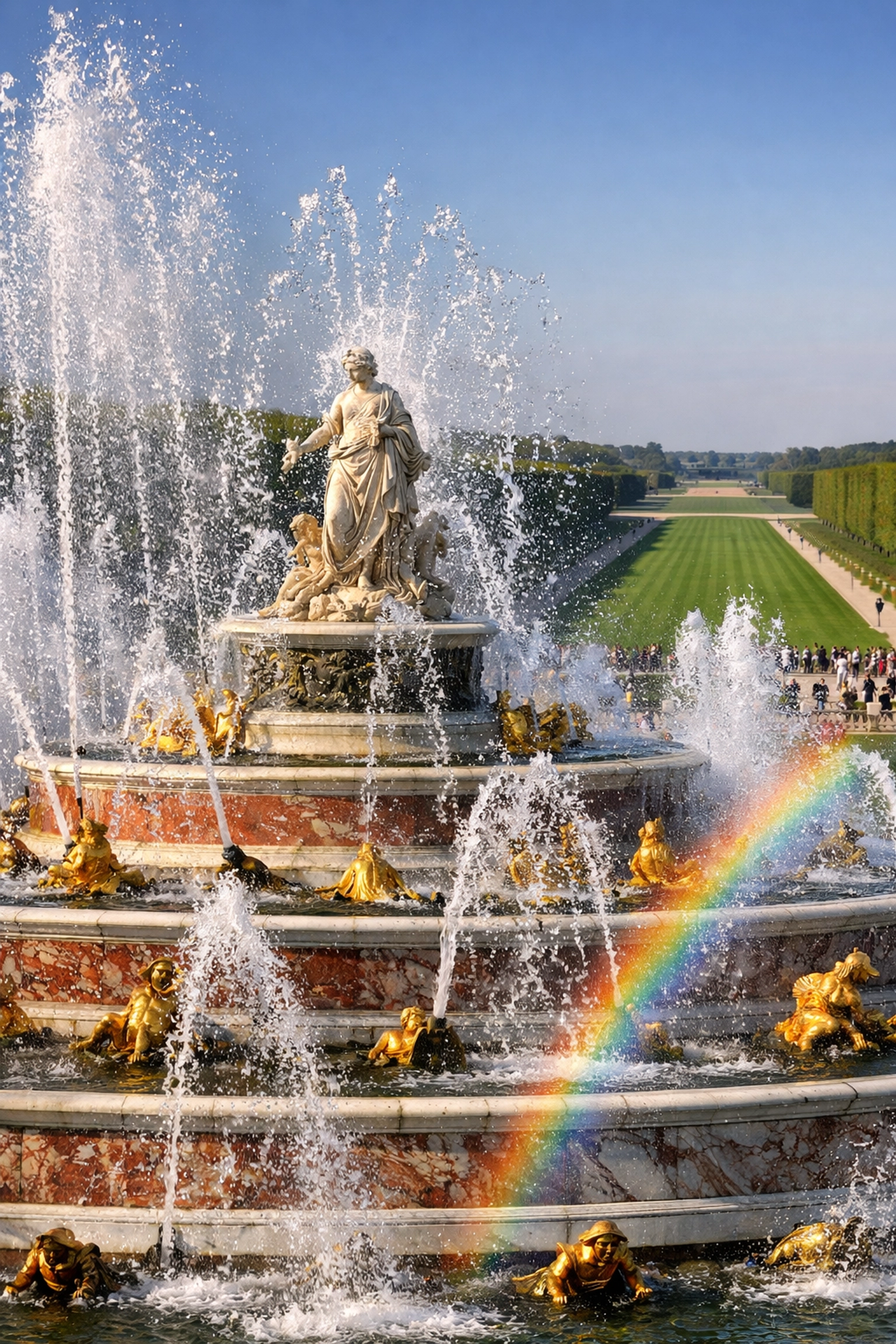
The gardens of Versailles are home to some of the most famous fountains in the world. A common mistake is shooting them with a "standard" shutter speed (like 1/125s), which often results in water that looks messy and unintentional.
You have two choices for great water shots:
- The Freeze: Use a very fast shutter speed (1/1000s or higher) to freeze every individual droplet in mid-air. This looks incredible when the sun hits the water.
- The Silk: Use a slow shutter speed (1/4s or longer) to turn the water into a smooth, milky ribbon. You’ll need a ND filter and a steady surface (or a discreet tripod in the gardens) for this.
Check the schedule for the "Musical Fountains Show." Shooting the fountains when they aren't actually running is a huge missed opportunity!
6. Forgetting the Polarizer (The Garden’s Best Friend)
The gardens are vast, and between the Grand Canal and the numerous marble statues, there is a lot of glare. Shooting the gardens without a circular polarizer is a mistake you’ll regret when you get home and see washed-out skies and shiny, distracting leaves.
A polarizer will:
- Make the blue of the sky pop against the white stone.
- Cut the reflection on the water of the Grand Canal.
- Deepen the greens of the meticulously manicured hedges.
It’s a small piece of glass that makes a massive difference. For more gear-specific advice, you might want to look at our camera reviews to see which filters we’re currently loving.
7. "Set It and Forget It" (Ignoring Room-Specific Settings)
The lighting at Versailles changes every ten feet. You might move from a dimly lit hallway into a room flooded with golden afternoon sun. If you’re shooting on full "Auto," your camera is going to get confused by the gold leaf reflections and the dark wood.
Don't be afraid to use Exposure Compensation. If the room is filled with bright gold and mirrors, your camera might underexpose the shot, making it look muddy. Bump it up +0.7 or +1.0 to keep those whites and golds looking bright and royal.
Must-Visit Photo Spots for 2026
Now that you know what not to do, where should you actually point your camera? Here are the top three photo spots you can't miss:
The Hall of Mirrors (Galerie des Glaces)
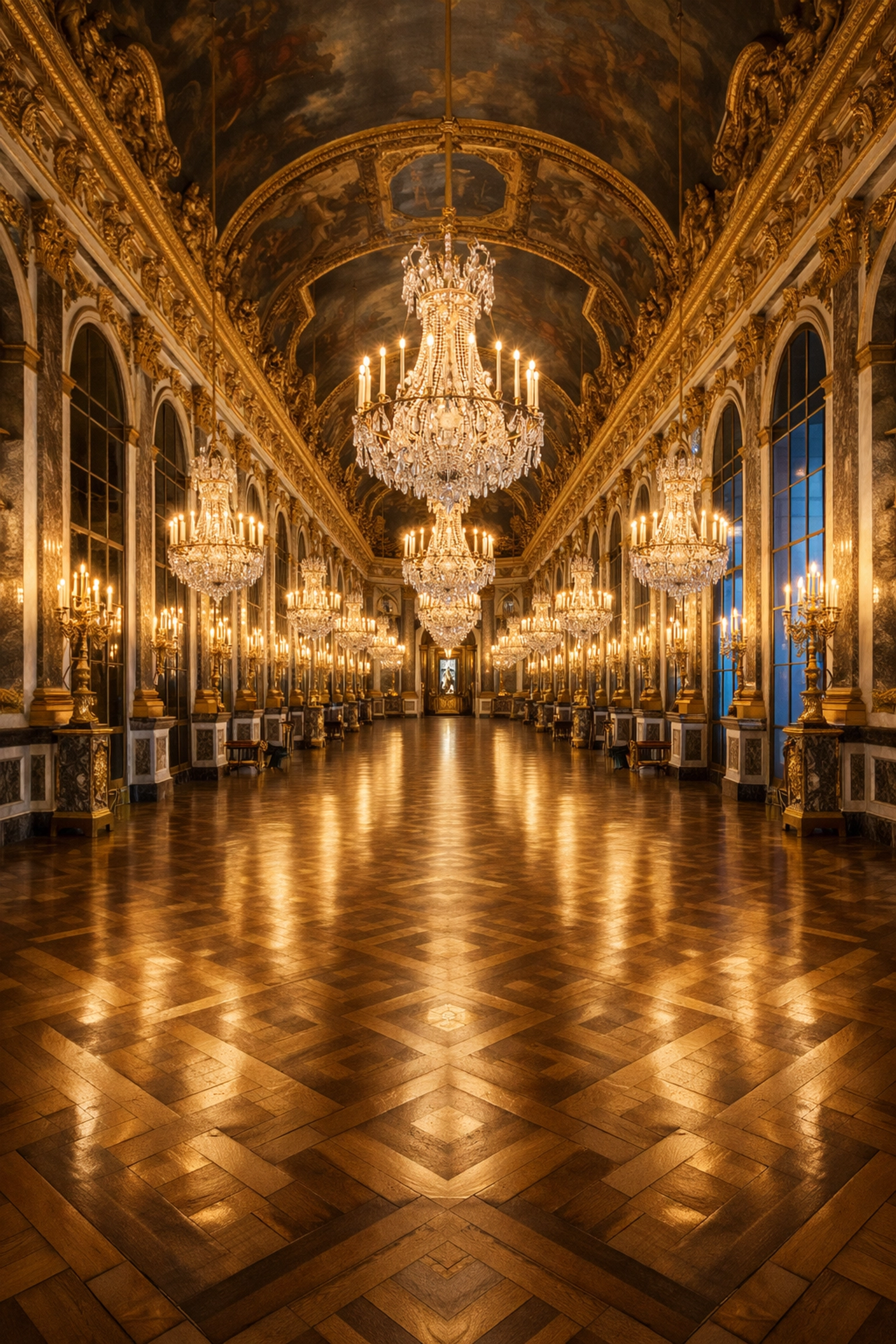
It’s the cliché for a reason. 73 meters of mirrors, 17 windows, and enough chandeliers to light up a small city. To get the best shot, stand at one end and use the floor patterns as leading lines to draw the eye through the gallery.
The Petit Trianon
If the main Palace is too chaotic, head to Marie Antoinette’s private estate. It’s much more intimate and offers a rustic, "hamlet" vibe that is perfect for lifestyle and portrait photography. It’s one of the best photography locations for those who prefer a softer, more natural aesthetic.
The Latona Fountain
Located right on the central axis of the gardens, this fountain offers a perfect view looking back at the Palace. It’s the quintessential Versailles landscape shot.
Planning Your Visit
Versailles isn't just a quick stop; it’s a full-day commitment. Between the Palace, the Gardens, and the Trianon, you’ll easily walk 10,000 steps before lunch.
- Tickets: Buy them in advance. Seriously. Don't be the person standing in the three-hour line. Find tour options here.
- Comfort: Wear comfortable shoes. The cobblestones at the entrance are brutal on heels.
- Stay Hydrated: There are a few spots to grab food, but they get packed. Bring a water bottle and some snacks.
If you’re looking for more travel inspiration or maybe a different kind of vibe after your trip to France, check out our guide on Miami’s hidden speakeasies for a totally different photography challenge.
Final Thoughts
Photography at the Palace of Versailles in 2026 is a test of patience, technical skill, and crowd management. But when you finally nail that shot of the sun setting over the Grand Canal, or the perfect symmetry of the Royal Chapel, it’s all worth it.
Remember, the best photos come to those who plan. Avoid these seven mistakes, respect the history of the space, and don't forget to put the camera down for at least five minutes to just soak in the madness of it all.
Happy shooting, and may your ISO be high and your shutter be fast!
For more educational content on how to improve your craft, visit our Educational Category.













