
Just start by mapping a flexible itinerary that puts your children’s routines and safety first, prepping imperative documents, medications, and contact info, and choosing accommodations with kid-friendly amenities to reduce stress; you should build in rest breaks, backup plans, and easy activities so the trip stays fun and manageable for everyone.

Key Takeaways:
- Prioritize routines and downtime by scheduling travel around sleep and meal times, and building in extra breaks for naps and transitions.
- Choose kid-friendly accommodations and locations with easy access to attractions, kitchen/laundry facilities, safe play areas, and nearby dining.
- Pack smart with a compact necessarys kit (medications, snacks, wipes, spare clothes) and include activities to keep children engaged during transit.
- Create a flexible itinerary: one main activity per day, alternate high-energy and low-energy plans, and keep backup options for weather or mood shifts.
- Prepare safety and documentation: IDs, health info, emergency contacts, travel insurance, and basic childproofing items, and brief kids on simple safety rules.
How to Choose a Kid-Friendly Destination
Researching Family-Friendly Locations
Use parent-reviewed sites, destination guides and local tourism pages to shortlist cities with age-appropriate attractions. Check if the area offers pediatric care within 30-60 minutes, easy public transit, and accommodations with kid amenities like cribs, babysitting, and kitchenettes. Compare concrete examples-Orlando for theme parks, San Diego for beaches and zoo, or a national park for outdoor learning-and aim for destinations with at least three family-focused activities so your days have variety without long transfers.
Considering Travel Time and Accessibility
Direct flights matter: aim for nonstop flights under 4 hours for toddlers and avoid more than one layover. Assess airport layout-stroller gates, short transfer times-and local transport options: taxis with car-seats, elevator access, and family-friendly shuttle schedules. If you face an 8-12 hour long-haul, plan overnight stops and recovery days to reduce the impact of jet lag on your kids.
Plan drives with stops every 90-120 minutes for stretching and bathroom breaks; apps can map rest areas and playgrounds. Time flights to coincide with naps or sleep cycles-early morning or late evening often works-and reserve bulkhead seats or bassinets when available. Verify car-seat rental policies abroad and book transfers that provide age-appropriate restraints and under-60-minute connections to keep transitions calm and safe.

Tips for Budgeting Your Family Trip
When planning your family budget, break costs into categories – travel, lodging, food, activities and a contingency fund. Expect roughly $150-$350 per day for a family of four depending on destination; urban centers trend higher. Prioritize free or low-cost options like parks and museums, set daily spending limits, and book nonrefundable deals only if you’re comfortable. Any unplanned expenses should be covered by a separate fund of at least $200-$500.
- Budgeting
- Family travel
- Discounts
- Contingency fund
- Travel insurance
Estimating Costs and Expenses
Itemize major lines: flights, lodging, meals, local transit and activities. Expect $250-$600 per person for domestic flights at peak times, $100-$300 per night for family rooms, and $20-$60 per person daily for food; parks and museums can be <$10 per child while theme parks run $80-$150. Use a spreadsheet so you can adjust categories quickly and see where you can trim.
Finding Deals and Discounts
You can use fare alerts, sign up for hotel newsletters, and compare package prices; bundling often saves 15-30%. Shop off-season, book midweek stays, and check membership perks like AAA or military rates. Watch flash sales and coupon codes, and confirm child pricing before checkout to avoid surprises.
You should map price trends with tools like Google Flights and Hopper, set alerts for multiple nearby airports, and consider booking refundable fares when travel plans are uncertain. Call hotels for unpublished family rates, combine attraction passes (multi-day park passes can cut costs by 20-50%), and always check cancellation rules and refund policies to avoid costly penalties.
How to Plan Engaging Activities for All Ages
When you map your itinerary, slot a mix of short, age-tailored activities: aim for 1-2 high-energy experiences and 1 calm activity daily, keeping outings under 3-4 hours for preschoolers. Use local resources like guided family tours, parks with playgrounds, and interactive museums to engage toddlers through teens. Coordinate transport times to avoid rush hours and pack an activity kit with snacks, small games, and a basic first-aid kit to handle hiccups on the go.
Balancing Adventure and Relaxation
Alternate full adventure days with lighter ones so you don’t burn out; for example, plan a hike or theme-park visit every other day and reserve afternoons for beach time or pool play. Keep morning activity windows to 2-3 hours for younger kids and schedule a 30-60 minute quiet period after lunch. Always factor in naps for under-5s and enforce sun and water safety during active outings to avoid emergencies.
Incorporating Educational Experiences
Turn outings into learning moments by choosing sites with hands-on programs: many museums offer family trails, the U.S. National Park Service has the Junior Ranger program, and science centers run interactive workshops. Give each child a simple goal-collect three facts or sketch one artifact-and use short scavenger hunts or local-language mini-lessons (5-10 words) to make learning playful and memorable.
Before you go, download apps like Google Arts & Culture or Seek by iNaturalist, book timed-entry tickets to avoid queues, and plan 60-90 minute learning blocks-long enough to engage, short enough to stay focused. Use on-site educators and combine hands-on exhibits with a 30-45 minute scavenger hunt; families in Washington, D.C. report higher engagement when they do both. Verify age limits and accessibility, and keep a backup activity pack for unexpected closures.
Tips for Packing Like a Pro
Efficiently group items by day and activity: use packing cubes to compress outfits and stash a day bag with snacks, wipes, a compact first-aid kit and two spare outfits per child. Bring a lightweight stroller (under 22 lb) and an FAA-approved car seat for flights, and note that sunscreen and insect repellent are treated as liquids on many routes. Pack duplicate prescriptions and scanned IDs on your phone. Any parents label luggage and use a color code to speed airport transitions.
- Packing cubes for outfits and dirty/clean separation.
- Carry-on day bag with snacks, wipes, spare clothes, and meds.
- Documents & meds: prescriptions, insurance cards, photocopies in waterproof sleeve.
- Electronics: charger, 10,000 mAh power bank, and child-safe headphones.
Essentials for Kids
Start with practical counts: pack at least two outfits per day for toddlers, one extra pair of shoes, a swim diaper if needed, and a compact thermometer. You should include small portions of familiar snacks (3-5 choices), a refillable water bottle, any daily medications in original containers, and a lightweight blanket or favorite comfort item. Mark important items with a bright tag or sticker so you can spot them quickly at airports or hotels.
Keeping Entertainment Handy
Stash a mix of screen and non-screen options in your carry-on: one tablet with 6-10 pre-downloaded shows, child-safe headphones, two small tactile toys, a sticker/activity book, and a magnetic travel game. Rotate activities every 20-30 minutes to prevent boredom, and keep a zip pouch for crayons and cards so loose pieces don’t scatter during transitions.
For longer trips, prepare playlists and offline episodes from apps like PBS Kids and Netflix (download at home) and load 8-12 short activities-laminated coloring pages, a magnetic chess/checkers set, travel-sized puzzles, and reusable sticker pads. Bring a 10,000 mAh power bank and a short USB-C cable stored in a labeled pouch; consider volume-limiting headphones (max ~85 dB) to protect ears. Swap items between kids to extend novelty and place a simple reward (sticker or small toy) for good behavior during flights or long drives.
How to Ensure Safety During Travel
Keep safety practical: carry printed and digital copies of IDs, passports, vaccination records and a short medical card with your child’s allergies, medications, blood type and two local emergency contacts. Buy travel insurance that covers medical evacuation and note policy numbers before departure. Fit and use the correct child seats or harnesses-proper restraint can cut serious injury risk substantially. Watch for water hazards and busy roads; when sightseeing, pick accommodations with secure entrances and use nightlights to prevent falls.
Preparing for Emergencies
Pack a compact first-aid kit with blister supplies, pediatric pain reliever, antihistamine, oral rehydration salts and prescription meds in original packaging; photograph prescriptions and save generics on your phone. Note local emergency numbers-911 (US), 112 (EU)-and locate the nearest hospital and pharmacy before arrival. If abroad, register with your embassy and keep your travel insurance provider and policy number on a printed card in each bag.
Keeping Track of Children
Use a layered approach: outfit kids in bright clothing, give them an ID wristband with your hotel and phone, and use a small GPS tracker or phone with location sharing. Agree on a meeting point and a check-in rhythm-plan to touch base every 30 minutes during crowded outings. In busy areas, hold hands or use a child tether for toddlers, and teach children to find uniformed staff if separated.
Practical tech options include Apple Watch Family Setup, a lightweight Jiobit or an AirTag hidden in a backpack, plus family-location apps that send alerts when a child crosses a geofence. Test devices and battery life before each day; a dead tracker is useless. Run a quick role-play so your child can say their full name, hotel address and your phone number, and swap recent photos with caregivers to speed identification if needed.
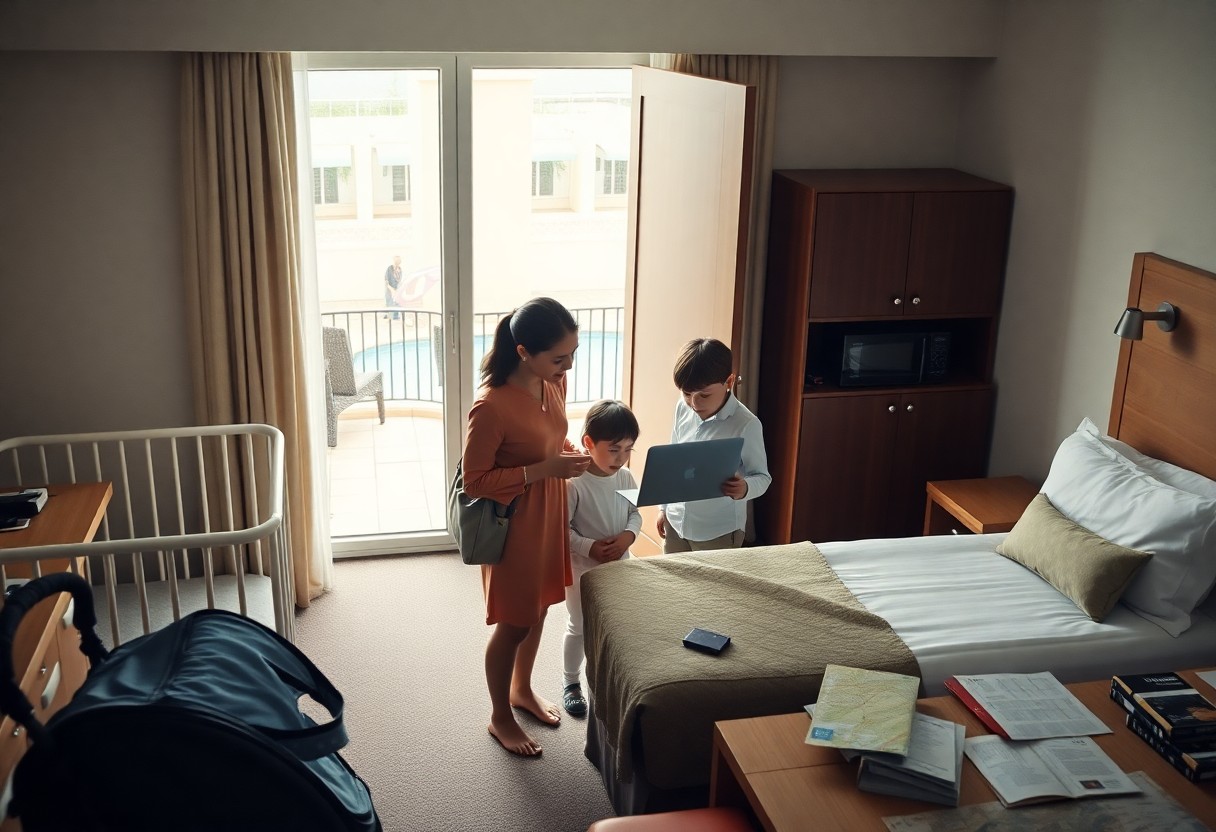
Factors to Consider When Booking Accommodation
Weigh location, safety and sleep needs when choosing family-friendly accommodation: think interconnecting rooms, crib availability and onsite laundry. Verify cancellation rules, guest photos in reviews and extra-bed fees to avoid surprises. Perceiving how nightly routines will fit the property prevents late-night disturbances and unexpected costs.
- Bed layout: request interconnecting rooms or suites for flexibility.
- Safety: confirm window locks, balcony guards and lifeguards if a pool is present.
- Practical amenities: kitchenette, on-site laundry and stroller storage.
- Policies: check child rates, early check-in options and parking fees.
Family-Friendly Amenities
You should prioritize hotels that offer free cribs or rollaways, kids’ menus and supervised clubs for ages 3-12; chains like Marriott and Hyatt often list these clearly. Prefer properties with a kitchenette, in-room fridge and washer/dryer to handle spills and laundry quickly. Note any unsafe features-unfenced pools or high balconies-and verify lifeguard or fencing details before booking.
Location and Proximity to Attractions
Aim for lodging within a 10-20 minute walk of main sights or under a 15-minute drive to parks and clinics to minimize transit stress. Confirm a supermarket within 5-10 minutes and stroller-friendly sidewalks or short transit hops. Avoid rooms facing busy roads so noise won’t interfere with naps or early bedtimes.
For example, staying within 2 miles of a theme park can cut daily commute time by 30-40 minutes; in cities, being on a tram line often saves parking hassles and taxi costs. You’ll benefit when attractions, medical services and groceries are all within a short, predictable travel time, and when the property offers secure bike or stroller storage for quick outings.
To wrap up
As a reminder, you can make family travel stress-free by planning age-appropriate activities, building flexible itineraries, packing imperatives and comfort items, keeping routines for meals and naps, and prioritizing safety and documentation. Set realistic expectations, involve kids in choices, and budget downtime to avoid overload. With clear communication and backup plans, your kid-friendly vacation will be memorable and manageable.
FAQ
Q: How do I choose the best kid-friendly destination and travel dates?
A: Start by matching the destination to your children’s ages and interests – beaches and resorts for toddlers, theme parks for school-age kids, and outdoor adventures for older children. Aim for direct flights or shorter travel times, and travel during shoulder seasons to avoid crowds and extreme weather. Prioritize accommodations with family-friendly amenities (kitchen or kitchenette, laundry, adjoining rooms, pool, child care) and check recent reviews from families. Verify local medical facilities, language considerations, and accessibility. Book refundable or flexible rates when possible and factor in school schedules and local holidays to minimize wait times at attractions.
Q: How do I build an itinerary that keeps kids engaged without over-scheduling?
A: Limit major activities to one or two per day and alternate high-energy outings with downtime for naps, pool time, or unstructured play. Schedule windows rather than fixed times so you can adapt to moods. Prebook timed-entry tickets for popular attractions to reduce queueing. Include bite-sized experiences like playground visits, short nature walks, or interactive museum exhibits. Plan meals at family-friendly times and identify nearby backup options if plans change. Leave at least one free day mid-trip for rest or spontaneous family choices.
Q: What should be on a family packing checklist and how can I pack efficiently?
A: Pack necessarys in everyone’s carry-on: medications (with dosage instructions), a small first-aid kit, snacks, water bottle, spare change of clothes, comfort item for younger children, chargers, and basic sanitation supplies. For checked luggage, use packing cubes to separate clothes, swimsuits, and toiletries; bring layers for variable weather and a lightweight rain jacket. Include a travel laundry kit or sink detergent for quick washes. Carry copies of travel documents, prescriptions, and emergency contact info digitally and on paper. Leave a little space for souvenirs and pack duplicates of key items like outlet adapters and sunscreen to avoid last-minute shopping.
Q: How can I make travel days (flights, long drives) less stressful for kids?
A: Plan around sleep schedules when possible: book overnight flights for longer trips or travel after naps for short hops. Reserve seats together and request bulkhead or extra-legroom seats if helpful. Bring layered clothing for temperature changes, a small pillow or blanket, and familiar comfort toys. Prepare a mix of entertainment: preloaded shows, audiobooks, coloring pads, and quiet travel games; rotate items to maintain interest. Pack spill-proof snacks, motion-sickness remedies if needed, and zip-top bags for trash or wet items. Allow extra time for security and restroom breaks and keep a short “first 30 minutes” activity to settle kids quickly after boarding or starting the drive.
Q: What safety and health steps should families take before and during the trip?
A: Check required or recommended vaccinations and consult your pediatrician for destination-specific advice and prescriptions. Purchase travel insurance that covers medical evacuation and family members. Create a medical info sheet with allergies, medications, and pediatrician contact, and carry it in your wallet and phone. Register travel plans with relevant consular services if international, and save local emergency numbers. Use child ID solutions for crowded places, apply sunscreen and insect repellent appropriate for children, and practice food and water safety where necessary. Keep medications in original packaging with prescriptions and maintain hygiene habits like frequent handwashing during travel.












