Hey there, fellow explorer! If you’ve ever felt the itch to grab your camera, pack a bag, and head into the wild, you’re in the right place. There is something truly magical about the U.S. National Parks. From the jagged, snow-capped peaks of the Tetons to the ethereal, sun-drenched arches of Utah, these lands are a playground for anyone with a lens and a bit of wanderlust.
At Photoguides, we believe that photography isn’t just about the settings on your camera; it’s about the feeling of being there when the first light hits the horizon. This guide is the start of a comprehensive series where we’ll dive deep into all 63 parks. Whether you’re a pro looking for the next fine art masterpiece for Edin Fine Art or a hobbyist wanting to capture a memory, let’s look at the absolute best photography locations across the states.
The Iconic Big Three: Grand Canyon, Yellowstone, and Yosemite
If there’s a "Mount Rushmore" of photography parks, these are the contenders. They are the most photographed for a reason: the scale is simply hard to wrap your head around until you’re standing at the rim or under a towering granite wall.
1. Grand Canyon National Park, Arizona
The Grand Canyon is the undisputed heavyweight champion of landscape photography locations. The way the light plays off the various layers of rock is a masterclass in color theory.
- Best Sunrise Spot: Mather Point or Hopi Point.
- Pro Tip: Look for "atmospheric perspective." During the early morning, the haze between the canyon walls creates a sense of depth that is perfect for wide-angle shots.
2. Yellowstone National Park, Wyoming
Yellowstone is like another planet. You’ve got geothermal features that look like spilled neon paint and wildlife that wanders right past your tripod.
- Best Photography Spot: Grand Prismatic Spring from the overlook trail. The steam and the vibrant oranges and blues are incredible.
- Wildlife: Head to Lamar Valley at dawn. It’s the "Serengeti of North America."
3. Yosemite National Park, California
Yosemite is where many of us fell in love with photography. Looking out from Tunnel View, you see El Capitan, Half Dome, and Bridalveil Fall all in one frame. It’s almost too easy to get a good shot here, but the challenge is finding a unique perspective.
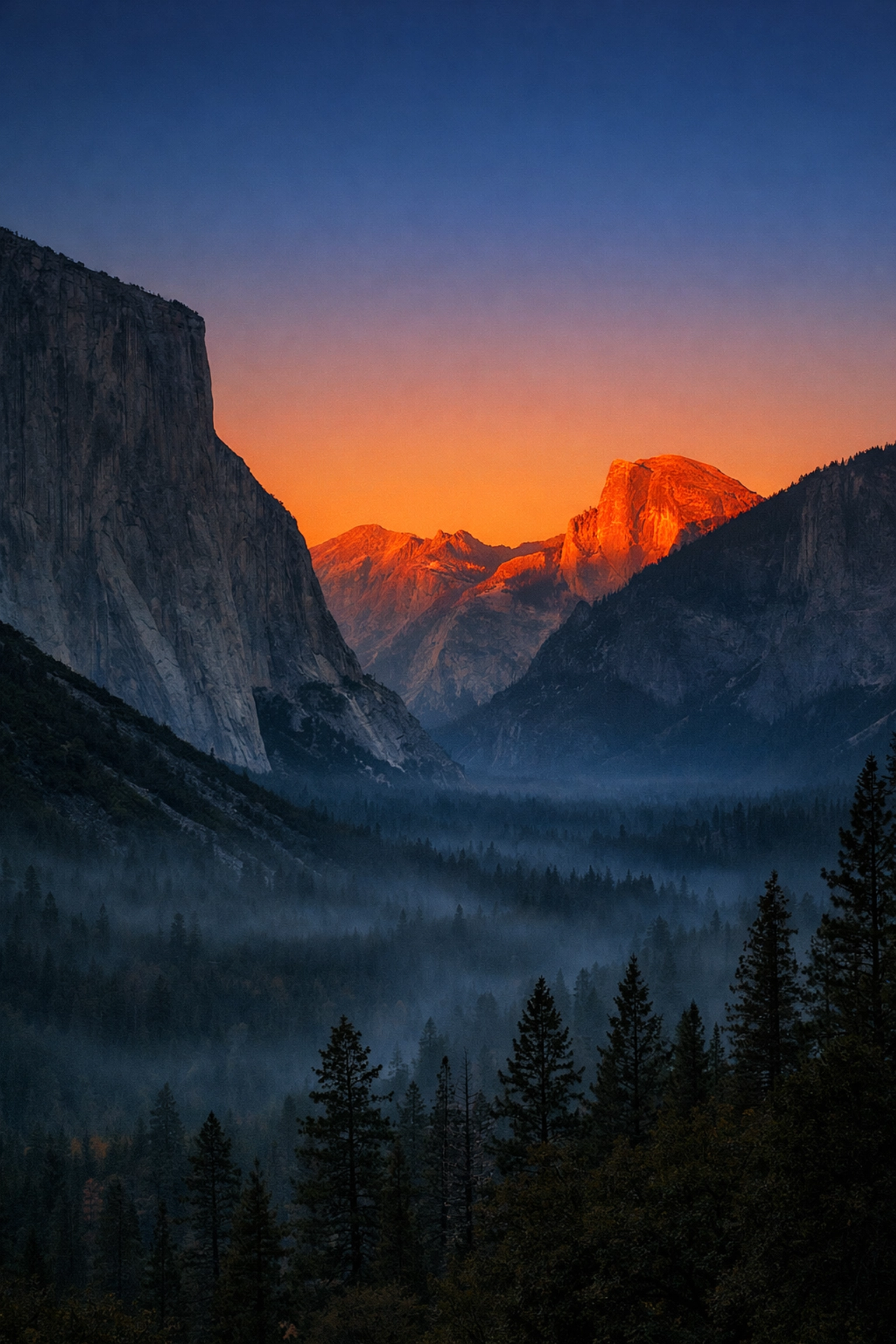
Alt Text: An ultrarealistic wide-angle shot of Yosemite Valley at sunset, showing the glowing orange light on Half Dome with the valley floor shrouded in a soft, blue evening mist.
The Desert Gems: Red Rocks and Arches
There is something deeply spiritual about the Southwest. The contrast between the deep blue sky and the fiery orange sandstone makes for some of the best sunrise spots in the world.
4. Arches National Park, Utah
Delicate Arch is the star of the show, but don't sleep on the Windows Section or Double Arch. For the best photography locations, you want to be at Delicate Arch for sunset, but be prepared to share the view with a few dozen other photographers.
5. Bryce Canyon National Park, Utah
Bryce isn't actually a canyon; it’s a giant amphitheater of hoodoos. At sunrise, these rock spires glow as if they’re lit from within. Inspiration Point offers a panoramic view that will leave you breathless.
6. Zion National Park, Utah
Zion is about scale. Standing at the bottom of the canyon looking up at the Great White Throne is a humbling experience. If you’re feeling adventurous, the Narrows offers a unique opportunity to shoot "glow light": where the sun hits the top of the canyon walls and reflects a warm, soft light down into the water.
For more deep dives into specific parks, be sure to check out the Edin Chavez Blog, where I share personal stories from the field.
The Peaks and Glaciers: Northern Wonders
If you prefer alpine lakes and jagged skylines, the northern parks are your sanctuary.
7. Glacier National Park, Montana
The "Crown of the Continent" is a dream. Hidden Lake Overlook and the many pull-offs along the Going-to-the-Sun Road provide endless landscape photography locations. Keep an eye out for mountain goats; they make for excellent foreground subjects.
8. Grand Teton National Park, Wyoming
The Tetons rise abruptly from the valley floor with no foothills to block your view. This makes locations like Schwabacher Landing and Mormon Row absolutely iconic. The reflection of the peaks in the Snake River at dawn is a bucket-list shot for every photographer.
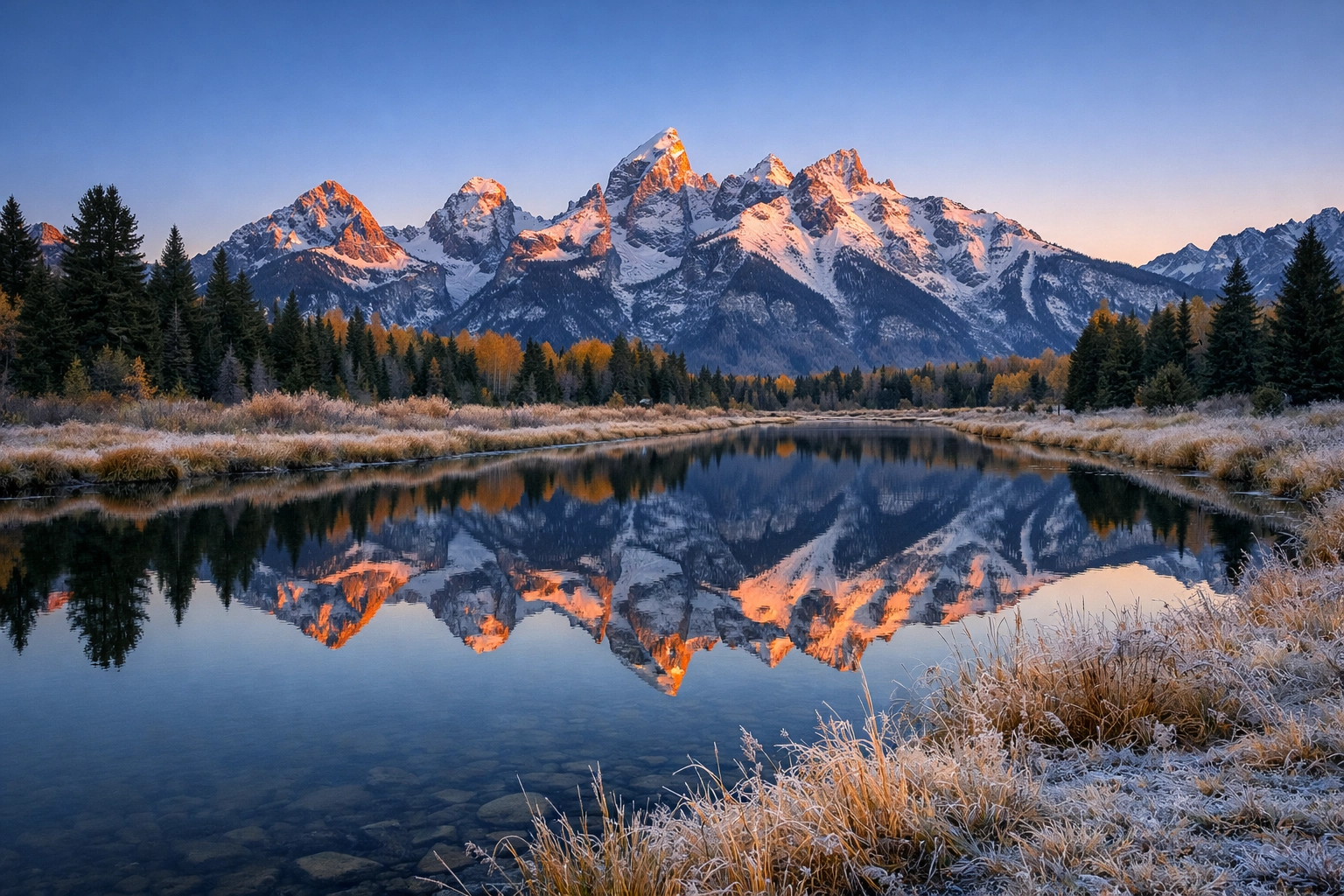
Alt Text: A crisp, ultrarealistic morning photo of the Grand Tetons reflecting in the calm waters of Schwabacher Landing, with golden light hitting the mountain peaks and a slight morning frost on the riverbank grass.
The Coastal and Tropical Escapes
Not every national park is about mountains and deserts. Some of the most beautiful light can be found where the land meets the sea.
9. Acadia National Park, Maine
Acadia is the first place in the U.S. to see the sun for half the year. Catching the first light at the top of Cadillac Mountain is a rite of passage. The rugged coastline at Boulder Beach is also perfect for long-exposure shots of the Atlantic crashing against the rocks.
10. Olympic National Park, Washington
Olympic is three parks in one: rugged coastline, glaciated mountains, and temperate rainforest. Ruby Beach, with its sea stacks and driftwood, is a moody photographer’s paradise. If you’re into gear and want to know what I use to protect my kit in the damp rainforest, head over to Shut Your Aperture.
Essential Gear for Your National Park Road Trip
Capturing these locations requires more than just a camera. You need to be prepared for the elements. We’ve put together a list of essential photography gear that covers everything from tripods to lens cleaners.
Quick Gear Checklist:
- A Sturdy Tripod: Essential for those best sunrise spots and long exposures of waterfalls.
- Wide-Angle Lens: To capture the vastness of places like the Grand Canyon.
- Telephoto Lens: Crucial for wildlife in Yellowstone or compressing mountain peaks in the Tetons.
- Circular Polarizer: To cut glare on water and make the skies pop in the desert.
- Sky Overlays: Sometimes the weather doesn't cooperate. You can always enhance your post-processing with some pro sky overlays.
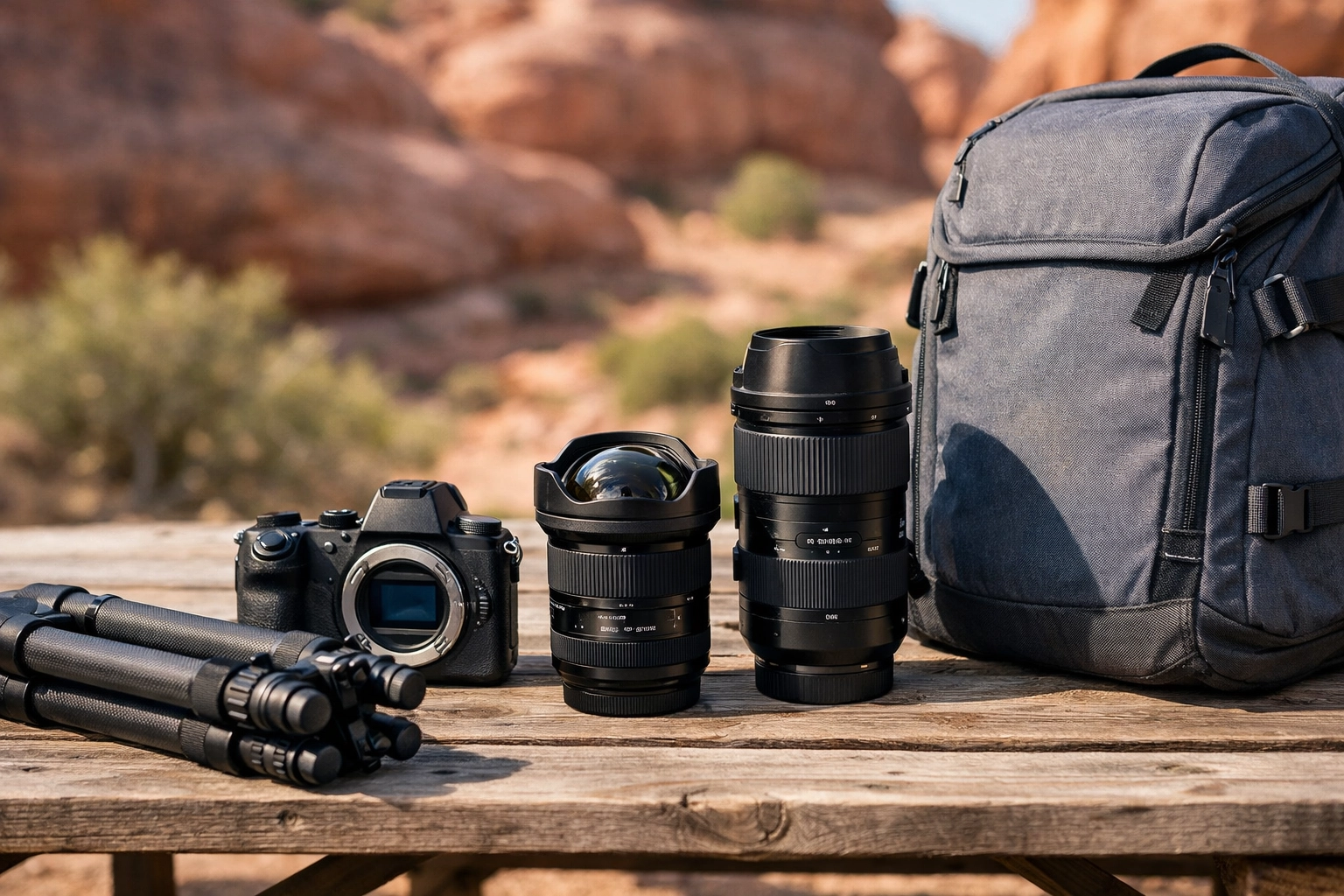
Alt Text: A flat-lay photo of professional photography gear, including a mirrorless camera, three different lenses, a carbon fiber tripod, and a rugged backpack, set against a rustic wooden background.
Practical Travel Tips for Photographers
Traveling through all 63 parks is a marathon, not a sprint. Here are a few things I’ve learned over the years to make the experience smoother:
- Get the America the Beautiful Pass: It’s $80 and covers your entrance fees for an entire year. It pays for itself after just three parks.
- Timing is Everything: The "Golden Hour" (the hour after sunrise and before sunset) is your best friend. The light is softer, warmer, and more flattering.
- Respect the Land: Always follow Leave No Trace principles. Stay on marked trails, especially in fragile environments like the crust in Arches or the meadows in Rainier.
- Check for Closures: Many parks have seasonal road closures. For instance, the road to the sunrise area in Mount Rainier or the Going-to-the-Sun Road in Glacier is only open for a few months a year.
If you’re looking for a quick escape while planning your big trip, you might find some inspiration in our guide to cheap weekend getaways.
Capturing the Hidden Gems
While everyone flocks to the "Big Hits," some of the best photography locations are in the parks you’ve never heard of.
- Great Basin (Nevada): Incredible for astrophotography. The skies are some of the darkest in the lower 48.
- Dry Tortugas (Florida): A remote fort in the middle of the ocean. The turquoise water and brick architecture are a stunning contrast.
- Isle Royale (Michigan): A rugged, isolated island in Lake Superior. It’s perfect for those who want to get away from the crowds and capture raw, untouched nature.
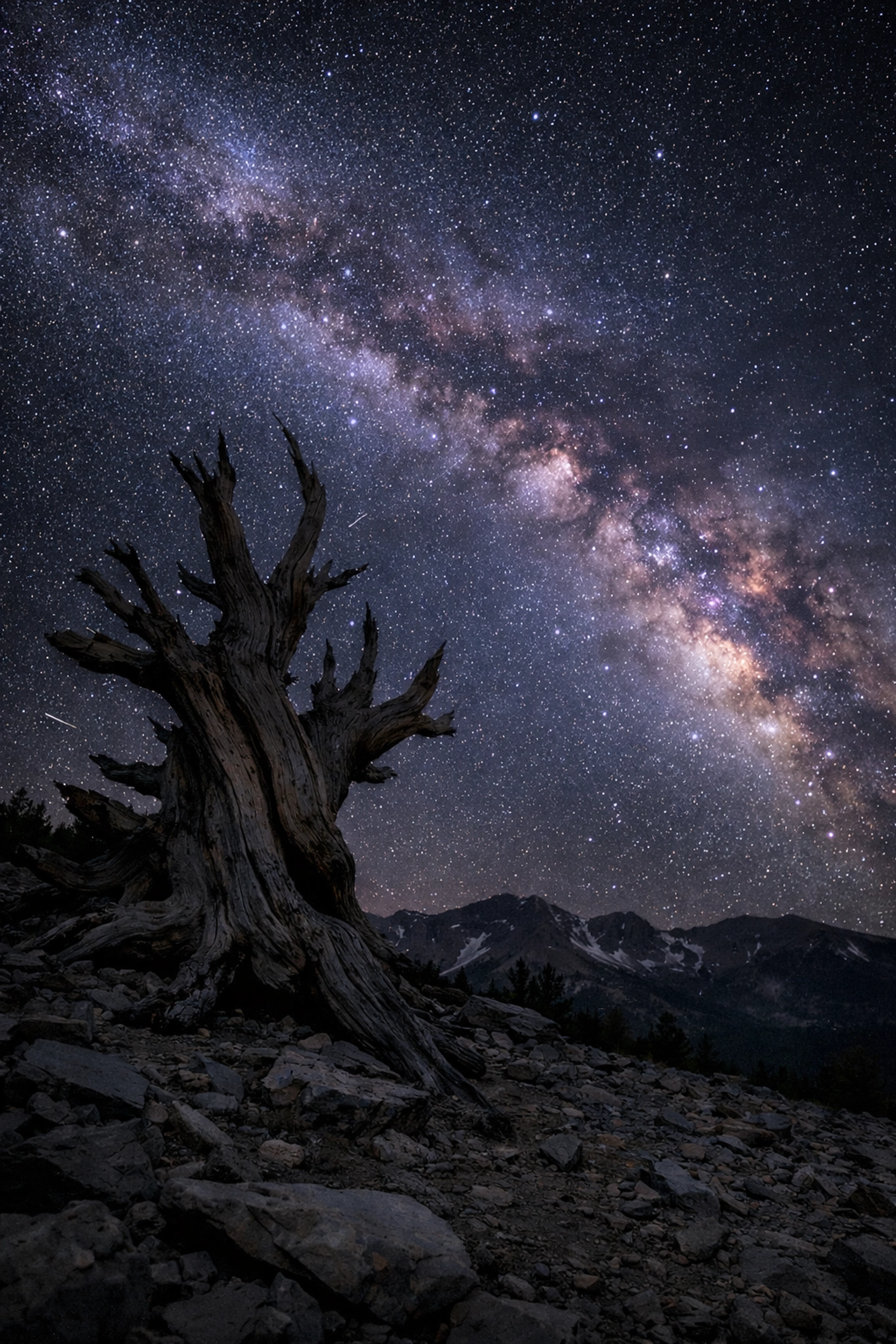
Alt Text: An ultrarealistic night sky shot from Great Basin National Park, showing the Milky Way stretching across a perfectly dark sky with an ancient Bristlecone Pine tree silhouetted in the foreground.
Final Thoughts
The journey through the 63 U.S. National Parks is a journey through the heart of nature’s beauty. Each park has its own personality, its own challenges, and its own unique light. Whether you are chasing the best sunrise spots in the East or the dramatic landscape photography locations of the West, the most important thing is to be present.
Remember to take a moment to put the camera down and just breathe it in. The photos are great, but the memories of standing in these cathedrals of nature are what truly last.
Stay tuned as we continue this series, breaking down every single park with specific maps, gear guides, and local secrets. Until then, keep shooting and stay curious!
For more inspiration on how to turn your passion for photography into something more, explore our resources on evergreen online business ideas or browse our educational category for more tips.
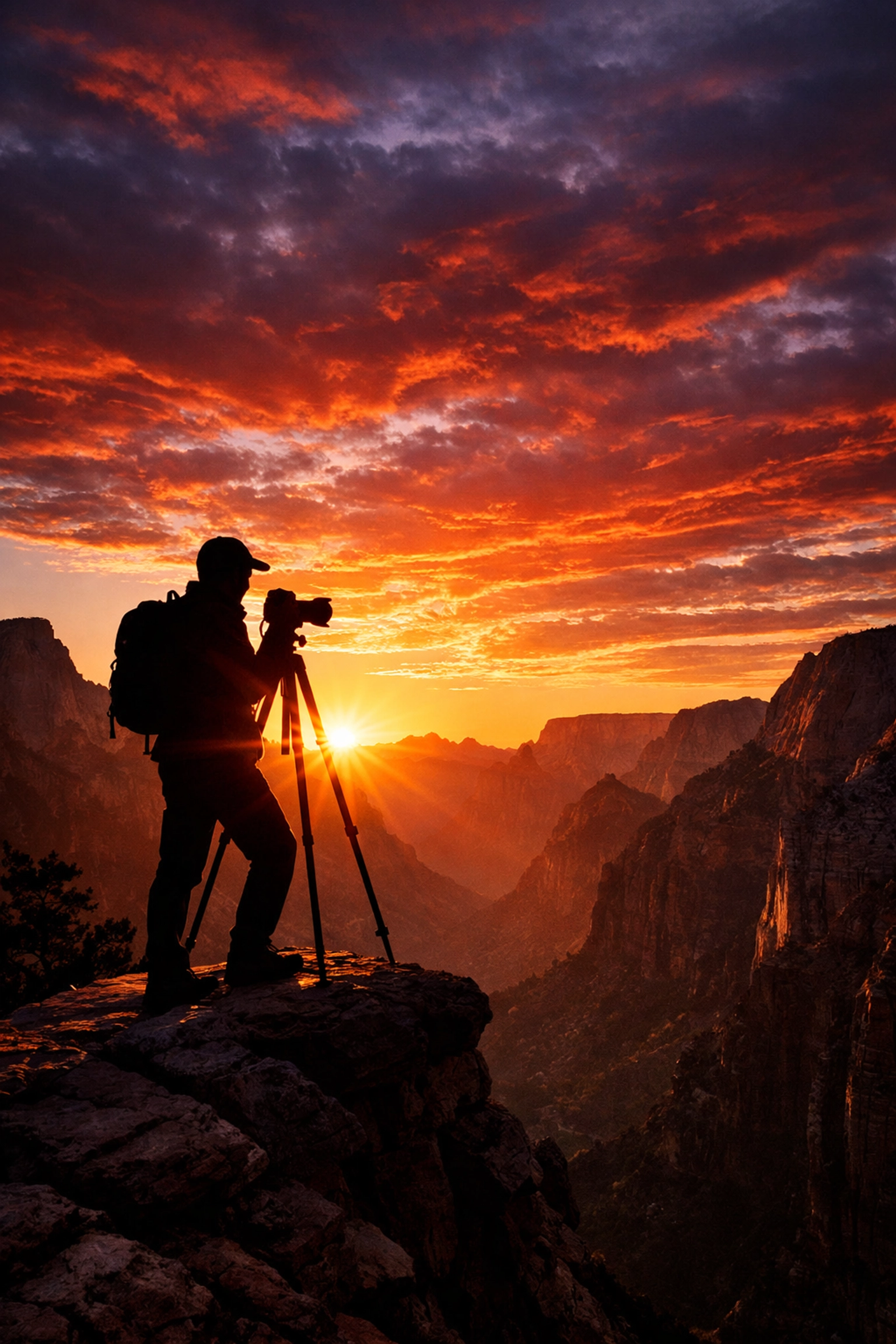
Alt Text: A silhouette of a photographer standing on a cliff edge at sunset, looking out over a vast valley of pine trees and distant mountains, representing the spirit of adventure.