
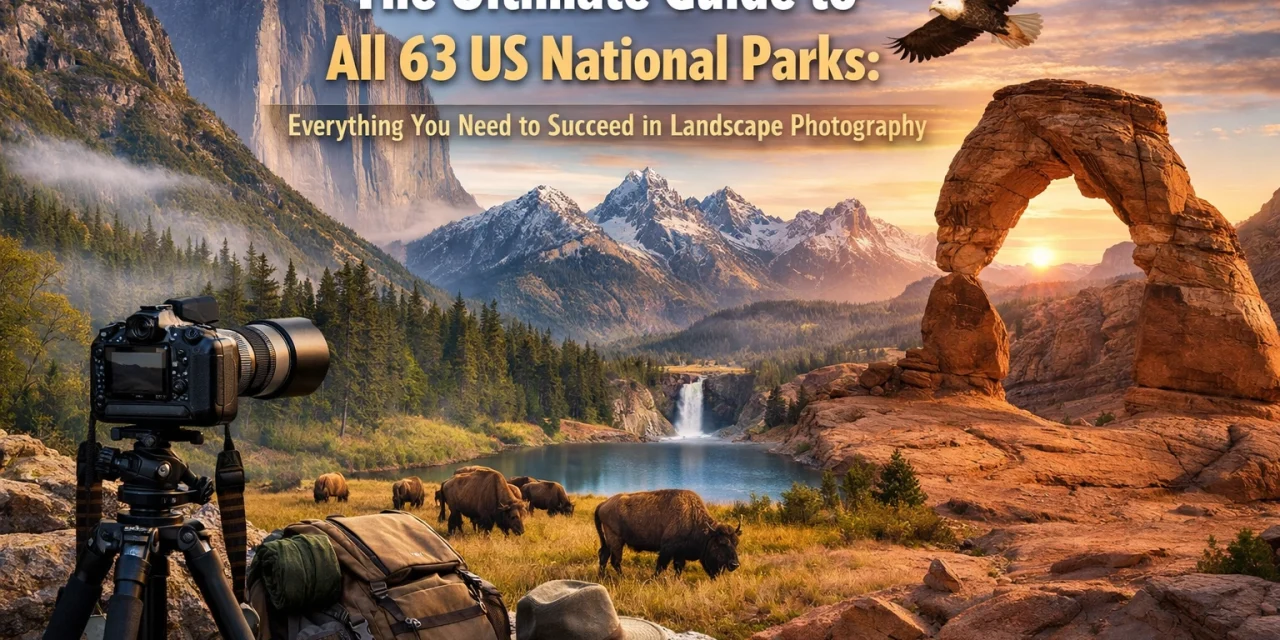
Category: Photo Guides
There is something deeply spiritual about standing on the edge of the Grand Canyon as the first light touches the rim, or watching the mist dance through the ancient trees of the Great Smoky Mountains. As photographers, we aren’t just looking for a pretty picture; we’re looking to capture a feeling: a moment of raw, natural power that stays with us long after we’ve packed up our tripods.
The United States is home to 63 National Parks, each offering a unique canvas for landscape photography. Whether you are chasing the jagged peaks of the Tetons or the alien-like rock formations of the Southwest, the diversity is staggering. I’ve spent years traveling to these icons, and I’ve realized that while every park is different, the formula for success remains the same: preparation, patience, and a little bit of luck.
In this ultimate guide, we’re laying the groundwork for a massive series where we will deep-dive into every single one of the 63 parks. This is your hub for the best photography locations and the technical secrets you need to bring home gallery-worthy shots.
Setting the Stage: Gear for the Great Outdoors
Before you set foot on a trail, you need to know your kit. Landscape photography is demanding on gear, not just because of the resolution required, but because of the environments you’ll face.
For most of these parks, a wide-angle lens (like a 16-35mm) is your bread and butter. It’s what allows you to capture the sheer scale of places like Yosemite or Zion. However, don't overlook a solid telephoto lens. Compressing the layers of a mountain range or picking out a lone tree in a desert can often result in a more impactful image than a standard wide shot.
Beyond lenses, a sturdy tripod is non-negotiable. Whether you’re shooting long exposures of waterfalls in Olympic National Park or waiting for the sun to drop in the Badlands, stability is key. If you’re wondering what exactly should be in your bag, check out our guide on essential photography gear to make sure you aren’t missing the basics. For more in-depth gear talk and community insights, I always recommend heading over to www.shutyouraperture.com.
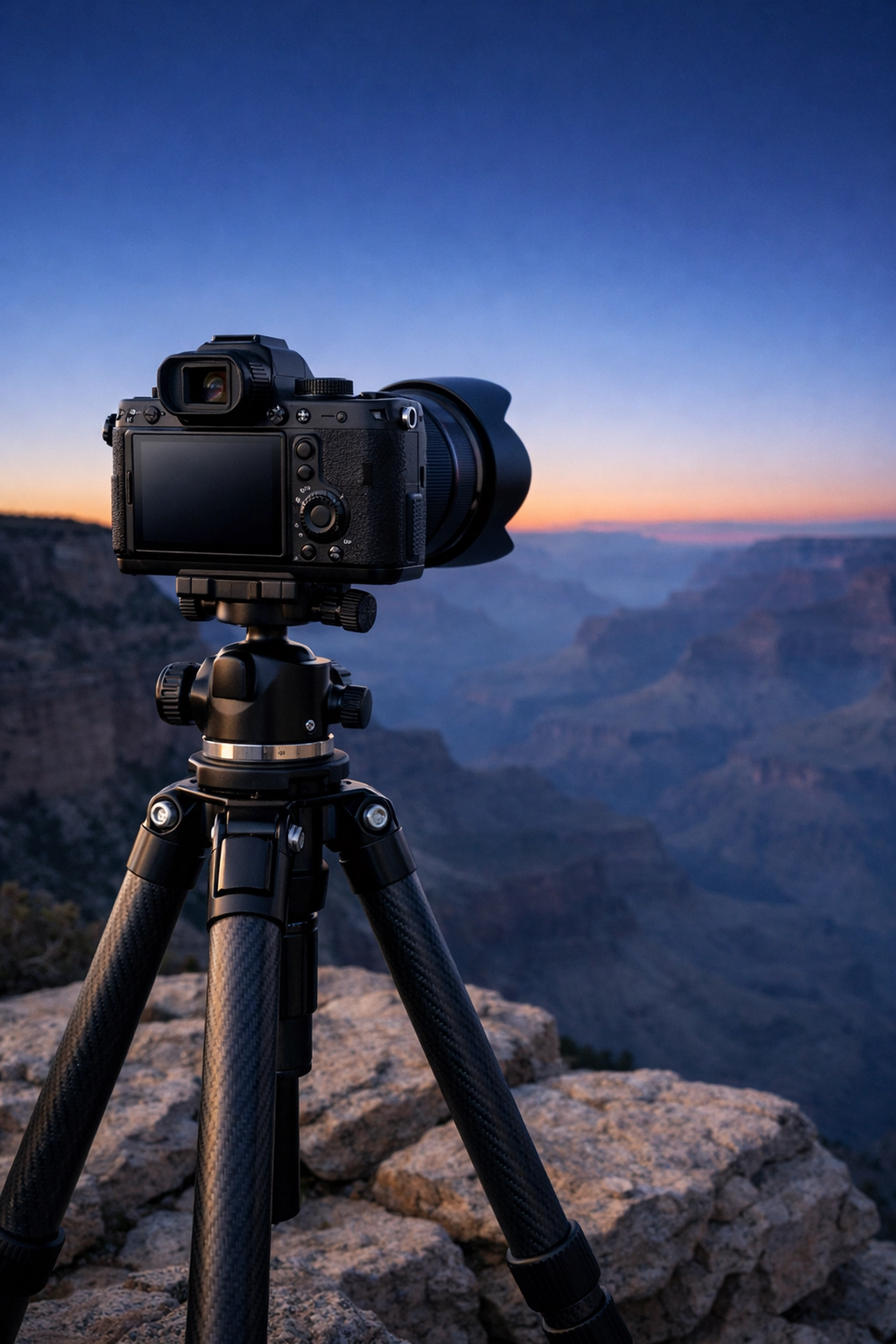
Alt text: A professional camera setup on a tripod overlooking a vast mountain valley during the blue hour, showcasing essential landscape photography gear.
The Quest for Light: Best Sunrise Spots
In landscape photography, light is everything. You can have the most beautiful composition in the world, but if the light is flat and gray, the photo will lack soul. This is why we chase the "Golden Hour."
Many of the best sunrise spots in the country are found within the National Park system. Think about Mesa Arch in Canyonlands National Park. At sunrise, the underside of the arch glows a fiery orange as it reflects the light from the canyon floor. It’s a bucket-list shot for a reason.
To succeed, you need to be on-site at least 45 minutes before the sun actually crests the horizon. This "Civil Twilight" period often provides the most dramatic colors in the sky. If you’re looking to see how these moments translate into high-end prints, you can see some of my favorite captures at www.edinfineart.com.
Regional Highlights: Where to Point Your Lens
With 63 parks to cover, it helps to break them down by region. Each area of the U.S. requires a different approach to composition and timing.
The Desert Southwest
This is the land of red rocks and dramatic arches. Parks like Arches, Bryce Canyon, and Zion offer some of the most iconic landscape photography locations in the world.
- Pro Tip: Use a polarizing filter here. It will help manage the reflections on the rocks and make the blue sky pop against the orange sandstone.
- Key Spot: Delicate Arch at sunset is a classic, but don't sleep on the "hoodoos" of Bryce Canyon during a winter snowfall.
The Pacific Northwest and California
From the rainforests of Olympic to the granite cathedrals of Yosemite, this region is all about scale and mood.
- Pro Tip: This is where you’ll want to practice your HDR (High Dynamic Range) techniques. The contrast between deep forest shadows and bright, snow-capped peaks can be a challenge for any sensor.
- Key Spot: Tunnel View in Yosemite is arguably the most famous view in photography, but exploring the rugged coastlines of Olympic National Park offers a more raw, moody experience.
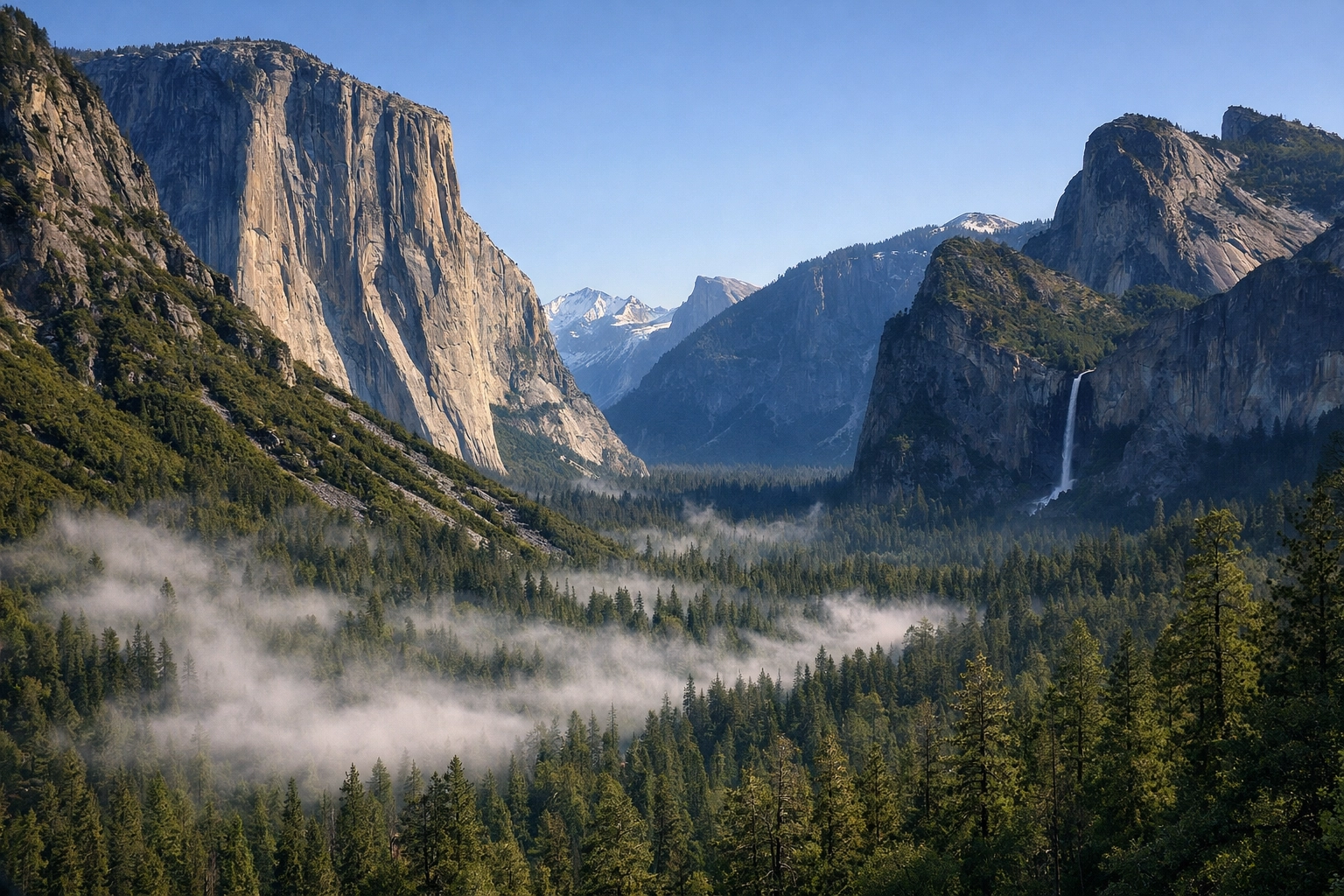
Alt text: The majestic granite cliffs of Yosemite Valley reflected in the Merced River, capturing the iconic Tunnel View during a clear spring morning.
The Rocky Mountains
Glacier, Grand Teton, and Yellowstone. These parks are about raw, alpine beauty and wildlife.
- Pro Tip: Early morning is best not just for the light, but for the wildlife. Keep your long lens handy for moose or bears while you wait for the sun to hit the peaks.
- Key Spot: Snake River Overlook in the Tetons: made famous by Ansel Adams: is still one of the best places to capture the grandeur of the American West.
Planning and Logistics
Photography in the National Parks isn't as simple as showing up and clicking a shutter. Many of the most popular parks now require reservations just to enter. Places like Arches and Rocky Mountain National Park have implemented timed-entry systems to manage crowds.
Always check the weather and park alerts before you go. A sudden storm in the North Cascades can turn a photography trip into a survival situation. However, don't be afraid of "bad" weather. Some of the best photos happen right after a storm clears, when the clouds are breaking and the light is dramatic. If you're looking for more travel inspiration that won't break the bank, we have a great list of cheap weekend getaways that often include park access.
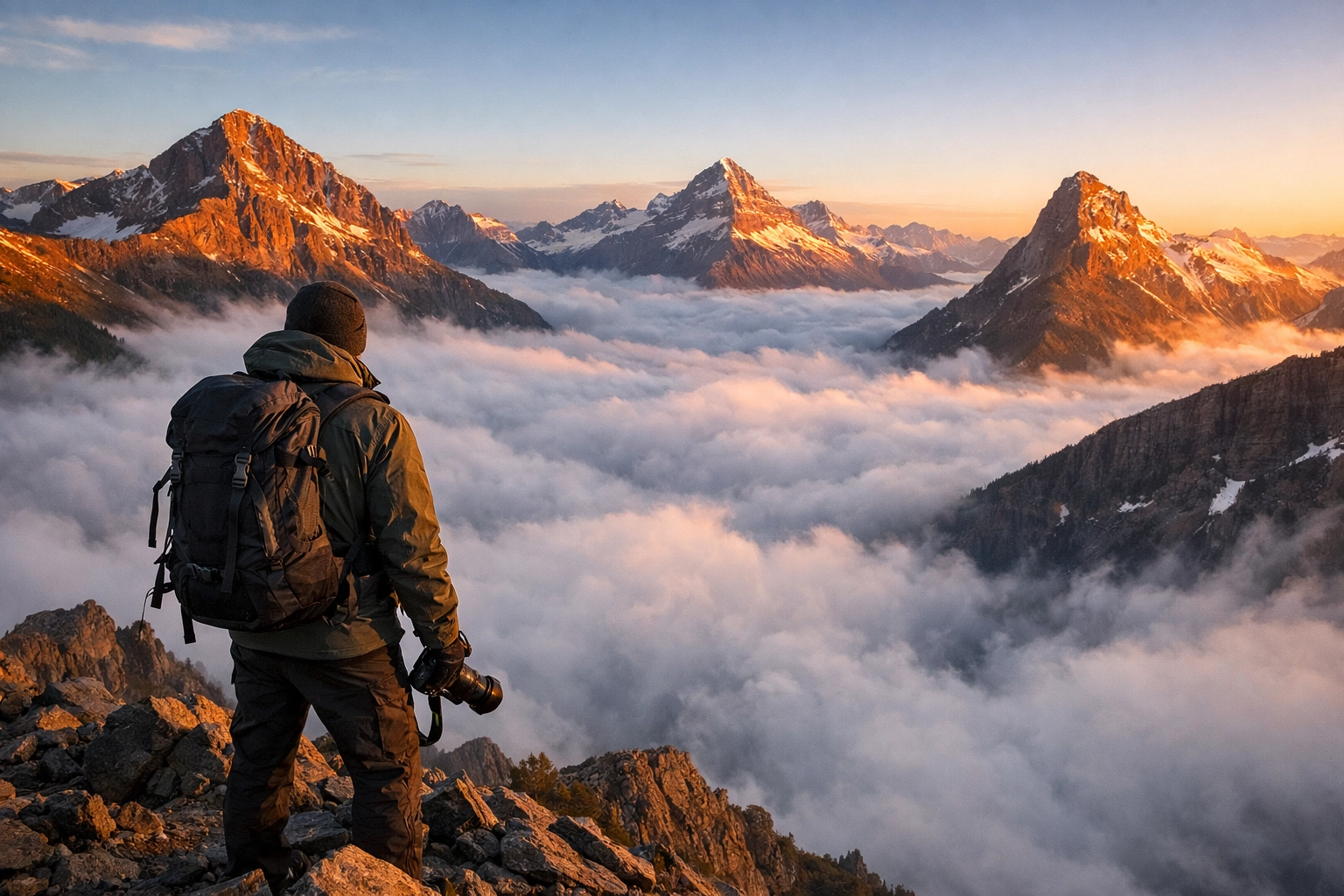
Alt text: A photographer standing on a rugged cliff edge, looking out over a misty mountain range, symbolizing the planning and adventure involved in landscape photography.
Composition: Beyond the Postcard Shot
It’s easy to go to a famous overlook, put your tripod in the same holes as a thousand photographers before you, and take the same photo. But to truly succeed, you need to find your own voice.
Look for leading lines: a winding river, a fallen log, or a trail that leads the viewer’s eye into the frame. Use foreground elements to create a sense of depth. In the Everglades, this might be a patch of sawgrass or a cypress knee. In the desert, it might be a uniquely shaped cactus or a pattern in the sand.
For more technical tutorials and deep dives into the "how-to" of these shots, keep an eye on our educational category for updated lessons. We are constantly adding new content to help you master the craft.
The Journey Begins Here
This guide is just the beginning. We are embarking on a journey to document all 63 parks in exhaustive detail. Each upcoming post in this series will focus on a single park, providing you with a map of the best spots, the best times to visit, and the gear you’ll need for that specific environment.
Whether you are a seasoned pro or just picking up your first camera, the National Parks offer an endless source of inspiration. They remind us of the beauty of our world and the importance of preserving it. You can follow along with our entire journey and find specific park deep-dives at www.blog.edinchavez.com.
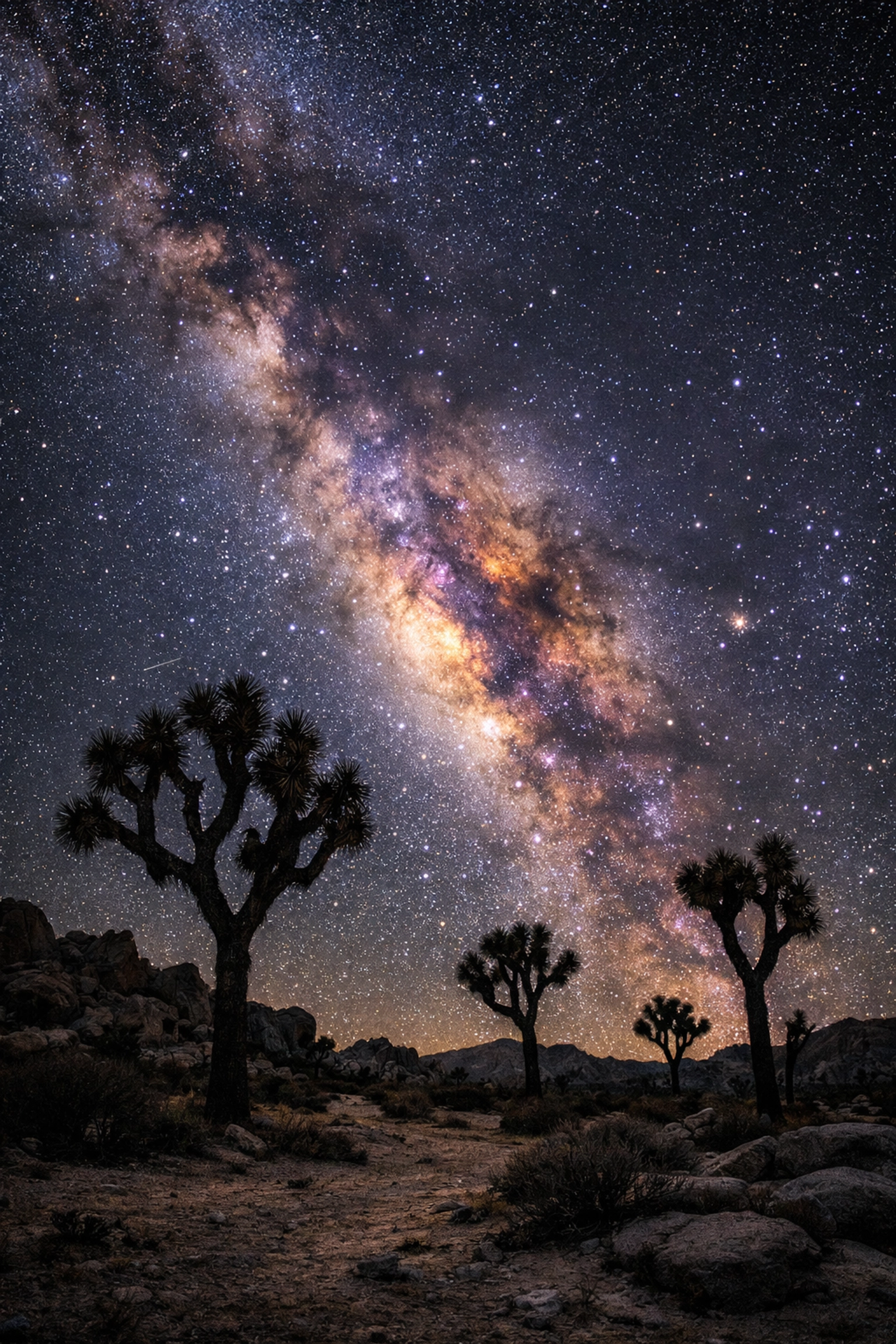
Alt text: A wide-angle shot of the Milky Way stretching over the desert silhouettes of Joshua Tree National Park, highlighting the beauty of night photography in the parks.
If you’re planning a trip and want a more curated, professional experience, we offer a photography booking experience to help you get the most out of your time in the field. There is nothing like having a guide who knows the land and the light to ensure you come home with the shots you’ve always dreamed of.
Landscape photography is a marathon, not a sprint. It’s about the miles hiked, the early wake-up calls, and the quiet moments spent waiting for the world to wake up. So, pack your bags, clean your lenses, and let's head out into the wild. The 63 parks are waiting for you, and we’ll be here to guide you through every single one of them.
Stay tuned for our next post in the series, where we’ll be heading to the heart of the desert to explore the hidden corners of Arches National Park. Until then, keep shooting and keep exploring.













