Category: Photo Guides
There’s something truly humbling about standing on the edge of the Grand Canyon or watching the mist roll over the peaks of the Great Smoky Mountains. I’ve spent a huge chunk of my life chasing light across these landscapes, and let me tell you, there is no greater playground for a photographer or an adventurer than the US National Park system.
With 63 unique parks scattered from the icy reaches of Alaska to the tropical waters of the Virgin Islands, the task of seeing them all: let alone photographing them well: can feel overwhelming. But don't worry, I’ve got your back. This guide is designed to help you navigate the "best photography locations" and find those "landscape photography locations" that will make your portfolio shine. Whether you're a pro looking for the "best sunrise spots" or a weekend warrior ready for your first big road trip, let’s get you ready for the journey of a lifetime.
Why the National Parks?
The National Parks aren't just patches of green on a map; they are the crown jewels of the American landscape. Each park was preserved for a reason: be it the geothermal oddities of Yellowstone or the towering granite cathedrals of Yosemite. For us, they represent a chance to disconnect from the digital noise and reconnect with the earth.
When I’m out there, I’m often reminded of why I started Photoguides in the first place: to share the beauty of the world through a lens. If you’re looking for deep dives into specific techniques or gear, you can always check out www.blog.edinchavez.com or see my finished works at www.edinfineart.com.
The Southwest: A Photographer’s Dream
The "Mighty 5" in Utah: Zion, Bryce Canyon, Capitol Reef, Arches, and Canyonlands: are arguably the most concentrated collection of "best photography locations" in the world.
In Zion National Park, the light hitting the canyon walls at sunrise is something you have to see to believe. For the best experience, head to the Watchman Bridge. It’s a classic for a reason. Arches National Park offers iconic silhouettes like Delicate Arch, but don't sleep on the Windows Section during the blue hour.
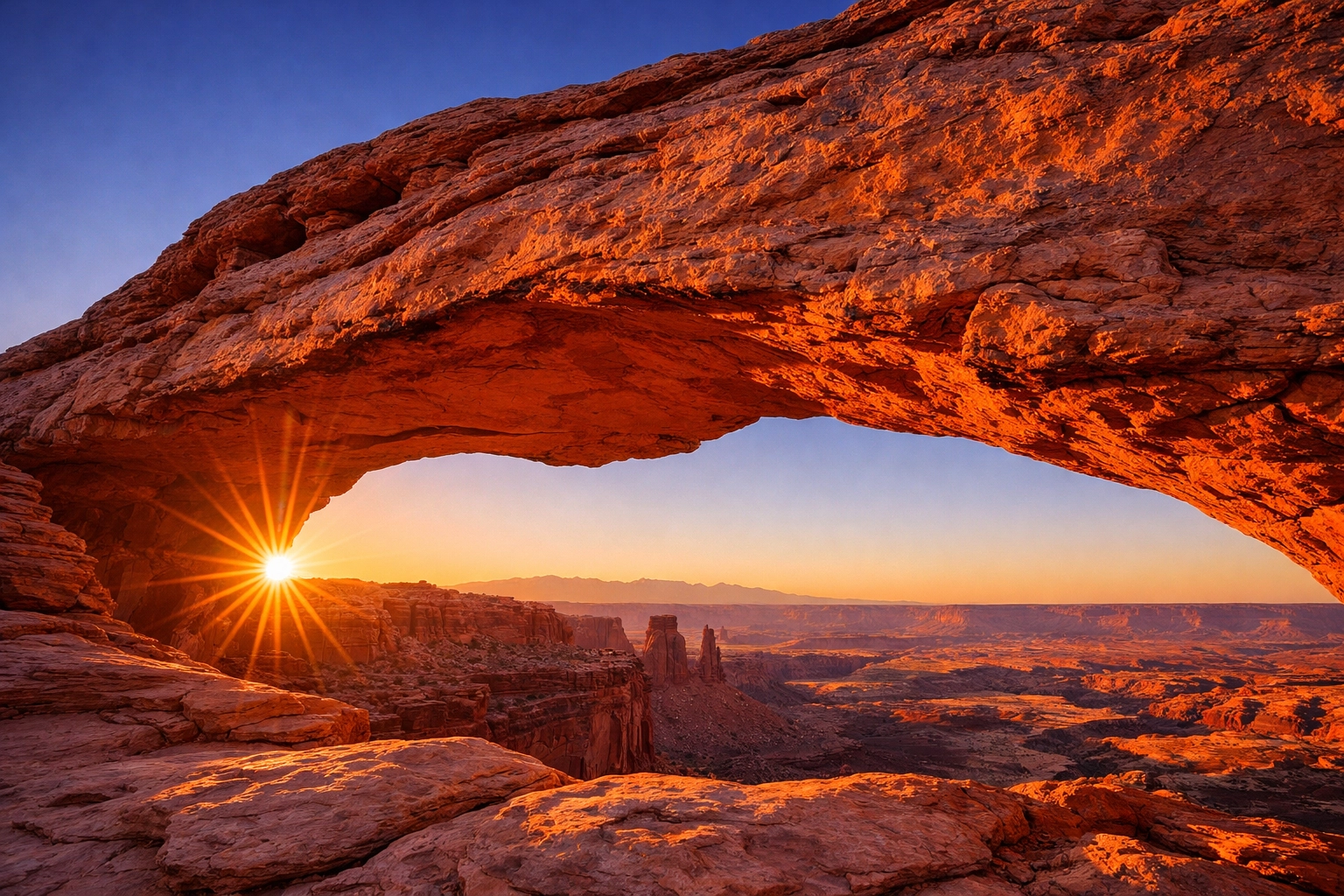
Alt text: An ultrarealistic wide-angle shot of the sun rising behind a natural stone arch in Arches National Park, glowing orange light hitting the red rocks with a starburst effect.
If you’re planning a trip out here, remember that water is your best friend. These deserts are unforgiving. Make sure you’ve checked out our essential photography gear list to ensure your sensors stay clean and your body stays hydrated.
The Titans of the West: Yosemite and the Tetons
If you were to ask any pro about their favorite "landscape photography locations," Yosemite and Grand Teton would be at the top of the list.
Yosemite is a masterpiece. From the sheer face of El Capitan to the roaring Yosemite Falls, every corner feels like a postcard. My tip? Get to Tunnel View before dawn. It is one of the "best sunrise spots" in the country, as the first light touches the top of Half Dome.
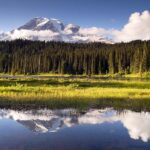
In Wyoming, Grand Teton National Park offers the jagged peaks that photographers live for. Mormon Row and its famous barns are legendary, but I personally love the reflections at Oxbow Bend. It’s peaceful, majestic, and everything a national park should be.
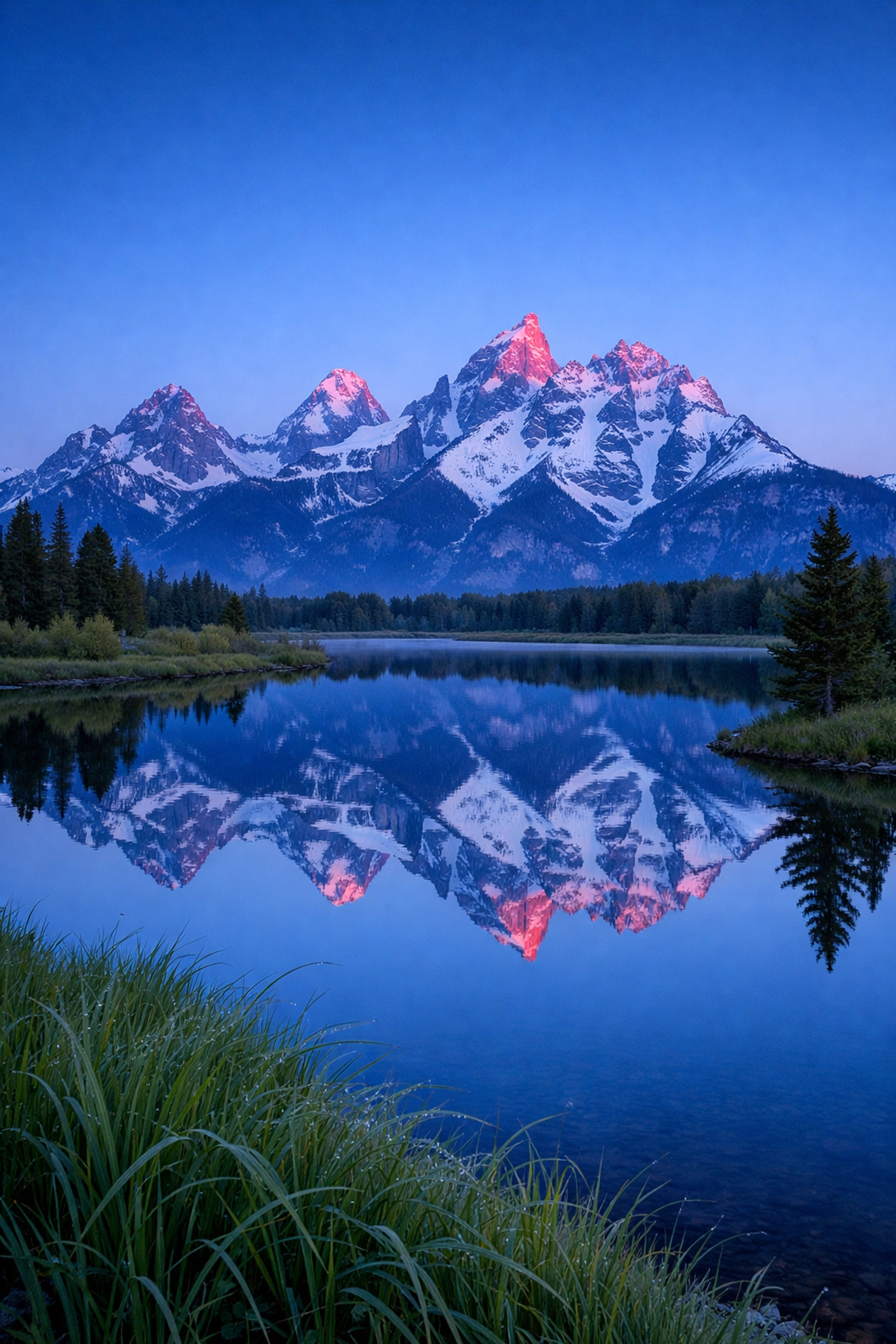
Alt text: A breathtaking landscape photo of the Teton Range reflected in a perfectly still Snake River at dawn, with golden light catching the mountain peaks.
The Hidden Gems and the "Quiet" Parks
While everyone flocks to the Grand Canyon (which you should visit at least once), some of the best experiences come from the lesser-known parks. Great Basin in Nevada offers some of the darkest skies in the lower 48: perfect for milky way photography. Theodore Roosevelt National Park in North Dakota has stunning badlands and wild bison without the crowds of its southern neighbors.
If you’re looking for a change of pace, Dry Tortugas in Florida is accessible only by boat or seaplane. It’s a literal fortress in the middle of the ocean. For more ideas on shorter trips, you might want to look into cheap weekend getaways that can get you close to these hidden treasures.
Capturing the Light: Pro Tips for Every Park
- Timing is Everything: The "best sunrise spots" aren't just about the sun; they're about the 20 minutes before the sun peaks over the horizon. That’s when the "Alpenglow" happens.
- Scout Early: Don't show up to a location for the first time in the dark. Use apps to track where the sun will rise and fall.
- Respect the Land: Always follow Leave No Trace principles. Our ability to keep visiting these places depends on us taking care of them.
- Gear Matters: You don't need the most expensive camera, but you do need a sturdy tripod and a good set of filters. I’ve reviewed plenty of options in our camera reviews 2024 section if you're looking to upgrade.
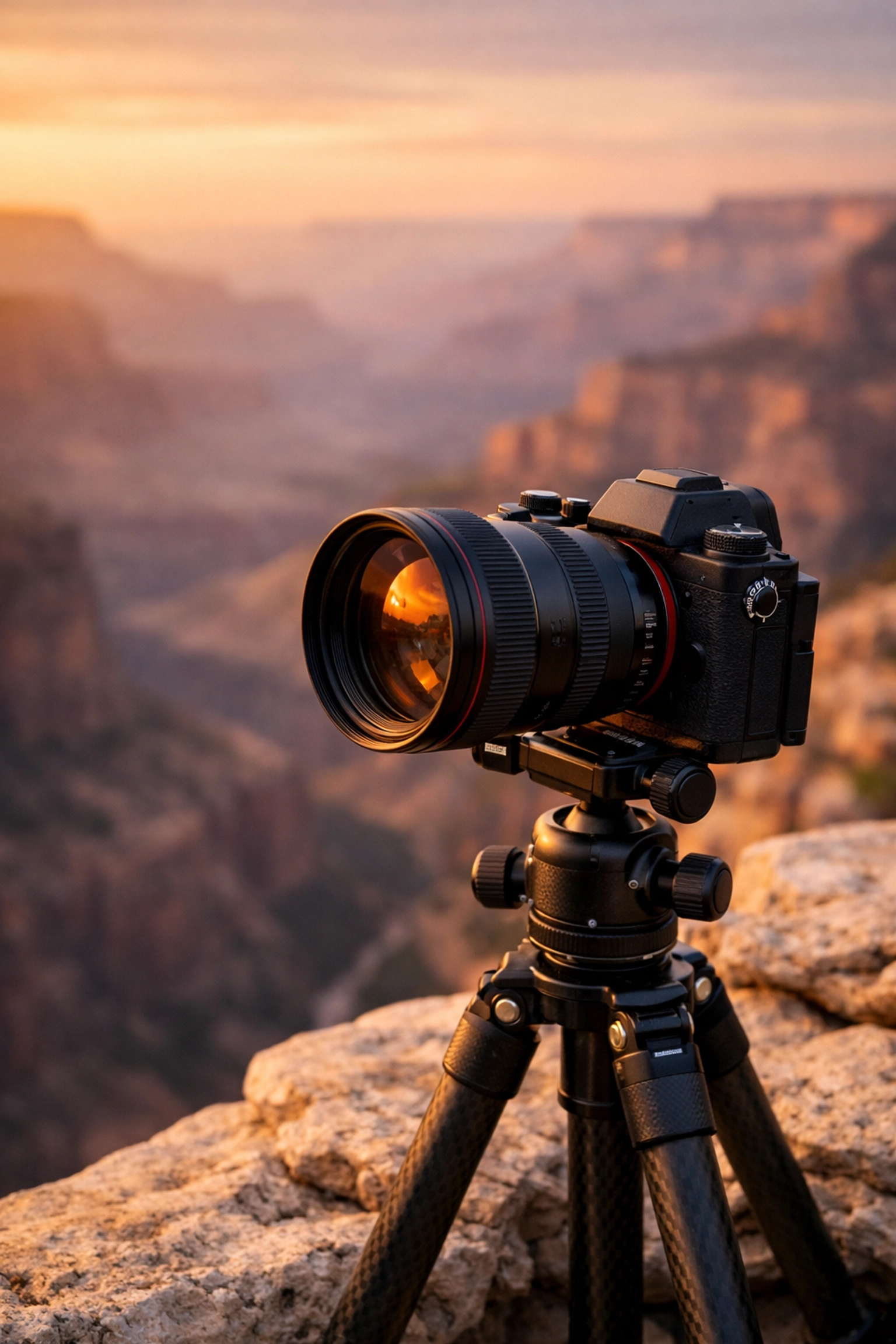
Alt text: A close-up of a professional camera on a tripod positioned at the edge of a vast canyon, with the photographer adjusting a lens filter during the golden hour.
Beyond the Lower 48: Alaska and Hawaii
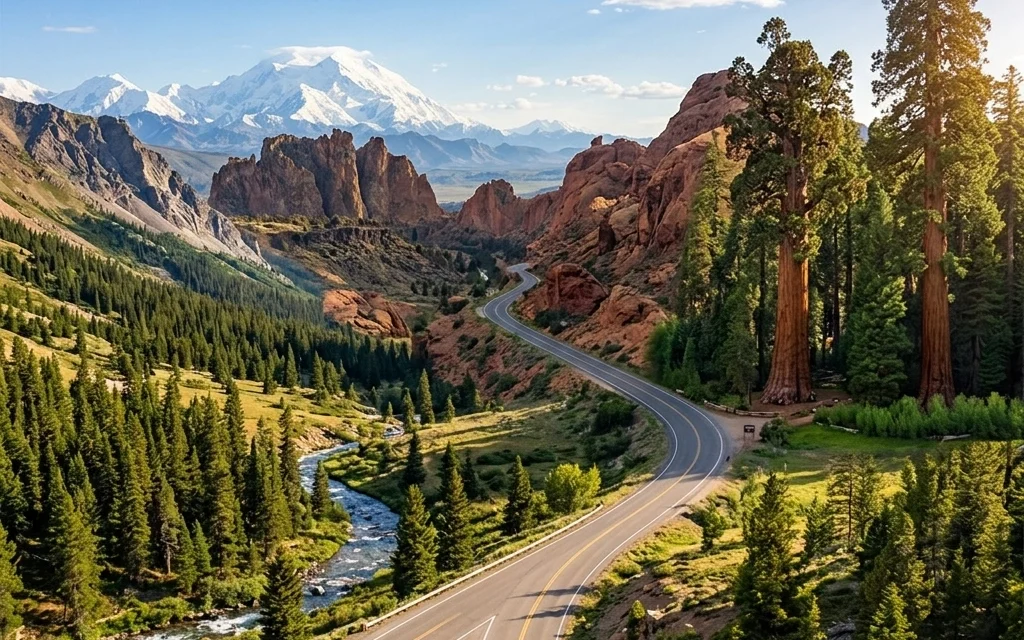
You haven't truly seen the scale of the US National Parks until you’ve been to Alaska. Denali is massive: so big that it creates its own weather. Kenai Fjords offers calving glaciers and incredible marine life. These are "landscape photography locations" on a scale that is hard to wrap your head around.
On the flip side, Hawaii Volcanoes National Park gives you the chance to photograph the literal creation of the earth. The contrast between the black volcanic rock and the blue Pacific Ocean is a dream for any artist.
If you are a gear nerd like me, you might find the module 8 lens adapter particularly useful for getting some unique, cinematic flares in these high-contrast environments.
Coastal Wonders: Acadia and the Olympic Peninsula
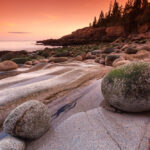
Moving to the East Coast, Acadia National Park in Maine is the first place in the US to see the sunrise during certain parts of the year. Cadillac Mountain is the place to be, but the rocky shores of Boulder Beach offer incredible foreground interest for long-exposure shots.
In the Pacific Northwest, Olympic National Park is like three parks in one: alpine peaks, temperate rainforests, and rugged coastlines. The sea stacks at Ruby Beach are a must-shoot.
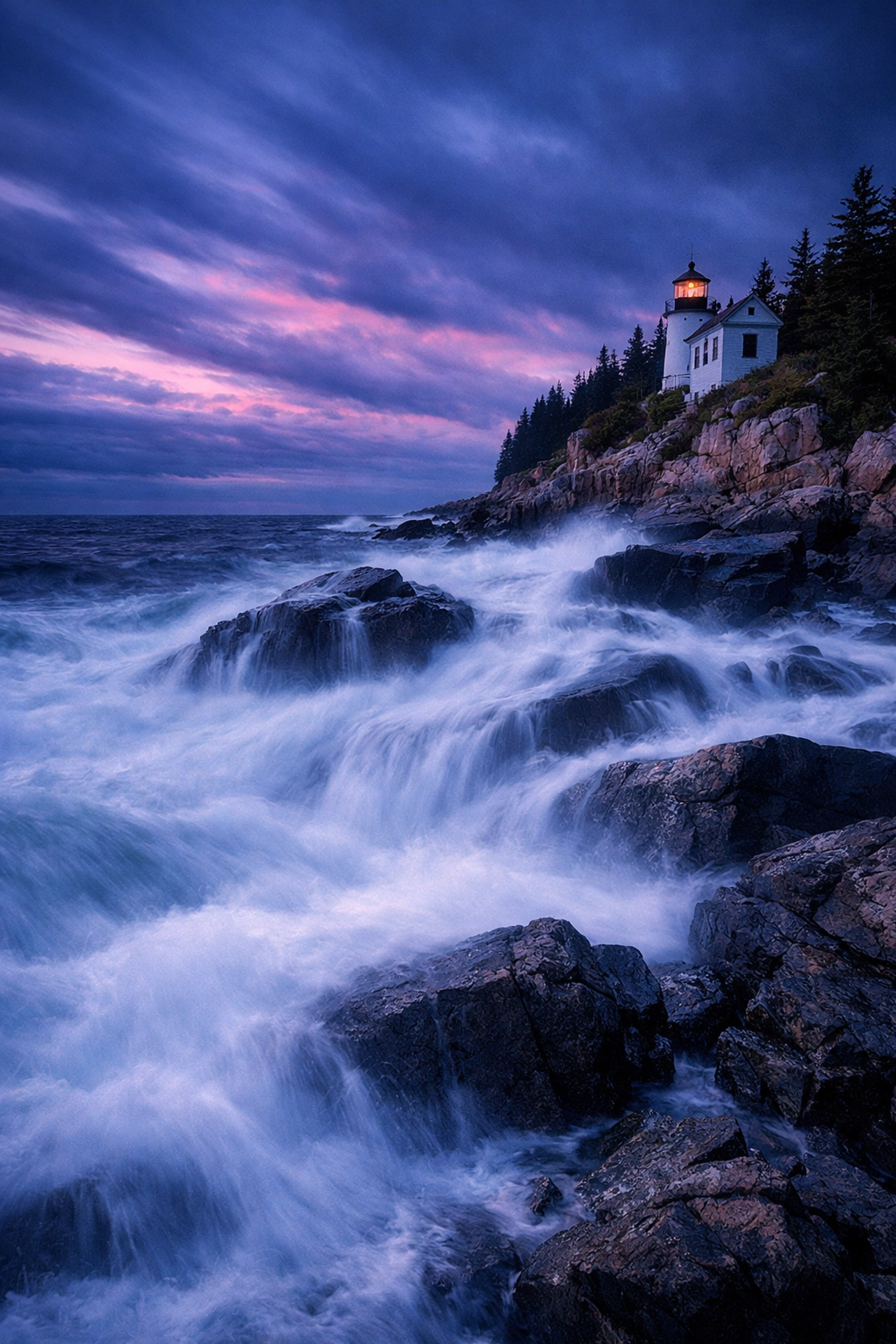
Alt text: A dramatic coastal scene at Acadia National Park with waves crashing against granite rocks and a lighthouse in the distance under a purple sunset sky.
Planning Your Logistics
Visiting all 63 parks is a marathon, not a sprint. I recommend getting the "America the Beautiful" pass. It’s about $80 and covers your entrance fees for an entire year.
When you’re planning your route, think about the seasons. You don't want to be in Death Valley in July, just like you don't want to be in Glacier in January (unless you’re a fan of extreme cold and closed roads).
For more inspiration and a community of like-minded shooters, head over to www.shutyouraperture.com. It’s a great place to see what others are capturing in the wild.
The Photographer's Checklist
Before you head out, make sure your kit is ready. There’s nothing worse than getting to a "best sunrise spot" only to realize your batteries are dead or your SD card is full.
- Wide-angle lens (for those epic vistas)
- Telephoto lens (for wildlife and compressing mountain ranges)
- Circular Polarizer (to cut glare and make those colors pop)
- Extra batteries (cold weather kills them fast)
- Headlamp (for those early morning hikes)
If you're feeling a bit stuck on how to process these images once you get home, check out our sky overlays to help bring some drama back into a flat sky.
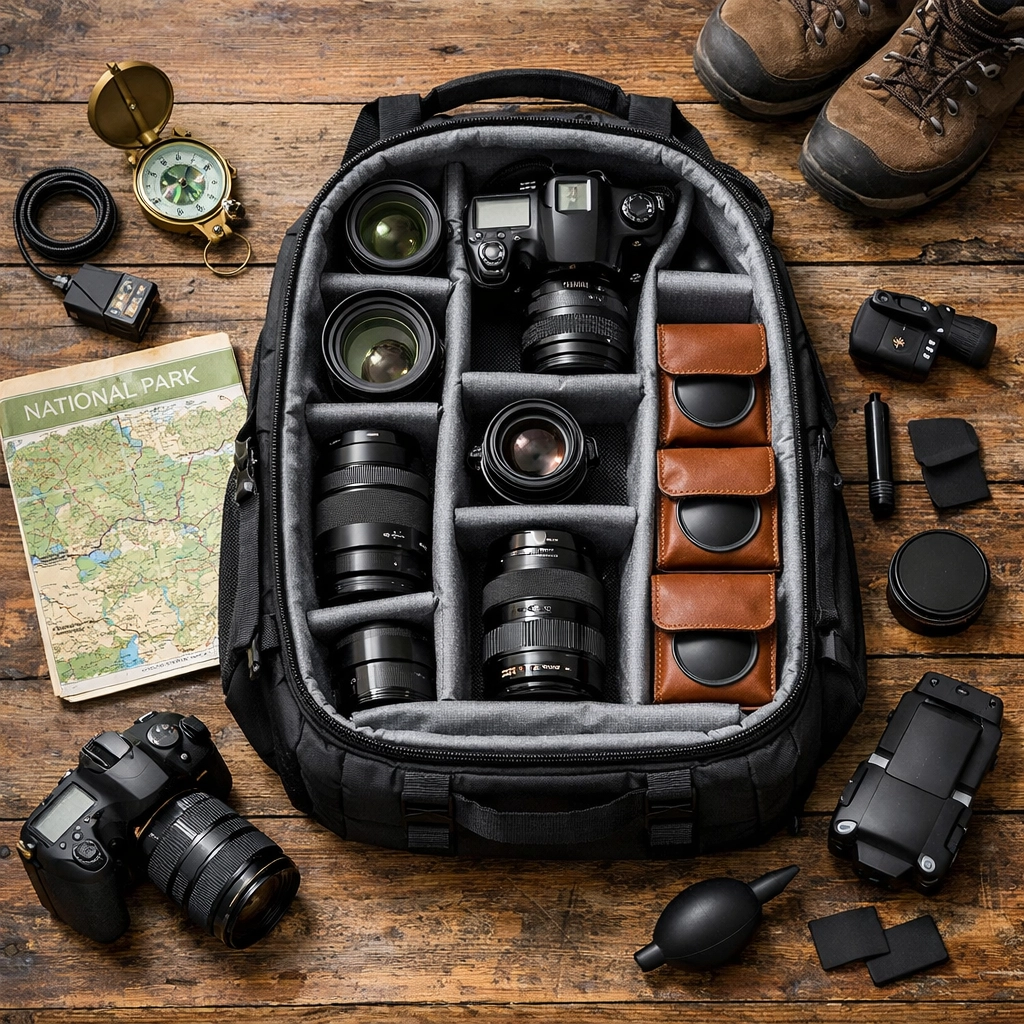
Alt text: An ultrarealistic top-down view of a photography gear bag organized with lenses, a camera body, extra batteries, and a map of a national park spread out on a wooden table.
Final Thoughts
The journey through all 63 parks is about more than just checking boxes. It’s about the quiet moments at 4:00 AM when the world is still, the smell of the pine trees, and the feeling of absolute awe when a storm clears to reveal a rainbow over a canyon.
Take your time. Breathe it in. And of course, keep shooting. Whether you’re following my journey on www.blog.edinchavez.com or carving your own path, these parks are waiting for you.
Don't forget to look into our photography booking experience if you want to join me on a guided tour of some of these incredible spots. Let’s make something beautiful together.