
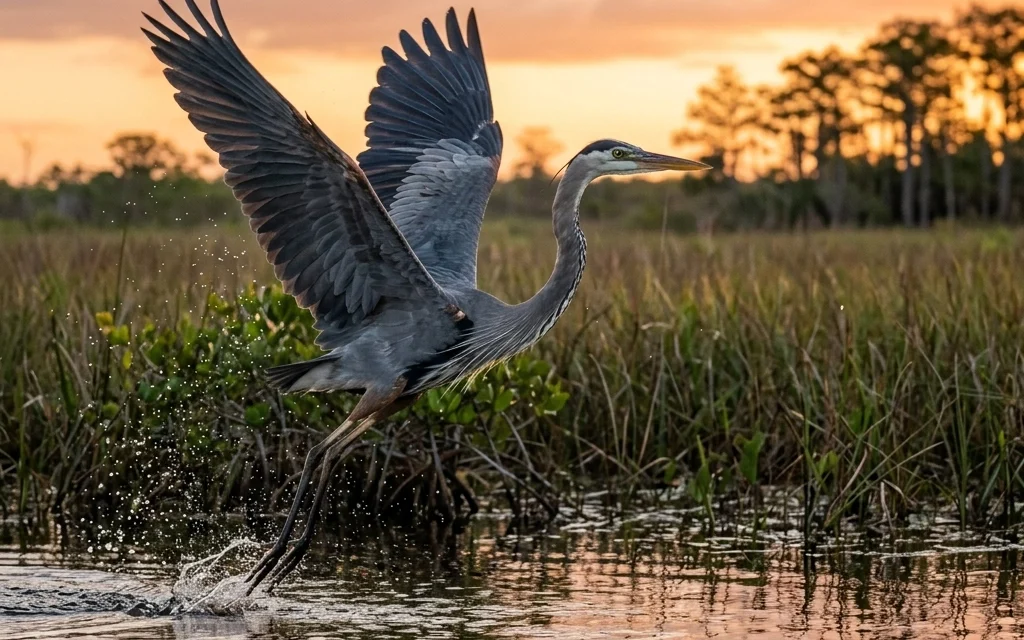
There is something almost prehistoric about the Everglades. When you’re standing on a boardwalk at dawn, surrounded by the chorus of a thousand different birds and the low grunt of an alligator, you realize you aren’t just in a park: you’re in another world. For a photographer, it’s arguably the most productive birding location in North America.
With over 360 species of birds calling this "River of Grass" home, it can feel a little overwhelming. Where do you start? What lens should you bring? How do you actually get those crisp shots of an Osprey in flight?
I’ve spent years navigating these wetlands, and I want to make sure your trip is as successful as possible. Whether you are a hobbyist with a new camera or a seasoned pro looking for that elusive Snail Kite shot, this guide will cover everything you need to know. And if you want to skip the guesswork entirely, you should definitely check out my Everglades Photography Guide, which is packed with the exact coordinates and seasonal secrets I use on my own shoots.
Understanding the Everglades Seasons
In South Florida, we don’t really have "winter" or "summer" in the traditional sense. We have the Dry Season and the Wet Season.
The Dry Season (Late November to April)
This is the "Golden Window" for bird photography. As the water levels across the glades drop, fish and amphibians are forced into deeper, concentrated pools. This creates a literal buffet for wading birds. Because the food is concentrated, the birds are concentrated, making them much easier to find and photograph. This is also when the weather is most comfortable for humans: fewer mosquitoes and lower humidity.
The Wet Season (May to November)
The park transforms into a vast, flooded prairie. While it’s incredibly beautiful, the birds disperse across the entire landscape because water (and food) is everywhere. It’s much harder to get close-up shots during this time, and the heat and insects can be quite a challenge. If you’re visiting during these months, focus your efforts on the coastal areas like Flamingo.

Essential Gear for Bird Photography
You don’t need the most expensive gear in the world to get great shots, but bird photography does have some specific requirements.
- The Long Lens: A focal length of at least 400mm is standard. If you’re shooting with a full-frame sensor, a 200-600mm or a 150-600mm is a fantastic versatile choice. If you are just starting out, check out my camera reviews 2024 to see which bodies pair best with long glass.
- A Secondary Body: Many of the birds in the Everglades, especially at the Anhinga Trail, are surprisingly bold. They might land just a few feet from you. Having a second camera with a 70-200mm lens allows you to capture environmental portraits without having to swap lenses in the humid air.
- Stability: While modern lens stabilization is incredible, a sturdy tripod with a gimbal head is a lifesaver for long days. If you prefer to stay mobile, a monopod is a great middle ground. For those shooting from a car window along the main park road, a simple beanbag on the door frame works wonders.
- Protection: Florida weather is unpredictable. Bring a rain cover for your gear and plenty of lens cloths.
If you are looking to upgrade your kit before your trip, I’ve put together a list of essential photography gear that covers everything from filters to bags.
Master Your Camera Settings
Bird photography is a game of milliseconds. To succeed, you need to have your settings dialed in before the action starts.
Shutter Speed is King
For birds in flight (BIF), you want a shutter speed of at least 1/2000s or 1/3200s. Even for perched birds, don't drop below 1/500s if you can help it, as birds are twitchy creatures. A slightly grainy photo at high ISO is always better than a blurry photo at low ISO. You can see some of my high-speed action work over at Edin Fine Art to see how freezing the action makes a difference.
Aperture and Depth of Field
Most bird photographers shoot "wide open" (the lowest f-number your lens allows, like f/4 or f/5.6) to blur out the distracting mangrove backgrounds and make the bird pop.
Focus Modes
Use Continuous Autofocus (AF-C or AI-Servo). Most modern mirrorless cameras have "Animal Eye Tracking": turn this on! It is a game-changer. Always aim for the eye; if the eye isn't sharp, the photo usually doesn't work.

Top Locations for Success
The Everglades National Park is massive, but for bird photography, a few spots stand head and shoulders above the rest.
1. The Anhinga Trail (Royal Palm)
This is the "crown jewel." The birds here are remarkably habituated to people. You can get incredible full-frame portraits of Anhingas, Double-crested Cormorants, and Purple Gallinules. It’s the perfect place to practice your technique because the opportunities are constant.
2. Shark Valley
Located on the Tamiami Trail, this 15-mile loop is a haven for Snail Kites and Wood Storks. The observation tower at the end of the trail gives you an eye-level view of birds flying over the sawgrass. It’s one of the best spots for birds-in-flight photography in the entire state.
3. Flamingo and Eco Pond
At the very end of the main park road lies Flamingo. This is where you’ll find the saltwater species: Roseate Spoonbills, Ospreys, and various shorebirds. Eco Pond, nearby, is a fantastic spot for late-afternoon light as the birds come in to roost.
If you’re planning a multi-day trip, you might also want to explore other areas of Florida. For more travel inspiration, check out cheap weekend getaways for photographers.

Professional Tips for Better Bird Photos
Light and Direction
In the Everglades, the "Golden Hour" (the first and last hour of sunlight) is vital. Not only is the light beautiful and soft, but this is when birds are most active. Try to keep the sun at your back. This illuminates the bird evenly and gives you that coveted "catchlight" in the eye. For more deep dives into lighting techniques, take a look at the educational category on Photoguides.
Get Low
Whenever possible, try to get down to the bird’s eye level. Shooting down on a bird from a high boardwalk often feels like a "snapshot." Getting low creates a more intimate, professional-looking portrait that draws the viewer into the bird’s world.
Be Patient and Observe
The best shots don't come from chasing birds; they come from waiting for them. If you see a Great Blue Heron hunting, stay still. Watch its behavior. When it freezes and its neck starts to quiver, you know a strike is coming. That’s when you hold down the shutter.

Why You Need the Everglades Photography Guide
While this guide gives you the foundation, the Everglades is a complex ecosystem that changes every year. Knowing which pond has the best morning light in February or where the Roseate Spoonbills are nesting this season can be the difference between a memory card full of "okay" shots and a portfolio of masterpieces.
I created the Everglades Photography Guide to be your digital scout. It includes:
- Exact GPS Coordinates: No more driving around aimlessly.
- Seasonal Insights: Know exactly when to go for specific species.
- Pro Techniques: Specialized tips for the unique lighting of the Florida wetlands.
You can also find more gear-specific advice and community tips at Shut Your Aperture, which is a great resource for staying up to date with the photography world.
Respecting the Wildlife
As photographers, we have a responsibility to the animals we document. Never feed the birds to get them closer, and always maintain a respectful distance, especially near nesting sites. If a bird stops what it's doing and starts watching you nervously, you're too close. The goal is to capture natural behavior, not stressed behavior.
The Everglades is a fragile treasure. By following the "Leave No Trace" principles, we ensure that these incredible species will be around for the next generation of photographers to capture.

Final Thoughts
Bird photography in the Everglades is a rewarding, soul-soothing experience. There is nothing quite like the silence of the marsh broken by the beating wings of a Great Egret. It takes patience, the right gear, and a bit of local knowledge, but the results are worth every mosquito bite.
Ready to start your adventure? Head over to Edin Chavez for more stories from the field, and don't forget to grab your copy of the Everglades Photography Guide before you head out. I'll see you out in the glades!













