
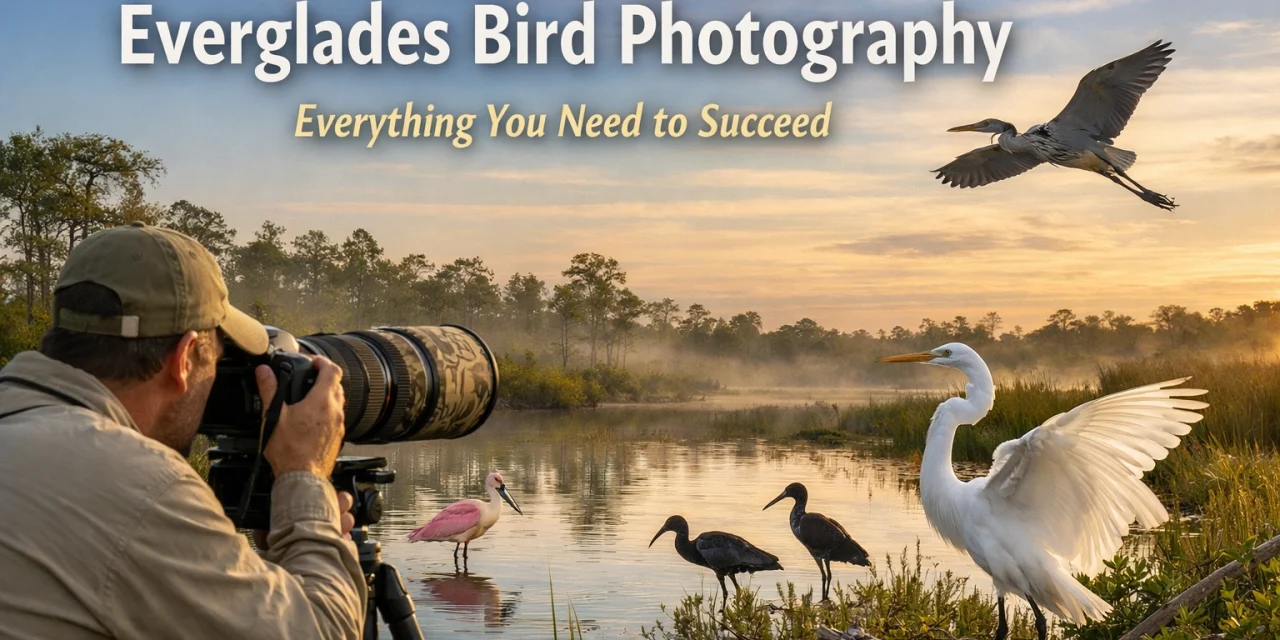
If you’ve ever stood at the edge of a sawgrass prairie as the sun begins to peek over the horizon, you know there is something truly spiritual about the Everglades. For a photographer, it’s not just a swamp; it’s a living, breathing gallery of some of the most spectacular avian life on the planet. From the prehistoric look of a Wood Stork to the vibrant pink of a Roseate Spoonbill, the Everglades offers opportunities that you simply won't find anywhere else.
But let’s be real: the Everglades can be intimidating. It’s huge, it’s hot, and if you don’t know where to go, you can spend hours looking at nothing but grass and water. That’s why I’ve put together this guide. I want to make sure that when you head out into the "River of Grass," you’re coming home with shots that you’ll want to frame.
Before we dive into the nitty-gritty, if you want the ultimate shortcut to success, you should check out our Everglades Photography Guide. It’s the culmination of years of shooting in these wetlands, designed to get you to the right spots at the right times.
Timing Your Trip: The Dry Season is King
In South Florida, we don’t really have four seasons. We have the "wet season" and the "dry season." For bird photography, the dry season: which runs from November through early April: is your golden window.
Why? It’s all about the water levels. As the Everglades dries up, the fish and amphibians get concentrated into smaller pools of water. This creates an all-you-can-eat buffet for wading birds. Because the food is easy to find, the birds gather in massive numbers. Plus, the weather is much more pleasant for us humans (meaning fewer mosquitoes and lower humidity).
If you’re looking for nesting behavior and fluffy chicks, aim for February and March. This is when the action really heats up at the rookeries.
Top Locations for Spectacular Shots
You could spend a lifetime exploring the 1.5 million acres of the Everglades, but if you’re on a schedule, you need to hit the heavy hitters.
1. Anhinga Trail
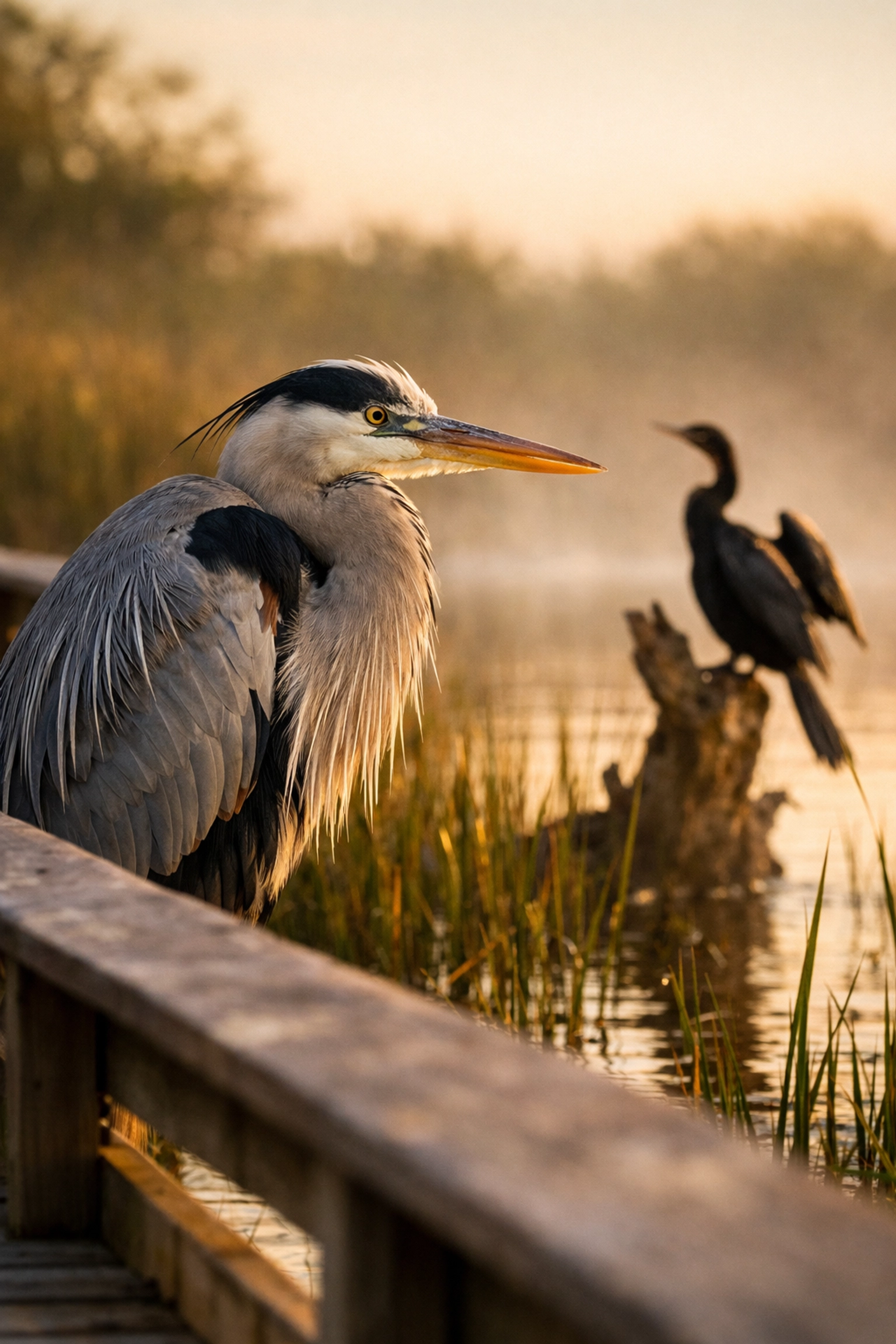
This is arguably the most famous photography spot in the park, and for good reason. Located right near the main entrance in Homestead, the Anhinga Trail features a boardwalk that puts you right on top of the action. The birds here are remarkably "tame": they are used to people, which means you can get incredible close-ups of Anhingas, Herons, and Egrets without needing a 600mm lens.
2. Shark Valley
Located off US-41 (Tamiami Trail), Shark Valley is a haven for wading birds. There’s a 15-mile paved loop that you can walk, bike, or take a tram on. During the peak of the dry season, the ditches along the road are literally crawling with wildlife. It’s not uncommon to see a Great Blue Heron hunting just five feet away from you.
3. Wakodahatchee Wetlands
While technically just outside the park in Delray Beach, no Everglades photography trip is complete without a stop here. It’s a man-made wetland with a long boardwalk that winds through nesting islands. It is, quite simply, the best place in Florida to get eye-level shots of nesting Wood Storks and Great Blue Herons.
Essential Gear for the Glades
The Everglades is a harsh environment, and your gear needs to be up to the task. If you’re wondering what else should be in your kit, take a look at our essential photography gear list for a deeper dive.
Lens Choice
You’ll want versatility. For birds in flight or shy songbirds, a 200-600mm or a 150-600mm lens is the gold standard. However, at places like the Anhinga Trail, a 70-200mm can often be plenty of reach because the birds are so close. If you’re looking to upgrade, our camera reviews 2024 section covers some of the best bodies and glass for wildlife today.
Stabilization
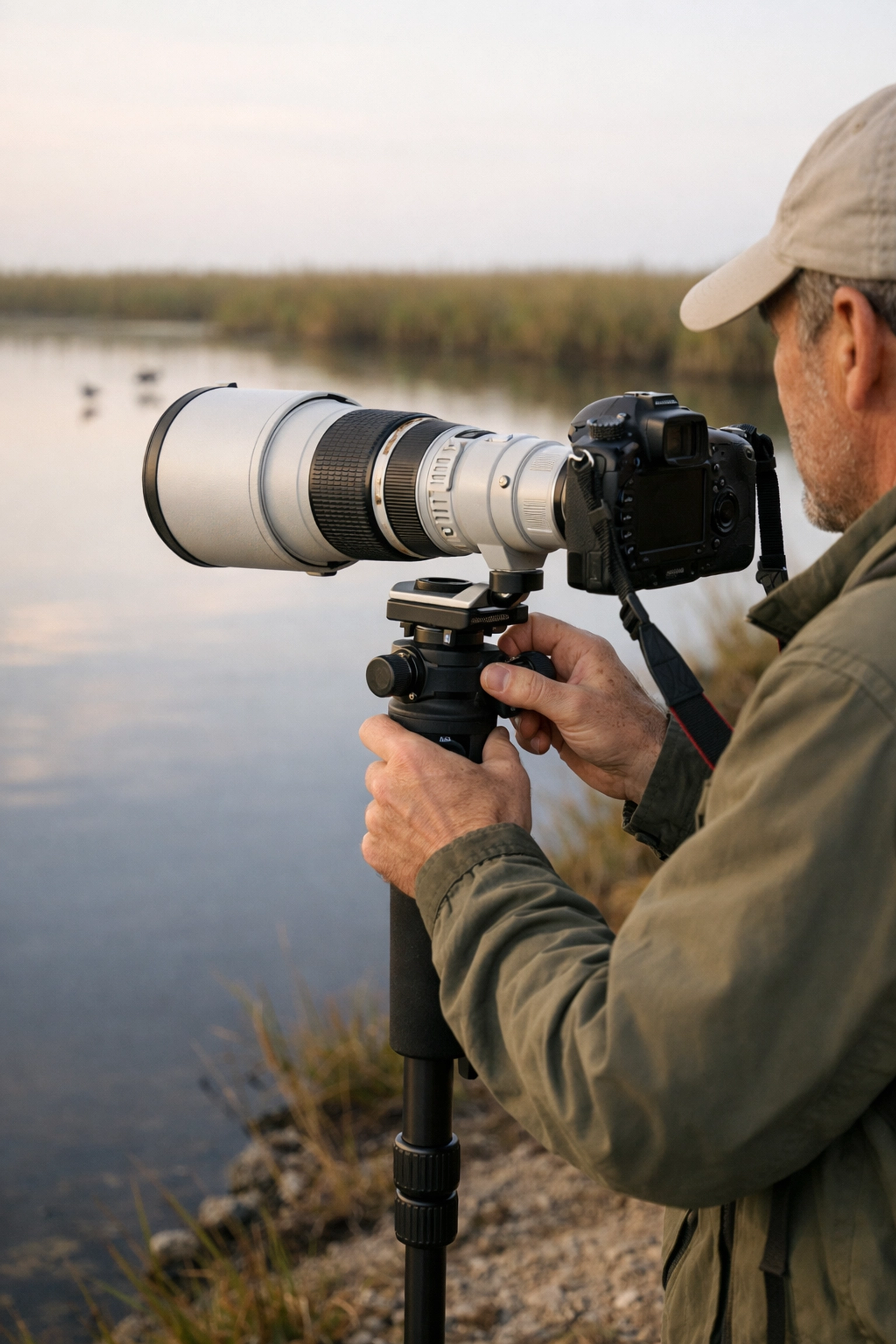
A tripod is great for those low-light morning shots, but the Everglades often requires mobility. I find myself using a monopod or even shooting handheld more often than not, especially when I’m moving quickly between spots on a boardwalk.
Technical Settings: Capturing the Moment
Bird photography is a game of milliseconds. One wrong setting and that Osprey dive is a blurry mess.
- Shutter Speed is Life: For birds in flight, don't drop below 1/2000s if you can help it. If the bird is perched and just hanging out, you can drop down to 1/500s or 1/800s to keep your ISO low.
- Aperture: I usually shoot wide open (f/4 or f/5.6) to create that beautiful, creamy background (bokeh) that makes the bird pop.
- Focus on the Eye: Modern mirrorless cameras have "Animal Eye AF," which is a game-changer. If your camera has it, use it. If not, use a single-point focus and aim right for the eye. If the eye isn't sharp, the photo usually isn't a keeper.
The "Secret Sauce": Understanding Behavior
The difference between a good photographer and a great one isn't the gear: it's the ability to predict what the bird is going to do next.
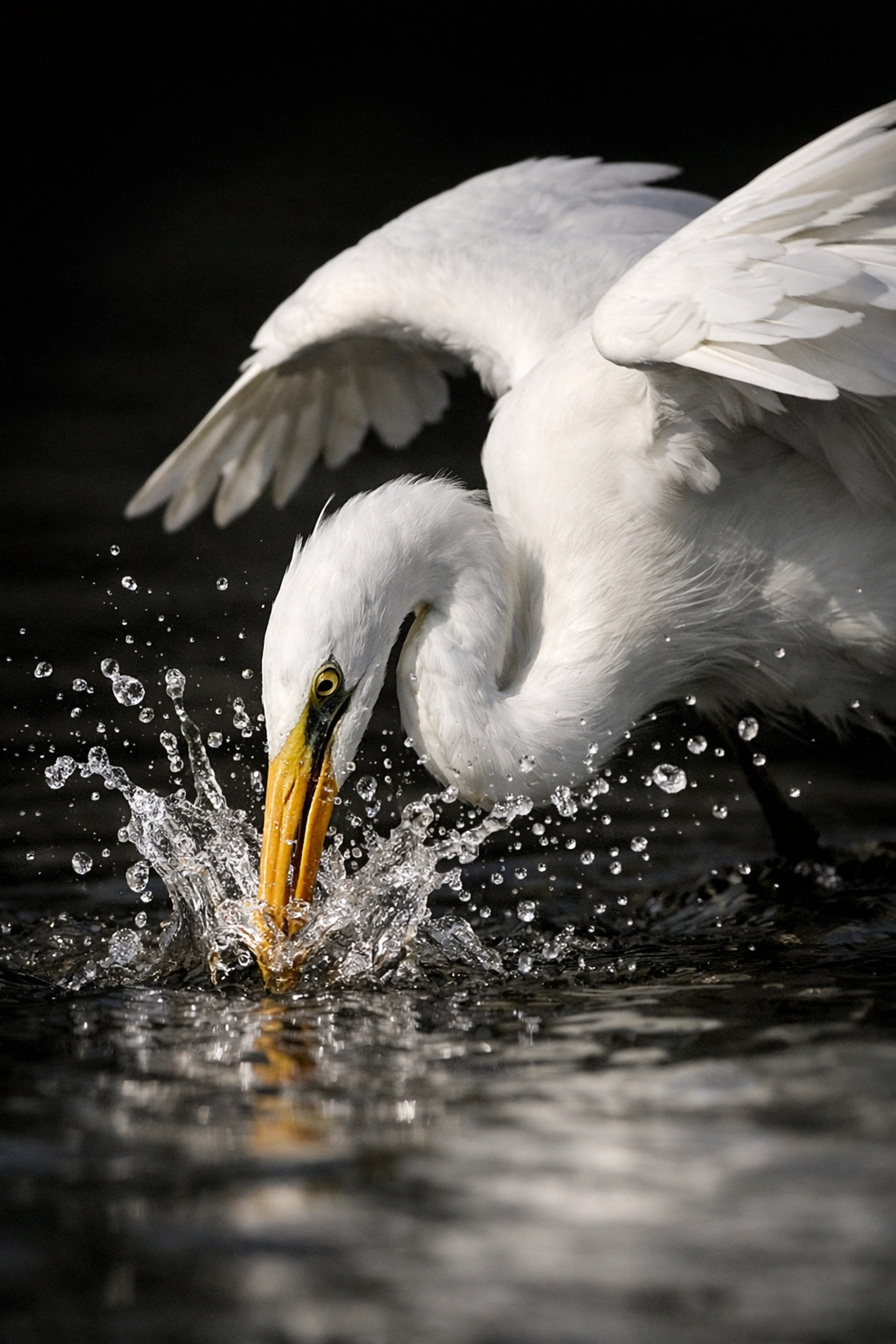
Spend time watching your subject. Is that Heron crouching down and wiggling its neck? It’s about to strike at a fish. Is that Pelican cleaning its feathers? It might be about to take flight soon. By learning these behavioral cues, you can be ready before the action starts.
If you want to dive deeper into these techniques, our Everglades Photography Guide goes into detail on how to track and anticipate wildlife movement in this specific ecosystem.
Safety and Ethics in the Field
We’re guests in the birds' home. It’s vital to keep a respectful distance, especially during nesting season. If a bird stops what it’s doing and starts watching you intently, you’re too close. Back off and give them space.
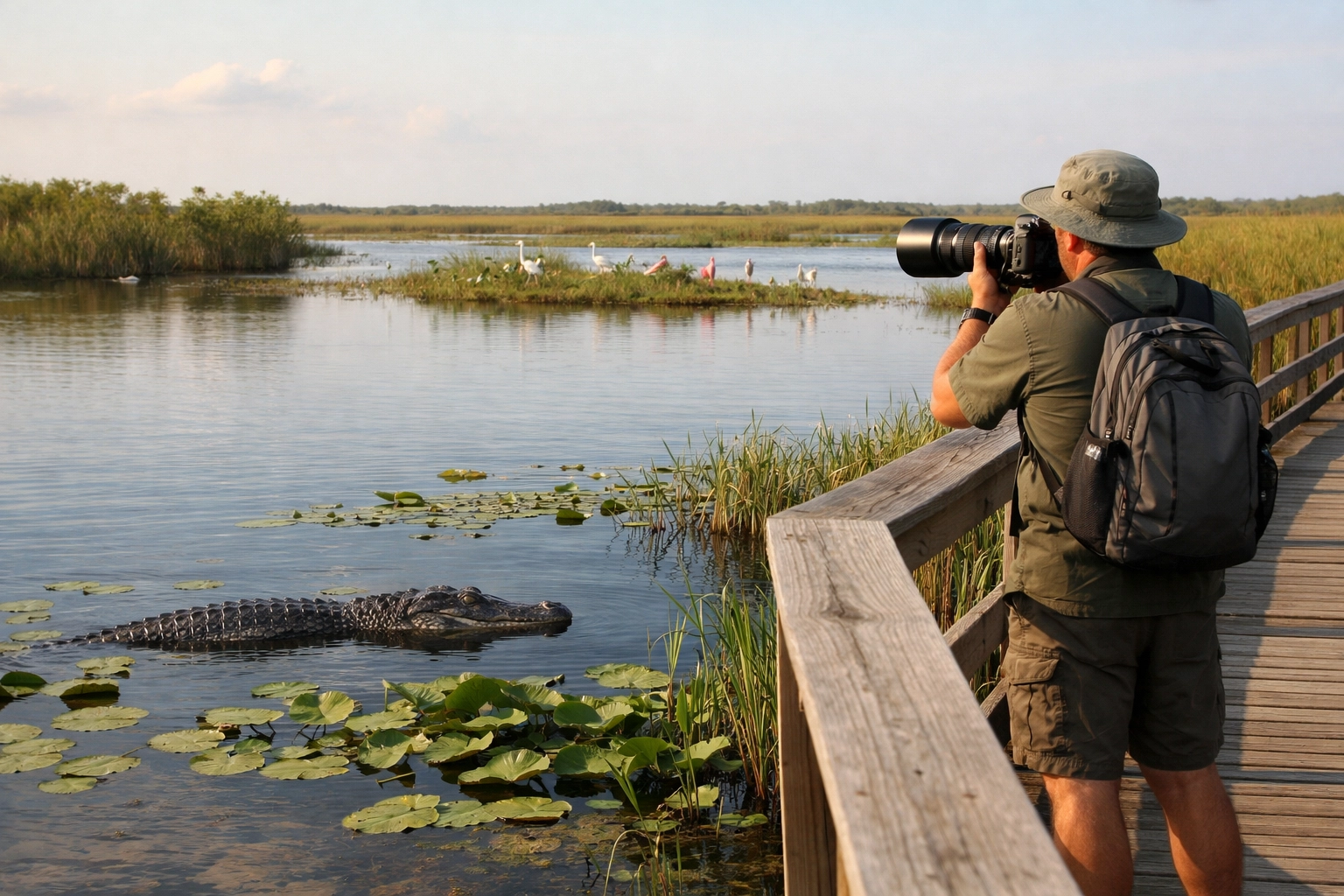
And let’s not forget the "other" residents of the Everglades: Alligators. You will see them. Often. They are generally lethargic and uninterested in humans, but they deserve your absolute respect. Never feed them, and always keep a wary eye on the water’s edge while you’re looking through your viewfinder.
Making the Most of Your Trip
If you’re traveling from out of town, the logistics can be a bit overwhelming. We want your photography booking experience to be as smooth as possible. Whether you're hiring a guide or going solo, having a plan is the best way to ensure you don't miss the "Big Cypress" sunset or the sunrise at Flamingo.
For those who want to skip the trial and error, the Everglades Photography Guide is your best friend. It’s packed with the exact GPS coordinates, seasonal tips, and gear advice that Edin Chavez and the Photoguides team use every time we head out.
Final Thoughts
The Everglades is a place of infinite beauty and constant change. No two trips are ever the same. You might go one day and see a hundred Spoonbills, and the next day you might find a rare Snail Kite hunting in the marshes. That’s the magic of wildlife photography: the uncertainty and the eventual reward of that one perfect frame.
So, pack your long lens, grab plenty of water (and maybe some bug spray just in case), and get out there. The birds are waiting.
Ready to master the swamp? Get the full breakdown in our Everglades Photography Guide and start taking the best wildlife photos of your life.













