
Category: Photo Guides
If you’ve ever scrolled past a tack-sharp shot of an anhinga with water droplets frozen midair, or a gator eye-level in perfect golden light, there’s a good chance it was made in the Everglades. The good news: you don’t need “once-in-a-lifetime luck” to get those kinds of frames: you need the right plan, the right timing, and a tour (or route) that matches what you want to shoot.
This guide walks you through Everglades photography tours from a photographer’s point of view: tour types, best locations, seasonal wildlife, what gear actually matters, camera settings that work, and the small practical details that save your day. If you want the fastest path to better images (and fewer “almost” moments), start with the Everglades Photography Guide here: https://blog.edinchavez.com/product/everglades-photography-guide/.
Why the Everglades is a dream for wildlife photographers (and why tours help)
The Everglades isn’t just “a swamp.” It’s a huge, living system where birds, reptiles, and mammals operate on a daily rhythm: feeding, mating, nesting, flying off at sunrise, and settling again as the light gets good.
A solid photography tour gives you three advantages you’ll feel immediately:
- Positioning: being in the right place at the right time, with the right light angle.
- Species knowledge: knowing what you’re looking at and what it’s about to do.
- Efficiency: fewer dead ends, fewer crowds, and more time with your lens up.
If you’re building a bigger learning path beyond the Everglades, you can also check educational posts at Photoguides: https://photoguides.org/category/educational.
Everglades photography tour options (and which one fits your style)
Not all “photo tours” are the same. Choosing the right format is half the battle.
Group photography tours (best for first-timers and budget-friendly learning)
Group tours usually run 3–7 hours, often with a guide who understands light and wildlife behavior. They’re typically more affordable (many are around the low-to-mid $200 range), and you’ll learn fast just by hearing what the guide tells the group.
Best for you if:
- You want instruction and structure
- You’re newer to wildlife photography
- You don’t mind sharing shooting space and pace with others
Watch-outs:
- You’ll sometimes compromise on subject choice (one person wants birds, another wants landscapes)
- Boat space can be tight for tripods, depending on the operator
Private photography tours (best for serious shooters and custom goals)
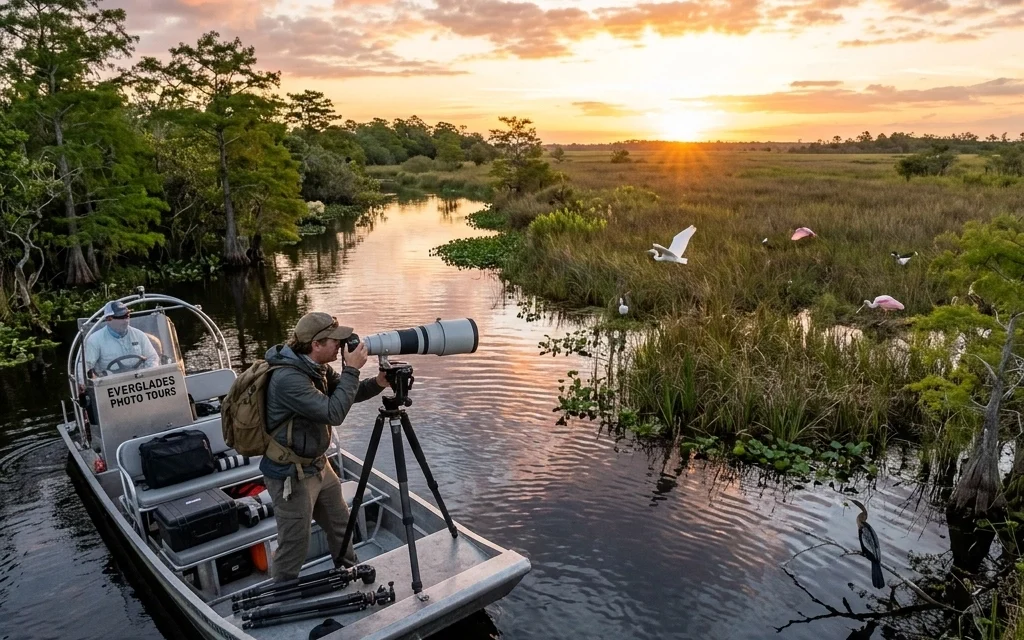
Private tours cost more, but they’re the closest thing to “stacking the odds” in your favor. Many private operators use flat-decked boats designed for photographers, with room to safely manage longer lenses and tripods.
Best for you if:
- You want to target a specific species (roseate spoonbill, osprey, pelicans, etc.)
- You want to shoot at your pace (waiting for behavior, not “moving on”)
- You’re chasing portfolio-level images
Photo workshops (best for leveling up quickly)
Workshops combine time in the field with deeper instruction: exposure strategy, focusing methods, bird behavior, critique, and workflow. These often include high-action scenarios like morning fly-offs in coastal areas (for example, the Ten Thousand Islands region), where you can capture a lot of frames in a short window.
Best for you if:
- You want coaching, not just access
- You’re ready to practice intentionally (and refine your technique fast)
If you want a single resource that helps you plan like a local: routes, timing, subject expectations, and what to prioritize: bookmark this now: https://blog.edinchavez.com/product/everglades-photography-guide/.
The best Everglades locations for photography (trail, marina, and “quiet winners”)
Anhinga Trail (Royal Palm): the “how is this even real?” spot
This is the classic, and for good reason. Birds here are often remarkably comfortable around people, which makes it one of the best places in the U.S. to practice close wildlife work.
What you’ll likely shoot:
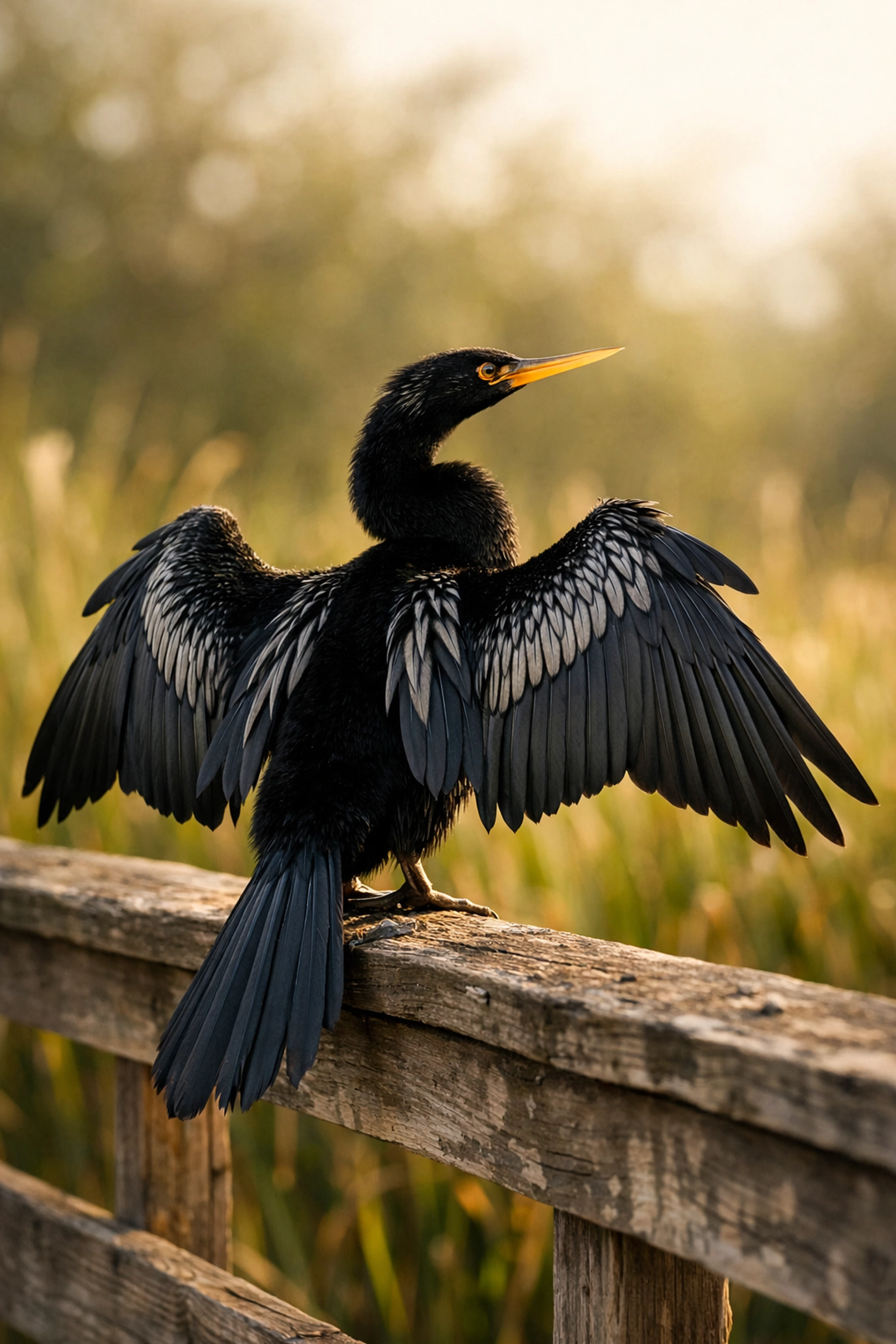
- Anhingas drying wings
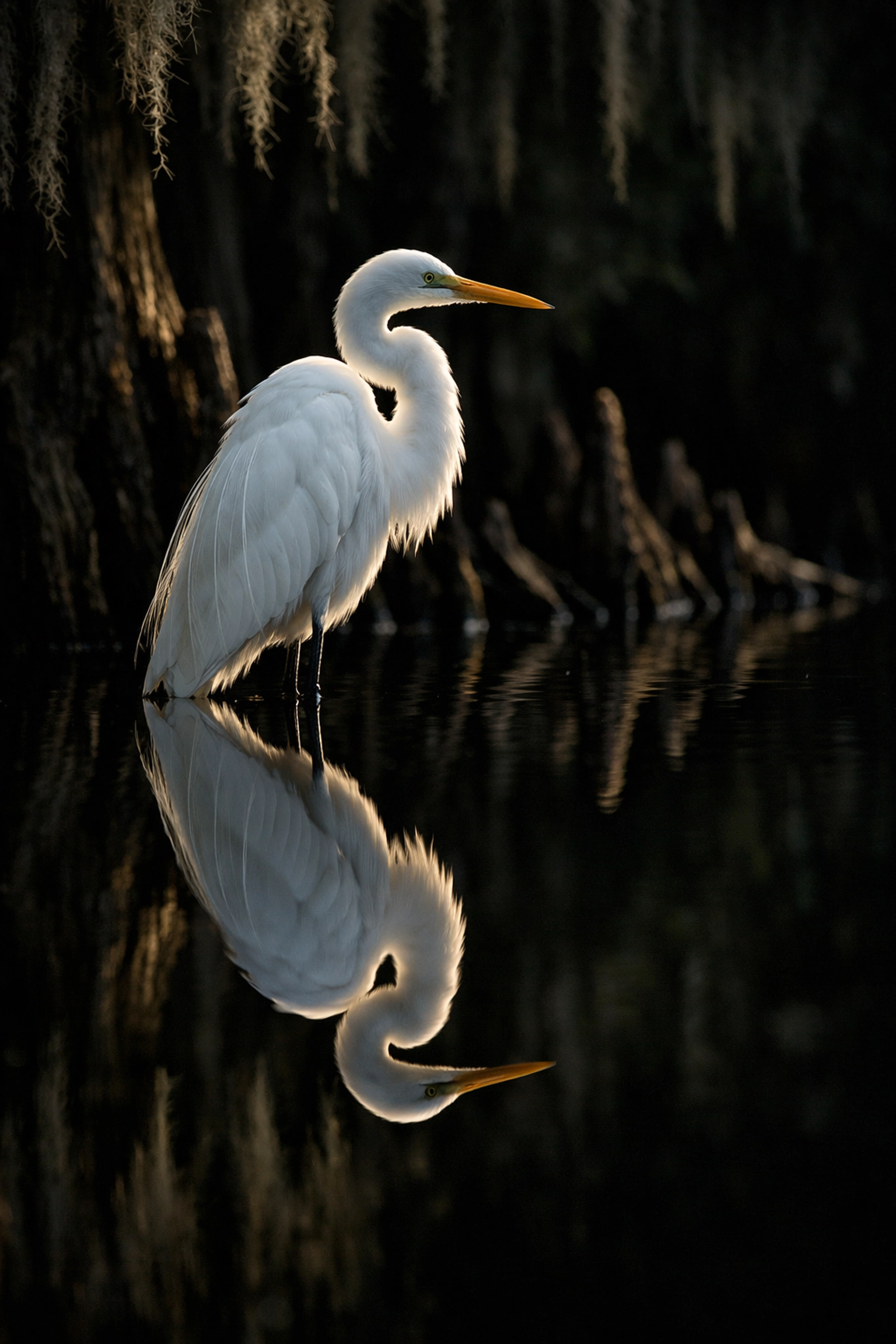
- Herons and egrets at close distances
- Alligators on the bank (sometimes very close: use common sense and give space)
Photography tip: This is a great spot for both long lenses and a short telephoto. You’ll be surprised how often 70–200mm is enough.
Flamingo Marina: boat access to Florida Bay + backcountry vibes
Flamingo is where you go when you want open water, bigger skies, and a different ecosystem feel. Boat tours here often include naturalist narration, which helps you understand what you’re seeing (and what to anticipate next).
Best for:
- Scenic wildlife + environmental compositions
- Birds over water
- Sunset color and layered backgrounds
Ten Thousand Islands: high bird variety, strong action potential
This region is known for serious bird opportunities and rich biodiversity. Depending on season and conditions, you can see large numbers of birds and get chances at flight shots, feeding behavior, and group interactions.
Best for:
- Birds in flight (especially early morning)
- Dense wildlife days when conditions align
Shark Valley: afternoon-friendly light, big-sky Everglades feel
Shark Valley can be excellent when you lean into the time of day and bring the right expectations. Afternoon light can be flattering, and the long views let you work with layers and leading lines.
Quiet winners: Pahayokee Overlook + Fakahatchee Strand Preserve
If you like a calmer pace and fewer people, these can be strong additions: especially when you want a more “wild” look in the background and you’re willing to work for the shot.
When to go: seasons, light, and what wildlife does in each window
November to April is widely considered the sweet spot for Everglades photography: cooler weather, less humidity, and strong wildlife activity. That said, summer mornings can still be productive if you’re on location early and plan around heat and storms.
Think in two daily blocks:
- Early morning: softer light, active birds, calmer wind (often), better flight and feeding behavior
- Late afternoon: warm tones, nicer shadows, dramatic skies: great for environmental portraits
Practical reality: Midday can still work (especially for reptiles), but if you’re chasing “magazine light,” build your tour around sunrise/sunset windows.
What to bring on an Everglades photography tour (comfort + camera essentials)
You’ll shoot better when you’re not distracted by heat, bugs, or dead batteries.
Clothing and comfort
- Closed-toe shoes (boardwalks + muddy edges happen)
- Hat + lightweight long sleeves (sun + mosquitoes)
- Water and electrolytes
- Bug protection (especially near dawn/dusk in warmer months)
Camera gear that actually matters
- Extra batteries (you’ll shoot more than you think)
- Plenty of memory cards (burst shooting adds up fast)
- Lens cloth + small towel (humidity and spray happen)
- Rain cover or simple dry bag for boat days
If you want a practical packing list that covers “what you’ll regret forgetting,” pair this article with the Everglades Photography Guide: https://blog.edinchavez.com/product/everglades-photography-guide/.
For a general gear checklist you can build from, Photoguides also has: https://photoguides.org/essential-photography-gear
Lenses for Everglades wildlife: the simple, no-drama setup
You can shoot the Everglades with lots of gear, but here’s what consistently works:
100–400mm or 200–600mm (your main wildlife lens)
This is your workhorse for birds, gators at a safe distance, and action moments you don’t want to crop to death.
70–200mm (the underrated hero)
For close birds on the Anhinga Trail, environmental portraits, and moments where 600mm is just too tight.
Wide-angle (optional, but worth it if you like landscapes)
If you love big skies, cypress scenes, or dramatic clouds over sawgrass, bring a wide lens: just don’t let it replace your wildlife lens.
If you’re still deciding on a camera/lens combo, browse reviews here: https://photoguides.org/category/reviews
(And if you like learning in community, Shutyouraperture is a solid place to hang out: https://www.shutyouraperture.com)
Tripods, monopods, and boat stability: what tours don’t always tell you
Some photo boats are designed with tripod space in mind; others aren’t. Before you book, ask:
- Is the boat flat-decked for photographers?
- How many tripods can be set up at once?
- Are you shooting from a stable platform or a typical tour boat?
My rule of thumb:
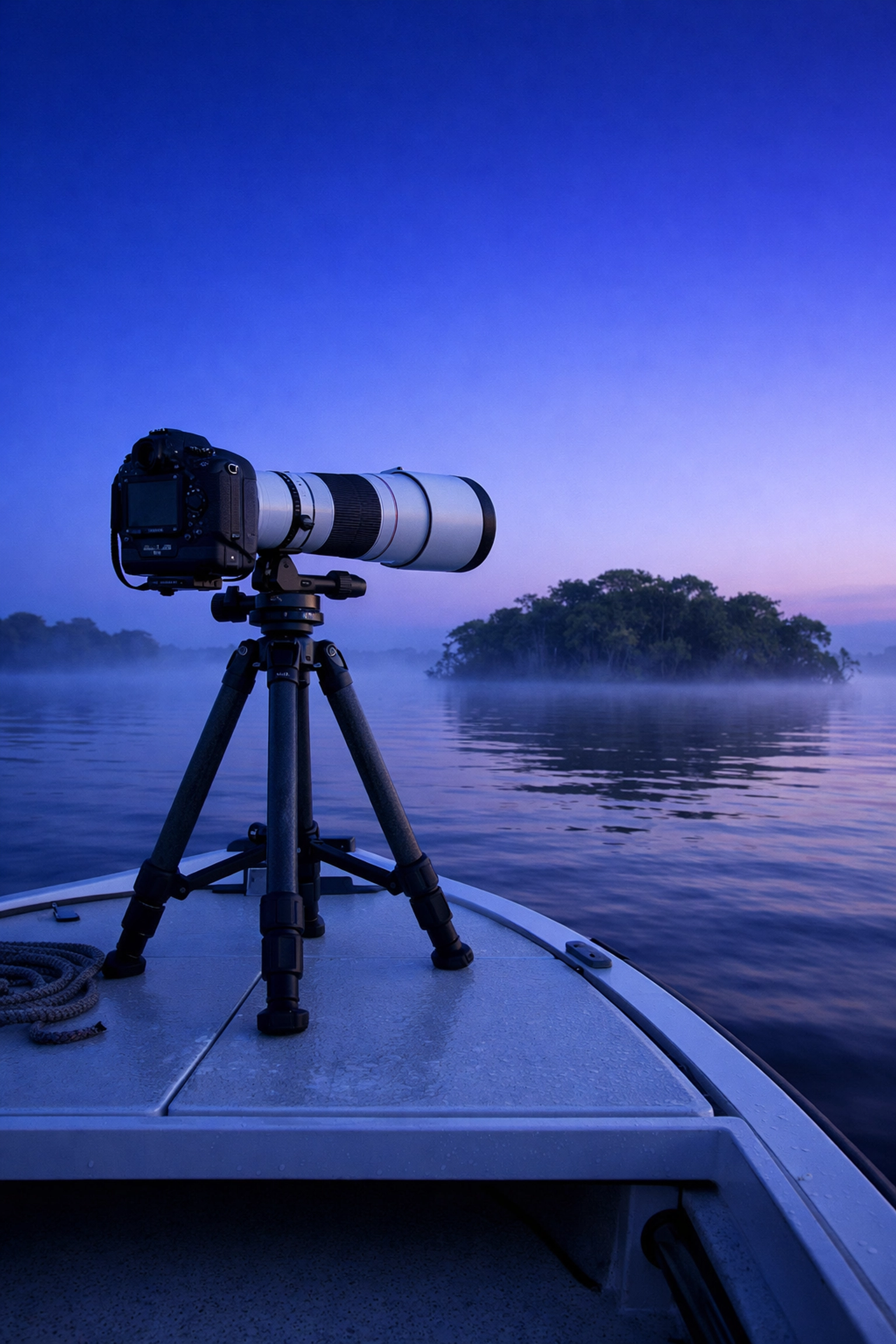
- On trails/boardwalks: tripod or monopod can help, especially with long lenses.
- On boats: a monopod is often more practical unless the boat is specifically built for tripods.
Camera settings that get you keepers (birds, gators, and low-light mornings)
Birds perched (sharp portraits)
- Shutter: 1/800–1/2000 (higher if they’re twitchy)
- Aperture: f/5.6–f/8
- ISO: Auto ISO is your friend in changing light
- AF: Single point or small zone, eye/head priority if your camera supports it
Birds in flight (action)
- Shutter: 1/2000–1/4000
- Aperture: wide open to f/7.1
- AF: Tracking + expanded zone
- Burst: High-speed, but don’t spray mindlessly: track smoothly and time the wing position
Alligators and reptiles (still, moody, detailed)
- Shutter: 1/500–1/1000 (higher if you’re handheld at long focal lengths)
- Watch reflections: shift a few inches left/right to clean up glare on the water
Quick tip that saves shots: expose for the whites on egrets. Slight underexposure is easier to recover than blown highlights.
Composition tricks that make Everglades images look “expensive”
You can have an incredible subject and still end up with a cluttered frame. Try these:
- Get low (even slightly): eye-level feels intimate and pro
- Clean backgrounds: take two steps, change your angle, simplify
- Leave space in the direction of movement: birds look better when they have “room to go”
- Look for behavior: preening, feeding, wing stretches: those moments elevate the shot
What to ask before you book an Everglades photography tour
A quick set of questions can save you from booking the wrong experience:
- Is this tour photographer-focused or a general nature tour?
- What time do you depart, and do you align with sunrise/sunset?
- Do you use a quiet approach (like electric trolling motors) near wildlife?
- What’s the maximum group size?
- Can you tailor the outing for birds vs landscapes vs reptiles?
- Are you allowed to bring a tripod/monopod, and is there room?
Private tours shine here because customization is the whole point. If you want a clear plan before you ever hit “book,” the Everglades Photography Guide is built for exactly that: https://blog.edinchavez.com/product/everglades-photography-guide/.
A simple “first Everglades tour” game plan (so you don’t overthink it)
If this is your first serious attempt, keep it simple:
- Pick one primary goal: birds, gators, or a balanced mix
- Shoot early: sunrise to mid-morning is your best confidence builder
- Bring one main lens + one backup: don’t carry your whole closet
- Prioritize keepers over experiments: nail sharpness and exposure first
- Take notes: which focal lengths you used most, what you wished you had, what you’d change
And if you want a structured, proven route: plus the “what to do when the wildlife isn’t cooperating” adjustments: grab the Everglades Photography Guide here: https://blog.edinchavez.com/product/everglades-photography-guide/.
Helpful resources (for planning + inspiration)
- Everglades planning and shot strategy: https://blog.edinchavez.com/product/everglades-photography-guide/
- More photography articles and resources: https://www.blog.edinchavez.com
- Fine art inspiration and prints: https://www.edinfineart.com
- Downloadables from Photoguides (useful extras): https://photoguides.org/download













