
Category: Photo Guides
There is something almost prehistoric about stepping into the Everglades. When the sun starts to peak over the sawgrass and the mist rises off the water, you aren't just taking photos; you’re stepping into a different world. As a photographer, this place is a playground, but if you go in without a plan, it can be an overwhelming, buggy, and humid challenge.
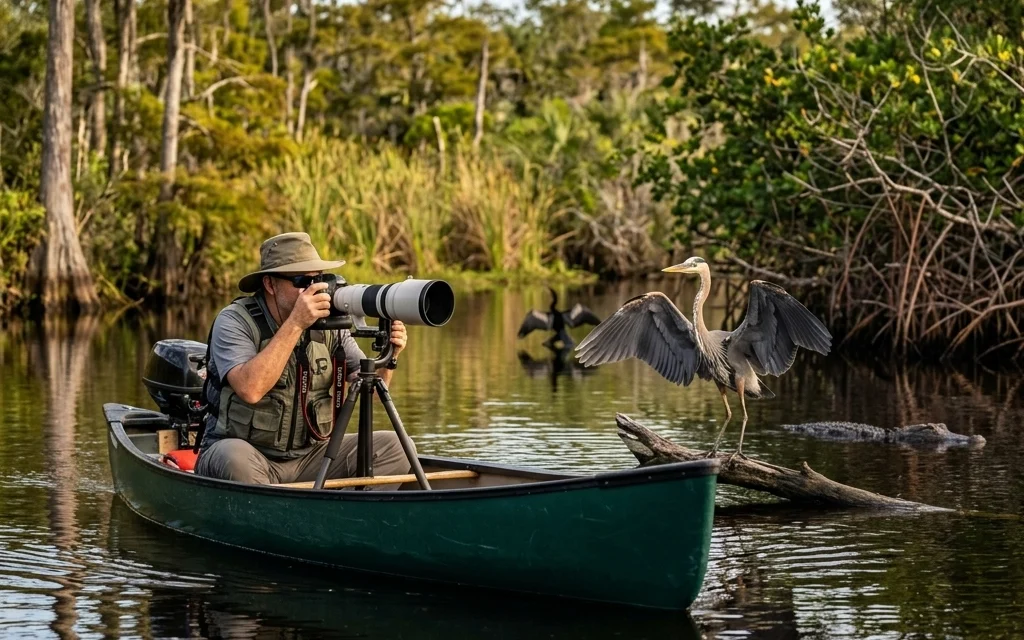
I’ve spent countless hours navigating these marshes, waiting for that perfect moment when a Roseate Spoonbill takes flight or an alligator glides silently through the duckweed. If you want to capture the true essence of this "River of Grass," you need more than just a good camera. You need patience, the right timing, and a bit of insider knowledge.
This guide is designed to give you everything you need to succeed, from the gear that won’t let you down to the secret spots where the wildlife actually hangs out. And if you really want to take the guesswork out of your trip, you should definitely grab my Everglades Photography Guide. It’s the result of years of trial and error packed into one easy-to-follow resource.
Timing is Everything: The Dry Season Advantage
If you take away one thing from this post, let it be this: timing is the difference between a memory card full of award-winning shots and a memory card full of photos of empty grass.
The Everglades basically has two moods: the Wet Season and the Dry Season. For wildlife photography, you want the Dry Season (November through April).
During these months, the water levels across the marsh drop significantly. Because the "River of Grass" starts to dry up, all the wildlife: from the smallest fish to the biggest gators: is forced to congregate around the remaining deep-water holes. This creates a natural buffet for wading birds and puts all your subjects in a much smaller, more predictable area. Plus, the mosquitoes are much less likely to carry you away, which is a major win in my book.
Early morning is your best friend here. Not only is the light soft and golden, but the animals are most active. Arriving at the park gates before sunrise ensures you’re set up and ready when the world wakes up.

Where to Go: The Best Photography Spots
The Everglades is massive: over 1.5 million acres: but you don't need to explore every inch to get great shots. There are a few key spots that consistently deliver for photographers.
1. Anhinga Trail (Royal Palm)
This is the "Old Faithful" of the Everglades. Located near the Homestead entrance, the Anhinga Trail is a boardwalk that takes you right over the marsh. It is arguably the best place for beginners and pros alike because the animals here are used to people. You can get incredibly close (safely!) to Anhingas, Herons, and Alligators. It’s also one of the best spots for bird photography due to the sheer variety of species.
2. Shark Valley
Don’t let the name fool you: you’re looking for gators and birds here, not sharks. Located off the Tamiami Trail, Shark Valley offers a 15-mile loop. You can bike it, walk it, or take the tram. The observation tower at the halfway point gives you a stunning 360-degree view of the glades, but the real magic is along the canal where alligators often sun themselves right next to the path.
3. Flamingo
At the very end of the main park road lies Flamingo. This is where the freshwater meets the saltwater of Florida Bay. It’s the best spot to find the American Crocodile (the shy cousin of the alligator) and Manatees. The light over the bay at sunset is some of the best you’ll find in the entire state.
Essential Gear for the Glades
The Everglades can be a harsh environment for camera gear. It’s humid, it’s salty near the coast, and it’s often dusty. You need a setup that is versatile.
- The Long Lens: You’ll want a telephoto lens, ideally something in the 300mm to 600mm range. While some animals at Anhinga Trail are close, many of the best bird shots happen at a distance. If you're looking for recommendations on the latest glass, check out Camera Reviews 2024.
- A Sturdy Tripod: If you’re shooting at sunrise or using a heavy 600mm lens, a tripod isn't optional. I highly recommend a gimbal head for wildlife; it allows you to track a flying bird with zero effort.
- Circular Polarizer: This is a secret weapon for Florida photography. It helps cut the glare off the water and lets you see the textures of the alligators beneath the surface.
- Protection: Use a rain cover even if the sky looks clear. A sudden afternoon squall is common, and the humidity can be brutal.
For a full breakdown of what I carry in my bag, take a look at our essential photography gear list.

Technical Tips: Mastering the Shot
Wildlife photography is about split-second decisions. Here are a few settings and techniques to keep in mind:
Focus on the Eye: This is the golden rule. If the eye isn't sharp, the photo won't connect with the viewer. Use your camera’s "Animal Eye AF" if you have it; it’s a game-changer for birds in flight.
Mind Your Shutter Speed: Birds are fast. Even a slow-looking heron moves its head quickly when it’s hunting. Keep your shutter speed at 1/1200s or higher for action shots. If you're new to these concepts, our educational section has some great primers on the basics.
Get Low: Most people shoot from eye level. If you can safely get lower to the ground (while staying on the boardwalks!), you’ll create a much more intimate perspective. It makes the viewer feel like they are in the animal's world, rather than just looking down at it.
The Wildlife: What You’re Looking For
The diversity here is staggering. You aren't just looking for "a bird"; you're looking for specific characters.
- The Anhinga: Known as the "Snake Bird," they swim with only their necks above water. Look for them on branches with their wings spread out to dry: it’s a classic Everglades shot.
- Roseate Spoonbill: These are the pink stars of the show. They are often mistaken for flamingos from a distance, but their unique bill and vibrant pink feathers make them a must-capture.
- American Alligator: They are everywhere, but the best shots are the ones that show detail: the scales, the teeth, or the reflection in the water.
- The Elusive Panther: It’s rare, but they are out there. If you’re lucky enough to spot one, keep your distance and start clicking.
If you love the look of these animals and want to see how they look as high-end art, you can browse my professional gallery at Edin Fine Art.

Respecting the Swamp: Ethics and Safety
We are guests in this habitat. The goal is always to capture the image without changing the animal's behavior.
- Keep Your Distance: National Park rules require you to stay at least 15 feet away from wildlife. This is for your safety and theirs.
- No Feeding: Never, ever feed the wildlife. It habituates them to humans, which usually ends poorly for the animal.
- Stay on the Paths: The ecosystem is fragile. Trampling the sawgrass can destroy nesting sites for smaller creatures.
If you’re planning a larger trip and need more logistics, check out our photography booking experience page to see how we help photographers get the most out of their travels.
Level Up Your Everglades Game
Look, you can head out to the Everglades with your camera and probably get some decent shots. But if you want to come home with a portfolio that truly stands out, you need to know the specific spots, the exact times, and the behaviors to look for.
I created the Everglades Photography Guide specifically to help you bypass the learning curve. It’s packed with GPS coordinates, seasonal tips, and specific gear advice tailored to this unique environment.
For even more gear talk and community tips, don't forget to swing by Shut Your Aperture. We’re all about helping each other get that perfect shot.
The Everglades is waiting. Grab your gear, check your batteries, and I’ll see you out in the marsh.













