
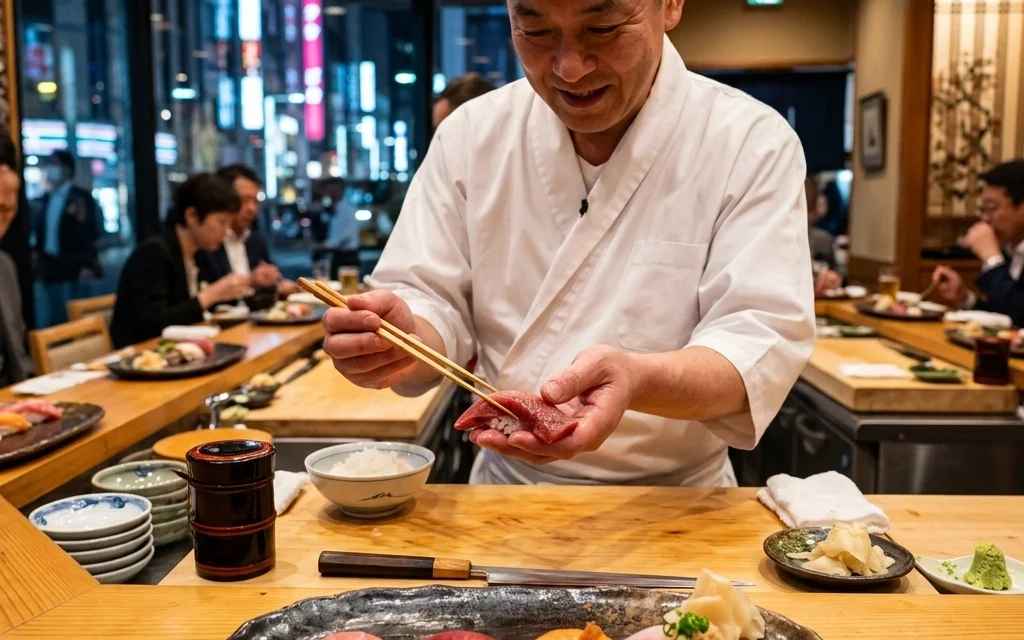
Welcome to day two of our 14-day deep dive into the culinary soul of Tokyo. Yesterday, we were navigating the neon-soaked maid cafes of Akihabara, but today, we’re leveling up. We’re heading to Ginza: the neighborhood where the sidewalks are practically paved with gold, the fashion is strictly high-end, and the sushi is, quite literally, the best in the world.
If you’ve ever seen Jiro Dreams of Sushi, you know the vibe. Ginza is the holy land of "Edomae" sushi. It’s a place where chefs spend decades learning how to wash rice before they’re even allowed to touch a piece of tuna. For a photographer, it’s a dream of textures and colors. For a foodie, it’s a spiritual experience. But for the uninitiated, it can be a little… intimidating.
Don't sweat it. I’m Edin, and I’ve spent enough time behind a lens and at a sushi counter to help you navigate this without dropping your nigiri in your lap or: heaven forbid: overstaying your welcome with your camera shutter.
The Birthplace of the Modern Bite
Before we get into where to eat, let’s talk about why Ginza is the goat. Back in the day (we're talking the Edo period), sushi wasn't this delicate art form. It was street food. But Ginza is where "Edomae" sushi was perfected. This style focuses on marinating, aging, and seasoning fresh fish from the nearby waters to bring out flavors you didn't know existed.
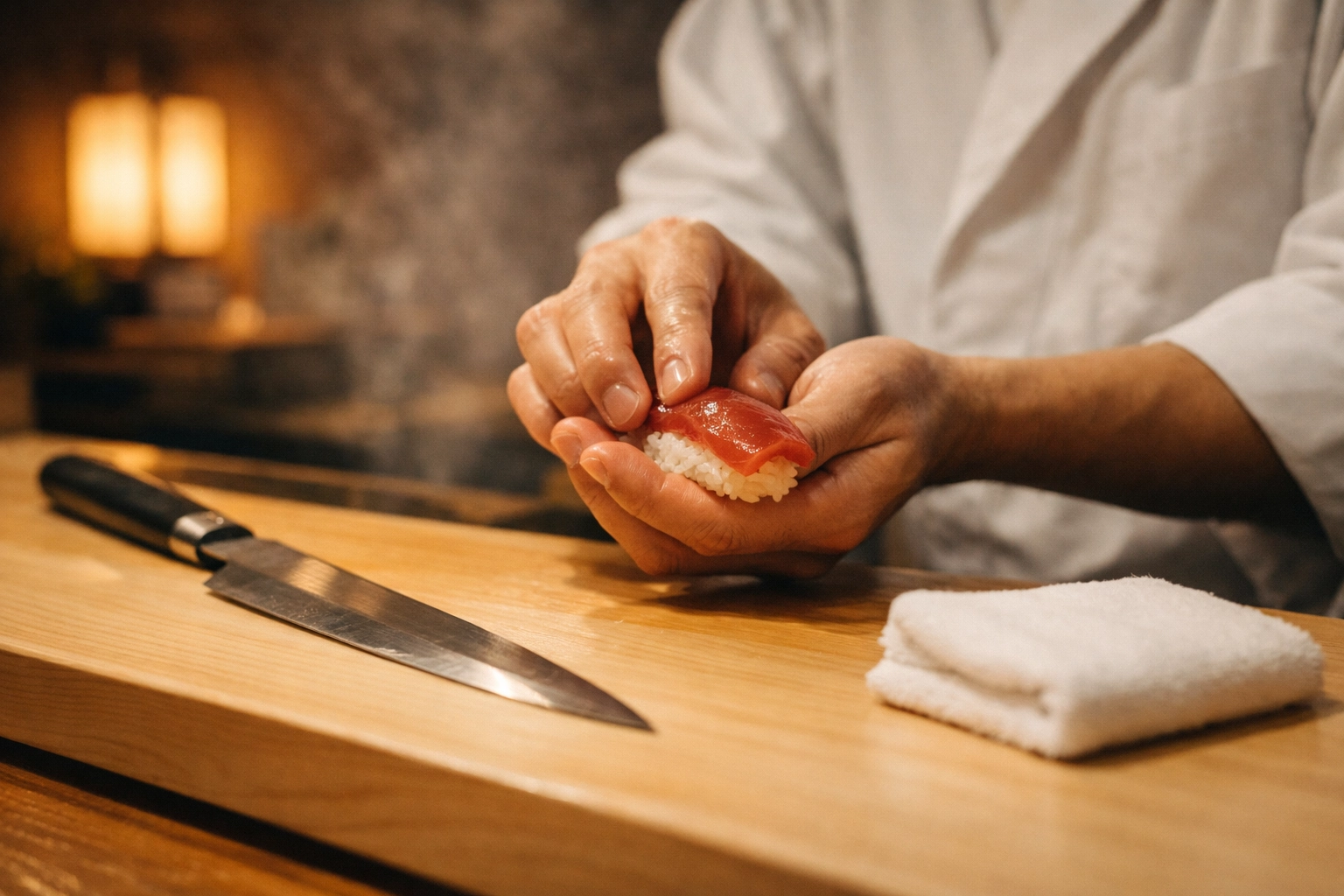
When you sit down at a Ginza counter, you aren’t just eating dinner; you’re witnessing a performance. Every slice of the blade and every press of the rice is calculated. It’s the ultimate subject for a photography booking experience if you can land the right spot.
The Heavy Hitters: Where to Spend Your Yen
If you’re looking to go all out: and I mean "I might need to sell a lens to pay for this" all out: Ginza has the heavyweights.
1. Kyubey Ginza Honten
This is a legendary institution. Since 1935, Kyubey has been the gold standard. It’s famous for its traditional techniques and arguably the place where "gunkan-maki" (the battleship roll with seaweed) was invented. The nigiri here doesn't just sit on the plate; it practically glows.
2. Sushi Saito
This is the white whale of sushi. It’s tiny, exclusive, and notoriously hard to book. Chef Takashi Saito is a master of precision. If you manage to get a seat here, you’ve basically won the Tokyo lottery. The artistry is so high that you’ll almost feel bad eating it. Almost.
3. Ginza Sushiko
A Michelin-starred gem that balances tradition with impeccable service. Each piece of sushi is served like a work of art. Their sake list is also top-tier, which helps if you’re trying to build up the courage to try some of the more adventurous seasonal catches.
If the thought of booking these places yourself makes your head spin, I highly recommend checking out a guided experience. You can book a high-end food tour through Viator to ensure you’re getting the real deal without the stress of navigating the Japanese reservation systems.
The "Smart" Choice: High Quality Without the Heart Attack
You don't always have to spend $500 on a lunch. There are spots in Ginza that offer that high-end Omakase feel without the eye-watering price tag.
- Sushi Murayama Annex: This is a fantastic spot for a high-quality Omakase in a luxurious atmosphere but at a much more reasonable price. Their appetizers are creative, and the sushi is meticulous.
- Sushi Yamaken Higashi Ginza: Looking for a budget-friendly entry point? You can find lunch sets here for around 5,000 yen ($35 USD). It’s the perfect place to practice your food photography before you hit the Michelin spots.
How Not to Look Like a Total Tourist (Etiquette 101)
Eating at a high-end sushi counter in Ginza has its own set of unwritten rules. Think of it like a silent dance between you and the chef.
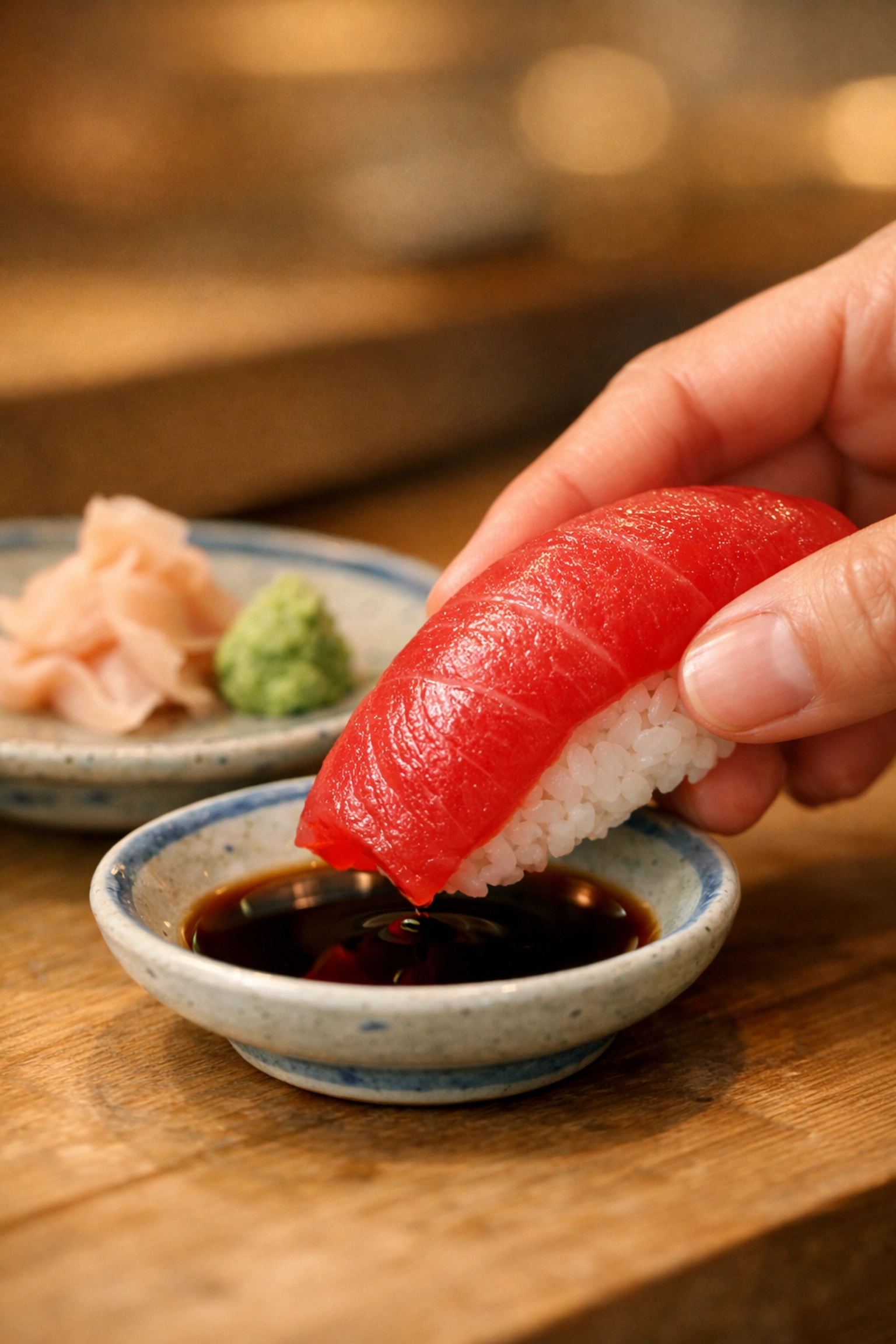
- One Bite, No Exceptions: Sushi is designed to be the perfect balance of fish, rice, and wasabi. If you bite it in half, the structural integrity collapses, and the chef’s soul dies a little bit. Pop the whole thing in.
- The Soy Sauce Trap: In Ginza, the chef usually brushes the fish with nikiri (a soy-based glaze) before serving it to you. If they do, do not dip it in extra soy sauce. It’s already perfect. If you do have to dip, dip the fish side, never the rice. Rice is like a sponge; it’ll soak up too much sauce and fall apart.
- Ginger is a Palate Cleanser: That pile of pickled ginger? It’s not a topping. You eat a slice between different types of fish to reset your taste buds.
- Hands or Chopsticks? Both are actually fine! Many traditionalists prefer using their fingers for nigiri. It’s easier to handle and keeps the rice fluffy.
Shooting Like a Pro: Capturing the Perfect Nigiri
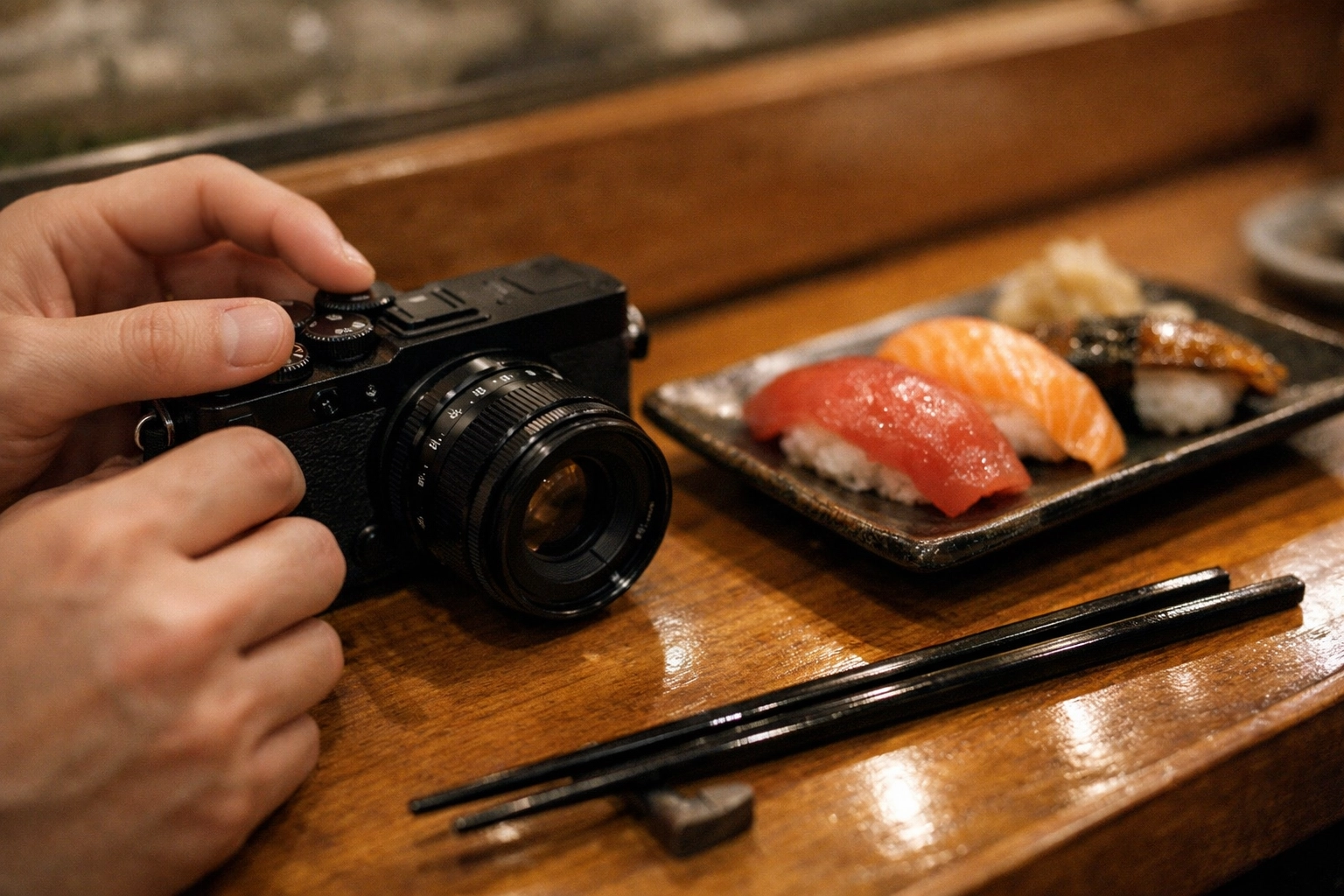
As a photographer, sushi is a challenging but rewarding subject. The lighting in Ginza dens is usually warm and focused, which can be a nightmare for white balance but a dream for moody, high-contrast shots.
The Gear
Don't bring a massive tripod and a huge strobe to a 6-seat sushi counter. It’s rude, and you’ll likely be asked to stop. Stick to a fast prime lens: a 35mm or 50mm is perfect. Check out our guide on essential photography gear for my favorite travel setups. If you're looking for something unique, the module 8 lens adapter can give your food shots a cinematic look that sets them apart from the standard "phone eats first" photos.
The Focus
When shooting sushi, focus on the texture of the fish. You want to see the marble of the fatty tuna (Otoro) or the shine on the skin of the mackerel. If you’re looking for more tips on gear and techniques, I always recommend checking out Shut Your Aperture for the latest community insights.
Lighting and Color
Capture those deep red tuna hues. If you’re shooting in RAW (which you should be), pay close attention to your reds and oranges in post-processing. You want the fish to look fresh and appetizing, not muddy. If you're looking for inspiration on how to handle color and light in your fine art, you can see how I handle vibrant palettes over at Edin Fine Art.
Making the Most of Your Ginza Experience
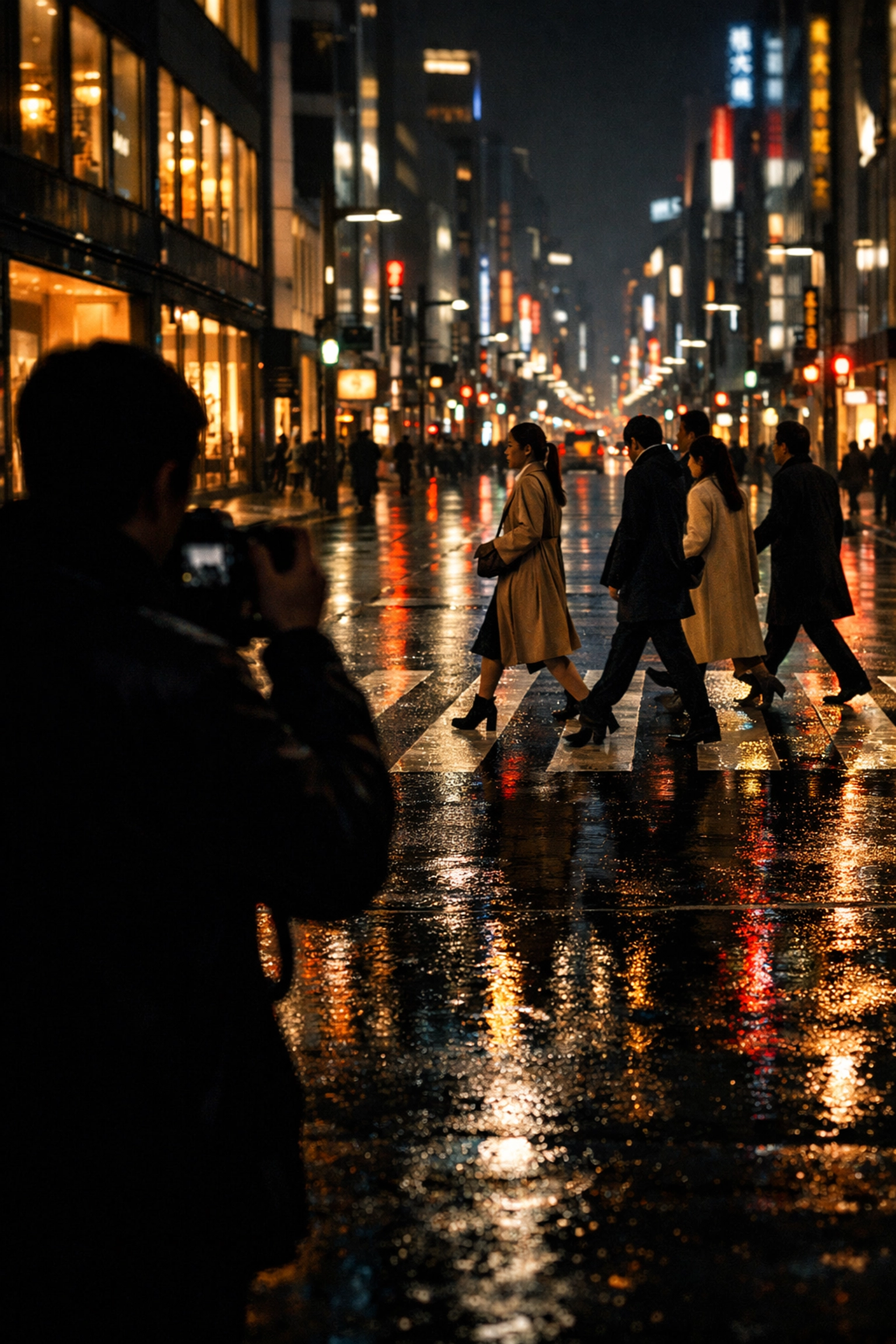
Ginza is more than just sushi. After your meal, take a walk through the streets. The architecture is stunning, and the street photography opportunities are endless. If you need a break from the hustle, there are plenty of hidden spots to explore. While we’re talking about great travel finds, if you’re planning the rest of your trip, you might find my thoughts on Dominican Republic vs Cancun or my guide to Miami's hidden speakeasies useful for your next getaway.
But let's stay focused on Tokyo. The best way to experience the culinary depth of this city is to let an expert lead the way. Seriously, the back alleys of Ginza hold secrets that Google Maps just can’t find. I can't recommend enough that you book a food tour through Viator. They’ll take you to the spots where the locals eat, and you’ll learn the stories behind the food that you’d never hear otherwise.
Final Thoughts
Eating sushi in Ginza is a bucket-list item for a reason. It’s a masterclass in minimalism, quality, and respect for ingredients. Whether you’re there to eat the meal of your life or to capture the shot of your career, just remember to be present. Put the camera down for a second, enjoy the melt-in-your-mouth magic of a piece of A-grade tuna, and soak in the atmosphere.
For more photography tips and travel stories, keep up with my latest adventures on my blog. We’ve still got 12 more days of Tokyo to explore, including the street food of Harajuku and the madness of the Tsukiji outer market.
Stay tuned, keep shooting, and most importantly, keep eating.
Quick Links for Your Tokyo Adventure:
- Need a food guide? Book here via Viator
- Want to level up your photography? Check out our educational resources
- Looking for gear reviews? See our camera reviews for 2024
- Planning a weekend getaway elsewhere? Check out cheap weekend getaways
See you tomorrow for more Tokyo treats!













