
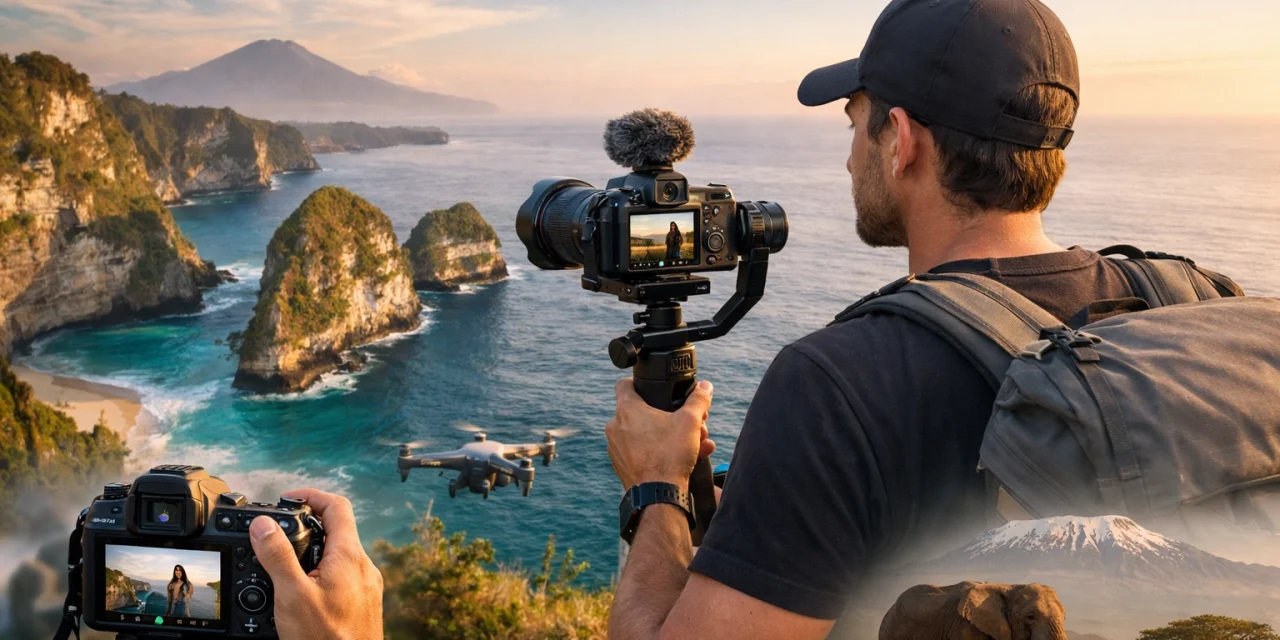
The landscape of visual storytelling has shifted dramatically over the last few years. If you’re reading this in 2026, you already know that being "just a photographer" or "just a videographer" is becoming a rarity. Clients, social platforms, and even our own creative spirits now demand a blend of both.
Hybrid photography is no longer a niche experimental phase; it’s the gold standard. It’s the ability to capture a breathtaking high-resolution still of a sunset and, with the flick of a switch, record a cinematic 8K log sequence of the light dancing on the water.
Whether you’re a seasoned pro or just starting out, mastering this dual-threat capability is the most important skill you can develop this year. At Photoguides, we want to ensure you feel confident making that transition. It’s not about doubling your workload; it’s about doubling your impact.
The Hybrid Mindset: Thinking in Stills and Motion
The biggest hurdle in hybrid photography isn't the gear, it's the mindset. Photography is about the "decisive moment," the one frame that tells the whole story. Video is about the "sequence," the series of moments that build a narrative.
In 2026, the best creators are those who can visualize both simultaneously. When you arrive at one of the best photography locations, don’t just look for the hero shot. Look for the movement. Is there grass blowing in the wind? Are there crowds moving through a city square?
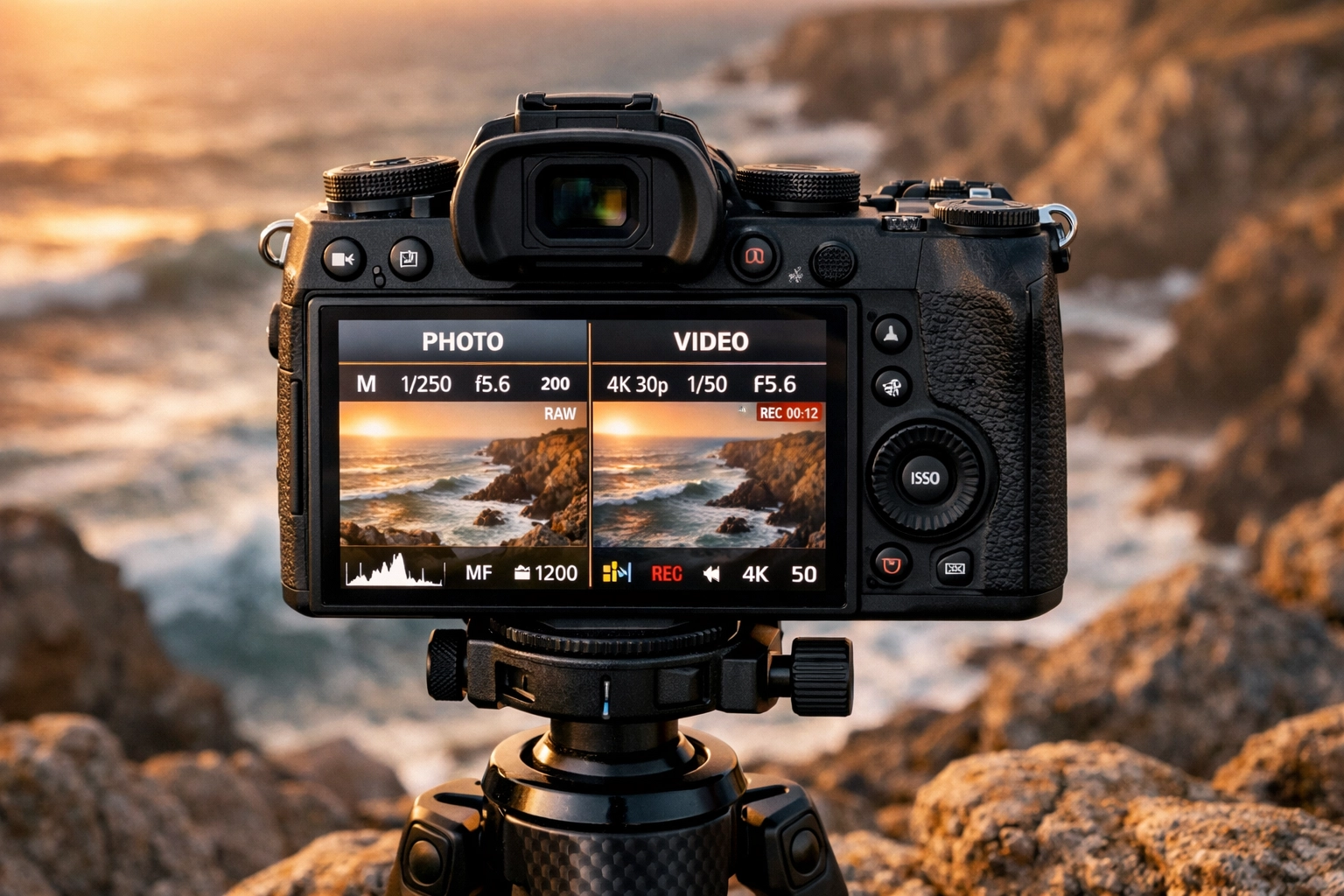
To succeed, you need to develop a "hybrid workflow." This means setting up your camera so that you can switch between modes in less than a second. Most modern mirrorless cameras allow you to save custom profiles. We recommend setting one dial for your high-shutter-speed photography and another for your 180-degree shutter rule video settings.
Essential Gear for the 2026 Hybrid Shooter
The gear wars of the early 2020s have settled into a beautiful era of capability. You no longer need to carry a dedicated cinema camera and a high-res stills body. The essential photography gear of today is built for both.
The Powerhouses
- Fujifilm X-H2S: Even a few years after its release, this remains a hybrid king. With its stacked sensor, it handles 6.2K open gate recording, perfect for those who need to crop for both TikTok and YouTube, while delivering 26MP stills that look like film.
- Canon EOS R8: If you are looking for a full-frame entry point, the R8 is still the champion of value. It offers 4K 60fps with no crop, making it a favorite for wedding photography insights.
- Sony ZV-E10 II: For the travel creator, this compact beast uses AI-driven autofocus that is practically psychic. It’s the perfect companion for solo creators who need to stay in focus while moving through a scene.
For a deeper dive into how these models have evolved, check out our camera reviews section where we break down the latest firmware updates that have kept these "older" 2024 models relevant in 2026.
Mastering the Technical Transition
The technical requirements for video are slightly more rigid than for photography. While you can "fix it in post" more easily with a RAW photo, a poorly shot video is much harder to save.
The Audio Gap
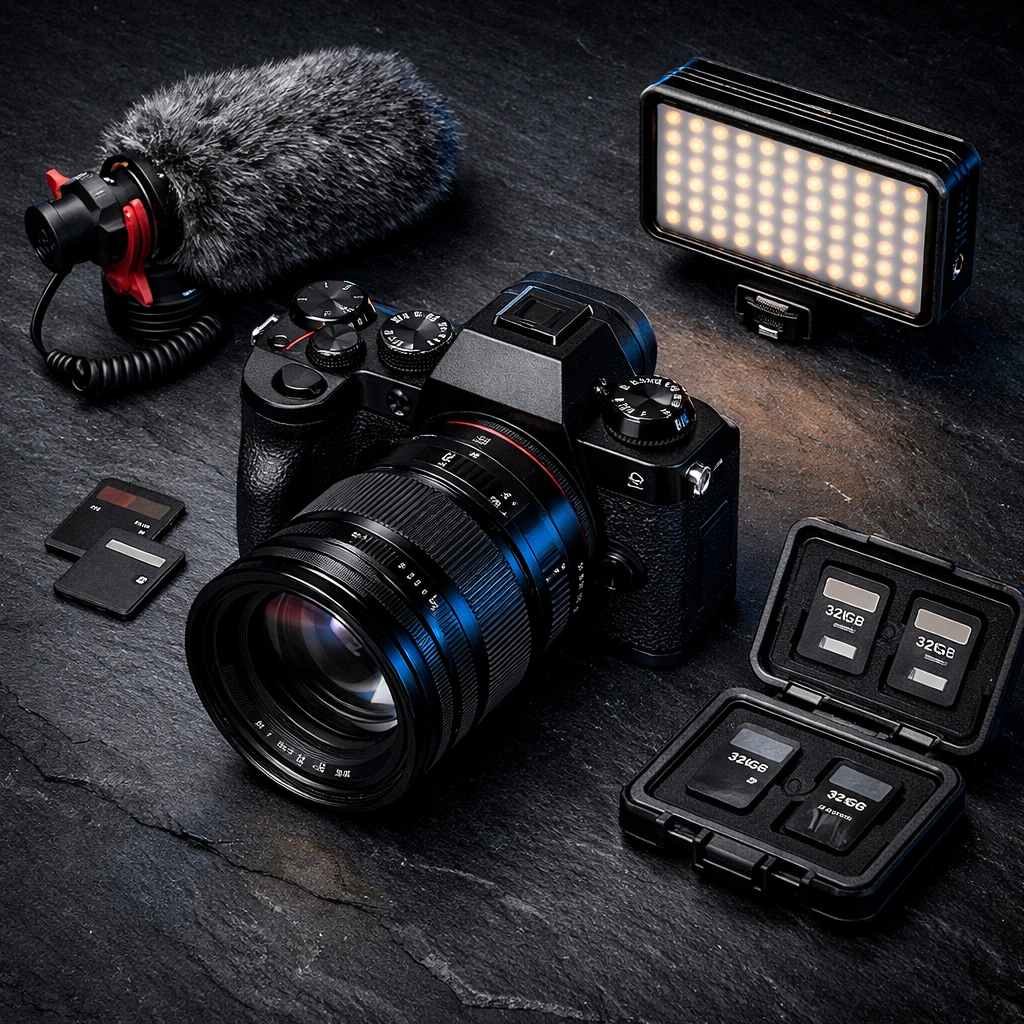
The most common mistake hybrid shooters make is forgetting that video is 50% audio. Your camera’s built-in mic won't cut it. To truly succeed, you need a dedicated shotgun mic or a wireless lavalier system. If you’re filming at a bustling spot like Miami's hidden speakeasies, the ambient noise can be beautiful, but your subject's voice needs to be crisp.
Constant Lighting vs. Strobe
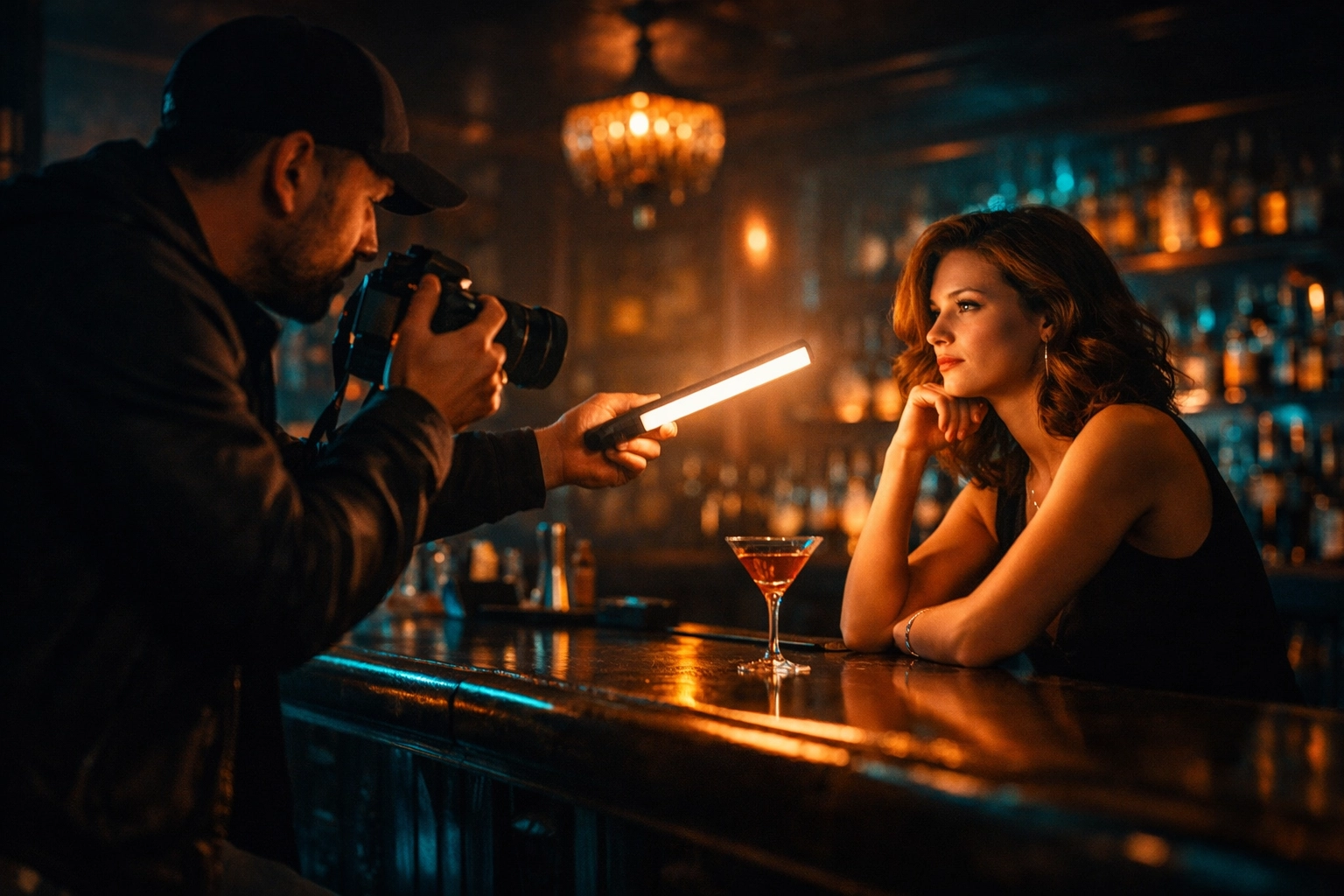
Photographers love their flashes, but strobes are useless for video. In 2026, LED technology has advanced to the point where small, battery-powered constant lights are powerful enough to act as your primary light source for both stills and motion. Carrying a powerful LED panel allows you to see your shadows in real-time, which is a massive advantage for educational photography and portraiture.
AI’s Role: Enhancing, Not Replacing
By now, AI is integrated into every part of our workflow. In 2026, the conversation has moved away from "Is AI cheating?" to "How can I use AI to be more creative?"
Hybrid shooters use AI for:
- Subject Tracking: AI now recognizes eyes, animals, cars, and even specific bird species instantly, ensuring your video remains sharp even at wide apertures.
- Generative Fill for Video: We’ve seen this in photos for years, but now we can intelligently remove a distracting tourist from a 10-second video clip with a single click.
- Authentic vs. AI Art: There is a growing premium on "Authentic Art." While AI can generate a landscape, it cannot capture the feeling of being at a location. Collectors at Edin Fine Art still value the physical presence and the unique perspective of a human behind the lens.
Where to Shoot: 2026’s Hidden Gems
Finding the right "photo spots near me" is about looking for locations that offer both visual stability and interesting motion.
If you’re looking for travel photography tips, consider these locations that are currently trending for hybrid creators:
- Coastal Destinations: Locations like Laguna Beach offer the perfect mix of static cliffs and crashing waves.
- Urban Textures: The breweries in Williamsburg, VA or the streets of Downtown Golden provide "lifestyle" backdrops that work perfectly for short-form video content and high-end commercial stills.
- Nature’s Contrast: Comparing the lush greens of the Dominican Republic vs. Cancun provides a masterclass in color grading for both mediums.
The "Open Gate" Secret Weapon
If there is one technical tip you take away for 2026, let it be this: Shoot in Open Gate.
"Open Gate" means using the full 3:2 or 4:3 sensor area rather than a 16:9 crop. This is a game-changer for hybrid shooters. It allows you to deliver a cinematic horizontal video for a website and a vertical 9:16 Reel for Instagram from the exact same clip without losing significant resolution.
This efficiency is what separates the hobbyist from the professional. It allows you to spend less time worrying about framing for every different platform and more time focusing on the art itself.
Post-Processing: The Unified Workflow
In 2026, the software we use for photo and video has begun to merge. You can now apply the same LUT (Look Up Table) to your video footage that you use as a preset for your photos, ensuring a consistent brand aesthetic across all platforms.
For those looking to add that extra "wow" factor to their stills, using sky overlays can help match the mood of a dramatic video sequence when the weather doesn't cooperate. However, the goal should always be to maintain the "reassuring" authenticity that Photoguides stands for. We want our viewers to trust that what they see is a reflection of the real world, enhanced by our creative vision.

Final Thoughts: Finding Your Voice
Hybrid photography isn't about doing twice the work; it’s about having twice the voice. In a world saturated with content, the ability to tell a story through a single powerful image and a compelling short film is your greatest competitive advantage.
Don't feel like you need to master everything overnight. Start by taking one video clip for every ten photos you take. Experiment with the photography booking experience by offering your clients a "highlight reel" alongside their gallery. You'll be surprised at how much they value seeing their memories move.
The technology of 2026 is here to support you, but your eye, your heart, and your unique perspective are what will truly make your work stand out. So, grab your camera, head out to a cheap weekend getaway, and start capturing the world in every dimension possible.
Happy shooting!













