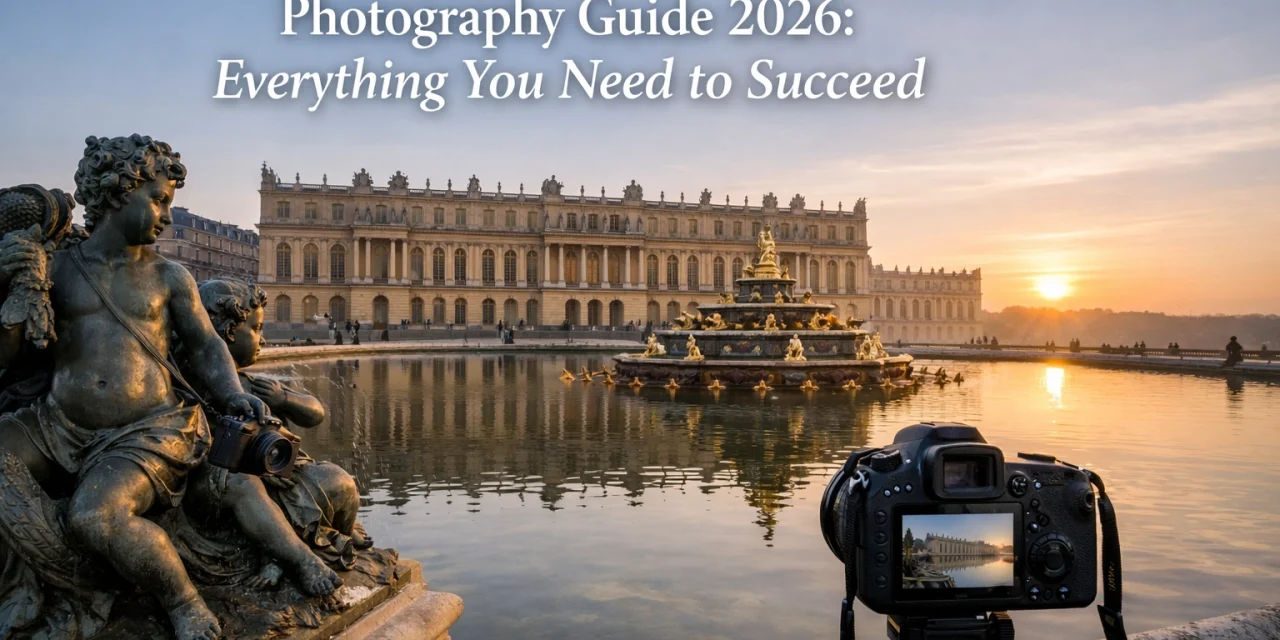
Let’s be honest: walking into the Palace of Versailles feels a bit like stepping into a fever dream designed by someone who thought "too much gold" simply wasn't a possibility. It’s grand, it’s decadent, and in 2026, it remains one of the best photography locations on the planet. But if you’ve ever tried to take a photo in the Hall of Mirrors at 2:00 PM on a Tuesday, you know that "succeeding" here requires more than just a fancy camera: it requires a battle plan.
I’m Penny, and I’ve spent more time dodging selfie sticks in the Royal Apartments than I care to admit. Whether you’re a pro looking to add to your portfolio at Edin’s Fine Art or a hobbyist following our Mastering Photography: The Ultimate 2026 Guide for Every Skill Level, this guide is your golden ticket to capturing the Sun King’s playground without losing your mind.
1. The 2026 Vibe: Why Versailles Now?
Versailles hasn't changed much since the 17th century (thankfully), but the way we photograph it has. With higher-resolution sensors and better low-light performance in our modern kits, we can finally capture the intricate textures of the silk wallpapers and the subtle glow of the crystal chandeliers without a tripod: which is great, because tripods are still strictly forbidden inside.
Before you hop on the RER C train from Paris, make sure you’ve secured your photography booking experience and tickets well in advance. Seriously, don’t be the person crying at the golden gates because you didn't book ahead. Use this Viator link to grab a "Skip the Line" pass. Your future, non-sweaty self will thank you.
2. Essential Gear for the Sun King’s Palace
If you bring a 600mm prime lens here, the only thing you’ll be photographing is the nose hair of the tourist standing three inches in front of you.
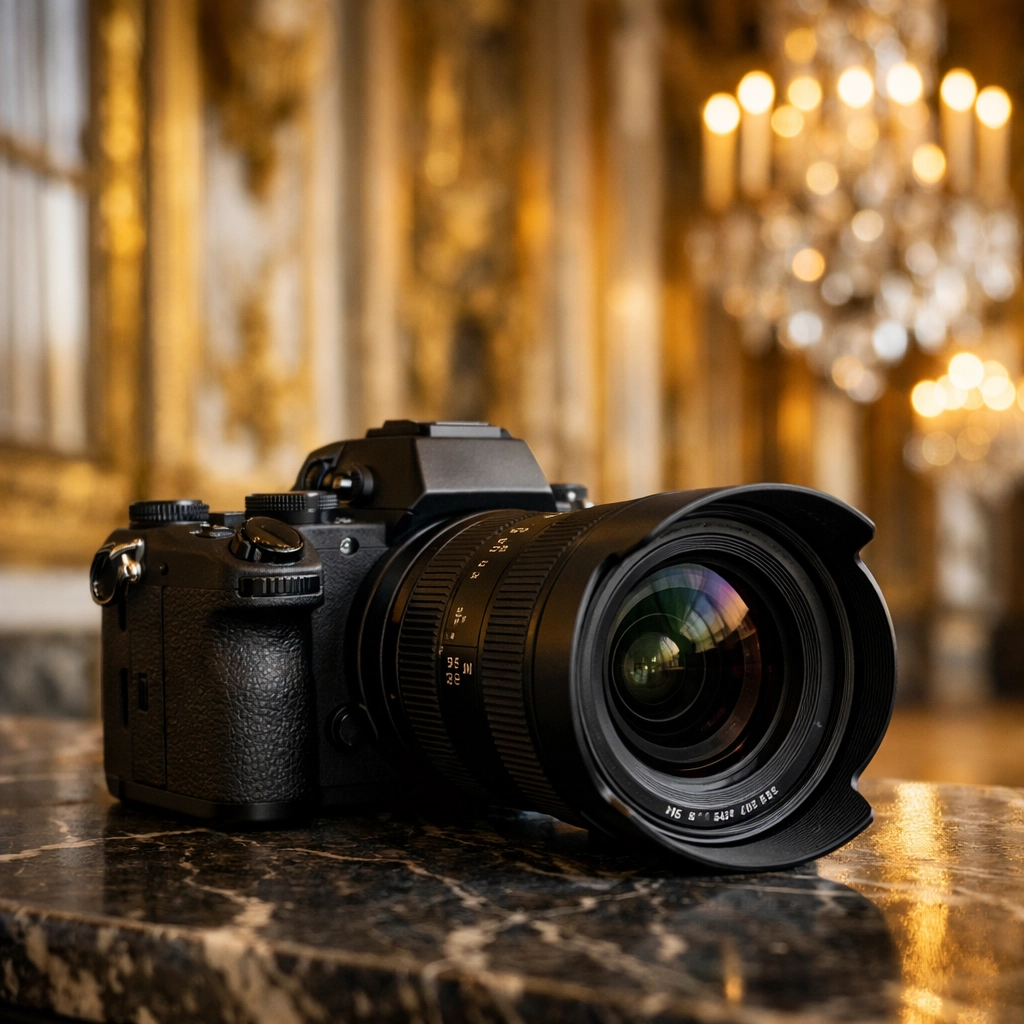
- The Wide-Angle King: A 16-35mm (full-frame equivalent) is non-negotiable. You need that width to capture the sprawling ceilings and the sheer scale of the Hall of Mirrors.
- The Low-Light Beast: Since flash is a big "non" indoors, you’ll want a lens with a wide aperture (f/1.8 to f/2.8).
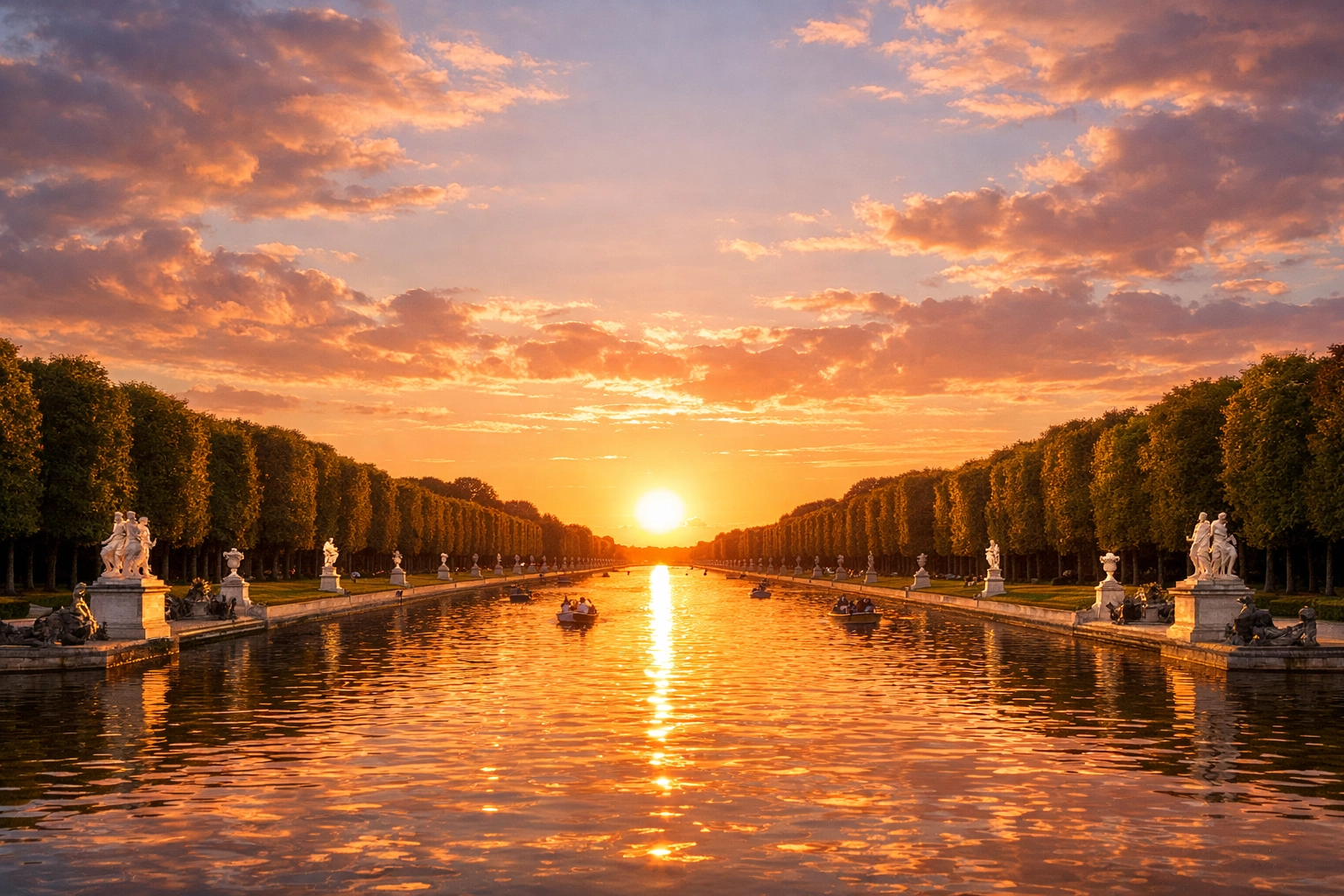
- Filters: In the gardens, a circular polarizer is your best friend to manage reflections on the Grand Canal and make those French skies pop.
- What to Leave at Home: Drones (illegal), tripods (forbidden inside), and your ego.
For a deep dive into what should be in your bag this year, check out our essential photography gear list or head over to Shut Your Aperture for the latest 2026 mirrorless reviews.
3. The Hall of Mirrors: Surviving the Boss Level
This is it. The most famous room in the world. 357 mirrors, 17 massive windows, and approximately 4 billion people. To get the shot, you have two choices: arrive at 9:00 AM sharp and sprint (politely) to the hall, or wait until 15 minutes before closing.
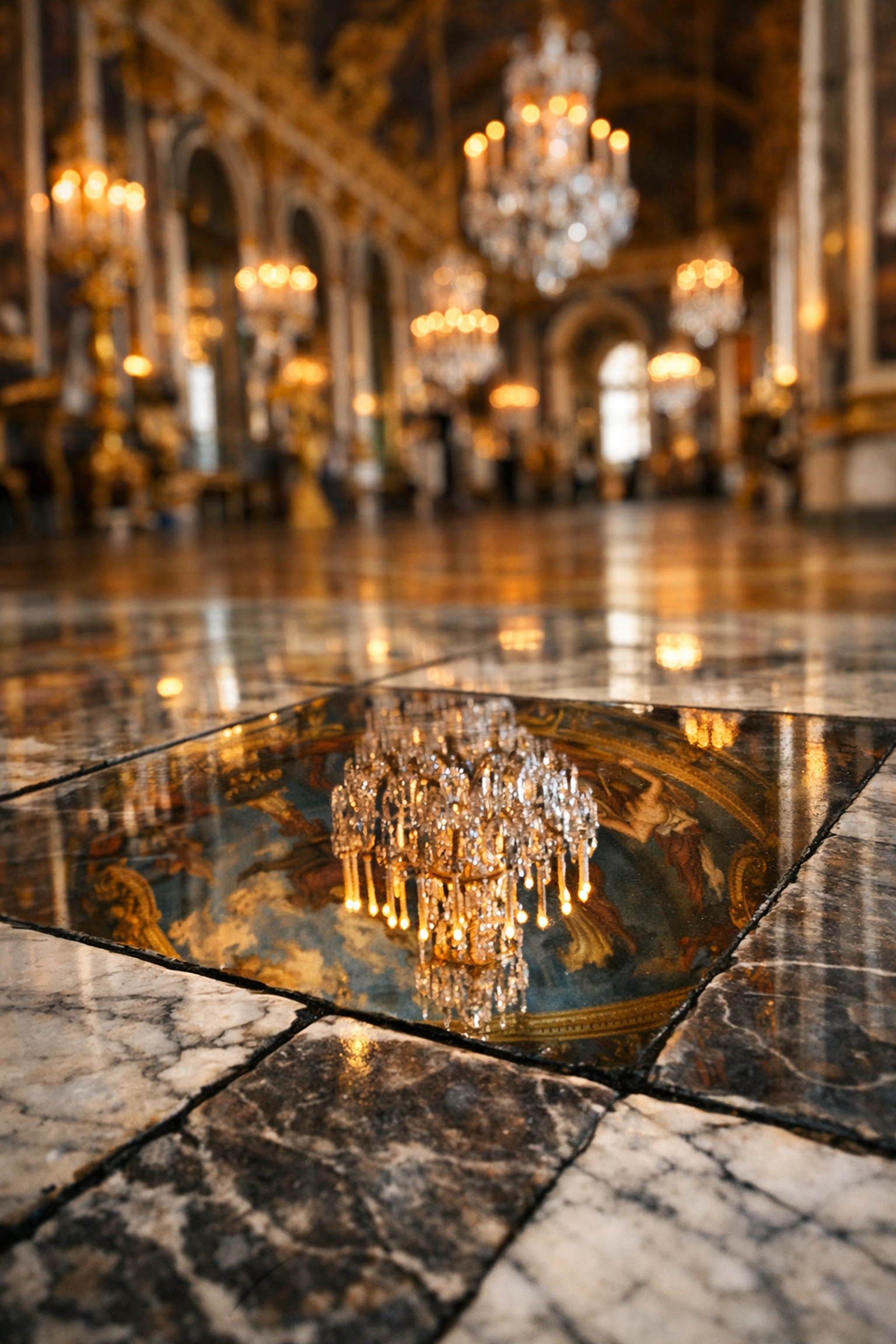
Pro Tip: Everyone tries to shoot the length of the hall at eye level. Don't do that. Point your camera up. The vaulted ceilings painted by Le Brun are spectacular and, more importantly, nobody is standing on them. Use the mirrors to create "infinite" architectural loops. If the crowds are too much, use a high-angle shot to crop out the sea of heads and focus on the relationship between the chandeliers and the gold-leaf molding.
4. The Royal Apartments and Interior Details
While everyone is fighting over the Hall of Mirrors, the King’s and Queen’s Grand Apartments offer some of the most intricate photo spots in France.
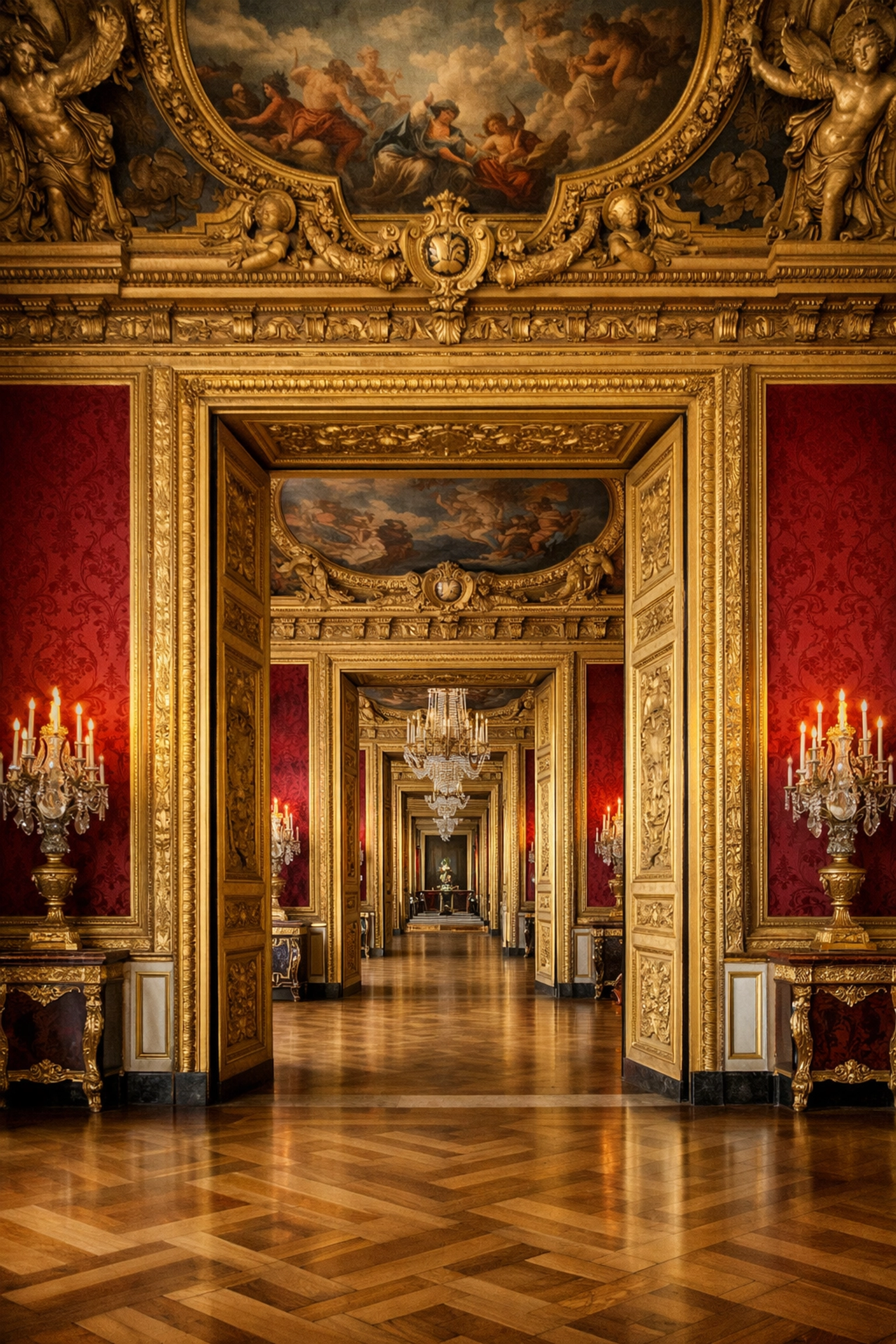
Focus on the "Grandes Communes." The symmetry in these rooms is a photographer's playground. Use the doorways as natural frames: a technique we often discuss on Edin’s Blog. Look for the way light hits the velvet drapery. In 2026, the restoration of the Queen’s Hamlet has made the interior details even more vibrant, so keep your ISO around 800-1600 to keep the shutter speed high enough for handheld shots.
5. The Gardens: Symmetry, Statues, and Scale
The Gardens of Versailles are a masterpiece of André Le Nôtre, and they are massive. If the Palace is about opulence, the gardens are about perspective.
- The Latona Fountain: Position yourself at the top of the stairs to get the Palace in the background and the fountain in the foreground. It’s a classic "rule of thirds" win.
- The Grand Canal: At sunset, this is the place to be. The sun sets right down the line of the canal, creating a golden path that is pure magic.
- The Orangerie: The geometric patterns of the hedges are best shot from the raised walkways. It’s one of the few places where a "top-down" feel is easy to achieve.
If you’re looking for more outdoor inspiration, our guide on cheap weekend getaways often highlights spots with similar grand architecture.
6. Escape to the Queen’s Hamlet (Le Hameau de la Reine)
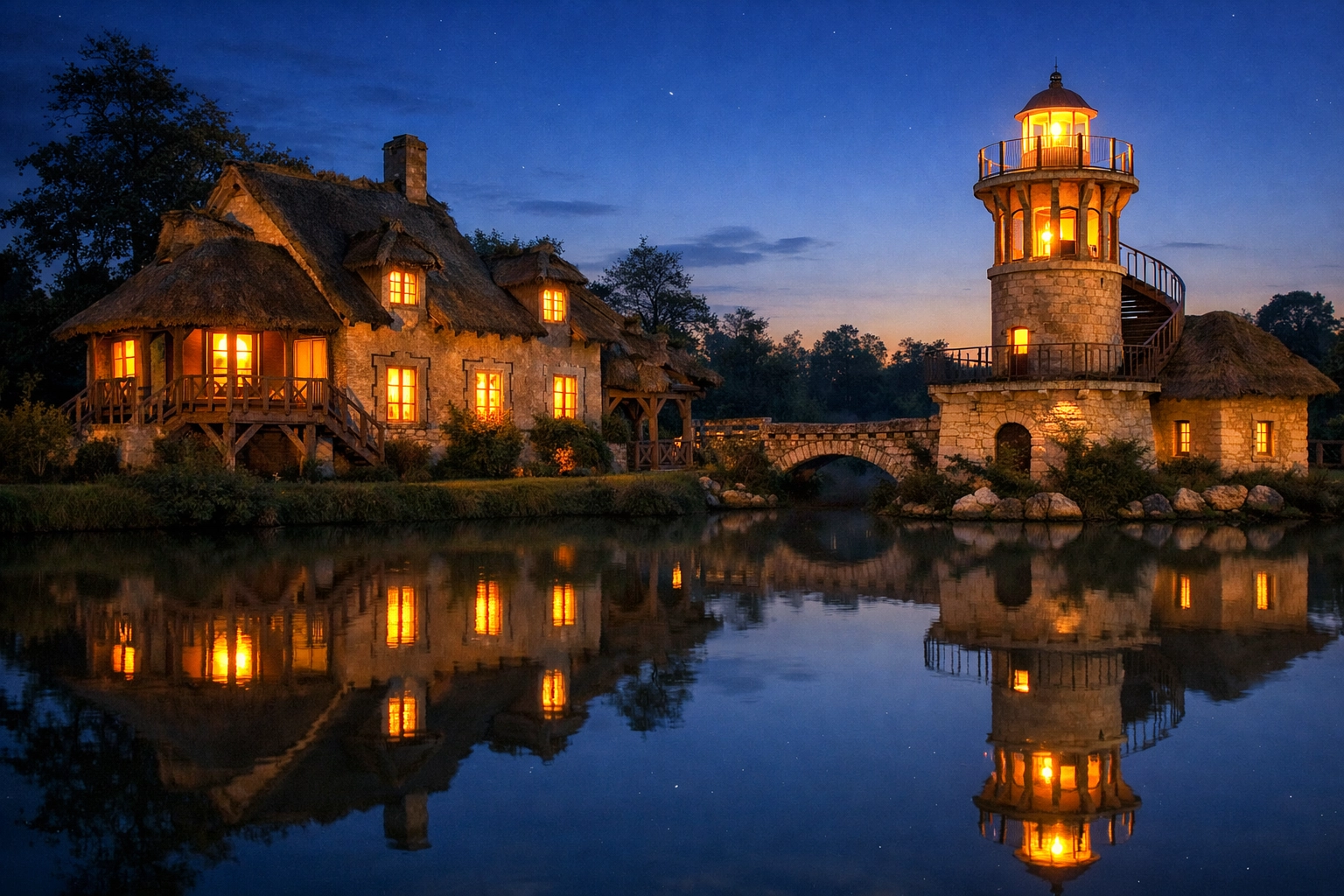
If you want to escape the "gold fatigue," take the 20-minute walk (or the little train) to Marie Antoinette’s private estate. This is easily one of the best photography locations for those who prefer a rustic, fairytale aesthetic over baroque intensity.
Think thatched roofs, a working farm, and a tiny lighthouse. It’s incredibly photogenic and much quieter than the main palace. It’s the perfect spot to practice your lifestyle and nature photography.
7. Technical Settings for Versailles Success
Since you’re shooting handheld in a mix of "dark museum" and "bright garden," you need to be quick on your dials.
- Indoor Settings: Aperture-priority mode is your friend. Set it to f/2.8 or your widest setting. Let the ISO go Auto (up to 3200 if needed). Use a shutter speed of at least 1/60s to avoid camera shake.
- Outdoor Settings: Drop that ISO to 100. If you’re shooting the fountains, use a fast shutter speed (1/1000s) to freeze the water droplets, or a slow one (with a steady hand and an ND filter) to make them look like silk.
For more technical breakdowns, our educational category has everything you need to master these transitions.
8. Avoiding the "Tourist Trap" Look
We’ve all seen the standard Versailles photo. To make yours stand out:
- Go Vertical: Most people shoot horizontal. A vertical orientation captures the floor-to-ceiling grandeur better.
- Look for Reflections: Not just in the mirrors, but in the polished marble floors and the water basins outside.
- Human Element: Sometimes, one lone tourist looking at a massive painting provides better "scale" than an empty room.
9. Practical Tips for your 2026 Visit
- The Passport Ticket: Get the one that includes everything (Palace, Trianon, Gardens). You can find these deals via Viator.
- Timing: Tuesdays and weekends are the busiest. Aim for Wednesday or Thursday.
- Security: Be prepared for airport-style security. Don't bring big backpacks; they’ll just make you check them, wasting precious "golden hour" time.
- Food: Don't waste your photo time in a 2-hour lunch line. Pack a snack or grab something quick near the Grand Canal.
10. Final Thoughts
The Palace of Versailles is more than just a building; it’s a testament to human ambition (and maybe a bit of ego). In 2026, with the right gear and a bit of patience, you can capture images that feel as timeless as the palace itself.
Remember, the best photo isn't always the most famous one: it’s the one that captures how you felt standing in the middle of all that history. For more tips on capturing iconic spots, check out our reviews of the latest gear that makes these trips easier.
Now, go forth and shoot like royalty. Just… maybe don't try to sit on the throne. They really don't like that.