
Category: Photo Guides
There is something deeply spiritual about standing on the edge of the Grand Canyon as the first light hits the rim, or watching the mist dance through the ancient redwoods of Northern California. The United States National Park system is a gift to photographers. With 63 diverse parks spanning from the tropical waters of the Virgin Islands to the icy peaks of the gates of the Arctic, the opportunities for capturing world-class imagery are endless.
But let’s be honest: planning a photography trip to even one of these parks can be overwhelming, let alone trying to conquer all 63. I’ve spent countless hours on the road, tripod in hand, waiting for that perfect "click." Whether you are a seasoned pro or just starting your journey, this guide is designed to help you navigate the best photography locations across the country and ensure you come home with a portfolio you’re proud of.
For a deeper dive into my personal gallery and to see how these parks look through a professional lens, you can always check out Edin Fine Art.
Getting Started: The Gear that Makes the Shot
Before you jump in your car and head for the hills, we need to talk about your kit. National Park photography is demanding. You’ll be dealing with dust, moisture, extreme temperatures, and long hikes.
A sturdy tripod is non-negotiable. Whether you’re shooting long exposures of waterfalls in Yosemite or capturing the Milky Way in the dark skies of Big Bend, stability is key. For lens choices, I always recommend a "holy trinity" setup: a wide-angle (16-35mm) for those expansive landscape photography locations, a mid-range (24-70mm) for general scenes, and a telephoto (100-400mm) for wildlife and compressing mountain peaks.
If you are looking to upgrade your setup before your next big trip, take a look at our essential photography gear guide or browse our camera reviews 2024 to see what’s currently leading the pack.

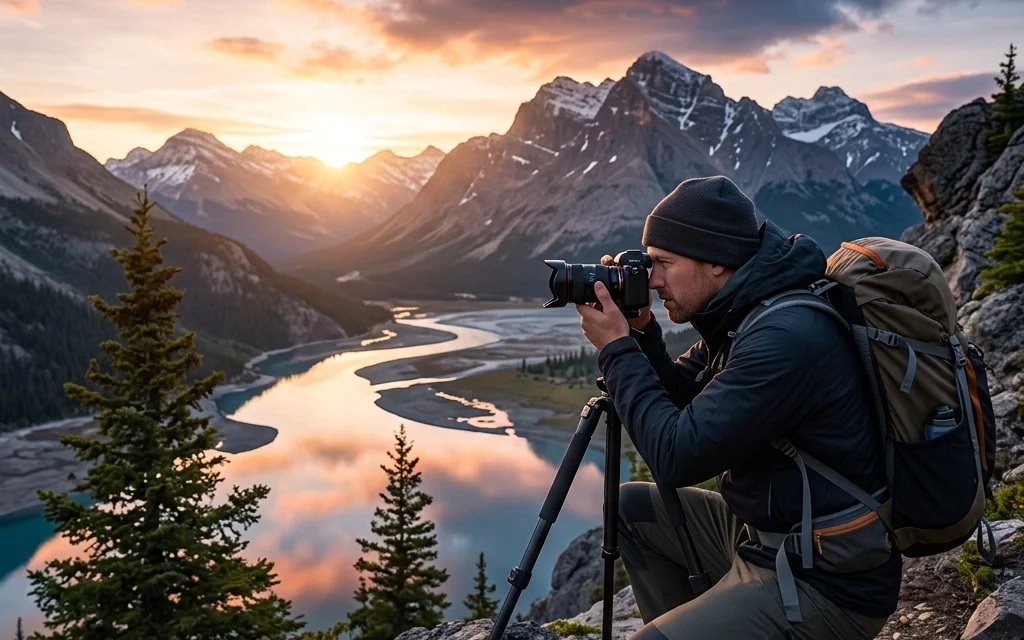
Alt text: A professional camera setup on a sturdy tripod overlooking a misty valley in the Great Smoky Mountains National Park during the blue hour.
Mastering the Light: Chasing the Best Sunrise Spots
In the world of photography, light is everything. While sunset gets a lot of the glory, I’ve always found that the best sunrise spots offer a certain stillness and clarity that you just can't find later in the day.
In places like Arches National Park, getting to Mesa Arch (technically in the neighboring Canyonlands) or Delicate Arch before dawn is a rite of passage. The way the sun glows through the stone is nothing short of magical. Over on the East Coast, Acadia National Park’s Cadillac Mountain is famous for being one of the first places in the U.S. to see the sun break over the horizon.
To master these high-contrast scenes, you might want to experiment with advanced techniques. I often use sky overlays to enhance a flat morning sky when the weather doesn't cooperate: you can download sky overlays here to give your post-processing a boost. For more technical tips on timing and exposure, head over to the Edin Chavez Blog.
The Icons: Desert Dreams and Red Rocks
The Southwest is arguably the heart of American landscape photography. Parks like Zion, Bryce Canyon, and the Grand Canyon offer textures and colors that feel otherworldly.
- Zion National Park: The "Watchman" at sunset is a classic, but don't overlook the patterns in the sandstone along the Checkerboard Mesa.
- Bryce Canyon: The hoodoos are most dramatic when side-lit. Sunrise at Inspiration Point or Sunset Point (ironic, I know) creates deep shadows that make the orange rock pop.
- Death Valley: From the salt flats of Badwater Basin to the rolling dunes of Mesquite Flat, this park is all about minimalism and scale.
When visiting these areas, remember that the "Golden Hour" is your best friend. The harsh midday sun can wash out those rich red and orange tones. If you’re planning a quick trip to hit these spots, check out our guide on cheap weekend getaways for budget-friendly logistics.

Alt text: An ultrarealistic wide-angle shot of the glowing red hoodoos of Bryce Canyon National Park under a soft, golden sunrise light with deep purple shadows.
Coastal Wonders and Ancient Forests
Moving away from the desert, the coastal and forested parks offer a completely different vibe. Here, we trade red dust for deep greens and moody blues.
Olympic National Park is a personal favorite because it’s like three parks in one. You have the rugged, sea-stack-filled coastline of Ruby Beach, the temperate rainforests of the Hoh, and the subalpine beauty of Hurricane Ridge. For the best shots here, you actually want a bit of "bad" weather. Overcast skies are perfect for the rainforest, as they saturate the greens and eliminate harsh shadows.
Similarly, Redwood National Park thrives in the fog. The mist creates "God rays" through the massive trees that are absolutely breathtaking. If you’re struggling with the technical side of forest photography: where light can be tricky: you might find our educational category helpful for learning about dynamic range and composition.
The Rugged North: Alaska and Beyond
For the truly adventurous, the eight National Parks in Alaska represent the final frontier. Denali, Kenai Fjords, and Glacier Bay offer a scale that is hard to comprehend until you’re there.
Wildlife photography becomes a major focus here. You’ll need that telephoto lens we talked about earlier. Capturing a grizzly bear fishing for salmon in Katmai or a moose in the shadows of Denali requires patience and a respect for the animals' space.
If you’re serious about your craft and want to connect with a community of photographers who have "been there, done that," check out Shut Your Aperture. It’s a great place to share your work and get feedback from people who love the craft as much as you do.

Alt text: A majestic grizzly bear standing in a shallow river in Katmai National Park, Alaska, with water splashing around it as it hunts for salmon, shot with a shallow depth of field.
Dark Sky Photography: The Parks at Night
The photography doesn't stop when the sun goes down. In fact, for many, that’s when it begins. Many National Parks are designated International Dark Sky Parks. This means they have minimal light pollution, allowing you to see the Milky Way with the naked eye.
Parks like Joshua Tree, Great Basin, and Big Bend are premier locations for astrophotography. To succeed here, you’ll need to understand the "Rule of 500" to avoid star trails and how to light-paint your foreground without overexposing the scene.

Alt text: The Milky Way galaxy stretching across a crystal-clear night sky above the iconic silhouette of a Joshua Tree in California.
Practical Tips for the Long Haul
Planning a trip to cover these landscape photography locations requires more than just a camera. Here are a few "pro-tips" to keep in mind:
- Reservations are Key: Many parks, like Arches and Yosemite, now require vehicle reservations months in advance. Don't let your dream shoot be ruined by a closed gate.
- Stay Safe: Always check the weather. A flash flood in Zion or a sudden snowstorm in the Rockies is no joke.
- Respect the Land: Follow "Leave No Trace" principles. Stay on marked trails, even if you think a different angle is better. We want these parks to remain beautiful for the photographers who come after us.
- Book an Experience: If you feel stuck or want to fast-track your learning, consider a photography booking experience. Learning in the field with a pro can change your perspective entirely.

Alt text: A photographer standing on a rocky outcrop at sunset in Yosemite National Park, looking out over Half Dome and the valley below.
Bringing the Magic Home
At the end of the day, the best photo isn't just about the settings on your camera; it’s about the feeling of being there. The National Parks are a reminder of the raw, untouched beauty of our world.
Whether you are aiming to capture the best photography locations for your Instagram or you want to create large-scale prints for your home, the journey is what matters. Take your time, breathe in the fresh air, and wait for that light. It’s always worth the wait.
For more inspiration, tutorials, and deep-dive guides into specific parks, keep exploring Photoguides. We are here to help you every step of the way, from choosing your first lens to printing your first masterpiece. Happy shooting!













