
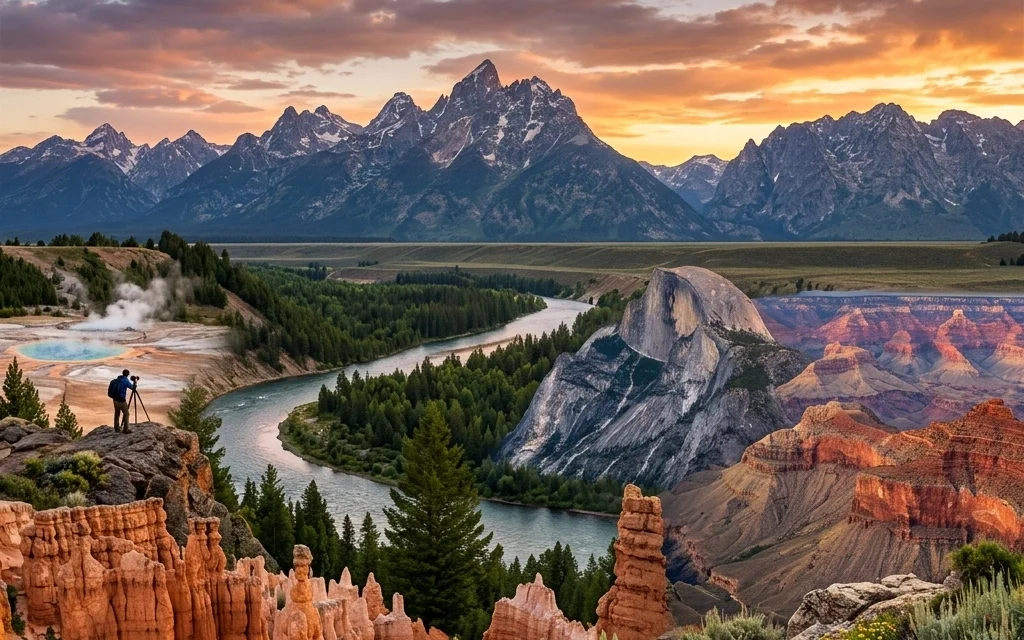
There is something almost spiritual about standing on the rim of a canyon or at the base of a granite monolith as the first light of day begins to kiss the peaks. If you are a photographer, the US National Parks are essentially our version of the ultimate playground. From the moss-draped forests of the Pacific Northwest to the jagged, sun-scorched arches of Utah, these 63 protected lands offer the most diverse landscape photography locations on the planet.
At Photoguides, we know that planning a trip to a National Park can feel a bit overwhelming. Which trail do you take? Where do you stand for that iconic shot? And most importantly, when do you need to be there to beat the crowds? This guide is the start of a comprehensive series where we will dive deep into every single park, but today, we’re setting the stage with the essentials you need to succeed across the entire system.
Why the National Parks are a Photographer’s Dream
The National Park Service manages over 84 million acres of land. For us, that means endless opportunities for "the shot." Whether you are looking for the best photography locations for sweeping vistas or intimate macro shots of desert blooms, the variety is staggering.
But succeeding in these parks isn't just about showing up; it’s about preparation. You need to understand the light, the gear, and the timing. If you’re looking to sharpen your skills before your next trip, check out our educational resources to get your technical foundation solid.
The Southwest: A Study in Red Rock and Light
When most people think of landscape photography, they think of the "Grand Circle." This area in the Southwest contains some of the most famous parks in the world.
Zion National Park
Zion is all about scale. To capture the true essence of the park, you have to look up. One of the best sunrise spots in the entire park is the "Towers of the Virgin" behind the Human History Museum. As the sun rises behind you, it hits the tops of the West Temple and the Altar of Sacrifice, turning them a fiery orange while the foreground remains in a cool, moody shadow.
Arches and Bryce Canyon
Arches National Park is a masterclass in composition. Delicate Arch is the heavy hitter here, but don't sleep on the Windows Section for sunrise. If you want to see how these images look when printed at a world-class level, take a look at the galleries at Edin Fine Art.
In Bryce Canyon, the hoodoos create a texture that is unlike anything else on Earth. Sunset Point is, ironically, one of the best places for sunrise because it allows the light to filter through the limestone pillars, creating a glow that seems to come from within the rocks themselves.

Caption: The glowing hoodoos of Bryce Canyon during the first moments of the golden hour.
The Icons of the West: Yosemite and the Tetons
If the Southwest is about color and texture, the West is about power and prestige.
Yosemite National Park
Yosemite is arguably the birthplace of modern landscape photography. Standing at Tunnel View, you see the history of the craft laid out before you: El Capitan, Half Dome, and Bridalveil Fall. To get a unique perspective, we often suggest heading up to Glacier Point. The view of Half Dome from there is intimate and staggering.
Grand Teton National Park
For mountain reflections, there is nowhere better than the Tetons. Schwabacher Landing and Oxbow Bend are the primary best photography locations for that classic "mirror" look. The key here is arriving early: at least an hour before the sun breaks the horizon. The pre-dawn "blue hour" provides a calm that is perfect for long exposures.
For more gear-specific advice on capturing these massive peaks, head over to Shut Your Aperture, where the community shares the latest tips on lenses and settings for high-altitude shooting.
The Hidden Gems of the East and Beyond
While the West gets a lot of the glory, the Eastern and Central parks offer a different kind of magic.
- Acadia National Park: Located on the rugged coast of Maine, Acadia is home to Cadillac Mountain. This is famously one of the first places in the U.S. to see the sunrise. The pink granite and deep blue Atlantic create a color palette that is soft, feminine, and incredibly striking.
- Badlands National Park: In South Dakota, the Badlands offer a lunar-like landscape. The best time to shoot here is during a storm. The way the clouds interact with the striated mounds creates a sense of drama that is hard to replicate elsewhere.
- Great Basin: This is one of the least visited parks, which makes it a paradise for those who want to avoid the crowds. It’s also an International Dark Sky Park, making it one of the premier landscape photography locations for the Milky Way.

Caption: The Milky Way arching over the ancient Bristlecone pines in Great Basin National Park.
Essential Gear for the National Parks
You don't need every lens in the bag, but you do need the right ones. For National Parks, we generally recommend a "holy trinity" of lenses:
- Wide-Angle (16-35mm): For those massive canyon vistas.
- Mid-Range Zoom (24-70mm): The workhorse for everyday scenes.
- Telephoto (70-200mm): Crucial for picking out details in the mountains or keeping a safe distance from wildlife.
Don't forget a sturdy tripod. The wind in places like the Grand Canyon or the Badlands can be fierce, and a flimsy tripod will result in blurry shots. You can find our full list of recommendations on our essential photography gear page. If you're looking for something specific like a lens adapter for a unique look, the Module 8 lens adapter is a great tool to have in the kit.
Timing and Logistics: How to Succeed
The "secret sauce" to great National Park photography isn't just gear; it's logistics.
The Golden Hour Rule
Almost every iconic shot you’ve seen was taken during the golden hour: the hour after sunrise and the hour before sunset. This is when the light is soft, warm, and creates the long shadows that give a flat photo three-dimensional depth.
Beating the Crowds
National Parks have become incredibly popular. To get the best sunrise spots, you often need to be in the parking lot while it's still pitch black. This is where planning comes in. We’ve found that traveling during the "shoulder seasons" (late spring and early fall) offers the best balance of good weather and manageable crowds. If you are looking for a quick photography trip without the hassle of a month-long road trip, check out our guide on cheap weekend getaways.
Post-Processing and Sky Overlays
Sometimes, despite our best efforts, the sky just doesn't cooperate. It happens to the best of us: you hike four miles for sunrise and get a "bald" blue sky. This is where high-quality post-processing tools come in. You can download sky overlays to help bring back the drama in your images while keeping them looking natural and professional.

Caption: A professional camera setup on a tripod, waiting for the light to hit the Grand Canyon.
Making the Most of the Experience
At the end of the day, photography is about the experience of being there. It’s about the smell of the pine trees in the Pacific Northwest and the silence of the desert at midnight. We encourage you to put the camera down for a few minutes and just soak it in.
If you want to see the stories behind these locations and get more personal insights into the life of a professional landscape photographer, visit Edin Chavez’s personal blog. Seeing the journey is often just as inspiring as seeing the final result.
Whether you are a seasoned pro or just starting out with your first DSLR, the National Parks are waiting for you. This guide is just the beginning. Stay tuned as we break down every single one of the 63 parks, providing you with GPS coordinates, specific gear lists, and the "secret" spots that most tourists walk right past.
Ready to start your journey? Grab your gear, check the weather, and we'll see you out on the trail.

Caption: A lone photographer silhouetted against a vibrant sunset in the Arches National Park.













