
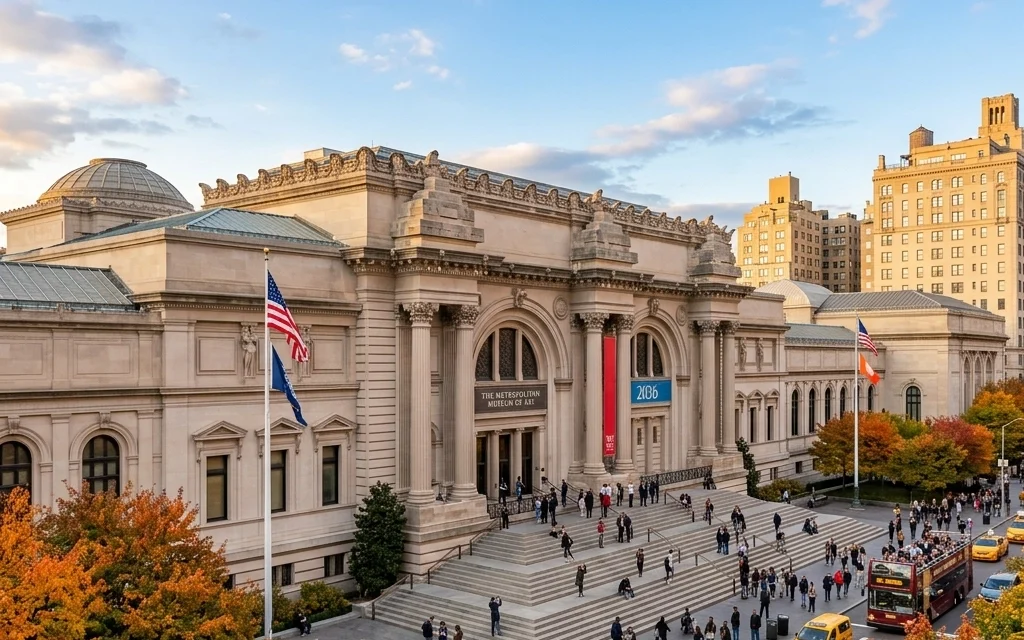
Let’s be honest: walking into the Metropolitan Museum of Art (the Met) for the first time feels a bit like trying to navigate a small, very fancy country without a map. With over two million square feet of space and thousands of years of human history packed into one building on the edge of Central Park, it’s easy to get overwhelmed.
But you’re not just here for a history lesson. You’re here because you’ve got a camera in your hand (or a very high-end smartphone) and you want to capture those "wow" moments. Whether you’re a pro looking for fine art inspiration or a hobbyist trying to level up your Instagram game, finding the best photography locations at the Met in 2026 requires a bit of strategy.
In this guide, I’m going to break down exactly where to go, what time to show up, and how to stay on the good side of the museum guards while you’re at it. If you're looking to brush up on your fundamentals before you go, don't forget to check out our pillar post, Mastering Photography: The Ultimate 2026 Guide for Every Skill Level.
The Golden Rules: How Not to Get Kicked Out
Before we dive into the secret spots, we need to talk logistics. The Met is pretty chill about photography compared to some other world-class museums, but they have a few "hard nos" that you need to respect.
- No Flash: This is the big one. Flash ruins the art over time and, frankly, it’s annoying to other visitors. Keep it off.
- No Tripods or Monopods: Unless you have a professional permit (which is a whole different ballgame), leave the three-legged friends at home.
- No Selfie Sticks: Just… don't.
- Personal Use Only: You can’t show up with a full lighting crew and a model for a commercial shoot without paying some serious fees. Keep it low-key.
If you’re worried about your low-light performance without a tripod, it might be time to look at some camera reviews for 2026 to see which sensors are handling high ISO the best these days.
1. The Temple of Dendur (Sackler Wing)
This is the "Old Faithful" of photo spots at the Met. It’s an entire Egyptian temple housed in a massive glass-walled room. The combination of ancient stone and ultra-modern glass architecture is a photographer's dream.
The Pro Tip: Use the reflecting pool. If you get low to the ground (without laying down: remember, keep it classy), you can capture a perfect reflection of the temple. The light here is best in the late afternoon when the sun starts to dip, casting long, dramatic shadows across the sandstone.

2. The American Wing Sculpture Court
If you’re looking for the best photography locations for portraits, this is it. The Charles Engelhard Court is basically a giant softbox. The glass ceiling diffuses the sunlight perfectly, meaning no harsh shadows on your subject's face.
The courtyard is filled with marble statues and the massive facade of the United States Branch Bank. The white marble acts as a natural reflector, giving everything a clean, high-end look. It’s a great place to practice the techniques we talk about over at Shut Your Aperture.
3. The Cantor Roof Garden (Seasonal)
If you’re visiting between April and October, you have to head to the roof. Not only will you find rotating contemporary art installations, but you’ll also get the most iconic view of the Manhattan skyline peeking over the trees of Central Park.
In 2026, the installations are more interactive than ever, providing great "leading lines" for your compositions. It’s one of the few places in the museum where you can truly play with "street style" photography in an outdoor setting. If you want to see how a master handles these types of vistas, take a look at Edin Chavez’s fine art gallery for some inspiration.

4. The European Paintings: The "Enfilade" Shot
Head to the second floor, specifically the newly renovated galleries for European Paintings (1250–1800). The way these rooms are connected creates what architects call an "enfilade": a suite of rooms with doorways perfectly aligned.
The Pro Tip: Stand at one end of the long stretch of galleries and shoot through the successive doorways. This creates incredible depth and a "frame within a frame" effect. It’s a masterclass in perspective. To really nail this, you’ll want a lens with a bit of a zoom to compress the background. Check out our guide on essential photography gear to make sure you have the right glass in your bag.
5. The Great Hall Balcony
When you first walk into the Met, the Great Hall is buzzing with energy. Instead of trying to fight the crowds on the ground floor, head up to the second-floor balcony. From here, you can look down at the grand arches and the flow of people.
This is a fantastic spot for a "long exposure" shot if you can steady your camera on the stone railing (since you don’t have a tripod). By slowing down your shutter speed, the moving crowds become a beautiful blur of color while the static architecture remains sharp. It’s a great way to show the "life" of the museum.

6. The Astor Court (The Chinese Garden)
This is a hidden gem. It’s a reconstructed Ming-style garden courtyard that is incredibly peaceful. The contrast between the dark wood, the white walls, and the grey stone makes it a perfect spot for black-and-white photography.
Because it’s tucked away, it’s often much quieter than the Temple of Dendur. If you’re feeling a bit overwhelmed by the NYC crowds, this is your sanctuary. It’s also a great place to test out a module 8 lens adapter to get some unique flares and textures in a controlled lighting environment.
7. The Modern and Contemporary Wing
For the minimalists out there, this wing is your playground. The walls are stark white, the lighting is clinical but intentional, and the art often features bold geometric shapes.
Look for the "negative space." Use the vast white walls to frame your subject or a single piece of sculpture. This area is all about composition and "less is more." If you want to see more minimalist travel inspiration, Edin’s personal blog has some great entries on shooting modern architecture.

Making the Most of Your Visit
To truly capture the Met, you need time. Don’t try to do it all in two hours. I highly recommend booking a specialized tour if you want to find the stories behind the art while you shoot. You can find some of the best Met Museum experiences on Viator that often include skip-the-line access: which is a lifesaver on weekends.
Best Times for Photography
- Friday and Saturday Nights: The Met is open until 9:00 PM. The crowds thin out after 6:00 PM, and the artificial lighting creates a completely different, much more moody atmosphere.
- Wednesday Mornings: Right when the doors open. Head straight to your "must-have" spot (like the Temple of Dendur) before the school groups arrive.
Technical Advice for 2026
Most modern cameras and even the latest iPhones handle low light incredibly well. Don’t be afraid to push your ISO to 3200 or even 6400 if it means keeping your shutter speed fast enough to avoid blur. Since you can’t use a tripod, your hands are your only stabilizer. Tuck your elbows into your ribs, take a breath, and fire on the exhale.
If you’re traveling to NYC from out of town and looking for other things to do, check out our list of cheap weekend getaways for more inspiration around the East Coast.
Wrapping Up
The Metropolitan Museum of Art is more than just a building; it’s a time machine. As a photographer, your job is to find the connection between the ancient world and the modern one. Whether it's the light hitting a 2,000-year-old statue or the reflection of a skyscraper in a museum window, the opportunities are endless.
Remember to be patient, stay respectful of the art, and most importantly, have fun. If you manage to grab some epic shots, we’d love to see them. And if you need more help planning the logistics of your shoot, our photography booking experience page can help you streamline the process.
Happy shooting, and I’ll see you in the galleries!













