
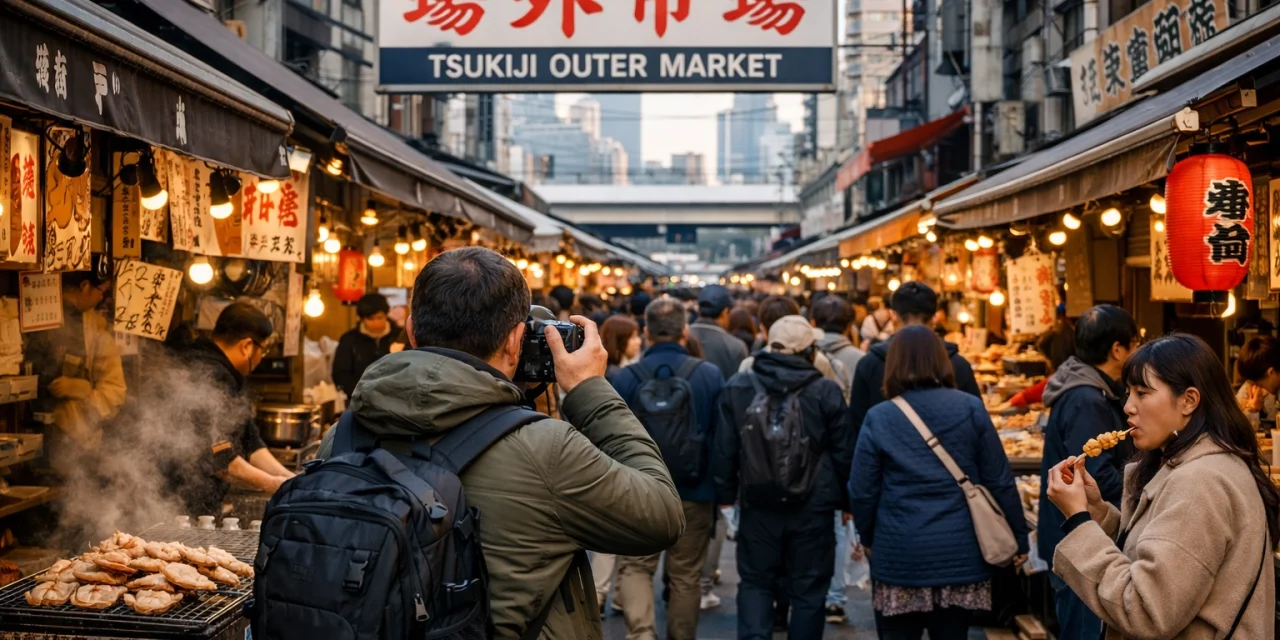
Welcome to day four of our 14-day deep dive into the culinary heartbeat of Tokyo. If you’ve been following along, your stomach is probably already confused by the sheer volume of ramen and themed-café treats we’ve discussed. But today, we’re heading to the holy grail of Japanese ingredients: Tsukiji Outer Market.
For a photographer, Tsukiji is a fever dream of textures, steam, and high-contrast shadows. For a foodie, it’s a place where you can eat your weight in bluefin tuna before 9:00 AM. Even though the famous "inner market" (the wholesale auction side) moved to Toyosu a few years back, the Outer Market is still very much alive, kicking, and smelling faintly of delicious grilled eel.
Whether you’re here to capture the perfect bokeh shot of a glistening piece of nigiri or you just want to know which stall has the fluffiest omelet, pull up a chair. We’re going in.
The Vibe: Why Tsukiji Still Reigns Supreme
There was a lot of worry that when the wholesale market moved, Tsukiji would lose its soul. I’m happy to report that those fears were unfounded. The Outer Market, Tsukiji Jogai Shijo, is a dense labyrinth of over 400 shops. It’s a mix of professional chefs buying $500 knives and tourists trying to figure out how to eat a giant strawberry mochi without making a mess.
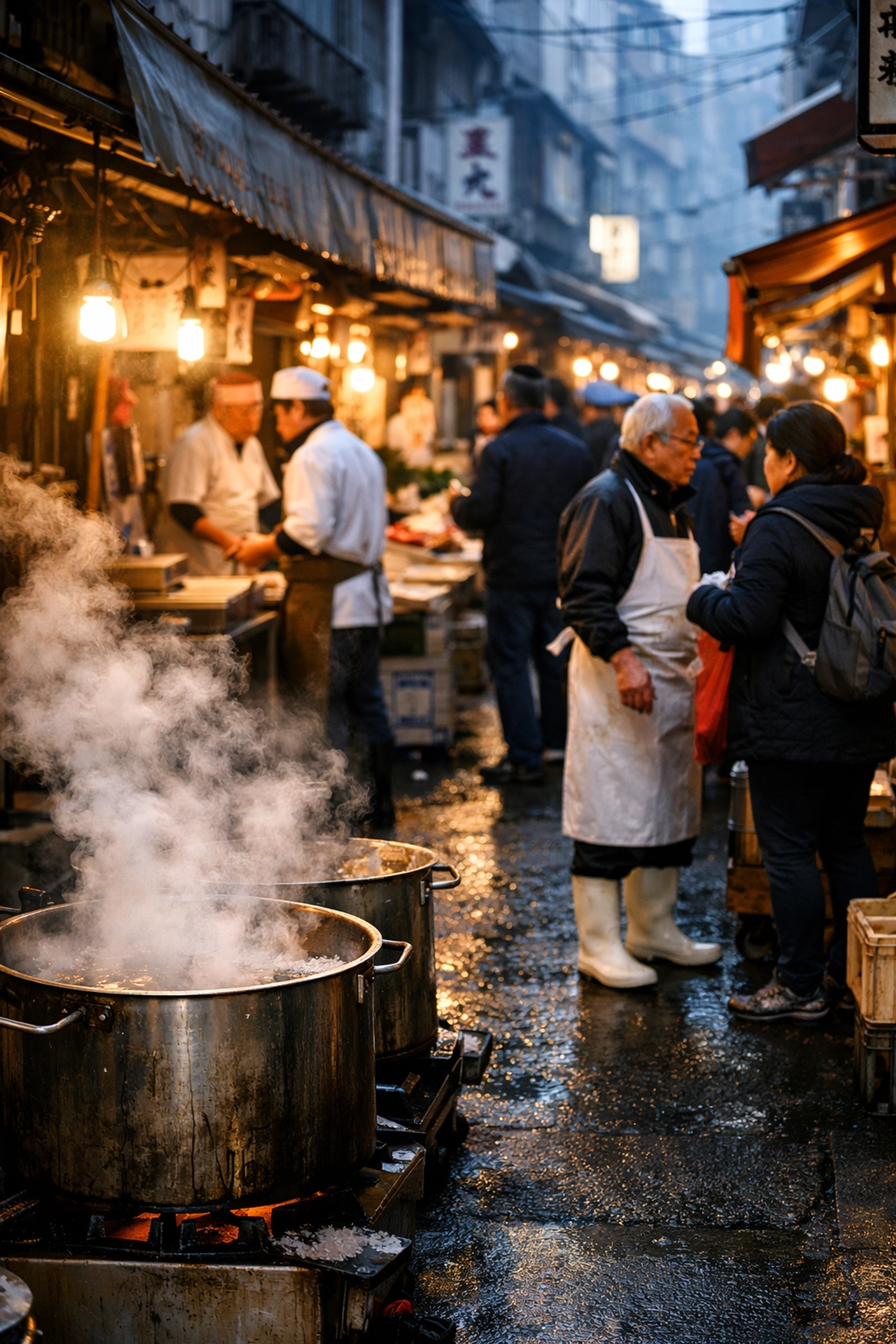
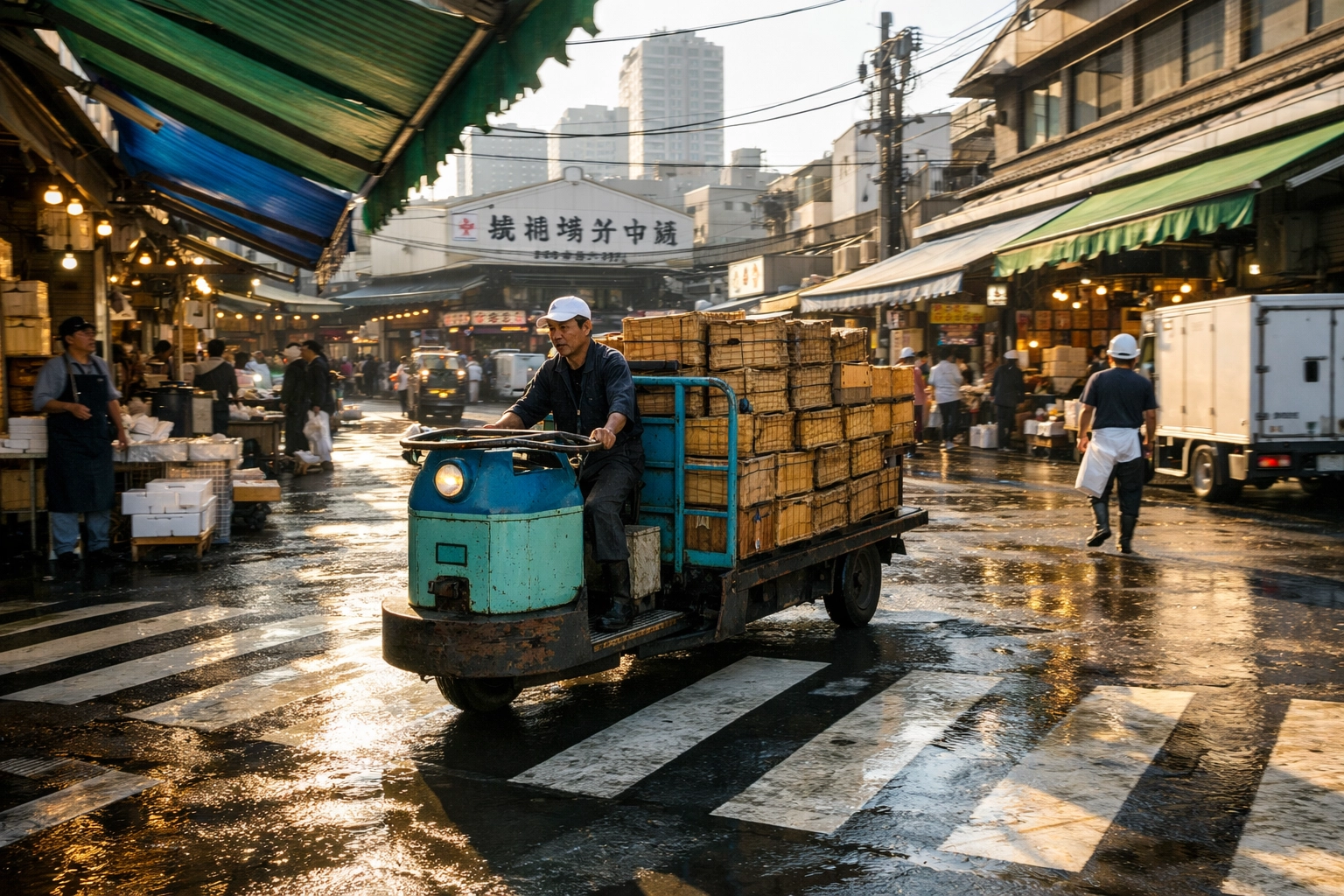
From a photography perspective, this is "Street Photography 101." You have narrow alleys, steam rising from massive pots of dashi, and vendors who have been honing their craft for forty years. It’s raw, it’s authentic, and it’s one of the best places in the world to practice your documentary-style shooting.
Gear Talk: Pack Light or Regret Everything
Before we get into the food, let’s talk shop. Tsukiji is crowded. Like, "I hope you like the smell of your neighbor's laundry detergent" crowded. This is not the place for a massive tripod or a dual-camera harness that makes you look like a tactical gear enthusiast.
I recommend a single body with a versatile prime lens: something like a 35mm or 50mm. You want a wide enough aperture (f/1.8 or f/2.8) to handle those dimly lit stalls and to create that creamy background blur that makes food photos pop. If you're looking for recommendations on what to bring to a high-density environment like this, check out our guide on essential photography gear.
Pro Tip: Keep your camera strap short. You’ll be dodging motorized carts and enthusiastic shoppers; the last thing you want is your expensive glass swinging into a vat of miso soup.
The Food Photography Shot List
Capturing food in a market is different from a controlled studio environment. You have to be fast, and you have to be respectful. Here are the three shots you absolutely need to get:
1. The "Action" Shot
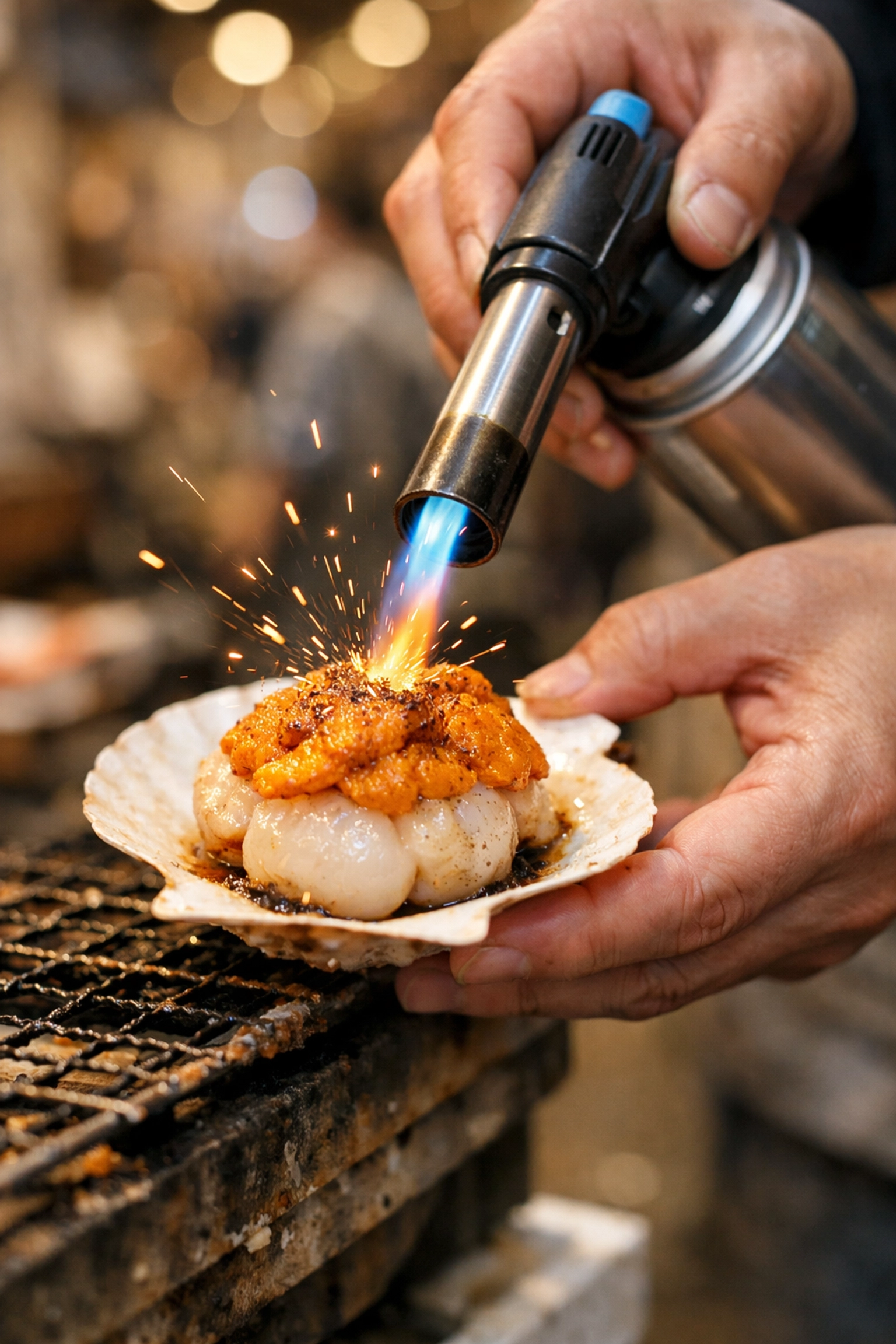
Catch the vendor in the middle of a motion. Maybe it’s the blowtorch searing the top of a scallop or the rhythmic slicing of a tuna loin. These shots tell a story. They show the labor behind the meal.
2. The Macro Detail
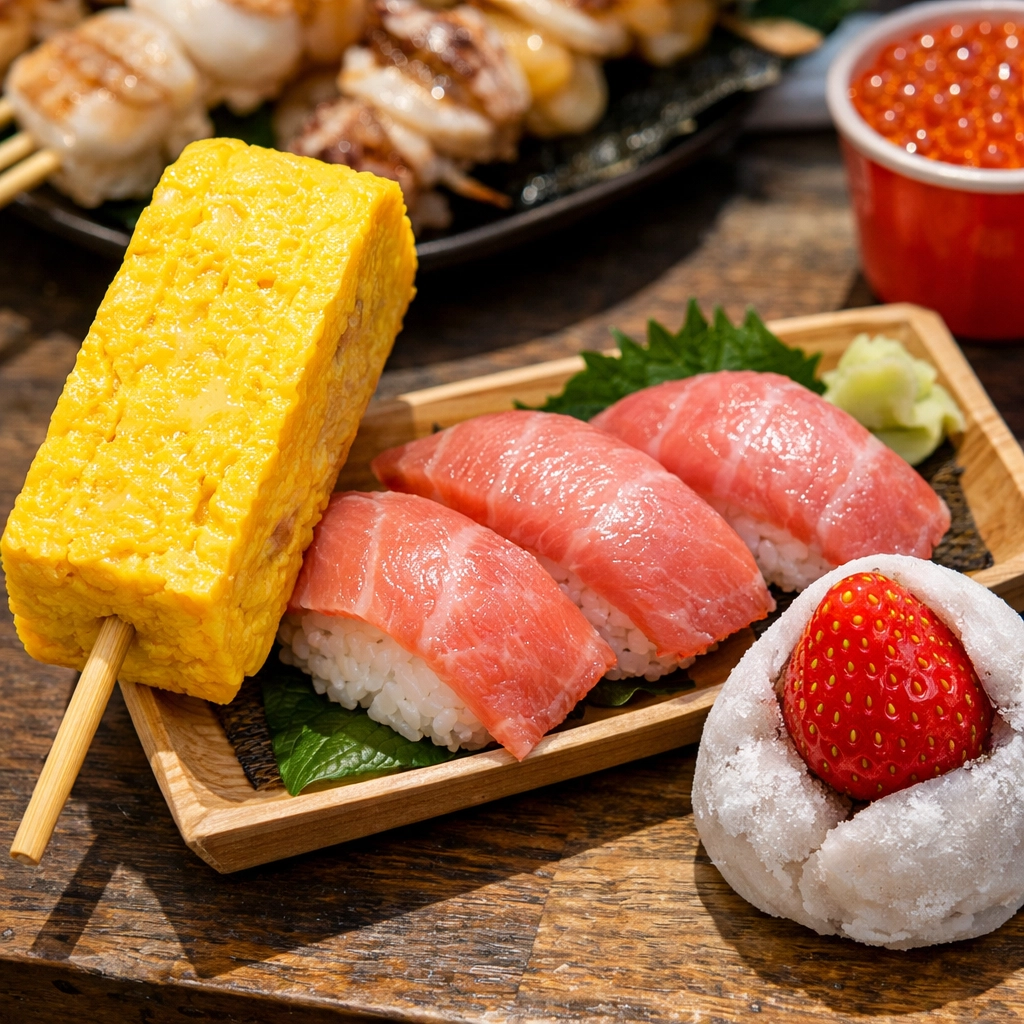
Get close. I mean really close. The glistening fat on a piece of otoro (fatty tuna) or the intricate layers of a tamagoyaki (rolled omelet). This is where your viewer can almost taste the photo. If you’re worried about your current setup’s sharpness, take a look at our camera reviews 2024 to see which sensors are killing it in the macro department right now.
3. The Environment
Step back. Capture the chaos of the alleyway with the food in the foreground. It gives the meal a sense of place.
What to Eat (And What to Point Your Lens At)
You can't come to Tsukiji and not eat. That’s a literal crime in some circles. While you can certainly wander aimlessly, the market is huge, and it’s easy to get overwhelmed. If you want a curated experience where you don’t have to worry about the language barrier, I highly recommend booking a food tour through Viator using this link. It takes the guesswork out of it, leaving you more brainpower for your shutter speeds.
Here are the absolute must-haves:
- Tamagoyaki (Japanese Omelet): You’ll see several stalls selling these on sticks for about 100-150 yen. The bright yellow color is a fantastic subject for a high-contrast photo.
- Maguro (Tuna) Everything: From tuna bowls to grilled jaw, this is the star of the show. The deep reds of the lean meat and the pale pinks of the fatty cuts are beautiful on camera.
- Fresh Oysters and Scallops: Usually grilled right in front of you with a splash of soy sauce and butter. The steam makes for an epic atmospheric shot.
- Strawberry Mochi: For a pop of color, nothing beats the giant white or green mochi topped with a vibrant red strawberry.
The Ethics of Street Photography in Tsukiji
Here’s where we get into the "reassuring" part of Photoguides. We want you to get the shot, but we don't want you to get kicked out. Japanese culture prizes politeness and "reading the air."
- Ask Before You Snap: If you’re standing three inches from a vendor's face, a quick nod and a "Sumimasen?" (Excuse me) goes a long way. Most vendors are happy to be photographed if you’re also a customer.
- Don't Block the Flow: These alleys are working thoroughfares. If you stand in the middle of a lane to adjust your ISO, you’re going to get a very polite but firm "move it" from a guy hauling a crate of sea urchins.
- Eat, Then Shoot: The best way to get access is to buy something. Once you’ve paid for that delicious skewer, you’ve basically bought a "photography pass" for that specific stall.
For more on how to navigate professional photography environments, see our section on the photography booking experience.
Beyond the Food: Hidden Gems
While everyone focuses on the fish, there are two spots within walking distance that offer a different visual flavor.
Namiyoke Shrine
Located right at the edge of the market, this shrine is dedicated to the "Wave Slide." It was built to protect the area from the sea. You’ll find massive lion heads here that are incredibly photogenic and provide a nice spiritual contrast to the commercial chaos of the market.
Tsukiji Hongwanji Temple
Just a short walk away, this temple looks more like something you’d find in India than Japan. It’s ancient, grand, and offers a massive open courtyard. It’s the perfect place to sit down, check your memory cards, and breathe after the sensory overload of the market.
Logistics: Timing is Everything
If you show up at Tsukiji at noon, you’ve missed the party. The market starts winding down by 1:00 PM, and many of the best stalls sell out long before that.
- 9:00 AM – 10:30 AM: This is the sweet spot. The professional buyers have cleared out (they get priority early in the morning), but the stalls are still fully stocked.
- Wednesdays and Sundays: Many shops are closed. Check the official Tsukiji calendar before you make the trek.
If you’re planning a larger trip and need more inspiration for your Japanese itinerary, or perhaps a shorter trip elsewhere, check out our post on cheap weekend getaways for some budget-friendly travel hacks.
Final Thoughts for the Hungry Photographer
Tsukiji Outer Market is more than just a place to grab a snack; it’s a living museum of Japanese food culture. As a photographer, your job isn't just to take a picture of a piece of fish: it's to capture the energy, the steam, the grit, and the incredible craftsmanship that goes into every bite.
Don't forget to put the camera down every once in a while. Some of the best memories aren't stored on an SD card; they’re stored in the "I can't believe I just ate the best sushi of my life at 8 AM" part of your brain.
Ready to explore? Don't forget to book your guided tour through Viator to ensure you hit all the secret spots that most tourists walk right past.
Stay tuned for tomorrow’s post, where we’re heading to Harajuku to see if the street food is actually as colorful as the fashion (spoiler: it is). Happy shooting, and even happier eating!













