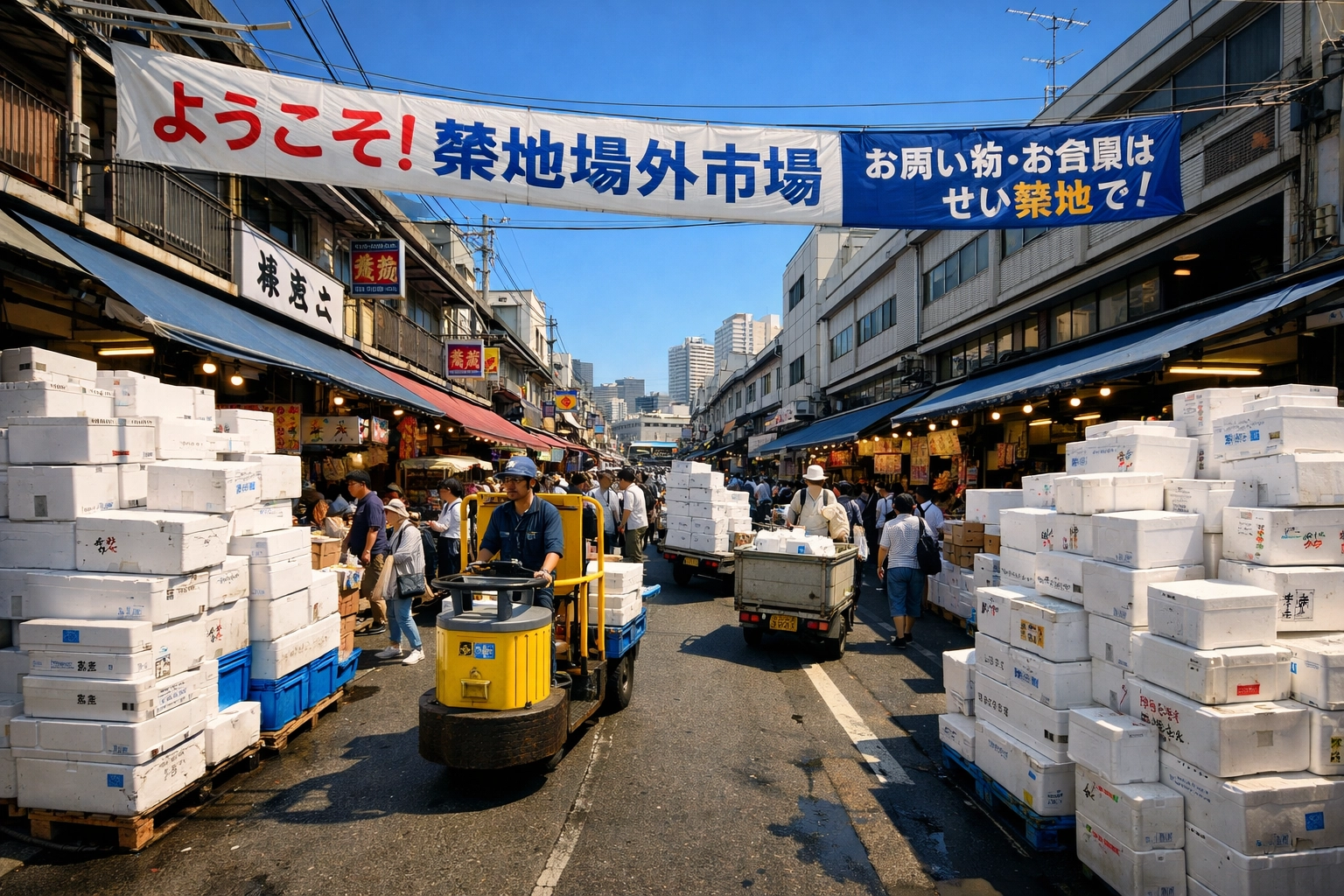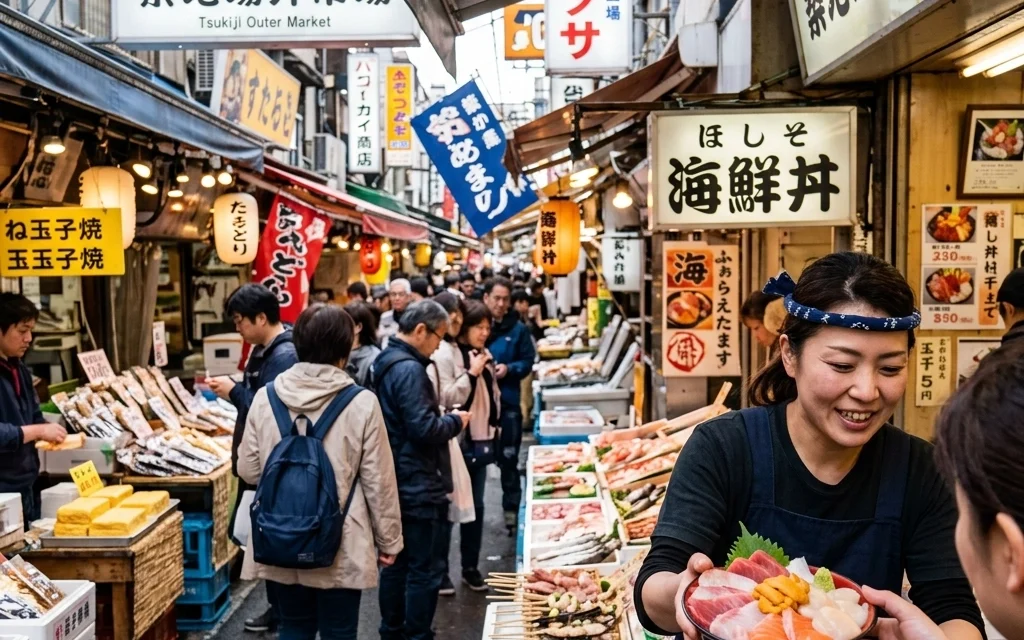
Welcome to Day 4 of our 14-day culinary deep dive into Tokyo! If you missed the first few days, we’ve already been caffeinated in Akihabara and pampered in Ginza. Today, however, we’re waking up early, well, early-ish, to tackle the legendary Tsukiji Outer Market.
Now, let’s clear the air before we dive into the sashimi. You might have heard that Tsukiji "closed" back in 2018 when the famous inner wholesale market and the high-stakes tuna auctions moved to Toyosu. While that’s technically true, the heart of Tokyo’s food scene stayed exactly where it was. The Tsukiji Outer Market is still very much alive, boasting over 400 stalls, tiny restaurants, and specialty shops that will make your taste buds do a happy dance.
Think of it as a sprawling, open-air food hall where the atmosphere is thick with the scent of grilled scallops and the sound of knife sharpeners. It’s chaotic, it’s delicious, and if you don’t have a plan, it’s easy to get lost in the sea of tourists. But don't worry, I’m here to make sure you eat like a local, not a lost traveler.
The Logistics: When to Show Up
If you want to beat the massive tour groups, aim to arrive by 8:30 AM or 9:00 AM. Most of the heavy hitters open around then, and by 11:00 AM, the narrow alleys are basically a mosh pit of people holding sticks of grilled eel. Most stalls start wrapping things up around 2:00 PM, so this is definitely a morning-to-early-afternoon affair.
Also, a pro tip from your friends at Photoguides: bring cash. While some of the bigger restaurants take cards, many of the best street food stalls are strictly "yen only." If you’re looking to document your food journey with more than just a phone, make sure you check out our essential photography gear guide to ensure you have the right lens for those tight, crowded spaces.
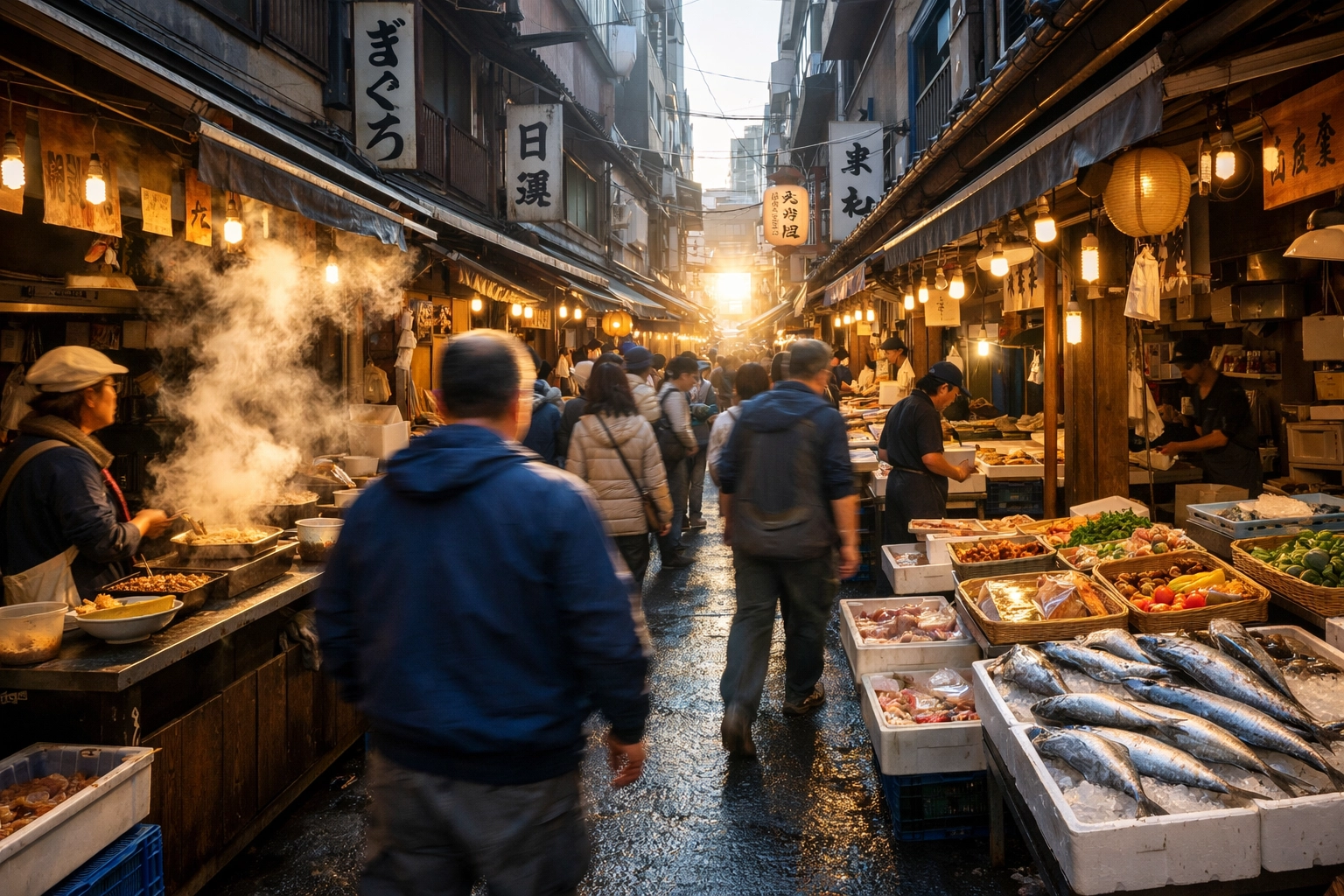
1. The Gateway Drug: Tamagoyaki (Rolled Omelette)
You can’t walk five feet in Tsukiji without seeing a bright yellow block of egg on a stick. This is Tamagoyaki, a Japanese rolled omelette that is sweet, savory, and incredibly fluffy. There are several famous shops like Yamacho and Takeshi, and you can usually watch the masters flipping the eggs in rectangular pans with surgical precision.
It’s often served on a stick for about 100 to 150 yen. It’s the perfect "appetizer" to kick off your morning. If you want to dive deeper into the history of these traditional snacks without getting elbowed in the ribs, I highly recommend booking a food tour through Viator here. Having a guide who knows the vendors by name is a total game-changer.
2. The Legendary Hormon-don at Kitsuneya
If you see a massive line of people standing on the sidewalk huddled over steaming bowls of dark brown stew, you’ve found Kitsuneya. This place is legendary for its Hormon-don, a miso-based beef organ meat stew served over rice.
I know, "organ meat" might sound intimidating to the uninitiated, but trust me on this one. It’s incredibly rich, tender, and savory. It’s the ultimate blue-collar breakfast that has been fueling market workers for decades. It’s messy, it’s loud, and it’s arguably the most "local" experience you can have in Tsukiji. To make sure you don't miss out on these hidden gems, you can find a guided market tour on Viator right here.
3. High-End Nigiri at Itadaki Bekkanka
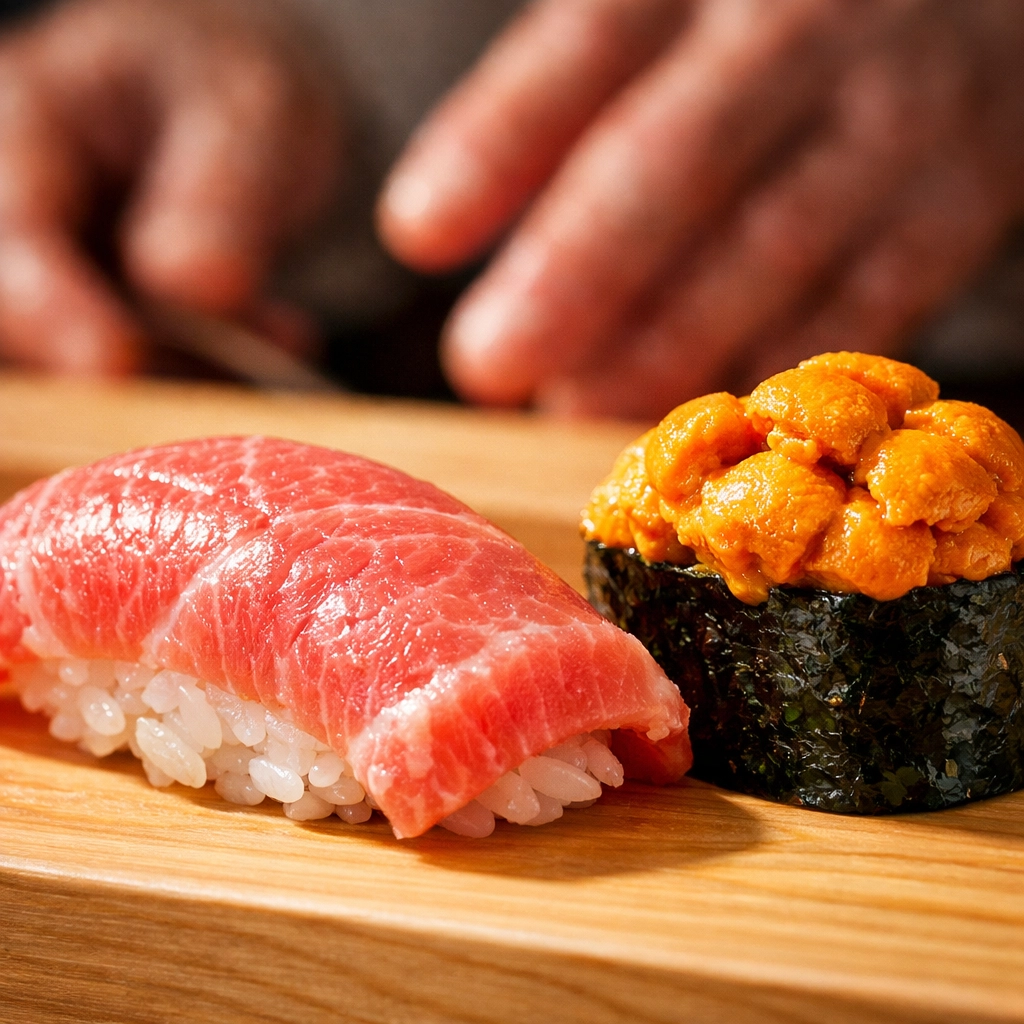
While street food is the main event for most, you are at the source of the world's best seafood. It would be a crime not to sit down for some proper sushi. For a truly elevated experience that doesn't require a three-month-advance reservation in Ginza, head to Itadaki Bekkanka.
They source their fish from the same top-tier suppliers that served the old inner market. The nigiri here is art. Whether it’s the melt-in-your-mouth Otoro (fatty tuna) or the buttery Uni (sea urchin), every bite is a reminder of why Tokyo is the sushi capital of the world. If you're nervous about the etiquette of high-end dining in Japan, we’ve got some reassuring insights on our photography booking experience page that cover general cultural expectations. For the best sushi-focused walking tours, check out the options on Viator.
4. The "Seafood on a Stick" Extravaganza
If you prefer to graze while you walk (well, stand: more on that later), Tsukiji is a wonderland of grilled skewers. You’ll find:
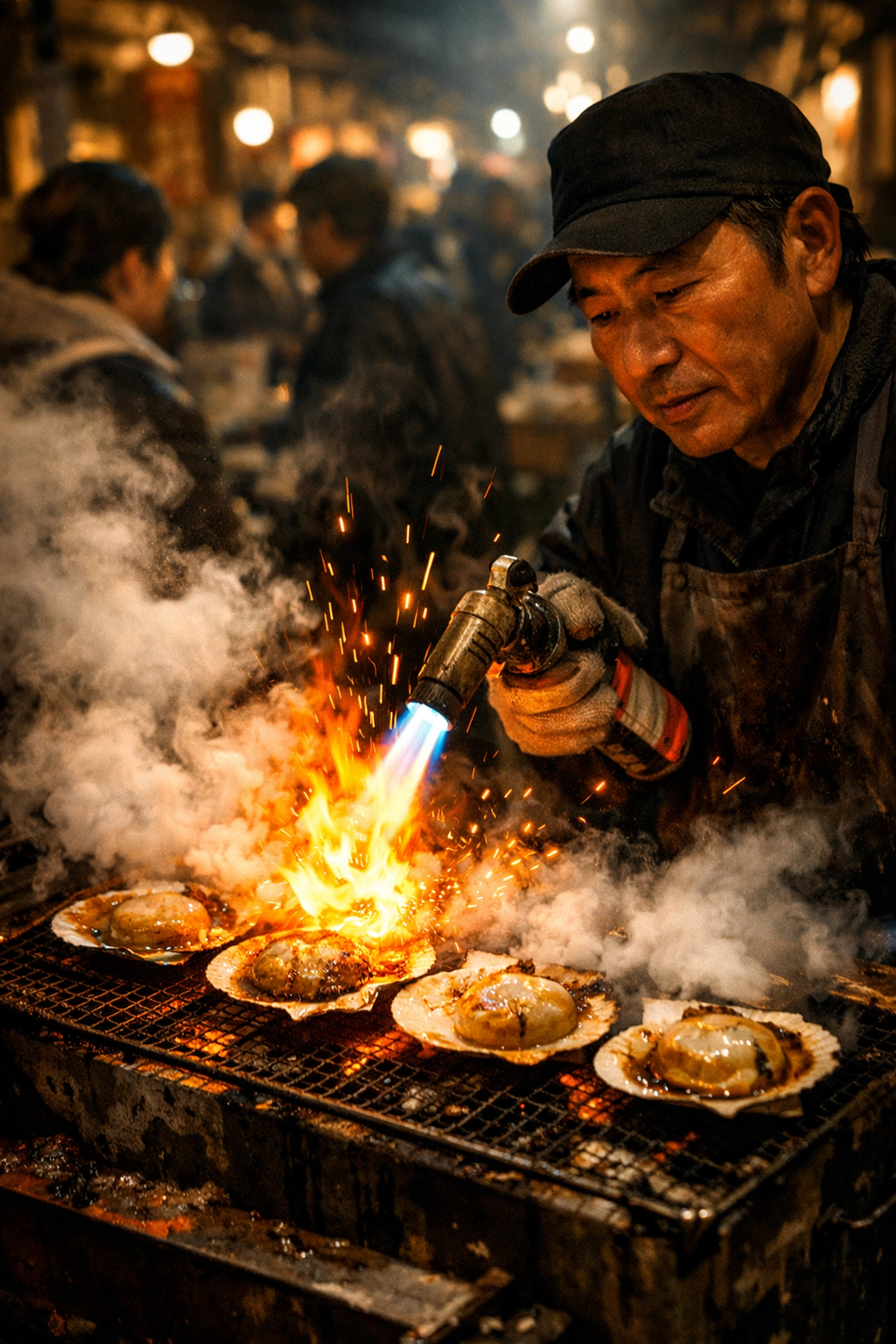
- Giant Scallops: Often grilled in their shells with a pat of butter and a splash of soy sauce.
- Unagi (Eel): Sweet, smoky, and glazed to perfection.
- Maguro (Tuna) Skewers: Sometimes lightly seared with a blowtorch.
- Corn Kakiage: Deep-fried corn fritters that are surprisingly sweet and addictive.
Each of these usually costs between 500 and 1,000 yen. It’s a great way to try a bit of everything without committing to a full meal. For a curated "tasting menu" of the market's best skewers, book a local expert via Viator.
5. Soratsuki’s Strawberry Daifuku
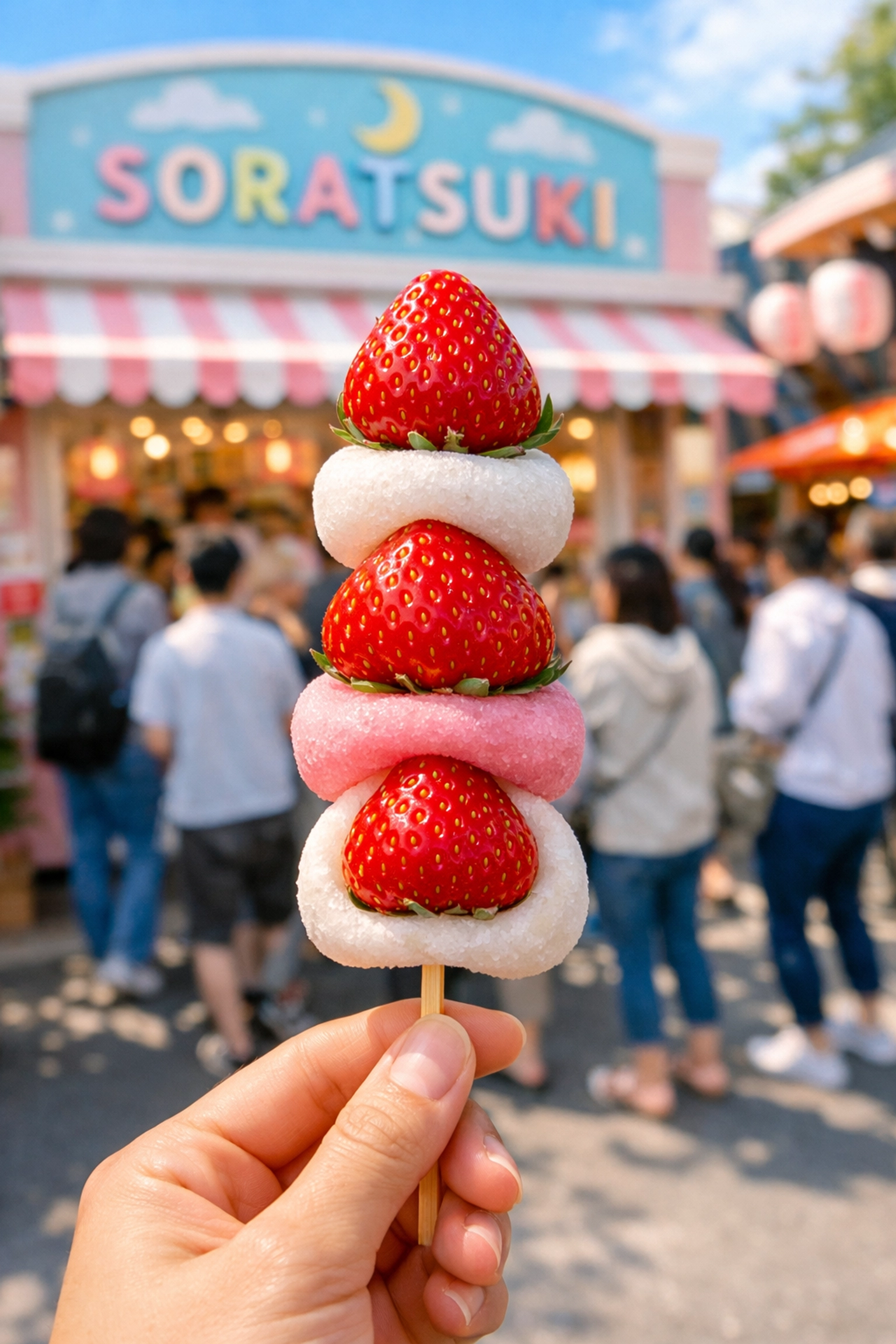
Once you’ve hit your limit on salt and vinegar, it’s time for dessert. Soratsuki is the most famous spot for Strawberry Daifuku: a soft, chewy mochi stuffed with sweet red bean paste (or custard) and topped with a massive, juicy Japanese strawberry.
The contrast between the soft mochi and the tart, fresh strawberry is perfection. They also serve "strawberry mania" soft-serve ice cream that is incredibly photogenic. If you’re looking for more travel inspiration or want to see how the pros capture these colorful treats, head over to Edin Chavez’s blog or browse Edin Fine Art for some stunning Japan photography.
Photography Tips for the Market
As a photography-centric company, we can’t let you go without a few tips. Tsukiji is a high-contrast environment. You’ll have dark alleys and bright, sunlit street corners.
- Go Wide: The alleys are tight. A 24mm or 35mm prime lens is your best friend here.
- Respect the Vendors: Always ask (or gesture) before taking a close-up photo of a chef or their stall. Most are happy to pose if you’re buying something!
- Fast Shutter Speeds: There is a lot of movement: steam rising, chefs chopping, and people weaving through the crowd. Keep that shutter speed up to freeze the action.
For more technical tips on capturing the essence of a city, check out the reviews and tutorials over at Shut Your Aperture.
The Golden Rule: Don’t Walk and Eat
This is the most important "local" tip I can give you. In Japan, walking while eating is generally considered rude (and in Tsukiji, it’s actually prohibited in many areas to prevent messes and accidents).
When you buy a snack, stay at the stall, eat it there, and use their trash can. It’s a great way to take a breath, soak in the atmosphere, and maybe even strike up a conversation with the vendor.
Why You Should Book a Food Tour
I know what you're thinking: "Penny, I have this guide, why do I need a tour?"
Honestly? Because Tsukiji is overwhelming. There are hundreds of shops, and half of them don't have English menus. A guide will take you to the "real" spots that haven't been ruined by TikTok fame yet. They’ll explain why the miso in the Hormon-don is that specific shade of brown and help you navigate the complex social cues of the market.
Save yourself the stress and book a highly-rated Viator food tour here. It’s the single best way to ensure you actually eat the good stuff and don't just end up with a mediocre 3,000-yen tourist-trap tuna bowl.
Final Thoughts
Tsukiji Outer Market is more than just a place to grab lunch; it’s a living museum of Tokyo’s culinary history. From the sweet tamago to the savory organ stews, it represents a side of Japan that is raw, fast-paced, and incredibly welcoming.
Tomorrow, we’re heading to Harajuku to explore the wild world of "Kawaii" street food: think giant rainbow cotton candy and crepes as far as the eye can see. But for today, wear comfortable shoes, bring an empty stomach, and get ready to experience the best seafood of your life.
If you’re planning your trip and looking for more educational resources on how to document your travels, don’t forget to browse our educational category. Happy eating!