
Category: Foodies
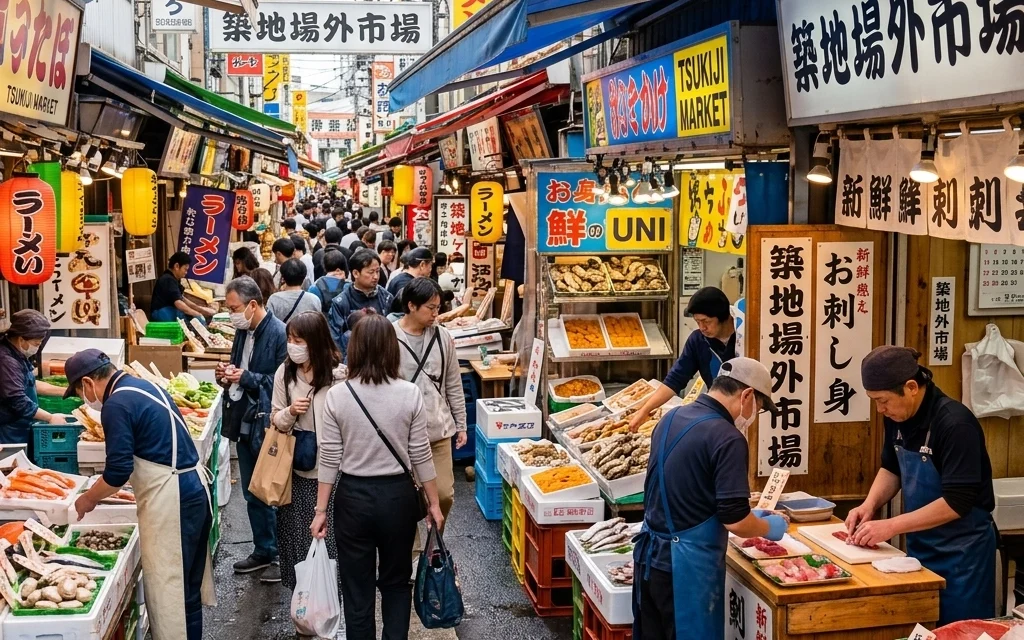
Welcome to Day 4 of our 14-day culinary marathon through Tokyo! If you missed our previous stops exploring the neon-soaked themed cafes of Akihabara or the high-end sushi counters of Ginza, don't worry: you’ve arrived just in time for the main event. Today, we are diving deep into the sensory overload that is the Tsukiji Outer Market.
Now, let’s address the elephant in the room (or the giant tuna in the freezer). You might have heard that the famous Tsukiji fish market moved. While the "Inner Market": where the frantic, high-stakes tuna auctions happen: relocated to Toyosu in 2018, the Tsukiji Outer Market is very much alive, kicking, and smelling delightfully of grilled scallops. In fact, for most foodies and photographers, the Outer Market is actually the better half. It’s a maze of over 400 stalls, narrow alleys, and some of the best street food on the planet.
Navigating this place can feel a bit like trying to solve a Rubik’s Cube while riding a unicycle through a crowd. But don't sweat it; I’m here to make sure you don’t just survive Tsukiji, but absolutely crush it.
Getting There and Timing Your Raid
First things first: logistics. Tsukiji is located in central Tokyo, easily accessible via the Hibiya Subway Line (Tsukiji Station) or the Toei Oedo Line (Tsukiji-shijo Station).
When should you show up? While you don't need to wake up at 3:00 AM like the tuna wholesalers do, you shouldn’t sleep in until noon either. Most shops start opening around 8:00 AM, and by 9:00 AM, the "pro" buyers have finished, meaning the paths are cleared for us hungry tourists. By 2:00 PM, many stalls start packing up, and the area turns into a bit of a ghost town. Aim for that 9:00 AM sweet spot for the freshest finds.

The "Golden Rules" of Tsukiji Etiquette
Before we talk about the food, we have to talk about manners. The Japanese take their food etiquette seriously, and Tsukiji is a working environment, not a theme park.
- No "Tabearuki" (Eating while walking): This is the big one. In many parts of Japan, it’s considered rude to walk and eat. In Tsukiji, it’s also a safety hazard. The alleys are narrow. If you buy a skewer of wagyu or a slice of tamagoyaki, stand in front of the stall or in a designated eating area to finish it.
- Watch out for the Turret Trucks: These little motorized carts fly through the market. They wait for no one. If you hear a whirring sound, move to the side immediately.
- Don't Touch the Merchandise: Unless you’re buying that $200 melon, keep your hands off. This is especially true for the fish.
- Keep Groups Small: If you’re traveling with a squad of ten, break off into pairs. You’ll find it much easier to squeeze into the tiny 6-seat sushi bars.
If navigating the etiquette and the crowds feels a bit daunting, the best way to see the market is with a pro. I highly recommend booking a Tsukiji food tour through Viator. They’ll show you the hidden gems you’d definitely walk past and handle all the Japanese-to-English translations for you.
What to Eat: The Tsukiji Bucket List
You’re here for the food. I’m here for the food. Let’s get to the goods. Here is what you absolutely cannot miss:
1. Tamagoyaki (Japanese Rolled Omelet)
This is the quintessential Tsukiji snack. You’ll see several shops with long lines, but they move fast. For about 100-150 yen, you get a warm, slightly sweet, fluffy block of egg on a stick. It’s simple, iconic, and the perfect breakfast appetizer.
2. Fresh Oysters and Uni (Sea Urchin)
If you like seafood, this is your playground. You’ll see stalls selling oysters the size of your hand. They’ll shuck them right in front of you, add a dash of ponzu, and you’re good to go. As for the Uni, look for the "Uni buns" or just eat it straight out of the shell. It’s like eating the butter of the ocean.
3. Maguro (Tuna) Everything
You can’t come to the home of the tuna auction and not eat tuna. Look for stalls selling Otoro (fatty tuna) skewers that are lightly seared with a blowtorch. It literally melts on your tongue. If you want a full meal, grab a Kaisen-don (seafood bowl) from one of the many restaurants tucked into the side streets.
4. Strawberry Daifuku
For dessert, look for the stalls selling giant, juicy strawberries wrapped in sweet red bean paste and chewy mochi. They are as beautiful as they are delicious.

A Photographer's Dream: Capturing the Chaos
As we often say over at Photoguides, the best gear is the gear you have with you: but at Tsukiji, you want to be strategic. The market is a masterclass in texture, light, and "street" vibes.
Pro Tip: The lighting in the market can be tricky. You have harsh sunlight in the open areas and dim, fluorescent light under the awnings. If you're looking to upgrade your kit before the trip, check out our guide on essential photography gear or see what’s performing well in our camera reviews 2024.
When shooting at Tsukiji, look for the details: the way the light hits the ice, the focused expression of a chef sharpening a knife, or the vibrant colors of the produce. Remember to be respectful; always ask "Sumimasen?" (Excuse me?) before taking a close-up photo of a shopkeeper. Most are happy to oblige if you’re polite (and maybe buy something first).
For more tips on how to handle travel photography in crowded spaces, I always suggest checking out the community over at Shut Your Aperture. There’s a wealth of knowledge there on how to get the shot without being "that" tourist.
Shopping Beyond the Seafood
Tsukiji isn't just for eating; it’s one of the best places in Japan to buy kitchenware. If you’re a home cook, you might leave here with a much heavier suitcase.
- Knives: Some of the world’s most legendary knife shops, like Masamoto and Aritsugu, have outposts here. A high-quality Japanese chef's knife is a souvenir that will last a lifetime.
- Ceramics: You can find beautiful, hand-painted bowls and plates for a fraction of what they’d cost in a fancy department store.
- Dried Goods: Pick up some high-quality Konbu (kelp) or Katsuobushi (bonito flakes) to take the flavors of Tokyo back to your own kitchen.

Making a Day of It
Once you’ve had your fill of raw fish and omelets, take a short walk over to the Hama-rikyu Gardens. It’s a stunning landscape garden that provides a peaceful contrast to the frantic energy of the market. It’s the perfect place to sit down, look through your photos, and digest.
If you're looking for other ways to spend your time in the city, check out our list of photography booking experiences to find a local guide who can help you level up your street photography game.
Why a Food Tour is Worth It
I’ve been to Tsukiji many times, and even I still get turned around. The market is a living organism. Shops move, new vendors pop up, and the "best" stall for fatty tuna can change from week to week.
That’s why I can’t recommend a guided tour enough. A local guide doesn't just show you where to eat; they tell you the history of the families who have run these stalls for generations. They know which stalls use the highest grade of seaweed and which ones have the best secret spicy sauce. Plus, they make the whole experience stress-free. You can find a variety of highly-rated tours on Viator right here. It’s an investment in your stomach that you won’t regret.

Final Thoughts
Tsukiji Outer Market is more than just a place to eat; it’s a piece of Tokyo’s history that refused to fade away when the "Inner Market" moved. It’s loud, it’s crowded, it’s a little bit messy, and it’s absolutely wonderful.
Whether you’re there to capture world-class street photography: don’t forget to check out Edin’s Fine Art for some inspiration on how to capture travel essence: or you’re just there to eat your weight in sea urchin, Tsukiji will stay with you long after you’ve left.
For more travel tips and deep dives into the world’s coolest spots, keep following our Tokyo series here on the Edin Chavez blog. Tomorrow, we’re heading to Harajuku to see if the street food is as wild as the fashion. Spoiler alert: it is.
See you there, and happy shooting!













