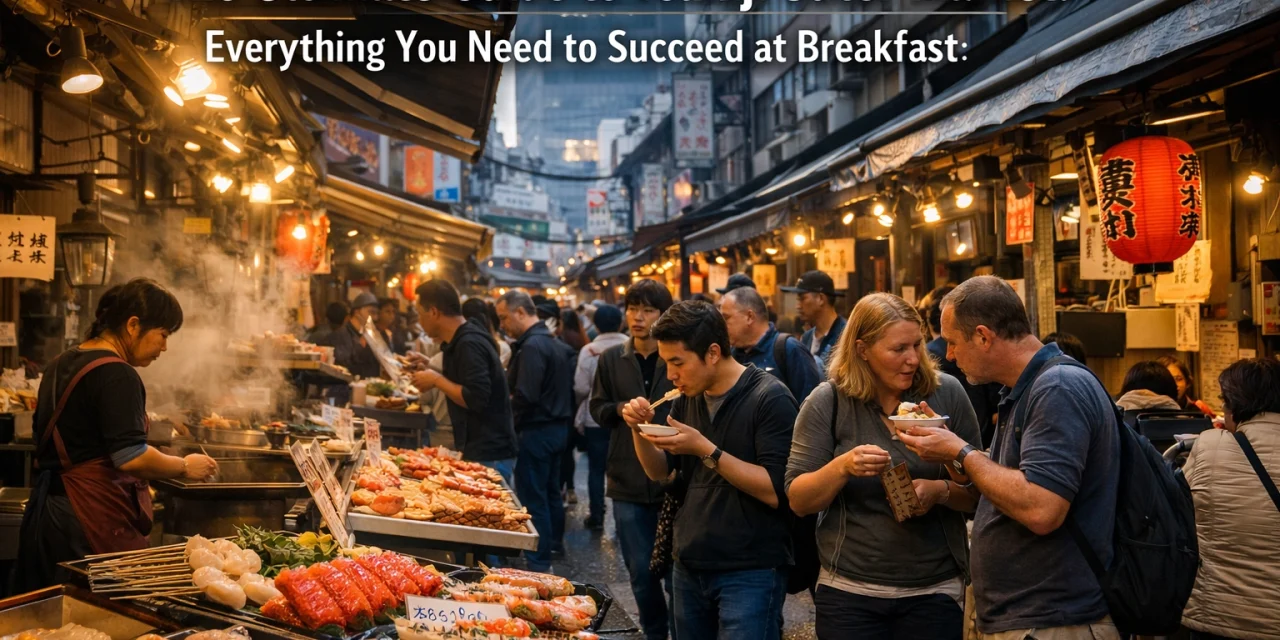
Welcome to day four of our 14-day culinary marathon through Tokyo. If you’ve been following along, your pants are probably tighter, and your camera’s memory card is likely screaming for mercy. Today, we’re tackling the heavyweight champion of the breakfast world: Tsukiji Outer Market.
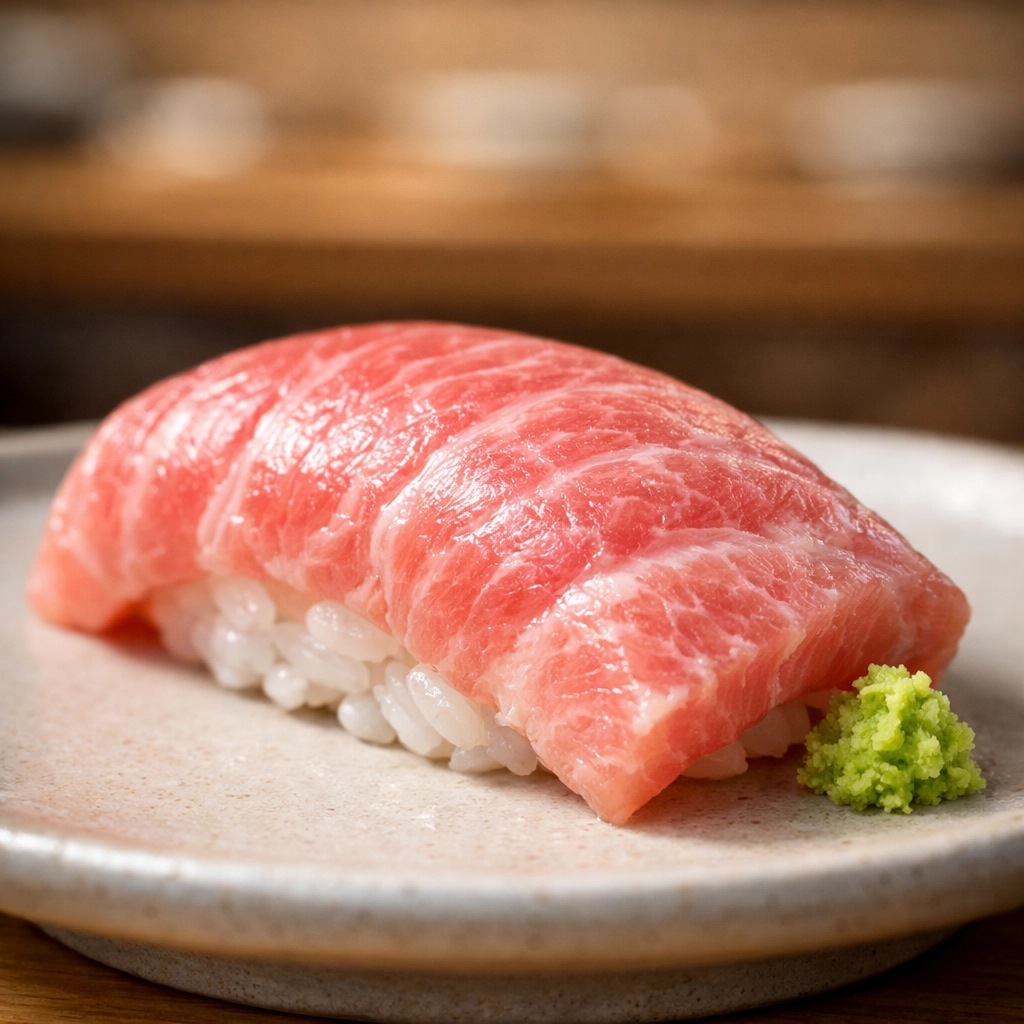
Look, I get it. 5:00 AM is a lifestyle choice usually reserved for marathon runners and people who enjoy suffering. But in Tokyo, the early bird doesn’t just get the worm; the early bird gets the fattest, melt-on-your-tongue Otoro tuna that has ever graced a rice bed. If you’re serious about food, and if you’re reading this, I know you are, you have to do Tsukiji right.
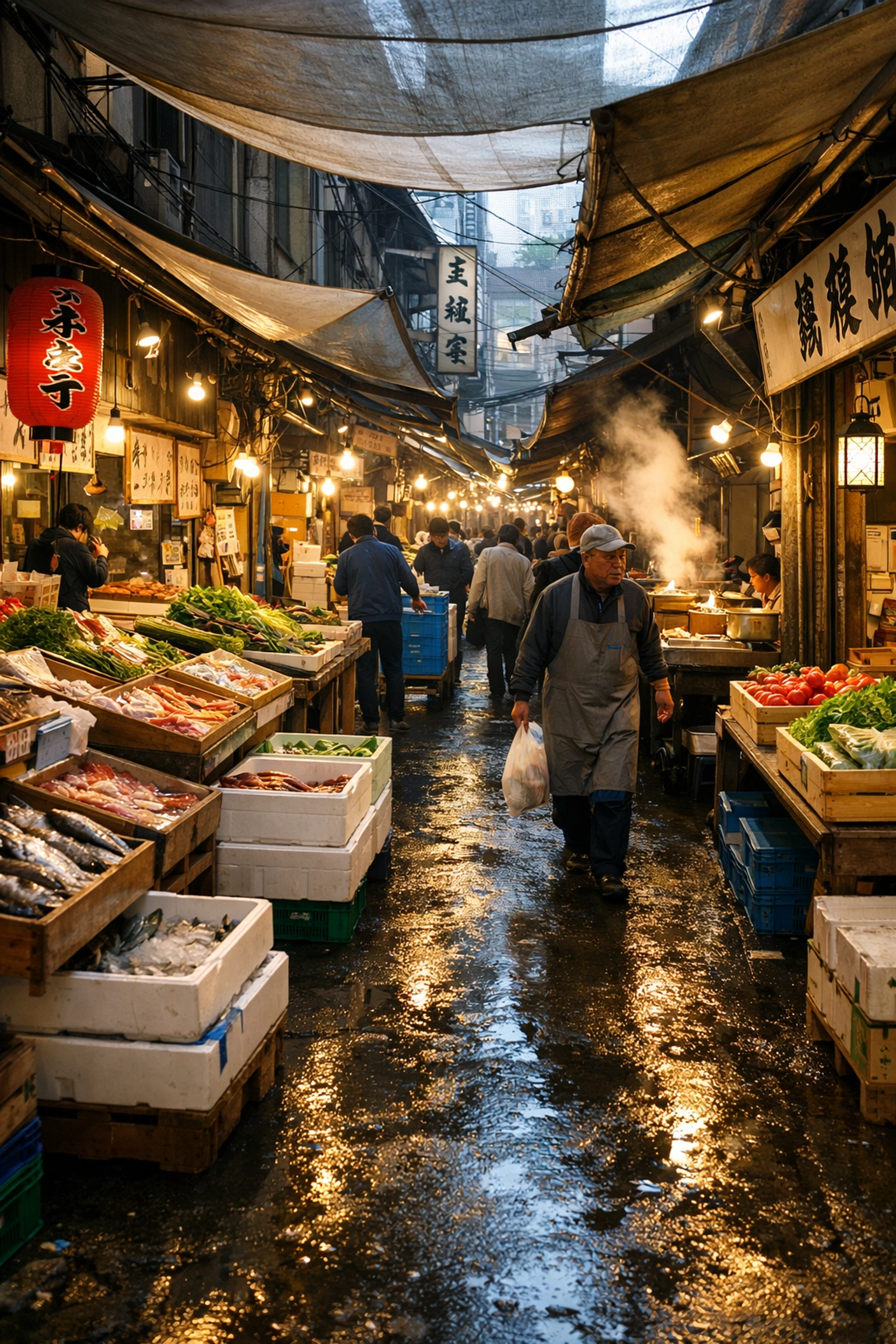
While the famous inner wholesale market (the place where the giant tuna auctions happened) moved to Toyosu back in 2018, the Outer Market stayed exactly where it was. It’s still a labyrinth of over 400 shops, stalls, and tiny restaurants that feel like they haven't changed since the 1950s. It’s loud, it’s crowded, it’s chaotic, and it’s arguably the best place on the planet to eat breakfast.
The "Early Bird" Myth: When to Actually Show Up
There is a lot of misinformation about when to arrive at Tsukiji. Some guides tell you to get there at 3:00 AM. Unless you are a professional fish buyer or you really enjoy standing in the dark, don’t do that.
Most of the retail stalls and restaurants start opening around 7:00 AM. If you want to beat the massive tour groups that arrive by 9:30 AM, aim for an 8:00 AM arrival. This gives you that sweet spot where the fish is fresh, the energy is high, and you aren’t being elbowed by a sea of selfie sticks every three seconds.
The Breakfast Hit List: What to Eat
You can’t just walk into Tsukiji and start eating randomly, well, you can, but your stomach only has so much real estate. You need a strategy. Here are the non-negotiables:
1. The Sushi Breakfast (Nigiri)
Yes, sushi for breakfast is the law here. You’ll see massive lines for places like Sushidai. Is it good? It’s incredible. Is it worth waiting four hours in the cold? That’s between you and your god. Personally, I prefer the smaller "standing sushi" bars like Okame. You get world-class quality without the soul-crushing wait.
If you want the full experience with a local who knows which stall has the best catch of the day, I highly recommend booking a food tour through Viator. It takes the guesswork out of the narrow alleys and ensures you don't accidentally order something you aren't ready for.
2. Kaisen-don (The Seafood Bowl)
If you prefer your fish in bulk, go for a Kaisen-don. It’s a bowl of seasoned rice topped with a literal mountain of seafood. Look for bowls featuring Uni (sea urchin) and Ikura (salmon roe). When it’s fresh at Tsukiji, Uni doesn't taste "fishy": it tastes like creamy, briny butter.
3. Tamagoyaki (The Sweet Omelet)
For about 100 to 150 yen, you can get a warm, rectangular slice of Japanese omelet on a stick. It’s slightly sweet, incredibly fluffy, and serves as the perfect palate cleanser between fish courses. Watching the chefs flip these with long chopsticks is a masterclass in coordination.
4. Grilled Scallops and Wagyu
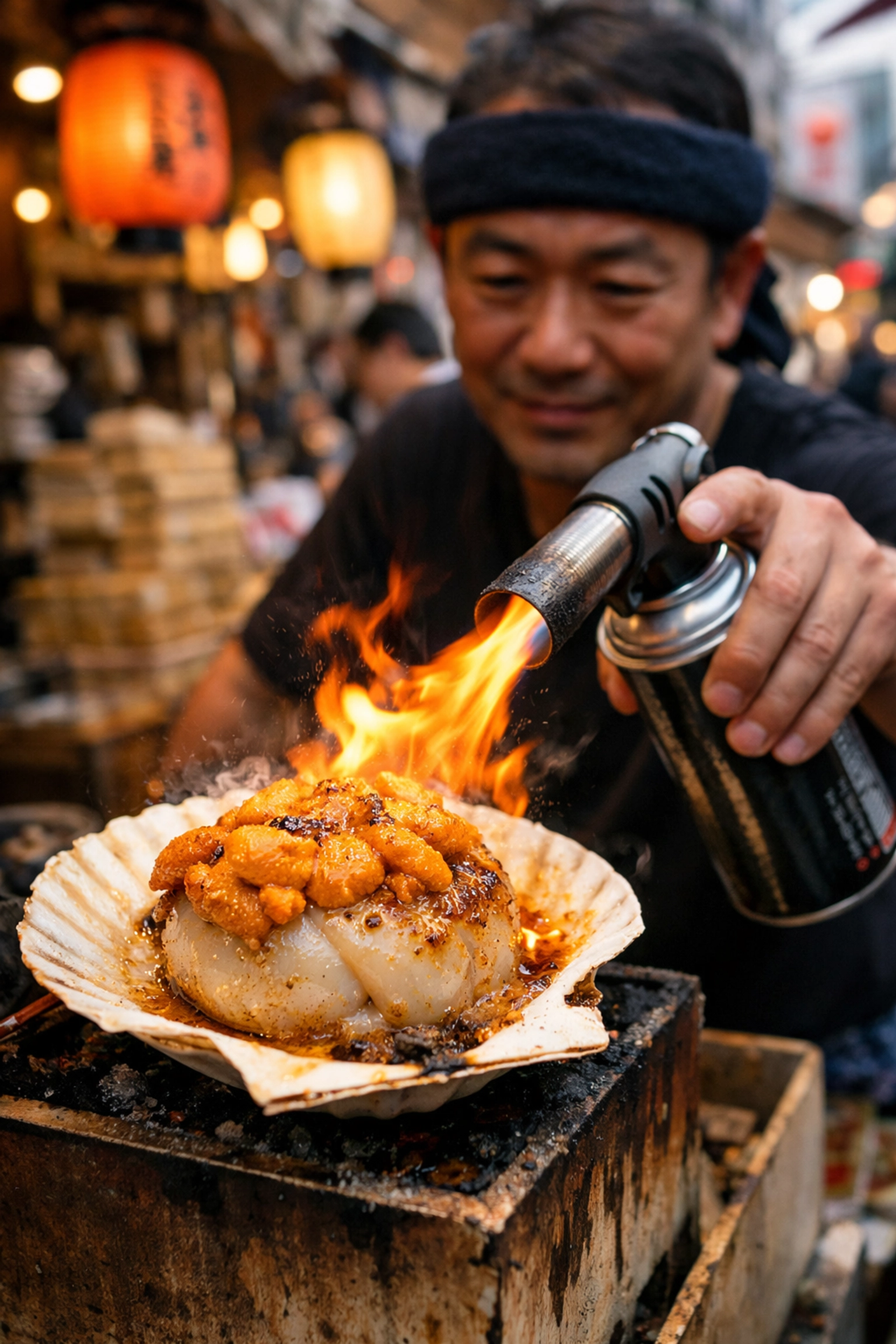
Wait, beef at a fish market? Absolutely. You’ll find stalls torch-searing giant scallops topped with uni and butter, right next to vendors grilling high-grade Wagyu beef skewers. It’s a carnivore’s dream in the middle of a pescatarian’s paradise.
Capturing the Chaos: Photography Tips for Tsukiji
As a photographer, Tsukiji is both a dream and a nightmare. The lighting is a mix of harsh morning sun and dim, flickering fluorescent tubes in the alleys. If you’re looking to document your food journey, you need to be prepared.
First, check your essential photography gear. A fast prime lens (like a 35mm or 50mm f/1.8) is your best friend here. It’ll help you blur out the distracting crowds and focus on the glistening texture of the fish.
Pro Tip: Be respectful. These people are working. Don't block the narrow walkways for a ten-minute photoshoot of your tuna bowl. Take the shot quickly: natural light is better than flash anyway: and then enjoy your meal. If you’re worried about your gear’s performance in these conditions, check out our camera reviews 2024 to see which sensors handle mixed lighting the best.
Logistics: How to Not Get Lost
Getting to Tsukiji is easy, but navigating it is a different story.
- Transport: Take the Toei Oedo Line to Tsukiji-shijo Station or the Tokyo Metro Hibiya Line to Tsukiji Station.
- Cash is King: While some bigger restaurants take cards, many of the best street food stalls are cash-only. Bring more yen than you think you’ll need.
- The Wednesday/Sunday Rule: This is the most important tip: The market is largely closed on Wednesdays and Sundays. Always check the "Tsukiji Market Calendar" online before you go. There’s nothing more heartbreaking than waking up at 6:00 AM only to find shutters pulled down over your favorite sushi spot.
If you’ve spent your previous weekends looking for cheap weekend getaways or exploring restaurants in downtown Golden, the sensory overload of Tsukiji will feel like a different planet. It’s fast-paced, but the reward is the freshest meal of your life.
Why You Should Consider a Guided Tour
I’ve been to Tokyo a dozen times, and I still get turned around in the outer market. It’s a grid that isn't really a grid. Beyond the food, there are incredible shops selling handmade Japanese knives, high-end dried seaweed, and ceramics that would make any kitchen look like a Michelin-starred restaurant.
A guide can help you navigate the etiquette: like where it’s okay to stand and eat (hint: don't walk and eat!) and which stalls are tourist traps versus local legends. Seriously, save yourself the stress and book a tour here. It’s the difference between a good breakfast and a legendary experience. Plus, having someone handle the photography booking experience for a local food walk allows you to actually focus on the flavors.
Final Thoughts on a Tsukiji Breakfast
Tsukiji isn't just about the food; it’s about the atmosphere. It’s the sound of the styrofoam boxes sliding, the steam rising from the ramen stalls, and the incredible hospitality of people who have been doing this for generations.
It’s a reassuring constant in a city that is always changing. Even as the "Inner Market" moved to the modern, sterile halls of Toyosu, Tsukiji Outer Market kept its soul. It’s gritty, it’s delicious, and it’s the only way to start a day in Tokyo.
Once you’ve finished your breakfast, you’re perfectly positioned to head over to the Ginza district for some high-end shopping, or perhaps take the subway over to Akihabara to see the themed cafes we’ll be discussing later in this series.
Just remember: wear comfortable shoes, bring your appetite, and don't be afraid to try something that looks slightly intimidating. Usually, that’s the best thing on the menu.
For more travel guides and photography tips to help you document your world travels: whether you’re looking for breakfast places in Cape Coral or the best food places in Jackson, TN: stick with us at Photoguides. We’re here to make sure your photos look as good as your food tastes.
Happy eating, and even happier shooting!