
Category: Foodies
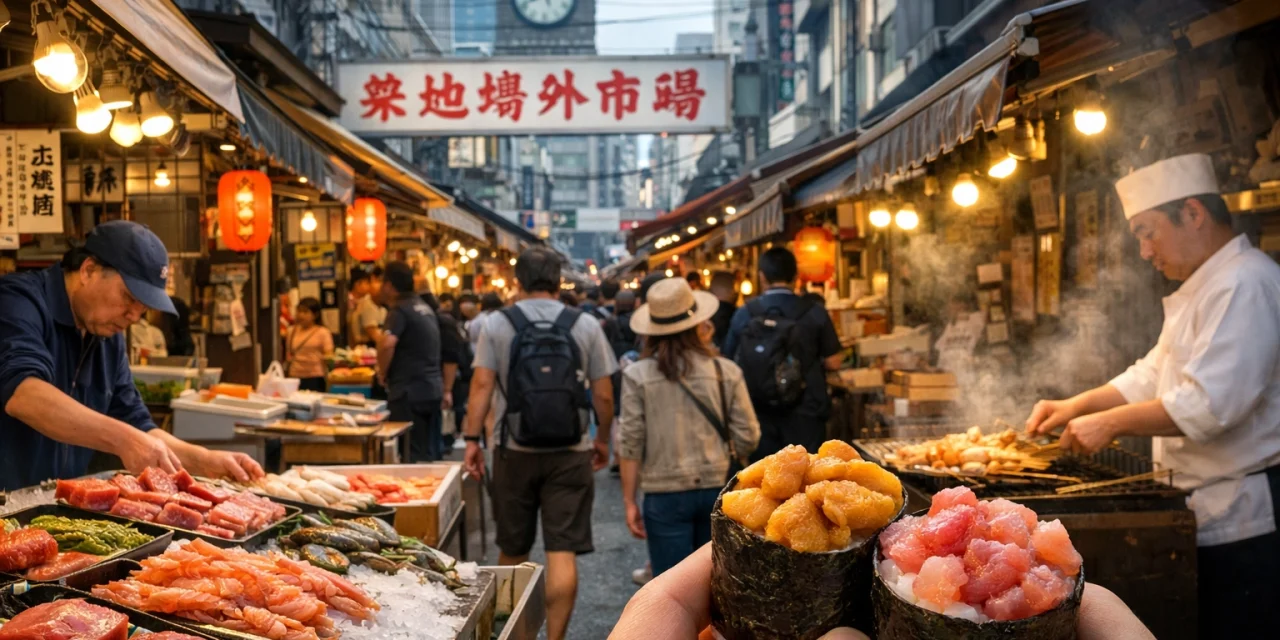
Welcome to day four of our 14-day culinary deep dive into Tokyo. If you’ve survived the neon-soaked themed cafes of Akihabara and the white-glove service of Ginza, it’s time to trade your loafers for some sturdy walking shoes. We’re heading to the legendary Tsukiji Outer Market.
Now, I know what you’re thinking. “Edin, didn’t the market move?” Well, yes and no. The inner wholesale market, the place where the giant tuna were auctioned off at 4:00 AM, moved to Toyosu back in 2018. But the soul of the operation? The street food, the knife shops, the tiny six-seat sushi bars, and the chaotic energy? That all stayed right here in Tsukiji. It’s a seafood safari, and you’re about to be the apex predator of sashimi.
The Lay of the Land: Tsukiji 101
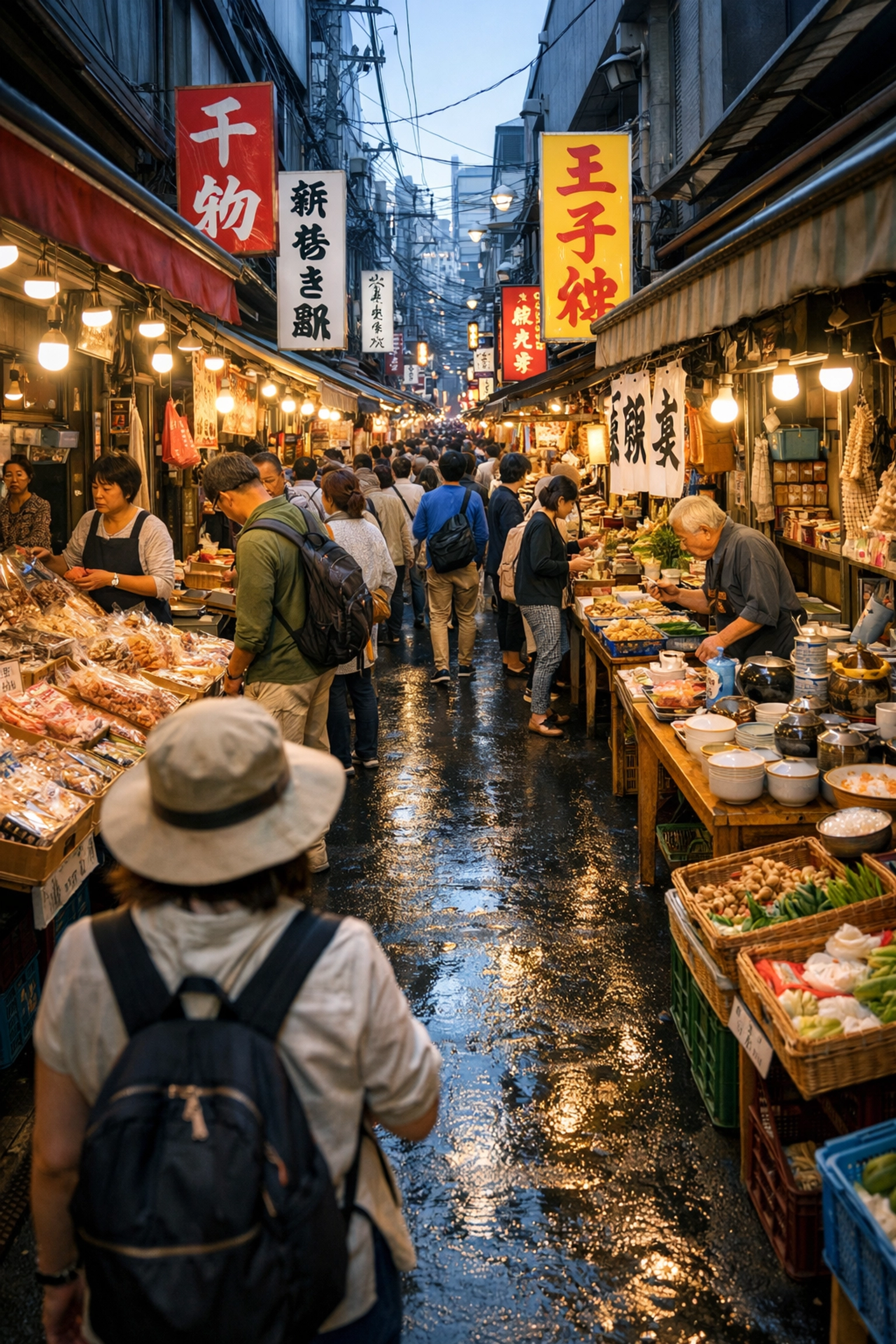
Tsukiji is a labyrinth of narrow alleys, steam-filled stalls, and more varieties of sea creatures than you’ll find in a Pixar movie. It’s located just a stone’s throw from the glitz of Ginza, but it feels like a different world.
Getting there is a breeze. Hop on the Hibiya Line to Tsukiji Station or the Oedo Line to Tsukiji Shijo Station. If you’re feeling like a morning walk, you can even trek it from Shimbashi Station in about 20 minutes. My advice? Get there early, but not too early. While the professionals are busy doing business before 9:00 AM, the market really hits its stride for us mortals between 9:00 AM and 1:00 PM.
Before you dive headfirst into a bowl of rice and raw fish, remember: this is a working market. If you want to make the most of it without getting lost (or accidentally buying a 40-pound octopus), I highly recommend booking a food tour through Viator here. Having a local guide explain exactly what that wiggling thing on a stick is can be a real life-saver.
The Seafood Safari Checklist: What to Eat
You’re here for the food. I’m here for the food. Let’s not pretend otherwise. Here is your essential hit list for a successful Tsukiji crawl.
1. Tamagoyaki (Japanese Omelet)
You’ll see several stalls with long lines and chefs expertly flipping yellow rectangles in square pans. This is Tamagoyaki, a sweet and savory rolled omelet. It’s usually served on a stick for about 100 to 150 yen. It’s the perfect “appetizer” to kick off your morning.
2. Fresh Oysters and Scallops
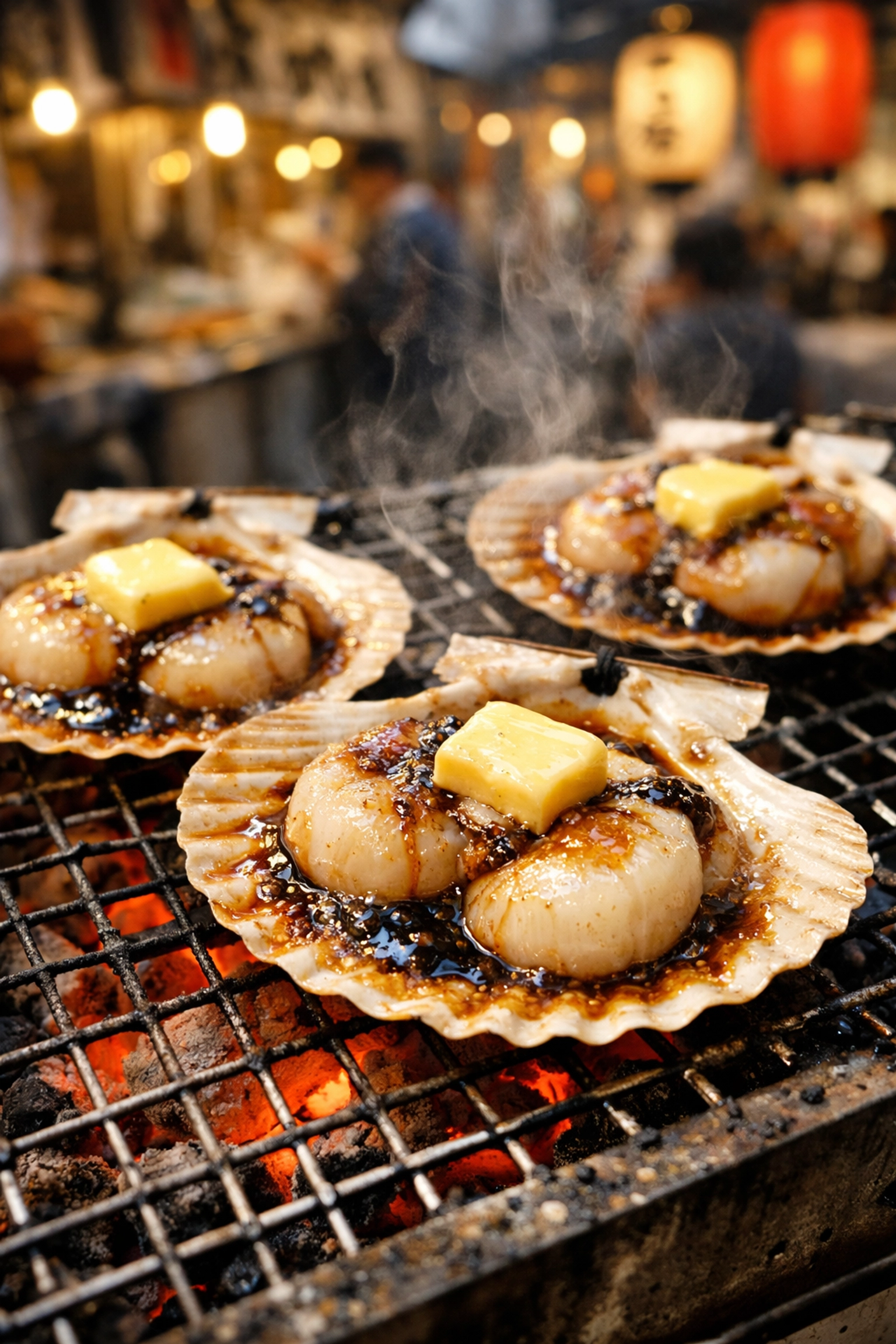
The size of the shellfish here is honestly intimidating. You’ll find stalls grilling giant scallops in their shells with a pat of butter and a splash of soy sauce. If you’re brave, go for the raw oysters the size of your hand. They are creamy, briny, and worth every yen.
3. Uni (Sea Urchin)
If you like uni, Tsukiji is your Mecca. You can find uni buns, uni pasta, or just a wooden tray of high-grade sea urchin to eat with a spoon. It’s the butter of the sea, and in Tsukiji, it’s as fresh as it gets.
4. Maguro (Tuna) Everything
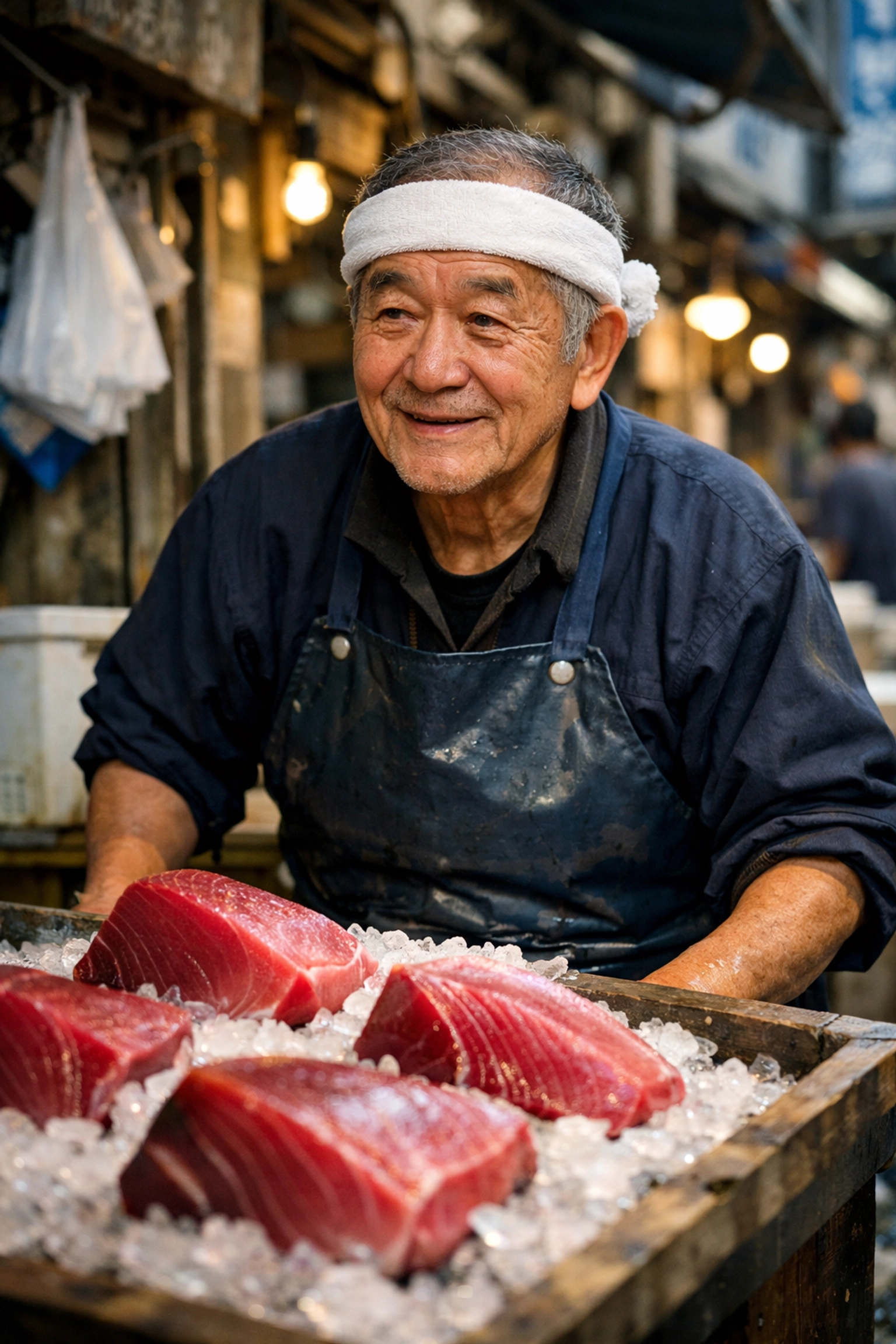
Since we’re at the source, you have to try the tuna. Whether it’s a fatty tuna (Otoro) nigiri that melts on your tongue or a bowl of Tekkadon (tuna sashimi over rice), you’ll never be able to eat grocery store sushi again. Sorry, I don't make the rules.
If you’re looking for a more sit-down experience to rest your legs, check out our guide on photography booking experiences which often includes local food insights, or take a look at my personal favorites over at Edin Chavez Fine Art for some visual inspiration before you start snapping your own food photos.
Capturing the Chaos: A Photographer’s Tip
As the CEO of Photoguides, I can’t let you walk into one of the most photogenic places on earth without some gear advice. Tsukiji is tight, crowded, and dimly lit in the alleys.
Leave the massive tripod at home. You need to be mobile. A fast prime lens (like a 35mm or 50mm) is your best friend here. It’ll help you capture those close-up shots of glowing salmon roe and the weathered faces of the fishmongers without being a nuisance to the crowd. For more on what to pack for a trip like this, check out our essential photography gear guide.
Beyond the Plate: Shopping for Treasures
Tsukiji isn't just about filling your belly; it’s about filling your kitchen. The "Outer Market" is home to some of the finest culinary tools in the world.
- Knives: Japanese knives are legendary. Shops like Masamoto and Azuma Minamoto no Kotane have been around for generations. Buying a handcrafted knife here is a rite of passage for any serious home cook.
- Ceramics: You’ll find beautiful, rustic plates and sake sets that look like they belong in a museum but cost less than a fancy lunch.
- Dried Goods: Pick up some high-quality bonito flakes, kombu (kelp), or authentic wasabi (the real stuff, not the green horseradish paste).
If you're curious about how these tools stack up, keep an eye on our camera reviews 2024 section where we apply that same level of scrutiny to photography tech.
Etiquette: How Not to Be "That" Tourist
Tsukiji is welcoming, but it has rules. To keep the vibe reassuring and respectful, keep these tips in mind:
- Don’t Eat While Walking: This is a big one in Japan. Buy your food, stand in the designated area near the stall, finish it, and then move on.
- Watch Your Bags: The aisles are narrow. If you’re rocking a massive backpack, you’re going to hit someone. Carry it in front of you or use the lockers at the station.
- Ask Before Snapping: Most vendors are happy to have their food photographed, but it’s always polite to give a quick nod or ask "Photos okay?"
- Small Groups Only: If you’re traveling with a pack of ten people, you’re going to have a hard time fitting anywhere. Break off into pairs.
To make the navigation even easier, consider that Viator food tour again. They know the vendors, they know the etiquette, and they know where the "secret" stalls are that don't have a 40-minute wait.
The Spiritual Side: Namiyoke Shrine
Before you leave, tuck into the corner of the market to find the Namiyoke Shrine. The name literally means "protection from the waves." When the land for Tsukiji was being reclaimed from the sea in the 17th century, storms kept destroying the work. After this shrine was built and the spirit was pacified, the construction succeeded.
It’s a quiet, beautiful spot that houses giant lion heads used in festivals. It’s a great place to sit for five minutes, digest your three pounds of raw fish, and reflect on the history of this incredible district. For more travel inspiration and "behind the scenes" stories, head over to my personal blog.
Wrapping Up Your Safari
Tsukiji Outer Market is more than just a place to eat; it’s a sensory overload in the best way possible. From the smell of roasting shellfish to the rhythmic "clack-clack" of knives on wooden boards, it’s a must-see for anyone visiting Tokyo.
If you’re planning your trip and looking for more low-key ideas, you might enjoy our post on cheap weekend getaways or perhaps explore some educational content to level up your travel photography before you land.
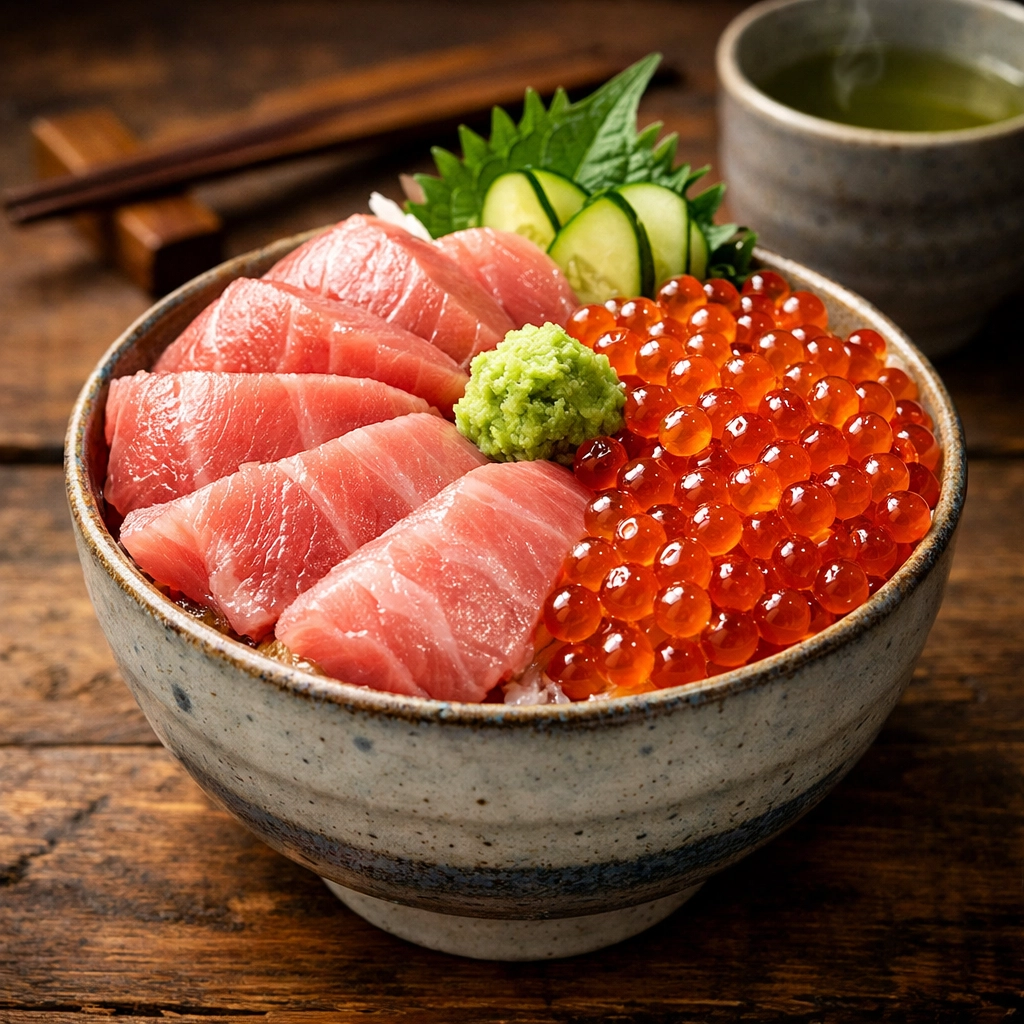
Tomorrow, we’re heading to Harajuku to see if we can find food that's as colorful as the street fashion. But for today, go get yourself a bowl of the freshest tuna you’ll ever eat. You’ve earned it.
Safe travels and happy shooting!













