
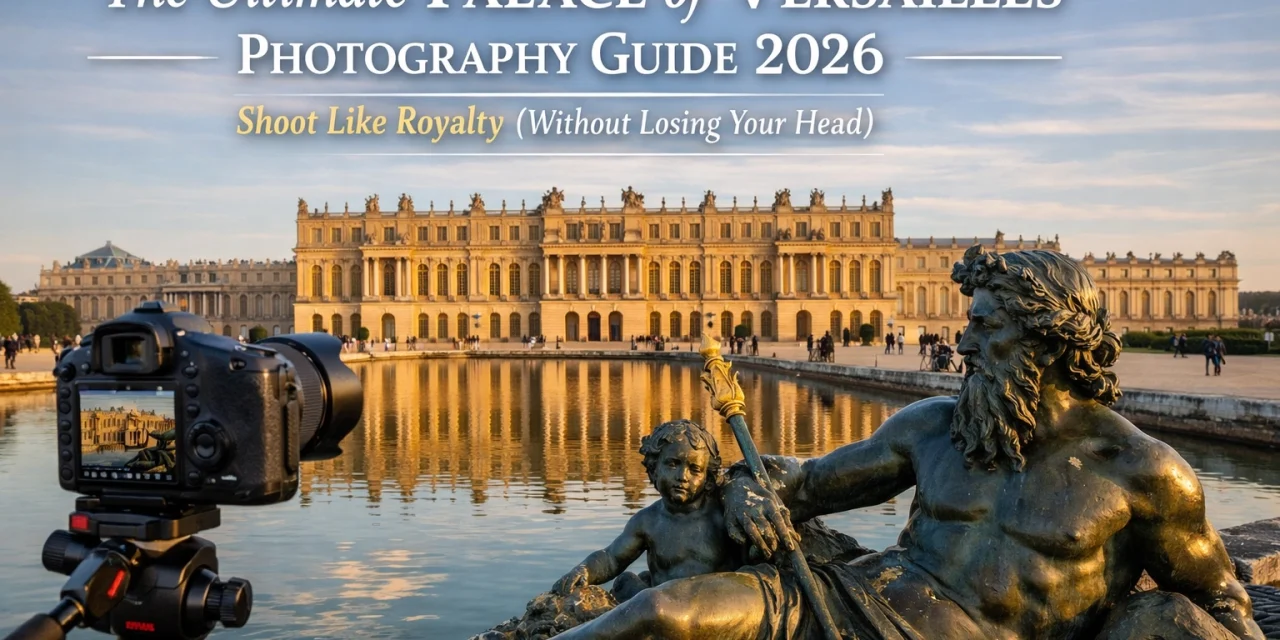
Let’s be real: Louis XIV didn’t build the Palace of Versailles to be "subtle." He built it to flex. And in 2026, it remains one of the most unapologetically photogenic spots on the planet. Whether you’re here for the 357 mirrors, the 2,000 acres of manicured gardens, or just to see if the Queen’s Hamlet looks as much like a Disney set in person as it does on Instagram (spoiler: it’s better), you’re going to need a plan.
Versailles is massive. If you wander in without a strategy, you’ll end up with 400 photos of the backs of other tourists' heads and a very expensive blister. At Photoguides, we want you to capture the majesty of the Sun King’s playground with the grace of a royal and the efficiency of a pro.
So, grab your camera, put on your most comfortable "royal" walking shoes, and let’s dive into the best photography locations at Versailles.
The Rules of the Realm: Know Before You Go
Before you start snapping, let’s talk logistics. The French take their heritage seriously, and the guards have a sixth sense for unauthorized tripods.
- No Tripods or Flash Inside: Inside the Palace (including the Hall of Mirrors), tripods, monopods, and flash are strictly forbidden. You’ll need to rely on high ISO settings and steady hands.
- Drones are a Hard No: Don't even think about it. Drones are strictly prohibited across the entire estate.
- Garden Gear: You can generally use a tripod in the gardens for personal use, but if you look "too professional" (think lighting rigs and reflectors), security might ask for a permit.
- Permits for Pros: If you’re doing a commercial shoot or a high-end engagement session, you’ll need to apply for a permit well in advance.
For more tips on navigating tricky locations, check out our Mastering Photography: The Ultimate 2026 Guide for Every Skill Level.
Timing is Everything: Beat the Crowds
In 2026, Versailles is more popular than ever. If you show up at noon, you aren't a photographer; you're a witness to a mosh pit in lace.
The Golden Hour Window:
- Morning Light (7:00 – 8:30 AM): The sun rises to the east, hitting the garden-side façade of the palace. This is the best time for the Water Parterre.
- Evening Light (6:00 – 7:30 PM): The sun sets over the Grand Canal. This creates a stunning silhouette of the palace and bathes the gardens in a warm, golden glow.
Pro Strategy: Book the very first time slot of the day. Run (don’t walk) straight to the Hall of Mirrors. Most people stop to look at the Royal Chapel first. Skip it for now: you can come back later. Having 30 seconds of an empty Hall of Mirrors is worth the sprint.
1. The Hall of Mirrors (Galerie des Glaces)
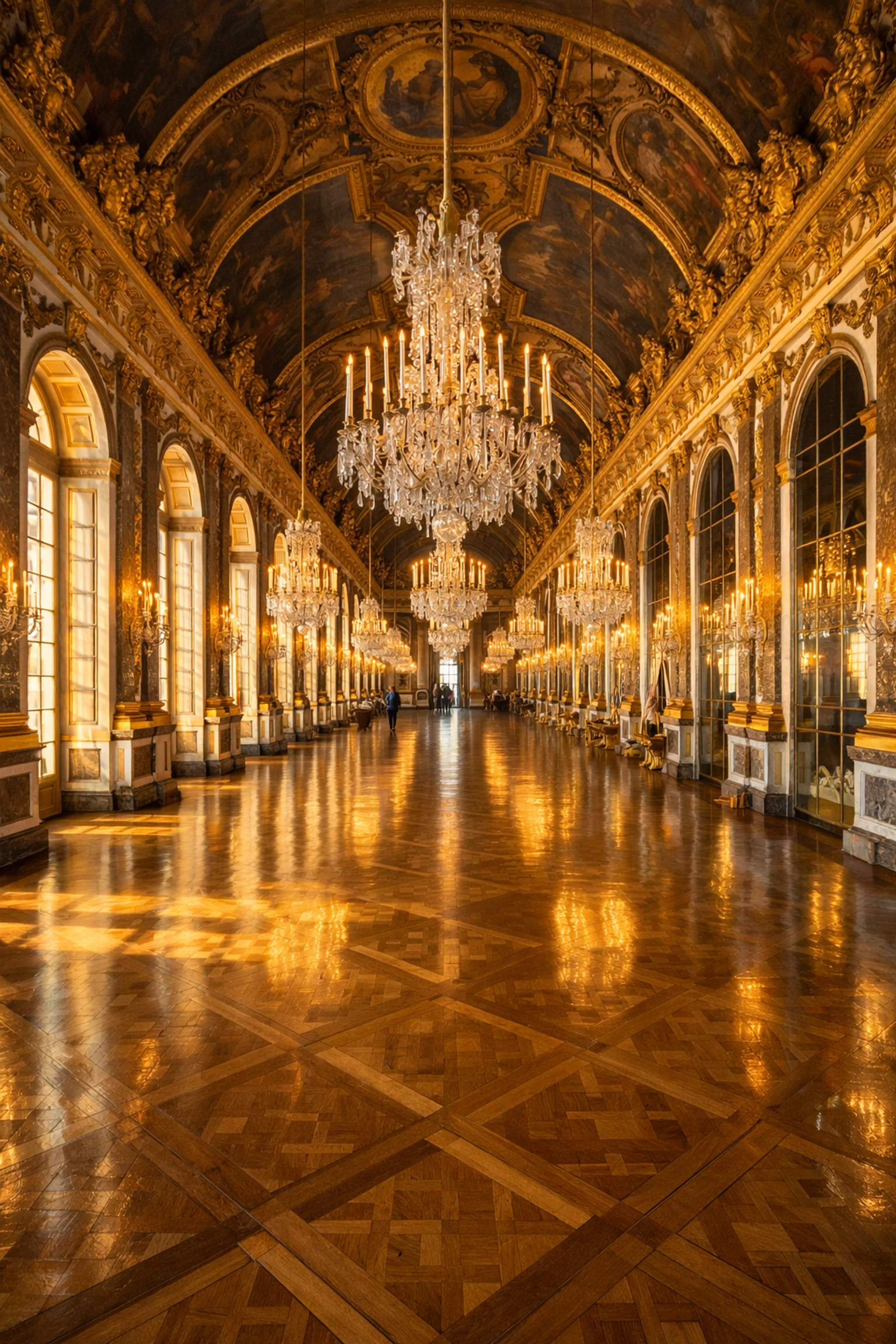
This is the "Boss Level" of Versailles photography. It’s 240 feet of pure opulence, with 17 arched windows reflecting off 357 mirrors.
- The Shot: A symmetrical leading-lines shot from one end to the other.
- The Gear: You need a wide-angle lens (16-35mm is perfect). This allows you to capture the floor-to-ceiling mirrors and the incredible painted ceilings.
- The Technique: Since you can't use a tripod, tuck your elbows into your ribs, hold your breath, and use a fast shutter speed. If your camera has IBIS (In-Body Image Stabilization), now is its time to shine.
2. The Water Parterre and Palace Façade
Directly behind the palace sit two massive pools that act as giant mirrors for the building itself. This is one of the best photography locations for capturing the sheer scale of the architecture.
- The Shot: Get low to the water to get a perfect reflection of the palace. If the wind is still, the symmetry is breathtaking.
- The Timing: Early morning. The sun will be behind you, illuminating the golden details of the windows.
3. The Grand Canal
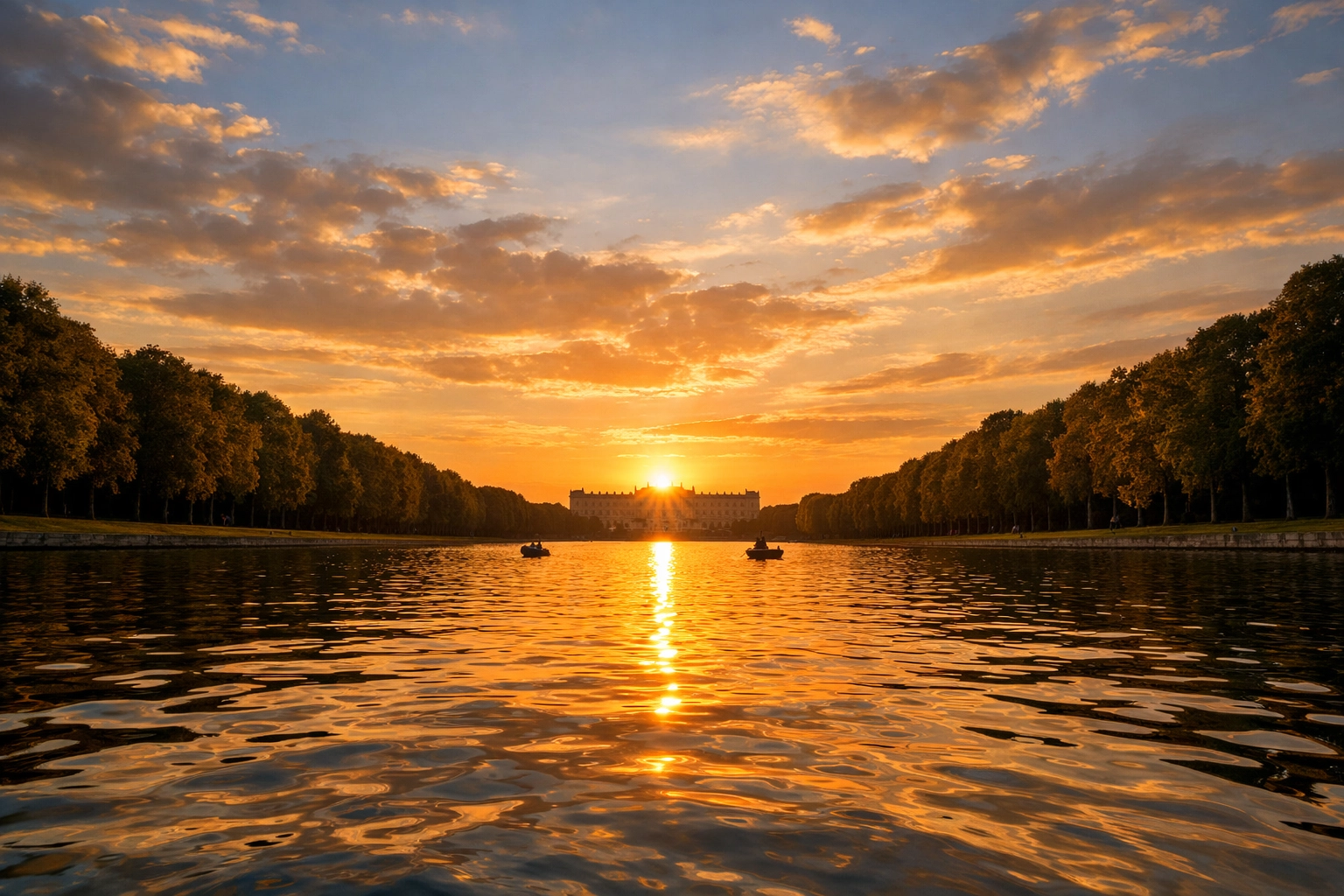
The Grand Canal is the spine of the Versailles gardens. It’s nearly a mile long and offers a sense of infinite perspective.
- The Shot: Walk halfway down the canal and look back toward the palace. Use the water to create a sense of depth. In 2026, the rowing boats are still a classic foreground element to add a bit of life to your landscape.
- Pro Tip: This is the ultimate spot for sunset. The sun drops right at the end of the canal, creating a "Path of Light" effect that Louis XIV specifically requested.
4. The Queen’s Hamlet (Hameau de la Reine)
Tucked away in Marie Antoinette’s estate, the Hamlet looks like a rustic English village. It’s a total departure from the gold and marble of the main palace. It’s cozy, thatched, and incredibly "cottagecore."
- The Shot: The Marlborough Tower reflecting in the lake. It looks like a fairytale.
- Why it works: It provides a texture and color palette (greens, browns, stony greys) that contrasts beautifully with the rest of your Versailles gallery.
If you’re looking to book a guided tour to ensure you don’t miss these hidden spots, check out these Versailles booking experiences.
Essential Photography Gear for Versailles
To make the most of your trip, don't overpack, but do pack smart. You'll be walking miles, so a heavy bag is your enemy.
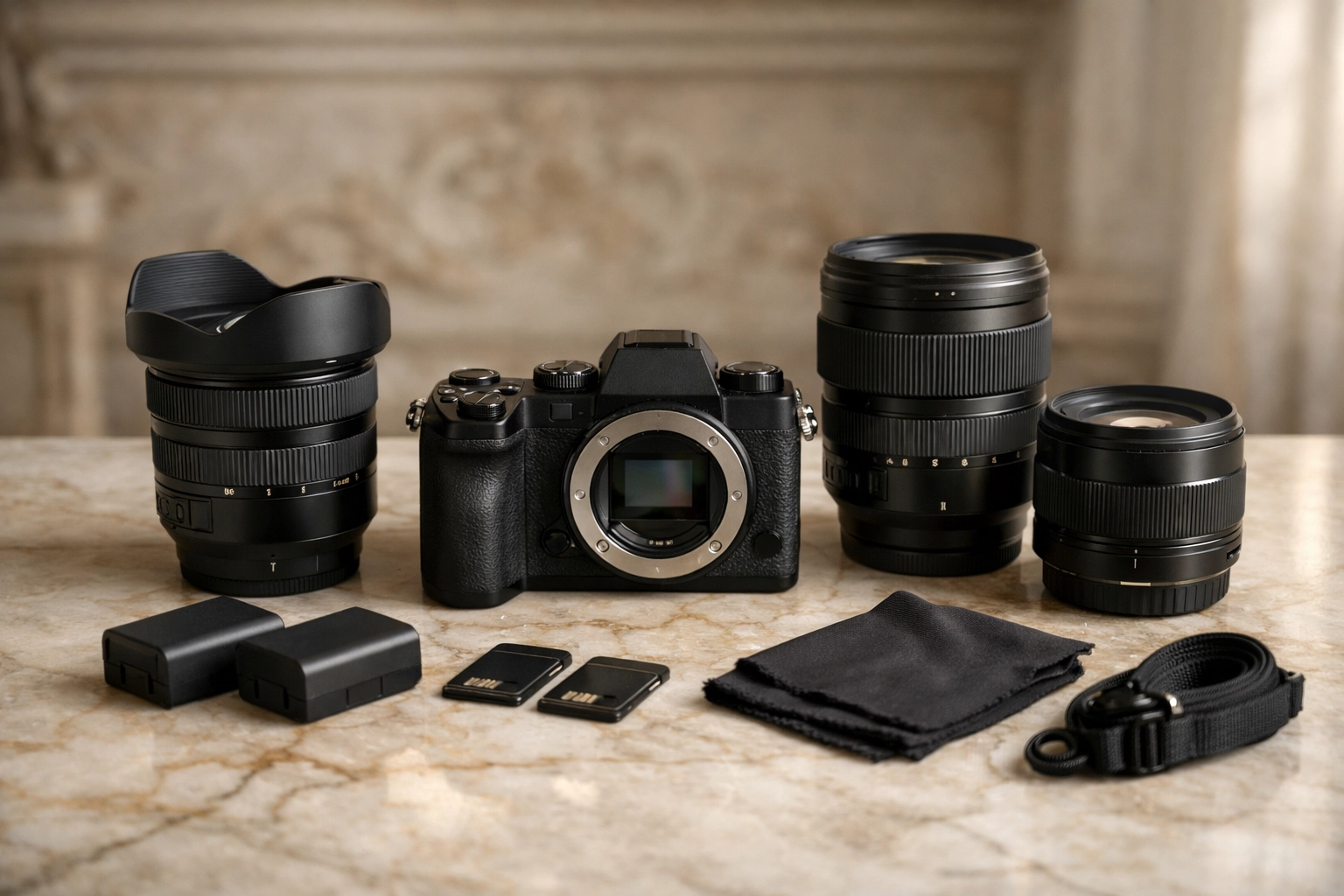
- Wide-Angle Lens: Essential for the Hall of Mirrors and the vast garden parterres.
- Mid-Range Zoom (24-70mm): Your workhorse for details, statues, and general "travel" shots.
- Fast Prime (f/1.8 or f/1.4): If you have a 35mm or 50mm prime, bring it for the darker Royal Apartments where you can't use flash.
- Extra Batteries: The cold stone of the palace and the constant use of Live View for high-angle shots will drain your battery faster than you think.
For a full rundown of what we recommend for 2026, see our guide on essential photography gear.
Composition Tips for "Royalty" Shots
1. Embrace the Symmetry
Versailles was designed on a central axis. Use your grid lines. If your horizon is even 1 degree off, the whole "royal" vibe crumbles. Align your center point with the fountains or the middle of the palace doors.
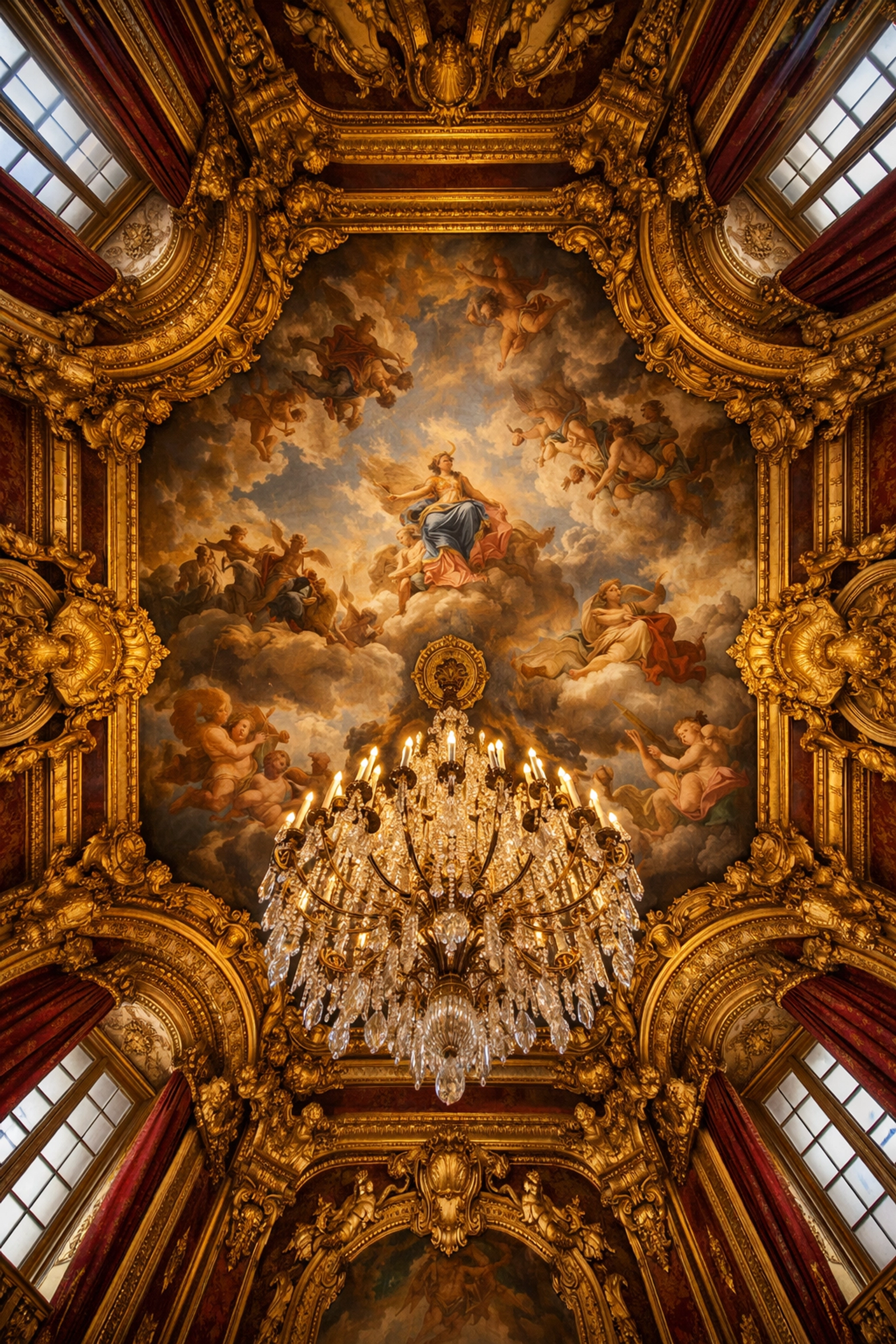
2. Look Up
The ceilings in the Royal Apartments are masterpieces. Use a wide-angle lens, stand directly in the center of the room, and shoot straight up. These "flat lay" ceiling shots are unique and often overlooked by tourists focusing on the furniture.
3. Use People for Scale
Sometimes, a photo of an empty garden looks like a postcard. Adding a person (even a stranger in the distance) gives the viewer a sense of just how massive these structures are. It turns a "place" into a "story."
Beyond the Main Palace: The Trianons
The Grand Trianon and Petit Trianon are often less crowded and offer a more intimate look at royal life. The pink marble of the Grand Trianon is especially beautiful under a high-noon sun, which usually flattens other subjects but makes the marble pop.
If you're planning a larger European trip, you might also want to look into our photography guides for Rome or the Eiffel Tower to round out your portfolio.
Pro Tip: The Fountain Shows
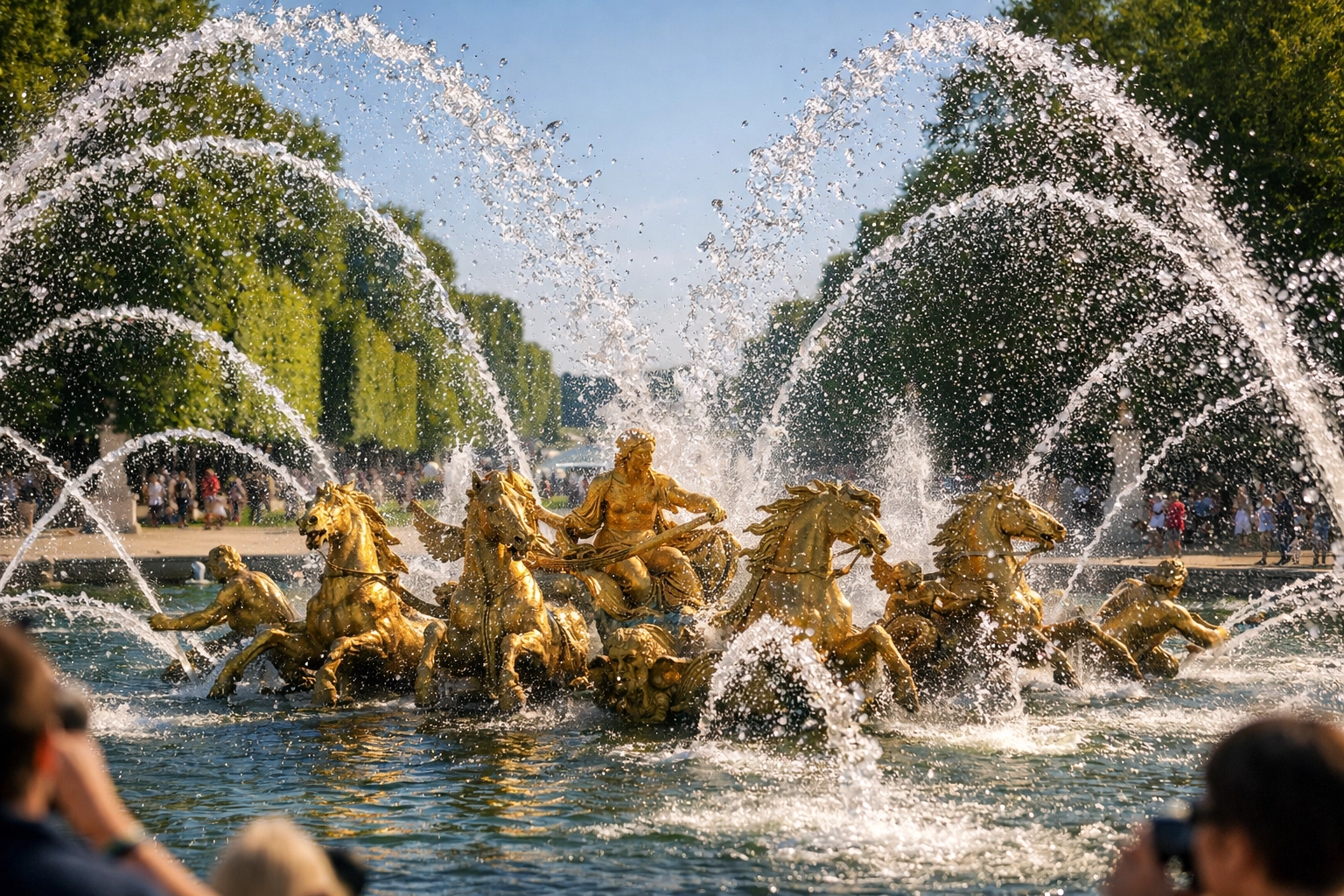
If you visit between April and October, check the schedule for the Grandes Eaux Musicales (Musical Fountain Shows). Seeing the Apollo Fountain in full spray is a must-capture.
- Technical Tip: Use a fast shutter speed (1/1000s or higher) to freeze the water droplets, or use a 6-stop ND filter and a tripod (allowed in the gardens!) to create a silky, ethereal water effect.
Final Thoughts
The Palace of Versailles is more than just a museum; it’s a masterclass in Baroque architecture and landscape design. In 2026, the key to great photography here is patience and perspective. Don't just take the same photo everyone else is taking. Look for the reflections in the puddles after a rain, the way the light hits a marble statue in the groves, or the symmetry of the Orangerie steps.
Ready to start your royal photo adventure? Book your Versailles experience here and make sure you have your tickets ready.
And remember, if you find yourself overwhelmed by the crowds, take a deep breath, head toward the Queen's Hamlet, and find your own quiet corner of history. For more inspiration on where to go next, check out our list of best photography locations around the world.
Happy shooting, and don't lose your head!













