There is something truly humbling about standing on the edge of the Grand Canyon as the first light of dawn spills over the rim, or watching the mist dance through the ancient trees of the Olympic Peninsula. As photographers, we aren't just looking for a "pretty picture." We are looking for those fleeting moments of connection with the earth: the kind that makes you forget to press the shutter for a second because you’re just so caught up in the scale of it all.
The United States National Park system is a gift. With 63 designated parks spanning from the volcanic wonders of Hawaii to the rugged coastline of Maine, it’s a lifetime’s worth of exploration. I’ve spent years traveling to these corners of the country, and I can tell you: no two parks are the same. Each offers a unique ecosystem, distinct lighting challenges, and a different story to tell through your lens.
In this comprehensive guide, I’m going to break down how to approach photographing all 63 US National Parks, the gear you absolutely need, and some of my favorite "secret" spots to help you capture something beyond the standard postcard shot.
Why Photograph the National Parks?
For me, the parks represent the ultimate playground for landscape photography. Whether you are hunting for the best sunrise spots or looking for that perfect landscape photography location, these protected lands offer a diversity you won't find anywhere else. But it’s not just about the big vistas. It’s about the textures in the desert, the way the light hits a grizzly’s fur in Denali, and the silent strength of a 2,000-year-old tree.
To see some of the work I’ve produced from these travels, you can explore my galleries at www.edinfineart.com. Every image tells a story of a moment I spent waiting for the light to be just right.
Gear: What’s in the Bag?
Before you head out into the wilderness, you need to make sure your kit is up to the task. Most parks have harsh environments: dust in the Southwest, moisture in the Northwest, and extreme cold in the mountains.
- Wide-Angle Lens (16-35mm): This is your bread and butter for those expansive vistas like Tunnel View in Yosemite or the overlooks at the Grand Canyon.
- Telephoto Lens (70-200mm or 100-400mm): Many people think landscape photography is all about wide angles, but a long lens allows you to compress the landscape and pick out specific details, like a lone peak or distant wildlife.
- Sturdy Tripod: If you’re shooting at blue hour or trying to capture the Milky Way, a tripod isn't optional. Check out our essential photography gear guide for my top recommendations on supports that won't weigh you down during a long hike.
- Filters: A circular polarizer is a must-have for cutting glare on water and making those clouds pop.
- Weather Protection: Make sure your camera is weather-sealed. If not, a simple rain cover can save your gear during a sudden downpour in the Smokies.
For a deeper dive into the latest tech, you can check out my camera reviews 2024 to see what’s currently leading the pack in landscape performance.

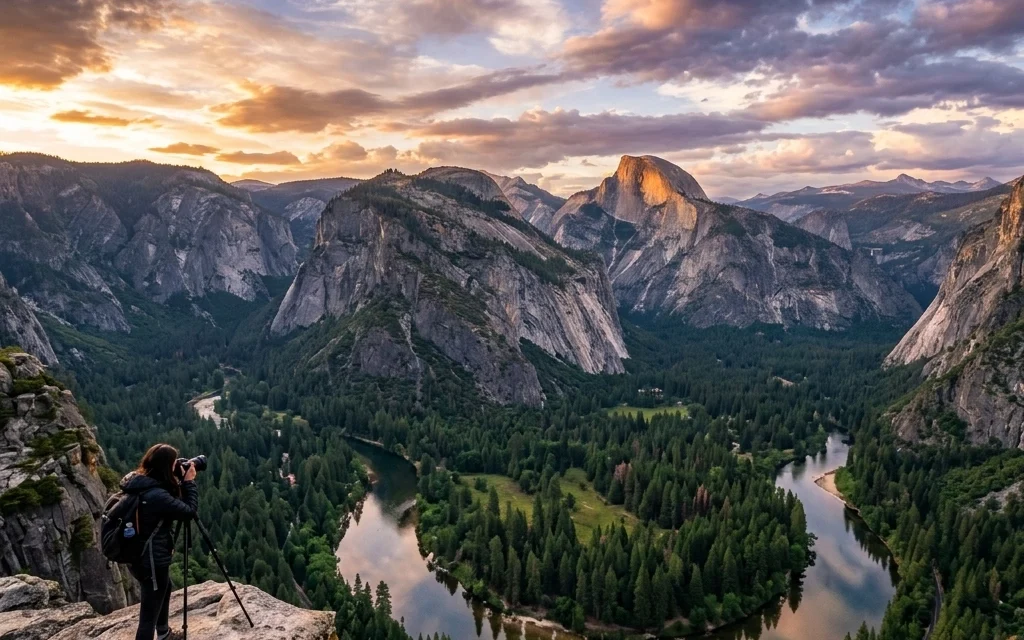
Alt text: A professional photography setup with a mirrorless camera on a tripod overlooking a misty valley at sunrise.
Top Photography Hotspots by Region
While I could write a book on every single park (and I’m working on a series for that!), let’s look at the heavy hitters across different regions.
The Desert Southwest: Arches, Zion, and Bryce Canyon
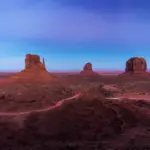
The "Big Five" in Utah are perhaps the most iconic landscape photography locations in the world. The contrast between the red rocks and the deep blue desert sky is a photographer's dream.
- Arches National Park: Delicate Arch is the famous shot, but try shooting it at night for incredible astrophotography.
- Zion National Park: The Narrows offers a unique challenge with reflected light bouncing off the canyon walls. If you’re looking for the best sunrise spots, the Canyon Overlook Trail provides a breathtaking view of the valley without the crowds of Angel's Landing.
The Pacific Northwest & West Coast: Yosemite and Olympic
This is where the scale of nature really hits you. Yosemite is the "Cathedral of Nature," and for good reason. From the granite monoliths of El Capitan to the roaring waterfalls, there is a shot around every corner.
- Yosemite: If you can time it for February, you might catch the "Firefall" at Horsetail Fall. But don't sleep on the high country along Tioga Road.
- Olympic: This park is three parks in one: glaciated mountains, temperate rainforests, and rugged coastline. For more tips on coastal shooting, you might find inspiration in my wedding photography insights which often cover managing tricky outdoor lighting.
The Hidden Gems: Great Basin and Badlands
Sometimes the best shots come from the parks that get the least foot traffic. Great Basin in Nevada has some of the darkest skies in the lower 48, making it a premier spot for the Milky Way. Meanwhile, the Badlands in South Dakota offer a prehistoric landscape that looks like another planet during the golden hour.
Timing and Logistics: Don't Get Left at the Gate
Photography is all about light, and light is all about timing. However, in 2026, timing also means logistics. Many parks, including Arches and Zion, now require vehicle reservations months in advance.
I always tell my students to plan their trips at least six months out. If you’re looking for a quick escape to practice your skills before the big trip, check out these cheap weekend getaways for some local inspiration.

Alt text: The Milky Way stretching over a desert landscape with ancient bristlecone pine trees in the foreground.
Professional Techniques for National Parks
To take your photos from "vacation snaps" to gallery-quality prints, you need to master a few key techniques:
Mastering Long Exposures
Whether it’s the moving clouds over the Tetons or the rushing water of a creek in the Great Smoky Mountains, long exposures add a sense of time and motion. Use a neutral density filter to slow your shutter speed down, even in the middle of the day. For post-processing tips on how to make these images pop, visit www.blog.edinchavez.com.
The Art of Composition
Don't just place the horizon in the middle. Use leading lines: like a winding trail or a fallen log: to draw the viewer’s eye into the frame. Look for "frames within frames," like an arch framing a distant peak. If you're interested in more educational content on composition, our educational category has some great deep dives.
Wildlife Etiquette
Parks like Yellowstone and Glacier are incredible for wildlife, but safety (and the law) comes first. Use a long telephoto lens (at least 400mm) to keep your distance. Not only does this keep you safe, but it also allows the animal to behave naturally, leading to much better photos. You can find more community discussions on wildlife gear at www.shutyouraperture.com.

Alt text: A majestic grizzly bear walking through a field of wildflowers in Denali National Park with mountains in the background.
Practical Tips for Your Photography Expedition
- Download Offline Maps: Most National Parks have zero cell service once you pass the entrance station. Download your maps on Google Maps or Gaia GPS before you leave the hotel.
- Leave No Trace: This is non-negotiable. Stay on the trails, don't crush the "living soil" in the desert (cryptobiotic crust), and take only photos.
- Golden Hour is Mandatory: Most parks look flat and uninteresting at noon. Be there an hour before sunrise and stay an hour after sunset. The "blue hour" is often when the real magic happens.
If you’re looking to improve your sky game in post-processing, especially for those days when the weather doesn't cooperate, you can download sky overlays to add that missing drama to your landscapes.

Alt text: An ultrarealistic wide-angle shot of the Grand Canyon at golden hour, showing deep oranges and purples in the rock layers.
Starting Your Journey
With 63 parks to choose from, it can feel overwhelming to know where to start. My advice? Pick a region and dive deep. Don't try to see five parks in five days. Spend three days in one park. Learn how the light moves across the landscape. Wait for the storm to pass.
Photography is as much about patience as it is about technical skill. When you finally get that shot: the one where the light, the composition, and the subject all align: you’ll realize why we do this.
Whether you're looking for the best photography locations or just want to immerse yourself in the beauty of the wild, the National Parks are waiting for you. For more detailed guides and to book a 1-on-1 session to hone your skills, visit our photography booking experience page.
This is the start of a massive series where we will break down every single park, one by one. Stay tuned, keep your sensor clean, and I'll see you out on the trail.