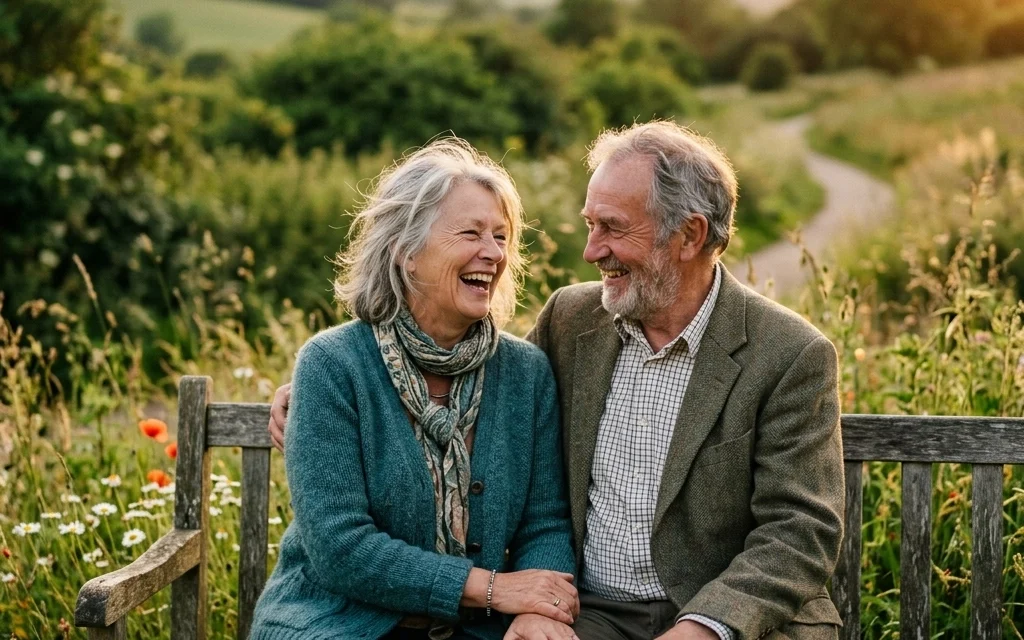
Unposed portrait photography is the sweet spot between documentary and portraiture: you’re still shaping the scene, but you’re not forcing a smile or “chin down, eyes to camera” energy. The goal is simple, create conditions where real emotion shows up, then be ready when it does.
Below are 10 practical, high-impact ideas you can use for couples, families, seniors, or personal branding sessions, plus location tips (“photo spots near me” style thinking), 2026 gear notes, and where AI fits without killing authenticity.
1) The “Do Something Together” Prompt (Not a Pose)
Instead of telling people how to stand, give them a tiny mission that naturally creates expression.
Try prompts like:
- “Walk to that corner and talk about what you want to do next weekend.”
- “Make each other laugh without tickling.”
- “Tell them the most random compliment you can think of.”
- “Teach me your handshake.”
Why it works: people forget their face when they’re doing something. Hands move, shoulders relax, and micro-expressions (the good stuff) show up fast.
Quick settings tip: shoot bursts at 1/500–1/1000, f/1.8–f/2.8, Auto ISO with a reasonable max (your camera’s comfort zone). Your keeper rate will jump.
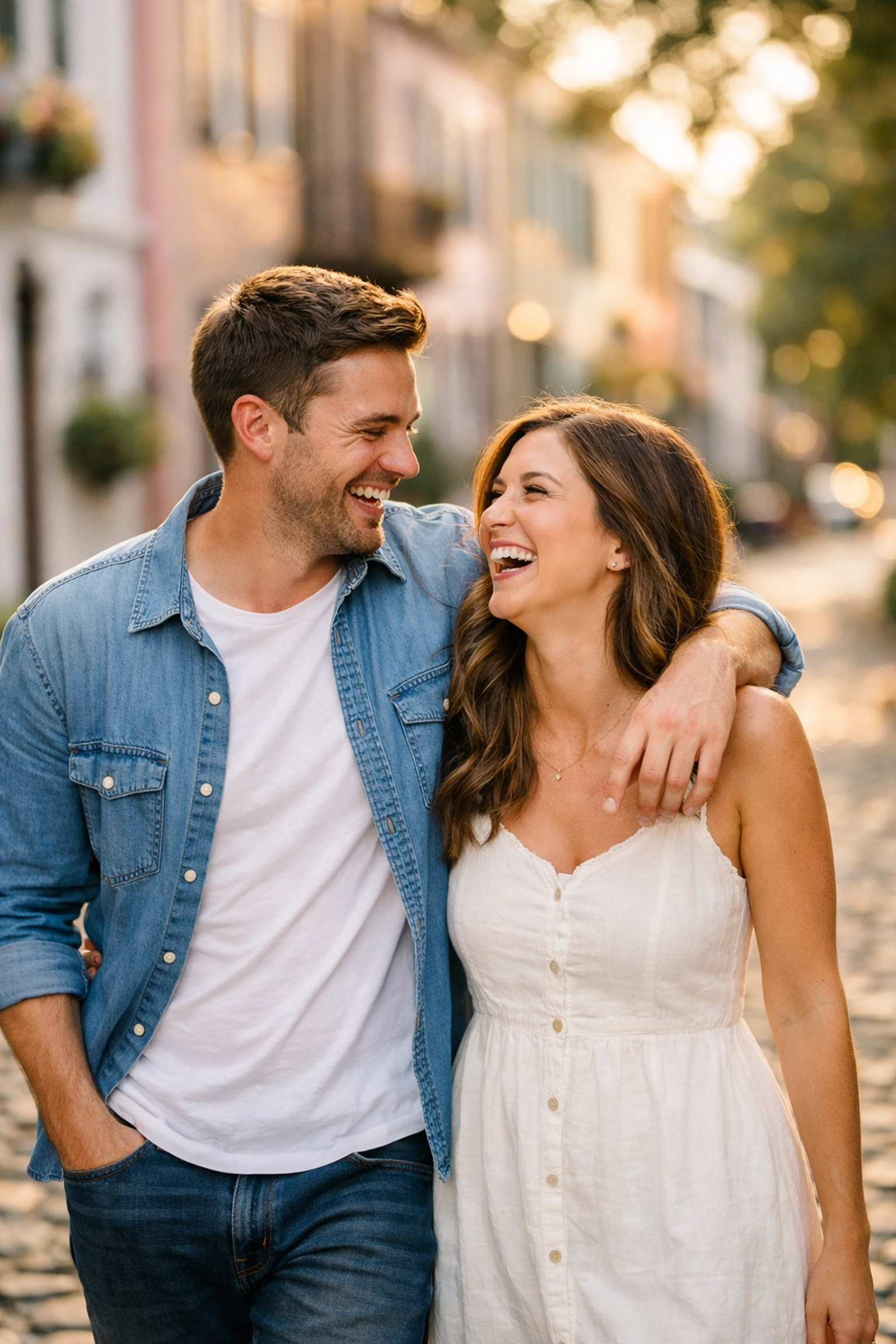
2) Photograph the Warm-Up (The First 10 Minutes Are Gold)
Most clients start stiff. That’s normal. The mistake is waiting until “later” to shoot for real. The warm-up is where you capture the honest nerves, the giggles, the “I don’t know what to do with my hands” moments that look so human.
How to use it:
- Start with a couple “for the parents” frames (simple, looking at camera).
- Then immediately move into easy actions: walking, adjusting a jacket, fixing hair, sipping coffee.
Reassuring client line: “You don’t need to perform, just hang out. I’ll handle the timing.”
This one is especially effective in public photo spots near me, boardwalks, murals, street corners, because the environment gives your subject something else to focus on.
3) Use a Longer Lens and Give Them Space
If you want genuine emotion, stop hovering. A longer lens lets you back up, lower your presence, and let people fall into their natural rhythm.
Portrait-friendly focal lengths (2026 reality check):
- 85mm for classic portraits (full frame)
- 135mm for compressed, cinematic candids
- 70–200mm when you need flexibility (events, families, unpredictable kids)
How to make it feel unposed:
- Stand farther away than you think you should.
- Let them talk to each other instead of talking to you.
- Shoot through foreground elements (leaves, door frames, railings) for depth.
If you’re building your kit this year, keep it simple: one sharp prime + one flexible zoom. Photoguides keeps a running gear list here: https://photoguides.org/essential-photography-gear
4) Pick a Meaningful Location (Not Just a “Pretty” One)
“Best photography locations” isn’t only about epic scenery. For unposed portraits, comfort beats aesthetics almost every time.
Meaningful location ideas:
- Their home (cooking, record collection, backyard)
- A neighborhood coffee shop they actually go to
- A park where they walk the dog
- A bookstore, arcade, skate spot, studio, gym
How to find “photo spots near me” that actually work:
- Look for open shade + clean backgrounds (north-facing walls, alleys, storefront overhangs).
- Prioritize places where people can move without feeling watched.
- Build a shortlist of 5–10 local “always works” locations and rotate them.
When you nail this, you get authenticity and repeatable results, perfect if you’re shooting a lot of sessions.
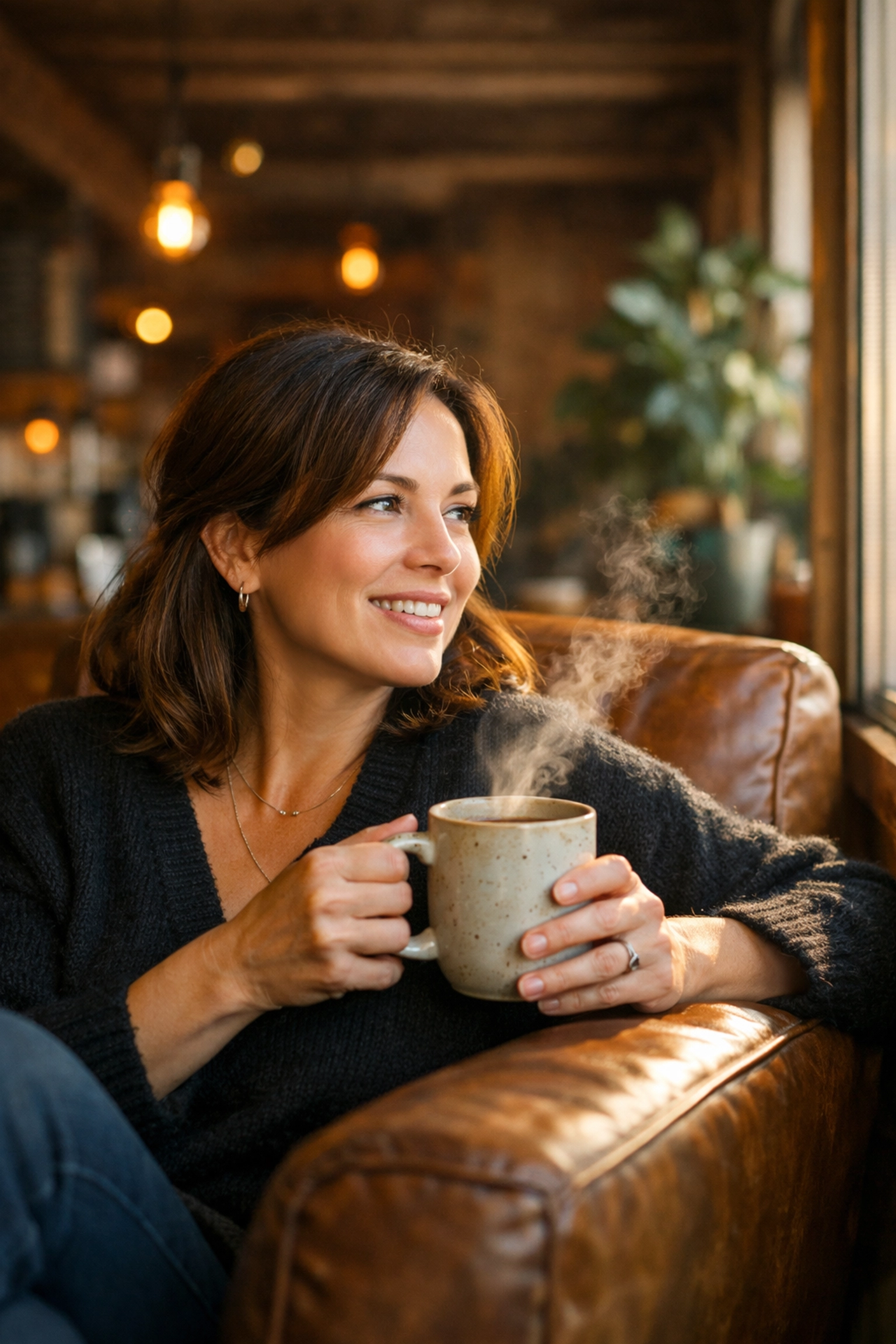
5) Golden Hour… But Don’t Worship It
Yes, golden hour is flattering. But unposed portraits are more about behavior than light. The real play is using natural light in a way that doesn’t interrupt the moment.
Three easy lighting setups that feel effortless:
- Open shade (clean, consistent, minimal squinting)
- Backlight at golden hour (hair glow + dreamy highlights)
- Window light indoors (calm, intimate, documentary feel)
Pro move: underexpose by -0.3 to -0.7 EV in harsh conditions to protect highlights and keep skin tones clean.
If you shoot a lot on iPhone, you can still do this: lock exposure and drag it down slightly. (Modern phones handle shadow recovery surprisingly well.)
6) Add Micro-Movement (The Secret to Natural Hands)
Hands are the #1 giveaway that someone feels posed. The fix isn’t “relax your hands.” It’s giving hands something subtle to do.
Micro-movement ideas:
- Adjust a sleeve, watch, necklace, or jacket collar
- Brush hair behind an ear mid-laugh
- Put hands in pockets then take them out while walking
- Hold a coffee cup, book, or film camera (props that make sense)
Bonus: movement creates tiny changes in posture that read as real: weight shifts, shoulder drops, a natural lean.
This also helps with couples: give them a “keep contact” rule (hands linked, shoulder touch, forehead bump) and let them move naturally.
7) Shoot Sequences (Your Best Frame Is Usually In-Between)
The best unposed portrait is rarely the first click. It’s the inhale before the laugh, the half-smile after the joke lands, the glance when they think you’re done.
How to shoot for that:
- Take 10–20 frames in a row during moments of connection.
- Don’t lower the camera right after you get “a good one.”
- Watch for transitions: looking away → looking back, serious → laughing, still → moving.
Settings that help:
- Continuous AF with eye detect
- Medium burst (you don’t need 40 fps to get real emotion)
- Shutter speed high enough to freeze small gestures
If you’re curious how newer cameras compare (and what’s actually worth buying), the review hub is here: https://photoguides.org/category/reviews
8) Let Conversation Do the Directing
Your voice matters more than your pose list. You’re not just photographing faces: you’re setting emotional temperature.
Conversation starters that work fast:
- “What’s something you’re proud of this year?”
- “What’s your current obsession: music, show, hobby?”
- “Tell me the story behind that tattoo / ring / jacket.”
- For seniors: “What are you excited for after graduation?”
Important: keep them looking at each other or slightly off-camera while talking. The second you demand eye contact, you can feel the performance switch flip.
If you want more practical coaching like this (posing without posing, client experience, session flow), browse the education category: https://photoguides.org/category/educational
9) Build a “Hidden Gem” Shot List in Every City
Unposed portraits thrive when your subject feels like they’re just living their life in a cool place. This is where travel photography tips meet portrait craft.
Create a personal “hidden gems” map with:
- Quiet side streets with good light
- Rooftop parking decks at sunset
- Small parks with open shade
- Markets, bookstores, train stations (if allowed)
- Scenic overlooks that aren’t the main tourist pull
When you travel, search like a local:
- “best photography locations + [city]”
- “quiet photo spots near me”
- “sunset viewpoint + [city]”
- “hidden gems + [neighborhood]”
If you’re planning short trips specifically to shoot, this roundup can help with inspiration: http://photoguides.org/cheap-weekend-getaways
10) Use AI as a Helper: Not a Replacement (2026 Approach)
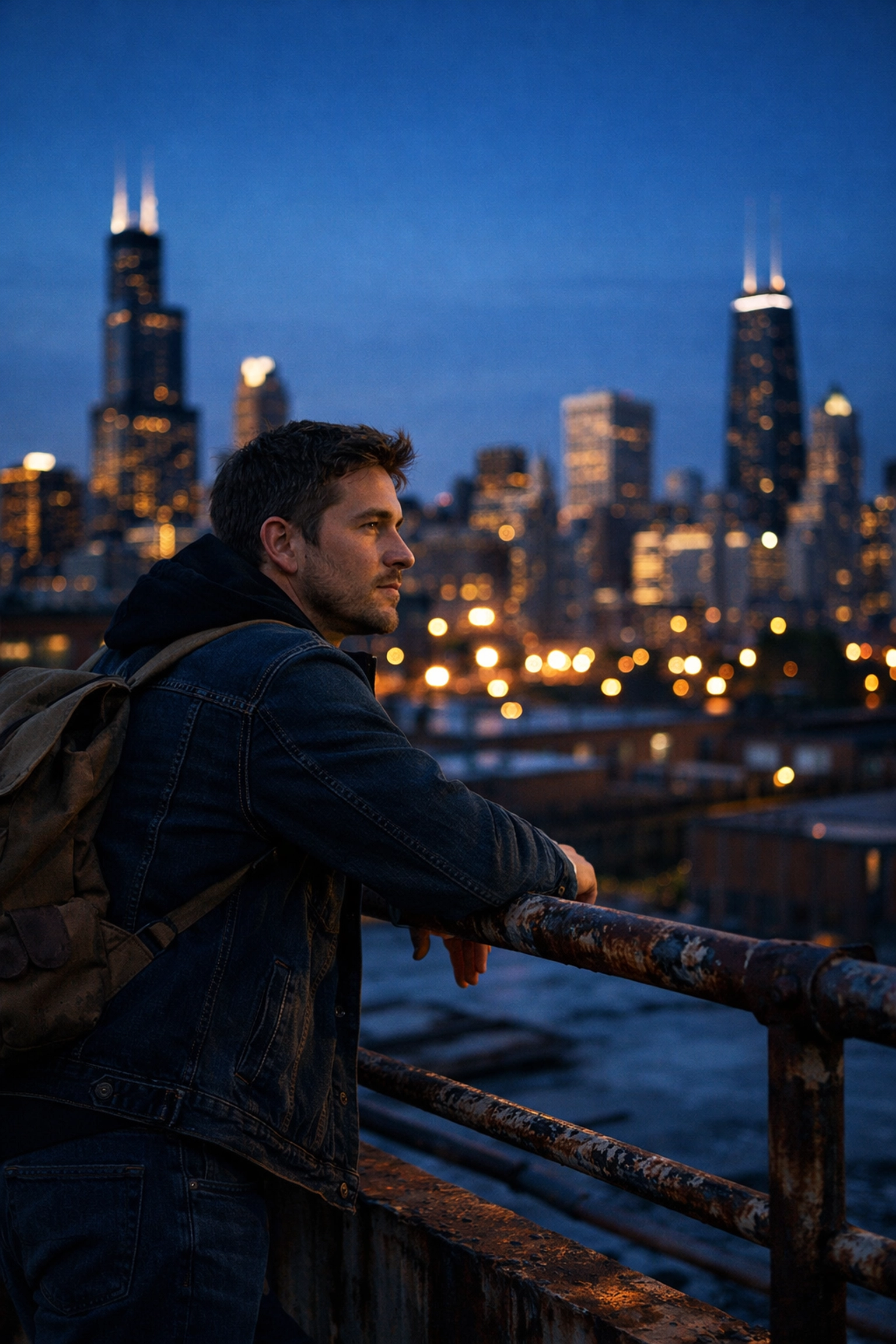
AI photography trends are everywhere in 2026, and the debate is real: authentic vs AI art. For unposed portraits, your best use of AI is behind the scenes: speed, consistency, and cleanup: without changing who someone is.
Smart, ethical AI uses:
- Culling assistance (flagging sharp frames, eyes open)
- Noise reduction for high-ISO indoor moments
- Subtle skin cleanup that doesn’t erase texture
- Color matching across a set for a consistent gallery
What to avoid if you want genuine emotion to stay genuine:
- Face reshaping, heavy beauty filters, or expression swaps
- AI-generated backgrounds that change the story of the location
- Over-smoothing that turns skin into plastic
If you want creative assets that don’t rewrite reality (like overlays for skies or atmosphere), use them like seasoning, not the meal. Photoguides has options here: https://photoguides.org/download/sky-overlays
Quick Gear Guide for Unposed Portraits (2026 Edition)
You don’t need a suitcase of equipment. You need reliability, great autofocus, and a setup that keeps you fast.
Simple, high-end kit:
- One camera body with strong eye AF
- One prime (35mm or 85mm) for emotion and storytelling
- One zoom (24–70 or 70–200) for flexibility
- A small reflector (especially for open shade)
- Optional: a compact LED for indoor lifestyle sessions (dim restaurants, hotel rooms)
If you want a broader gear checklist you can actually follow, start here: https://photoguides.org/essential-photography-gear
And if you’re into community + technique discussions (gear, edits, real-world shooting), you’ll enjoy https://www.shutyouraperture.com
A Mini “Unposed Session Flow” You Can Copy
When you’re trying to capture genuine emotions, flow matters more than individual ideas.
- Easy opener: one simple “camera-ready” frame
- Movement: walk-and-talk, hands linked, slow pace
- Interaction: a prompt that creates laughter or tenderness
- Quiet moment: stop in good light and let them breathe
- Close-up detail: hands, textures, small gestures
- Location switch: one nearby hidden gem to refresh energy
This structure keeps sessions calm and reassuring: clients feel taken care of, and you get the honest moments without forcing anything.
If you want to see more of my photography and how I approach portrait work, you can explore https://www.blog.edinchavez.com and https://www.edinfineart.com (especially helpful if you’re building a style that balances polish with real emotion).
Rapid-Fire Tips (Small Tweaks, Big Payoff)
- Don’t “correct” every posture. Fix what matters (light, background, awkward tangents). Let personality stay messy.
- Watch shoulders and breathing. Tension shows there first.
- Use foregrounds. Shooting through plants, curtains, doorways = instant intimacy.
- Let silence happen. Some of the best expressions show up right after the talking stops.
- Be ready for the in-between. The moment after you say “perfect” is often the real one.
If you’re ready to practice these ideas with a guided experience (and want someone else to handle the details), you can check what we offer here: https://photoguides.org/photography-booking-experience