
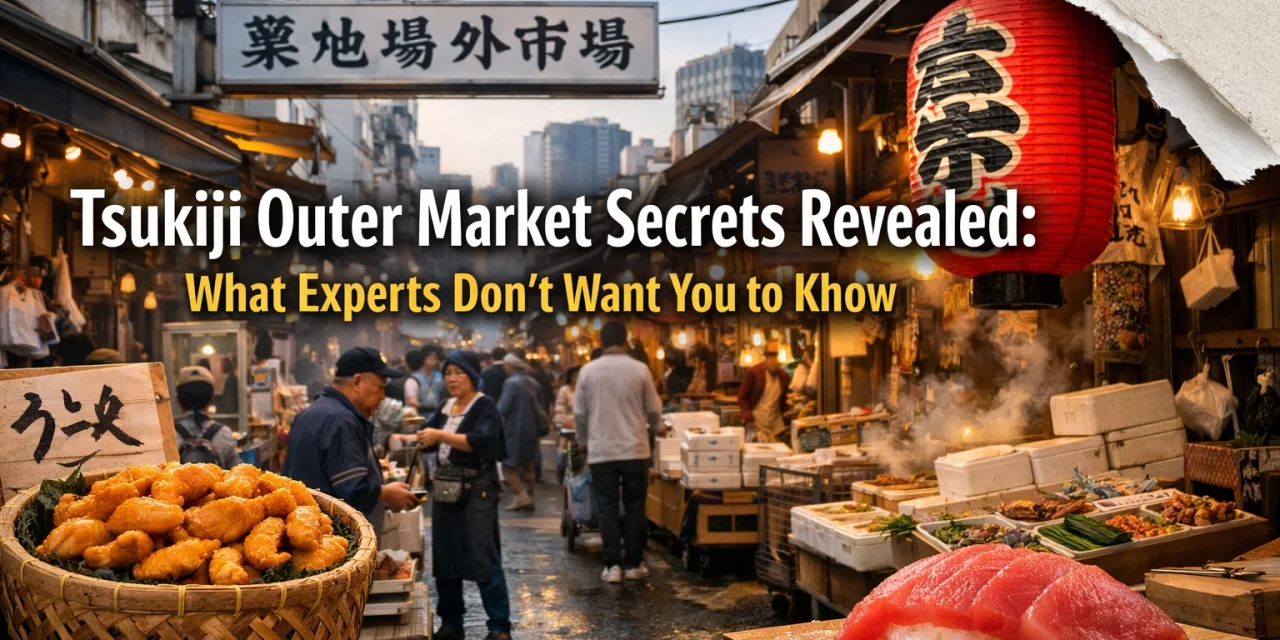
Welcome back to day four of our 14-day deep dive into the culinary heartbeat of Tokyo. If you’ve been following along, we’ve already navigated the neon-lit maid cafes of Akihabara and felt very fancy in Ginza. Today, we’re heading to a place that everyone thinks they know, but very few actually understand: the Tsukiji Outer Market.
There is a massive rumor going around that Tsukiji is "closed." You’ll hear it from misinformed travelers and outdated blog posts. Let’s set the record straight: the wholesale tuna auction: the part where guys in rubber boots yell at frozen fish at 4 AM: moved to Toyosu in 2018. But the Outer Market? The soul of the operation? It’s alive, it’s vibrant, and it’s still the best place in the world to burn a hole in your pocket for high-quality seafood.
However, if you just walk down the main street and eat at the first place with a colorful sign, you’re doing it wrong. I’m Edin Chavez, and at Photoguides, we’re all about finding the angles others miss. Whether it’s a perfectly framed shot or the perfect piece of fatty tuna, I’ve got you covered.
The Identity Crisis: Tsukiji vs. Toyosu
Before we get into the "secrets," you need to know where you are. Toyosu is a modern, sterile, (dare I say?) slightly boring facility where the business happens. Tsukiji is the historical maze of narrow alleys, steam-filled stalls, and the smell of toasted seaweed that has defined Tokyo for decades.
You don't need to wake up at 3 AM anymore. In fact, if you show up at 3 AM now, you’ll just be hanging out with a few lonely delivery drivers. The sweet spot is around 8 AM. This is when the vendors are fully set up but the massive tour groups haven't quite reached peak saturation.
If you want to navigate this maze like a local without the stress of getting lost, I highly recommend booking a food tour through Viator. Having a guide who knows the vendors by name is the difference between eating "tourist sushi" and the meal of your life.
Secret #1: The 3rd Floor Oasis
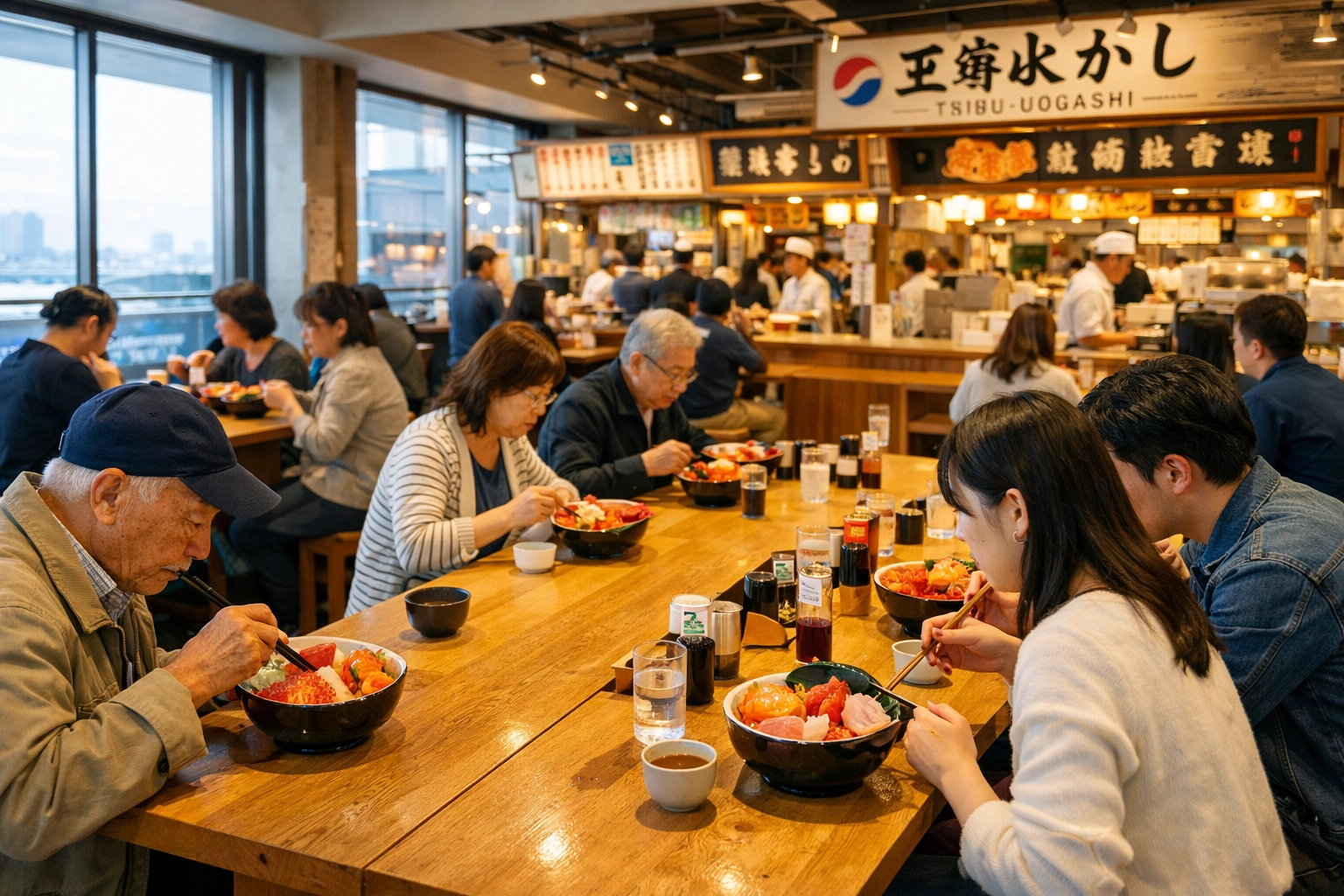
Here is something the average visitor walks right past. While everyone is elbowing each other in the street-level alleys, there is a literal "hidden" food court on the third floor of one of the main market buildings.
It’s called Tsukiji Uogashi. It features six legendary stalls that the locals frequent. Because it’s elevated and slightly tucked away, the atmosphere is entirely different. You can grab high-end chirashi bowls and sit down like a civilized human being. It’s the perfect place to regroup if the crowds downstairs start to feel like a mosh pit.
Secret #2: The Old Man & His Fish
Tucked away in a side alley that looks like it leads to a storage closet is a tiny sushi shop known locally as "The Old Man & His Fish." This isn't just another sushi joint; it’s a masterclass in culinary fusion.
The owner actually trained in Paris and speaks great English. He sources his fish at 4 AM every single day and opens his 10-seat counter at 7 AM. Because of his French training, he understands flavors in a way that’s slightly more adventurous than the traditionalists. If you go back a second time, don't be surprised if he remembers exactly what you liked. It’s that kind of place.
Finding these spots is easier when you have the right gear to document it. If you're wondering how to capture the steam rising off a bowl of miso or the texture of fresh uni, check out our guide on essential photography gear and my latest camera reviews for 2024.
The "Big Three" Must-Eats
You can’t leave Tsukiji without hitting these three heavy hitters.
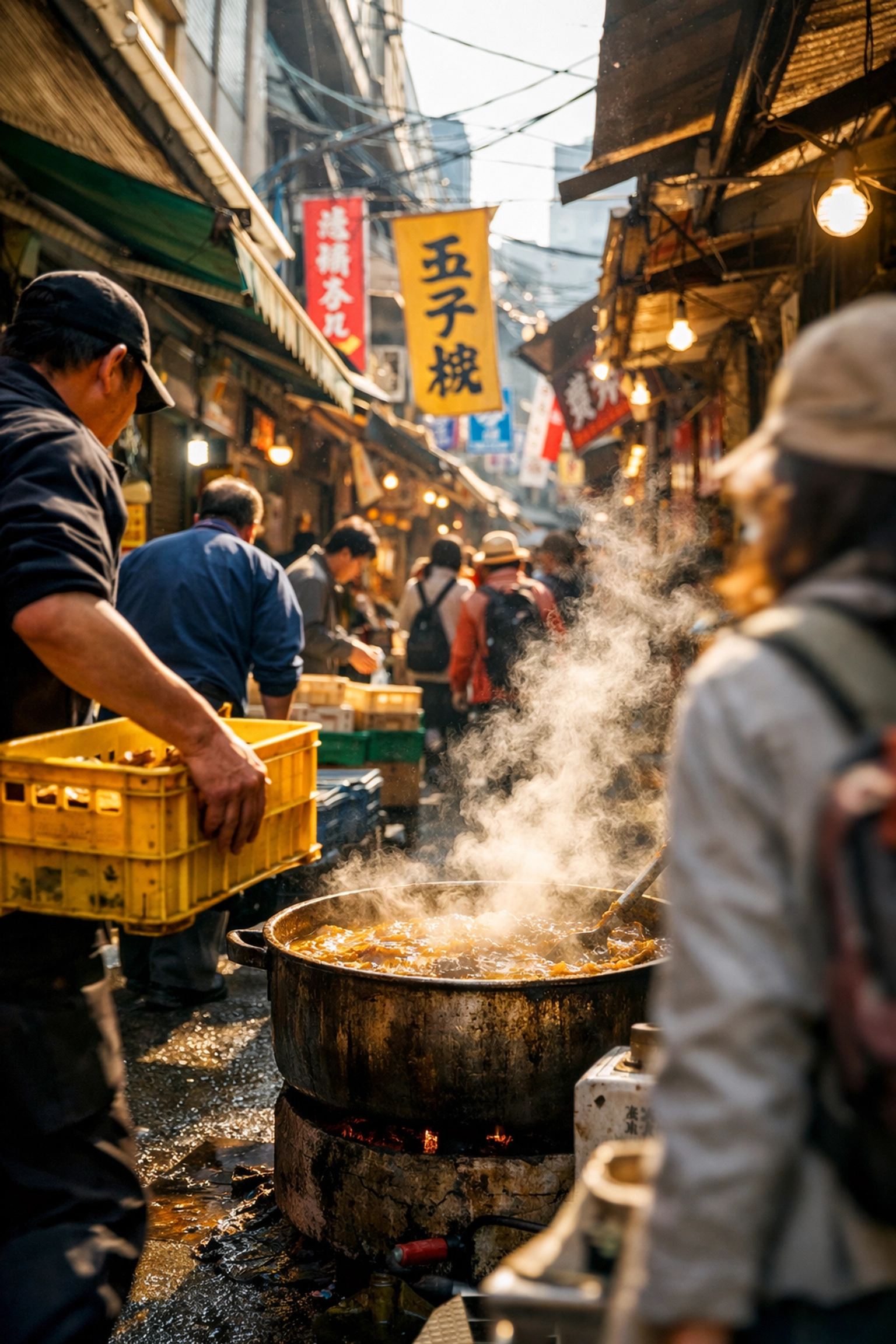
- Kitsuneya (The Organ Stew): You’ll see the line before you see the shop. They serve a miso-based organ stew (horumon-don) that has been simmering in "eternal pans" for decades. It looks dark, rich, and maybe a little intimidating, but it is pure umami heaven.
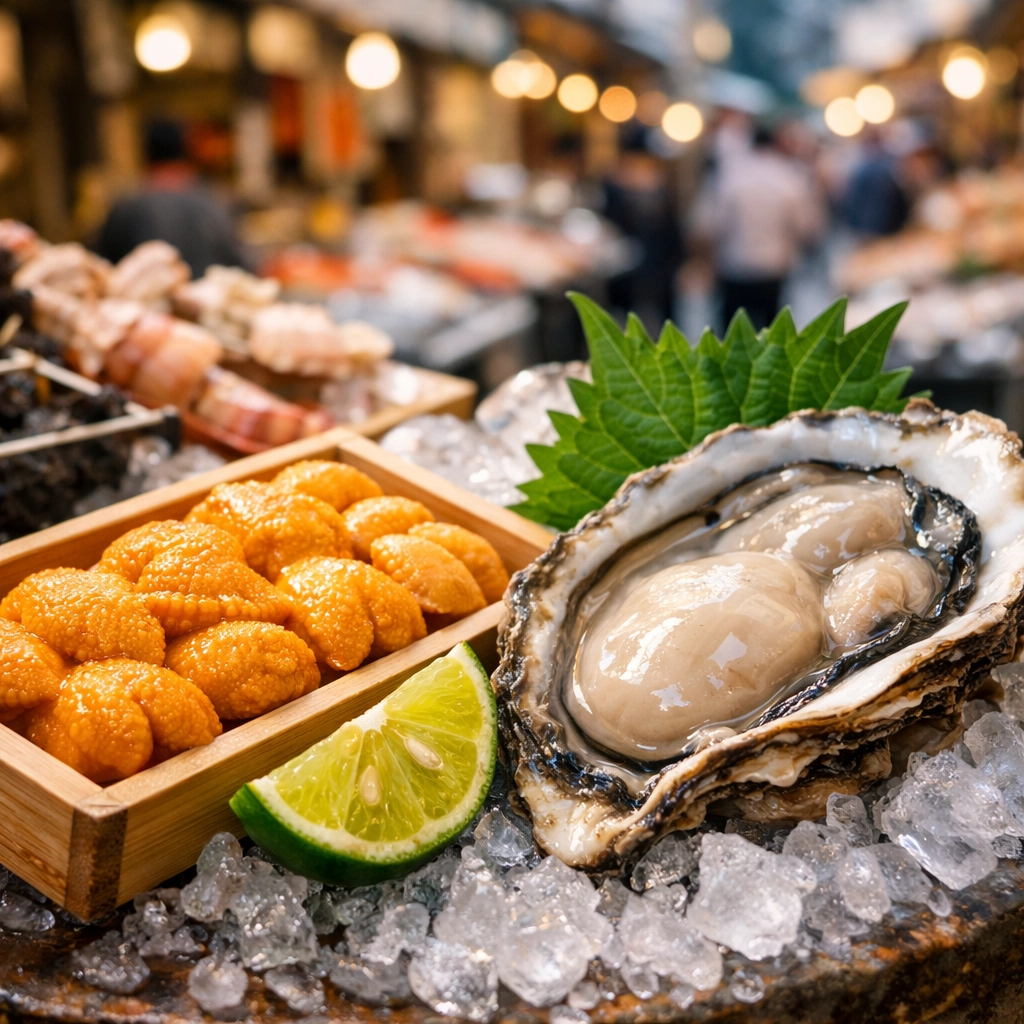
- The Uni Shops: Look for the dedicated sea urchin vendors. For about 500 JPY, you can get a single spoonful of uni that tastes like the ocean’s butter. If you want to see what high-end art looks like before it’s eaten, take a look at my fine art photography for some inspiration on composition.
- Giant Oysters: Head to Tsukiji Saito Fisheries. They serve oysters the size of a small shoe. They’ll shuck them right in front of you, add a dash of ponzu, and you’re good to go.
Photographing the Chaos
As a photographer, Tsukiji is a dream and a nightmare. The lighting is "dynamic" (which is code for "terrible"), with harsh sun in the alleys and dim fluorescent lights in the stalls.
If you’re serious about getting the shot, I suggest a fast prime lens: 35mm or 50mm. You want to be able to blur out the distracted tourists in the background and focus on the knife skills of the vendors. Don't forget to check out Shut Your Aperture for more community tips on street photography in crowded places like Tokyo.
Also, a bit of market etiquette: always ask before you snap a photo of a vendor. A simple nod and a "Sumimasen?" (Excuse me?) goes a long way. Most are happy to pose if you aren't blocking their customers. For more on how to handle professional-level shoots in new cities, look into our photography booking experience.
Secret #3: Professional Steel
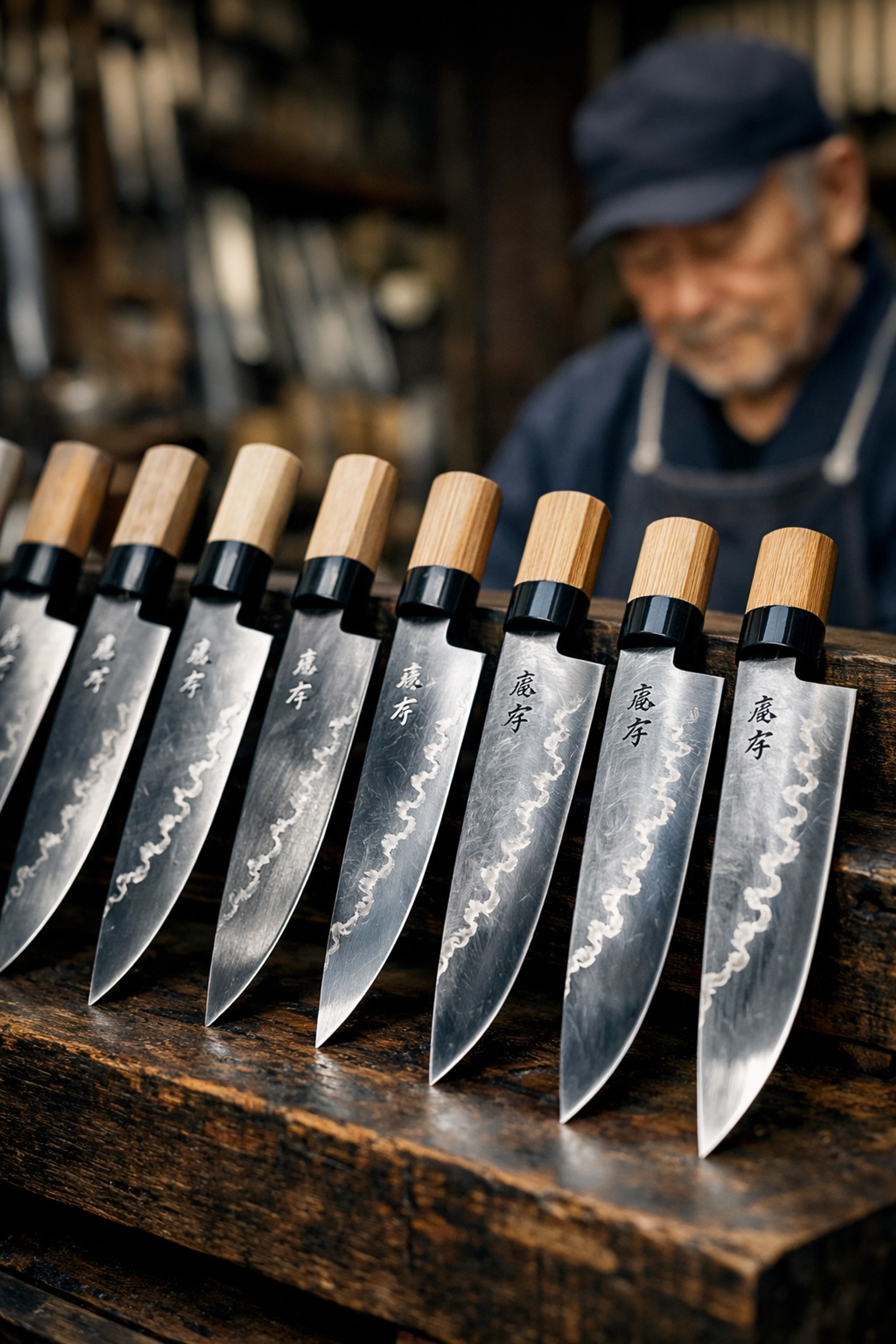
Tsukiji isn't just about things you can eat; it’s about things you can use to make food. The market is home to some of the finest knife shops in the world. Shops like Masamoto and Azuma Minamoto no Masahisa have been around for generations.
These aren't your typical kitchen knives. These are hand-forged pieces of Tokyo craftsmanship. Even if you aren't a Michelin-star chef, holding one of these blades is an experience. Just remember, if you buy one, you can't carry it on the plane. Ask the shop about shipping: they do it all the time.
Why a Guided Tour is Your Best Friend
Look, I love exploring solo. I’ve traveled the world capturing everything from National Parks to hidden speakeasies. But Tsukiji is dense. There are over 65 stalls in the main area alone, and the best stuff is often hidden behind a plastic curtain or down a staircase you didn't know existed.
A food tour takes the guesswork out of it. You won't spend forty minutes standing in the wrong line. You’ll get the "expert" experience without the "expert" price tag. Again, check out the food tours on Viator to make sure your morning in Tsukiji is legendary rather than just "okay."
Pro Tips for the Savvy Traveler
- Cash is King: While Japan is catching up, many of the best Tsukiji stalls are cash-only. Bring plenty of YEN.
- Wet Wipes are Gold: You’re going to be eating with your hands. You’re going to get soy sauce on your thumb. Be prepared.
- No "Stroll-Eating": Traditionally, it’s considered slightly rude to walk while eating in Japan. Many stalls have a small standing area. Use it. It’s also better for your digestion (probably).
- Wear Closed-Toe Shoes: The ground is often wet, and there are carts moving everywhere. Your flip-flops will not survive the Tsukiji hustle.
Wrapping Up Day 4
Tsukiji is a sensory overload in the best possible way. It’s loud, it’s crowded, it’s expensive, and it’s worth every single second. Whether you’re there for the legendary organ stew or to find that perfect 35mm street shot, the Outer Market remains the soul of Tokyo’s food scene.
Stay tuned for Day 5, where we’re heading to Harajuku. We’re swapping the raw fish for rainbow-colored street food and aesthetic cafes that are basically designed for Instagram.
If you’re planning your own trip and want to make sure your photos look as good as the food tastes, don't forget to download our sky overlays to fix those grey Tokyo afternoons in post-processing.
See you in the next alley!













