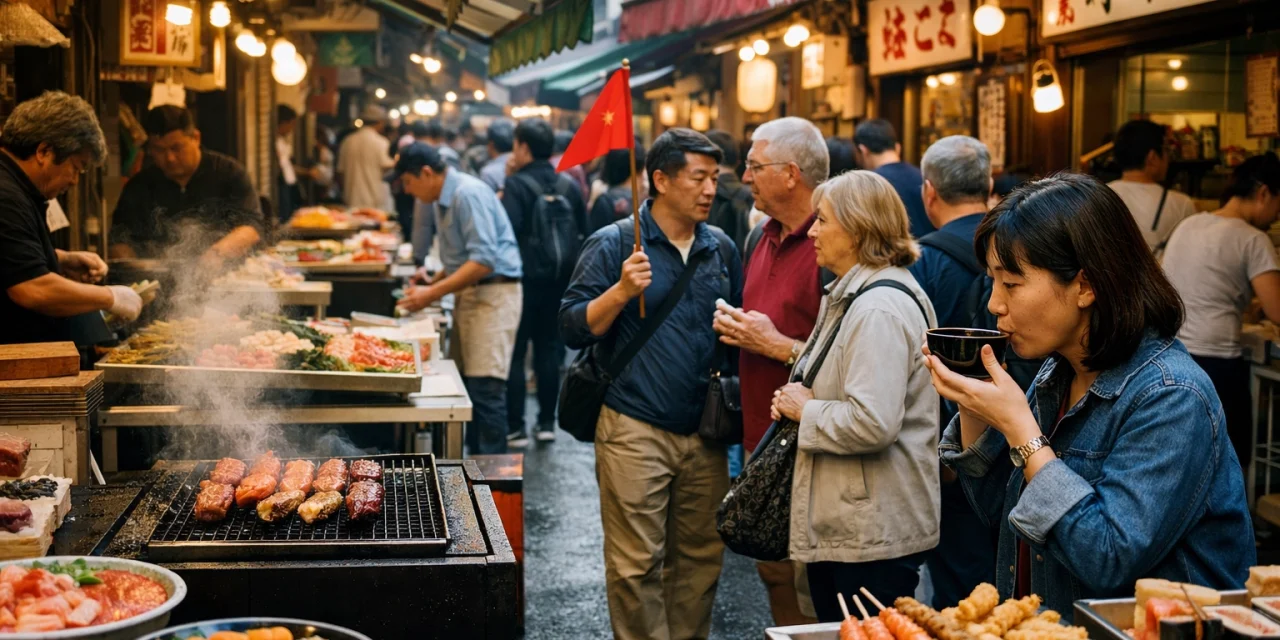
Listen, I get it. You’ve seen the TikToks and the high-speed reels of people dodging motorized turret trucks and devouring giant, torch-seared scallops. You think you’re ready to conquer Tsukiji. But here is the reality: most people do Tsukiji "wrong." They show up at the wrong time, stand in the wrong lines, and, worst of all, commit the ultimate Japanese faux pas that gets them "the look" from the locals.
Welcome to day four of our 14-day series exploring the culinary soul of Tokyo. We’ve hit the themed cafes in Akihabara and the neon-soaked street food of Harajuku, but today, we are going to the OG. The legendary. The slightly chaotic but always delicious Tsukiji Outer Market.
If you’re worried about navigating the narrow alleys or missing out on the best tuna of your life, take a deep breath. At Photoguides, we’re all about making sure you get the shot and the experience without the stress. Whether you’re here for the food or to sharpen your skills for a photography booking experience, I’m about to spill the secrets that the self-proclaimed "experts" usually keep to themselves.
The "9 AM Secret" That Changes Everything
If you search for advice on Tsukiji, half the blogs will tell you to get there at 5:00 AM. Unless you are a professional chef buying three tons of bluefin tuna for your Michelin-starred restaurant, I am going to tell you a secret: Stay in bed for two more hours.
The Tsukiji Outer Market is a working environment. Between 5:00 AM and 9:00 AM, the narrow lanes are a battlefield of professional buyers, wholesalers, and those iconic "Turret Trucks" that move for no one. If you’re a tourist trying to snap a selfie in front of a crate of uni at 7:00 AM, you aren't a guest; you’re an obstacle.
The real pros know that 9:00 AM is the magic hour. This is when the serious commerce winds down and the market shifts its focus to the hungry masses. The vendors are more relaxed, the "locals only" vibes soften, and you won’t have to worry about getting run over by a delivery cart. Plus, you’ll actually have the brainpower to appreciate the food instead of just surviving the crowd.
The Golden Rule: Don’t "Walk and Eat"
This is the one that trips up everyone. In the US or Europe, walking while eating a slice of pizza is a lifestyle. In Japan, and especially in Tsukiji, it’s a major no-no.
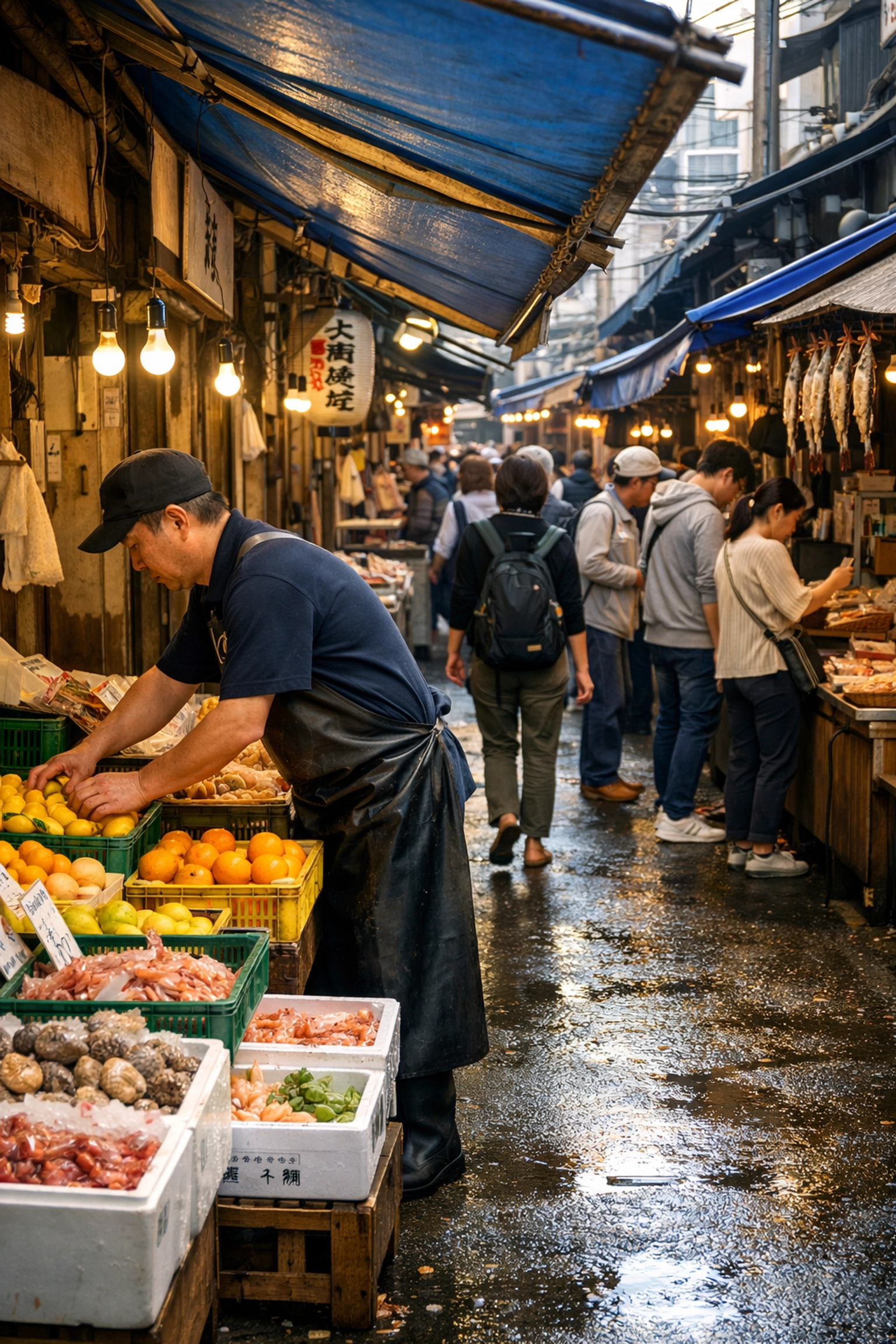
The market rules are very clear: Eat where you buy. Most stalls have a small standing area or a few stools. If they don't, you find a designated eating zone. Wandering through a crowded alley with a dripping stick of grilled wagyu is a recipe for disaster: both for your shirt and for the social harmony of the market.
If you want to experience the market like a true insider without the fear of offending anyone, I highly recommend booking a food tour through Viator. Having a local guide means you’ll always know exactly where to stand, what to say, and: most importantly: which stalls are actually worth your yen and which ones are just tourist traps with pretty lights.
What to Actually Eat: Beyond the Basic Sushi
Everyone goes for the sushi bowls (Kaisendon). And don't get me wrong, they are incredible. But Tsukiji is about so much more than raw fish. If you want a crawl that would make a food critic weep with joy, hit these spots:
1. The Tamagoyaki (Japanese Omelet)
You’ll see several shops selling these yellow rectangles on a stick for about 100 to 150 yen. It’s sweet, savory, and fluffy. It’s the perfect palate cleanser between savory seafood bites. Watch the chefs flip them with giant rectangular pans; it’s a feat of engineering and culinary skill that’s worth a photo or two.
2. Grilled Scallops with Uni
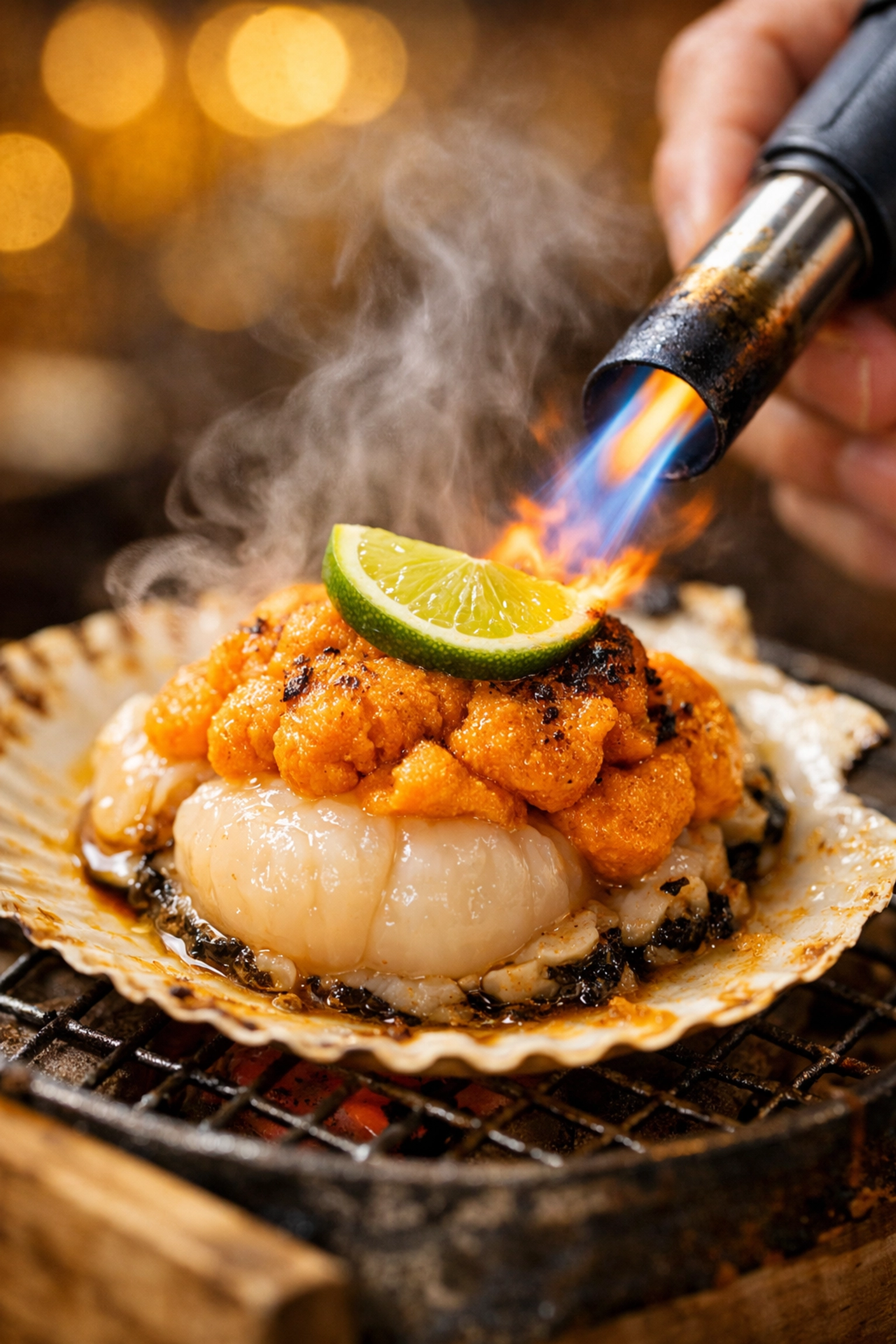
This is the "luxury" bite. Huge scallops grilled in their shells with a dollop of sea urchin on top, often finished with a blowtorch. It’s buttery, salty, and tastes like the ocean gave you a hug.
3. Onigiri (Rice Balls)
Look for the shops with the massive lines of locals. A simple salmon or pickled plum onigiri at Tsukiji hits different because the rice quality is top-tier and the seaweed is crispier than anything you’ll find in a convenience store.
4. Fresh Oysters
If you see a vendor shucking oysters the size of your hand, stop. Don’t think. Just buy. Squeeze a bit of lemon or a dash of ponzu, and you’re in heaven.
Photography Tips for the Market
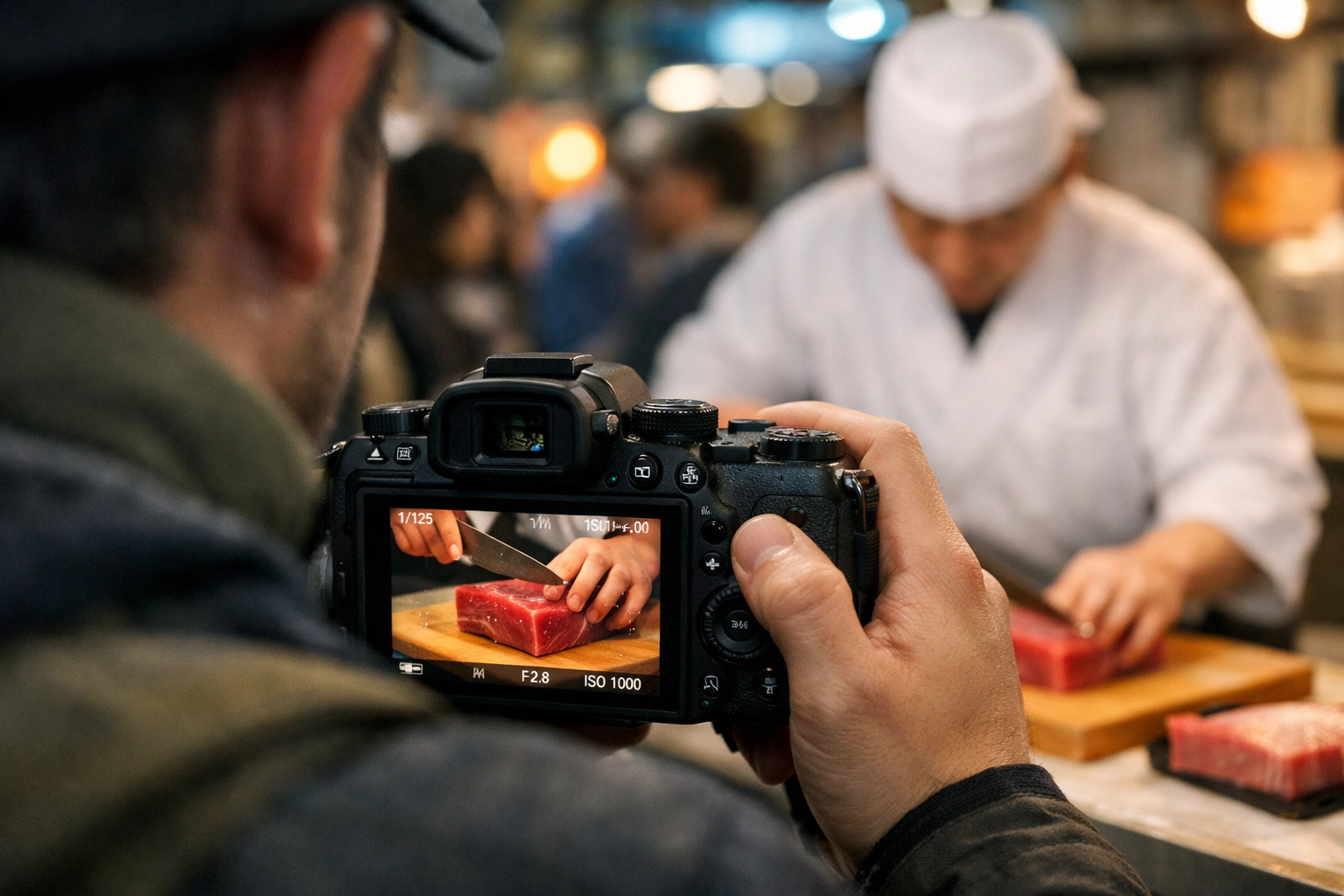
As you know, here at Photoguides, we can’t talk about a location without talking about the gear. Tsukiji is a challenging place to shoot. It’s dark in the alleys, bright in the open spots, and very, very crowded.
- Go Wide: A 24mm or 35mm prime lens is your best friend here. It allows you to capture the scale of the market without needing to back up (because there is nowhere to back up into). Check out our camera reviews 2024 to see which compact setups we’re currently loving for travel.
- Ask First: If you’re taking a close-up of a chef’s hands or a specific product, a quick nod and a "Sumimasen" (Excuse me) goes a long way.
- Fast Shutter Speeds: The market moves fast. To freeze the action of the knife-work or the splashing water, keep that shutter speed high.
If you’re just starting out and need to brush up on the basics before your trip, our educational category has everything you need to move from "auto mode" to "pro mode."
The "Plat Tsukiji" Hack
If you get overwhelmed: and you will: look for Plat Tsukiji. This is the official information center. They have maps, lockers to store your bags (don’t bring suitcases into the market alleys!), and most importantly, clean restrooms and a seating area. It’s the "safety zone" where you can regroup and plan your next move.
Why You Shouldn't Skip the "Non-Food" Stalls
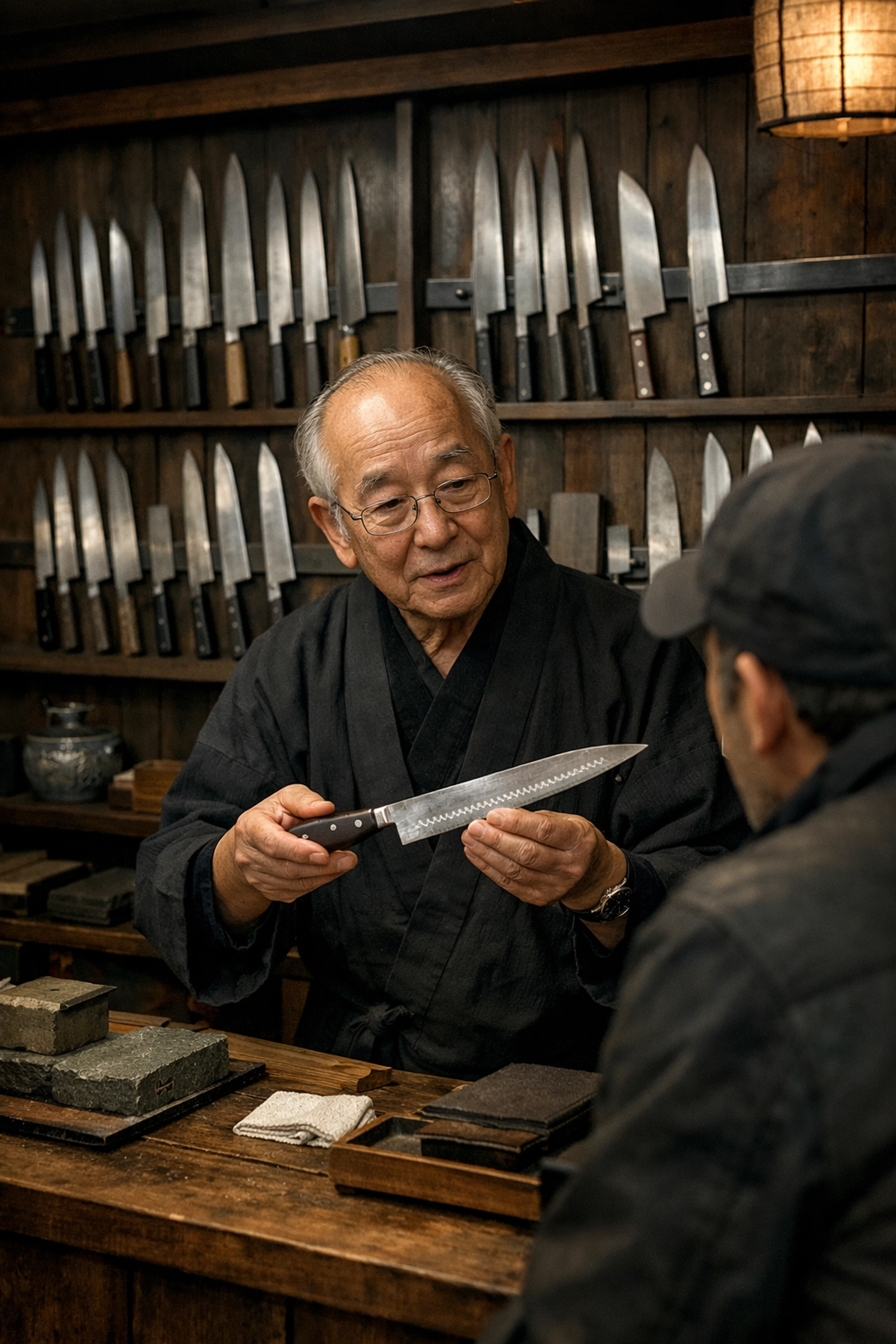
While your stomach is the primary driver, your kitchen at home will thank you if you look at the hardware. Tsukiji is home to some of the finest knife shops in the world. Buying a Japanese chef's knife here is a rite of passage. These aren't just tools; they are hand-forged pieces of art.
You’ll also find incredible ceramics, high-grade matcha, and dried goods like bonito flakes that will make your home cooking taste 10x better. It’s also a great place to pick up unique gifts that aren't the typical "I heart Tokyo" magnets.
Making the Most of Your Morning
If you’re feeling a bit intimidated by the sheer scale of the Outer Market, don't sweat it. The beauty of Tokyo is that even if you get lost, you’re likely to stumble upon something delicious. But if you want to skip the trial and error, booking a food tour through Viator is the way to go. You get the history, the etiquette, and the best bites all in one go.
Tsukiji is a sensory overload in the best way possible. It smells like sea salt and charcoal; it sounds like shouting vendors and clinking dishes; and it tastes like the freshest thing you’ve ever eaten.
Whether you’re a seasoned traveler who has seen everything from Miami's hidden speakeasies to breweries in Williamsburg, Tsukiji stands in a league of its own. Just remember: arrive at 9:00 AM, don’t walk while you chew, and keep your camera ready.
Stay tuned for day five of our Tokyo food series, where we’re heading to Ginza to see if high-end sushi is actually worth the $300 price tag (Spoiler: it usually is, but we’ll tell you how to find the deals).
Until then, happy shooting and even happier eating!