

Travel photography isn’t just about capturing moments; it’s about telling a story through your lens. In this guide, you’ll discover vibrant techniques that elevate your photography skills, ensuring your travel memories are as stunning as the places you explore. From leveraging natural light to understanding composition, these tips will empower you to create captivating images that truly reflect your adventures. Get ready to unlock the artistry behind travel photography and make your photos stand out like never before!
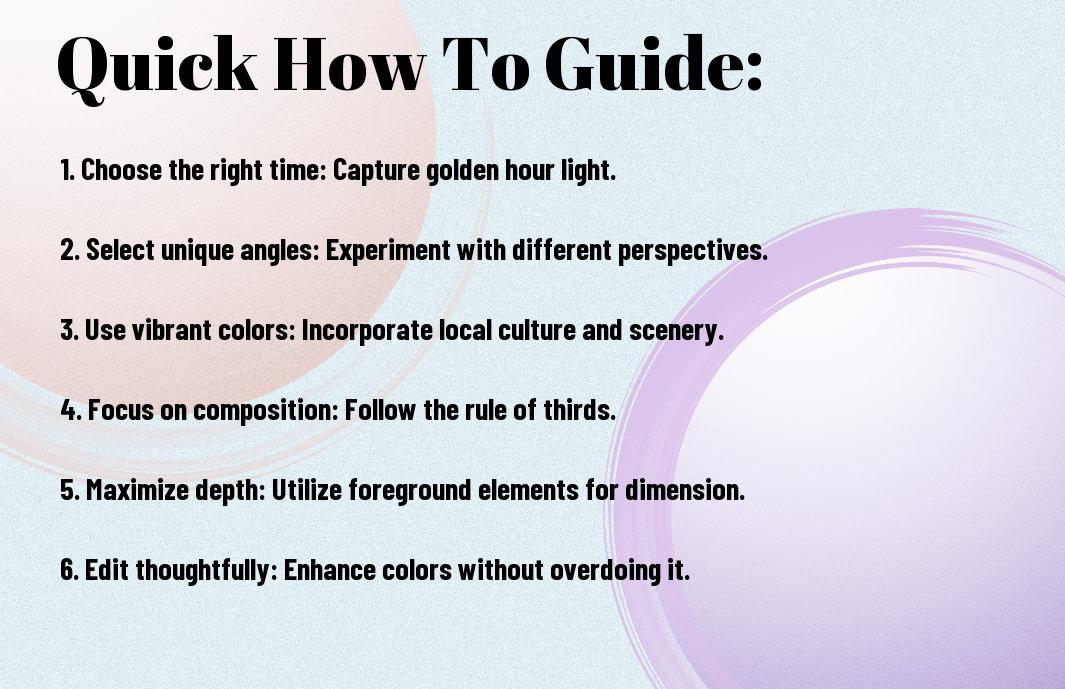

Essential Photography Equipment
As you commence on your travel photography journey, having the right equipment can significantly enhance your ability to capture stunning images. Investing in a reliable camera, lenses, and vital accessories will help you adapt to various shooting conditions and showcase your unique perspective of the world. Whether you’re exploring bustling cities or serene landscapes, equipping yourself with the best tools will ensure you seize the beauty of each moment.
Camera Selection and Accessories
With so many options available, selecting the perfect camera requires considering your photography style and needs. A lightweight mirrorless camera is ideal for travel, offering portability without sacrificing image quality. Don’t forget to pack vital accessories such as extra batteries, memory cards, and a sturdy tripod to ensure you’re ready for any adventure.
Lens Options for Travel Photography
While choosing the right lens can make a significant difference in your travel photography, you should focus on versatility to cover various scenarios. A good travel lens should strike a balance between wide-angle and zoom capabilities, enabling you to capture landscapes as well as close-up details without changing lenses frequently.
A standard zoom lens, such as a 24-70mm, is often favored by travelers for its adaptability, allowing you to shoot everything from expansive vistas to portrait shots. Investing in a wide-angle lens can elevate your landscape photography, while a prime lens with a wide aperture can help in low-light environments. By selecting the right lenses, you give yourself the creative options needed to document your adventures beautifully.

Mastering Light and Composition
If you want to elevate your travel photography, mastering light and composition is imperative. Understanding how natural light interacts with your subjects can dramatically enhance the vibrancy and emotion of your images. Pay attention to the time of day and angle of light to create stunning visual narratives that draw viewers in and make them feel part of the adventure.
Golden Hour and Blue Hour Techniques
Little do many travelers know that the magic hours just after sunrise and before sunset offer some of the most breathtaking light for photography. During these periods, the soft, warm hues of the golden hour can bathe landscapes in rich tones, while the blue hour, occurring just before sunrise and after sunset, presents cooler, moodier palettes. Such contrasts can add incredible depth to your travel photos.
Rule of Thirds and Framing Tips
Light and composition work hand-in-hand to create compelling photographs. By employing the rule of thirds, you can place your subject along the intersecting lines of a grid, appealing to the viewer’s eye. Framing your shots with natural elements or using leading lines can add interest and depth, ensuring your images stand out. Here are some tips:
- Activate the grid feature on your camera or smartphone to visualize the rule of thirds.
- Use trees, archways, or paths to frame your subject and guide the viewer’s eye.
- Experiment with varying perspectives to enhance your compositions.
Recognizing these techniques will help you create more engaging photographs that resonate with your audience.
Techniques like the rule of thirds are not just imperative—they’re transformative. When composing your travel shots, visualize a grid across your viewfinder. Position your primary subject along the intersections or lines to create balance and interest. Framing enhances your story, whether achieved through using natural elements or specific angles to highlight your primary subject. This approach provides structure while allowing you to capture the essence of your travels. By implementing these techniques in your photography, you can elevate your images significantly, making them worth sharing with friends and family.
- Practice placing your subject off-center to create dynamic compositions.
- Vary your framing by utilizing foreground elements to add depth.
- Explore different focal lengths to see how it affects your composition.
Recognizing the impact of these strategies in your photography will be fundamental in developing your unique style.

Capturing Local Culture
Your travel photography can become more vibrant and meaningful by immersing yourself in local culture. Focus on colorful markets, traditional festivals, and everyday life to tell a story that resonates with viewers. Engage with your subjects and show genuine interest in their customs, which will allow you to capture authentic moments that reflect the spirit of the place. The key is to be observant and respectful, letting the beauty of local culture inspire your compositions.
Street Photography Etiquette
On the streets, it’s important to be aware of your surroundings and respect people’s privacy. Always ask for permission before taking a close-up shot of someone, especially in more intimate settings. A friendly demeanor and a smile can go a long way in building rapport. If someone declines your request, gracefully move on without pressuring them. By following these guidelines, you can create stunning images while fostering a sense of connection with the local community.
Storytelling Through Portraiture
Even the simplest portrait can narrate a compelling tale about the people you meet during your travels. By focusing on emotions, expressions, and settings, you can reveal deeper insights into local customs and lifestyles. Explore different angles, lighting, and compositions to enhance the visual narrative, drawing viewers into your subject’s world. Engage with your subjects, perhaps asking them about their stories or traditions, as this not only enriches your portrait but builds a meaningful connection.
Photography is more than just capturing a face; it’s about transmuting personal stories into visual art. When you approach portraiture with an open heart, you enable your subjects to share their narrative, creating images that resonate on an emotional level. Choose backgrounds that reflect their environment or daily activities, allowing context to enhance their personality. This approach adds layers to your portraits, making them not just pictures but vibrant depictions of real life and culture.
Landscape Photography Techniques
Despite the simplicity of nature’s beauty, capturing stunning landscape photographs requires thoughtful techniques. To elevate your images, pay attention to composition, lighting, and the use of various photographic tools. By understanding the elements that contribute to great landscape photography, you can create images that resonate with viewers and effectively convey the essence of the scene.
Creating Depth and Scale
Even a small shift in perspective can transform your landscape shots by introducing depth and scale. Use foreground elements, such as rocks or flowers, to lead the viewer’s eye into the frame, creating a sense of dimension. Incorporate layers of interest, including midground and background features, to enhance the overall composition and provide context to your subject.
Long Exposure Methods for Moving Elements
The art of long exposure photography allows you to capture the movement of clouds, water, and other elements, resulting in striking images that convey motion. By using a tripod and slower shutter speeds, you can create soft, ethereal effects in your landscapes that invoke a sense of tranquility and time passing.
A well-executed long exposure can transform your landscapes dramatically. When photographing moving elements like waterfalls or ocean waves, opt for shutter speeds ranging from a few seconds to several minutes. Use neutral density filters to reduce the light entering the lens, allowing for extended exposure times without overexposing your shot. Experiment with different durations to find the perfect balance between motion blur and detail capture, and you’ll produce breathtaking, dynamic images.
Post-Processing Workflow
After capturing your stunning travel photographs, the magic continues in post-processing. This is where you can enhance colors, adjust exposure, and bring out the best in your images. Establishing a structured workflow can save you time and produce consistently polished results, allowing your vibrant visuals to shine even brighter. Utilize software that fits your skill level and project needs to streamline the process and elevate your travel images to new heights.
Color Grading for Vibrant Travel Images
If you want your travel images to pop, color grading can be your best friend. Play with saturation, contrast, and hue adjustments to evoke feelings or tell a story that resonates with viewers. By tailoring colors to match the emotions of your experience, you’ll create impactful imagery that draws the eye and captures the essence of your travels.
Batch Editing for Consistency
Images taken during the same trip can often benefit from a cohesive look through batch editing. This technique allows you to apply similar adjustments to multiple photos simultaneously, ensuring they share a harmonious tone and style. It not only saves time but also enhances your collection by providing a seamless flow in your storytelling.
Another advantage of batch editing is the ability to establish a signature style that reflects your unique vision as a travel photographer. By applying consistent adjustments to exposure, contrast, and color balance across your images, you create an engaging narrative that feels cohesive when viewed as a series. Use preset options in editing software to uphold your stylistic choices while maintaining efficiency, making the most of your creative time.
Technical Factors for Challenging Environments
To excel in travel photography, adapt to challenging environments by understanding key technical factors. Incorporate these elements into your planning:
- Understand your camera’s settings for diverse conditions.
- Invest in lenses suitable for different environments.
- Practice shooting in varying light and weather conditions.
Any knowledge gained will empower you to overcome obstacles during your adventures.
Low Light and Night Photography Tips
For capturing stunning images in low light or at night, use specific strategies to enhance your results:
- Use a tripod to stabilize your camera.
- Adjust your ISO settings to optimize sensitivity.
- Utilize longer exposure times for better light gathering.
Assume that patience and practice are key to mastering night photography.
Weather Considerations and Protection
With unpredictable weather, you need to prepare your gear adequately. Use weather-sealed equipment and protective covers to safeguard against rain or dust, and consider packing silica gel packs to absorb moisture. Keep a lens cloth handy for quick clean-ups, as this can make a significant difference in image clarity during adverse conditions.
Protection is imperative in rapidly changing environments. Utilize camera bags designed for moisture resistance and consider lens filters that can shield your glass from scratches or water droplets. Planning for the weather not only preserves your equipment but enhances your ability to capture captivating moments, no matter the conditions you face.
Conclusion
Now that you are equipped with these vibrant how-to techniques for stunning travel photography, you can elevate your shooting skills and capture breathtaking images on your journeys. By focusing on composition, lighting, and storytelling, you will create photographs that not only showcase the beauty of your destinations but also convey your unique perspective. Embrace these techniques, experiment with your style, and allow your travel experiences to shine through your lens, ensuring your memories last a lifetime.













