Remember the "good old days": back in 2022 or 2023: when a weekend wedding shoot meant a following week of absolute solitude in a dark room, hunched over a glowing monitor, caffeinated to the gills, and staring at 4,000 nearly identical raw files?
If you’re still doing that in 2026, I have some news for you: your peers are already at the beach, or better yet, they’re out shooting their next high-ticket commission while their computers do the heavy lifting.
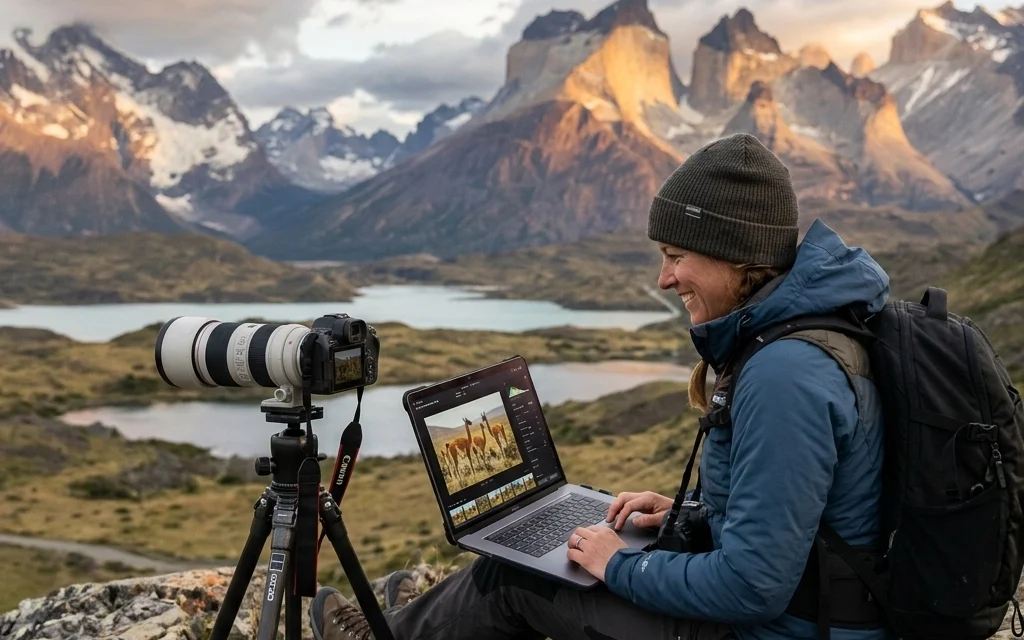
The conversation around AI in photography has shifted. It’s no longer a debate about whether "AI art" is real photography (we’ve mostly settled that: it’s a different beast entirely). Today, the buzz is all about workflow. In 2026, AI isn't replacing the photographer; it’s replacing the "digital darkroom grunt work" that used to lead to burnout.
At Photoguides, we’ve watched this evolution closely. Whether you're a seasoned pro or just starting out with your first essential photography gear, understanding how to leverage these tools is the difference between a thriving business and a hobby that feels like a chore.
The Death of the "Post-Processing Slump"
The biggest bottleneck in photography has always been the gap between the shutter click and the final delivery. In the past, this was where dreams went to die. We’ve all had those folders of "to-be-edited" photos that sit on hard drives for months.
In 2026, that "slump" is officially dead. AI tools have matured into sophisticated assistants that understand context, lighting, and, most importantly, your personal style.
Intelligent Culling: Your New Best Friend
Culling used to be the most soul-crushing part of the job. Choosing the best smile out of a burst of 10 shots? Checking for closed eyes in a group of twenty people? That’s a task computers are actually better at than humans.
Tools like Aftershoot and FilterPixel have evolved to a point where they don’t just look for "sharpness": they look for emotion. They can identify the "hero shots" by analyzing composition and facial expressions across thousands of images in minutes. What used to take four hours now takes four minutes.

The "Ghost" Editor: Consistency at Scale
The most significant breakthrough we've seen this year is the rise of personalized AI editing profiles. Services like Imagen AI have revolutionized the game by learning from your past edits.
Instead of applying a generic "Vibrant" or "Moody" preset that you have to tweak anyway, these tools analyze how you handled white balance, exposure, and color grading in your previous 5,000 shots. When you upload a new session, the AI applies your specific look.
This is "consistency at scale." Whether you’re shooting 100 photos or 10,000, the AI ensures they all look like they came from the same artist. This is a game-changer for high-volume photographers, from those doing wedding photography insights to corporate headshot pros.
For those of us who love the fine art side of things, like the work you’ll see over at Edin Fine Art, AI acts as a foundation. It gets the image 90% of the way there, leaving the final 10%: the soul and the creative flourish: to the human artist.
Retouching: From Hours to Seconds
Retouching has also seen a massive leap. We’ve moved past the "plastic skin" filters of the early 2020s. In 2026, AI retouching tools like Evoto can distinguish between a permanent feature (like a mole) and a temporary blemish. It can iron out a shirt, whiten teeth naturally, and even adjust the light source on a face after the fact, all while maintaining the natural skin texture.
If you’re an Atlanta event photographer, being able to deliver 200 retouched images the morning after an event isn't just a "nice to have": it’s now the industry standard.

Workflow Integration: It’s All About the Ecosystem
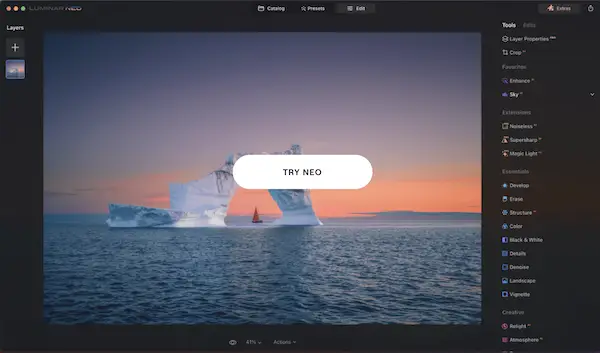
One of the reasons everyone is talking about these tools is that they finally play nice with each other. You no longer have to jump between five different apps. Most AI tools now live as plugins or seamless integrations within Adobe Lightroom or Capture One.
Even hardware is catching up. We’re seeing lens adapters and accessories, like the module 8 lens adapter, that help bridge the gap between vintage glass and modern digital sensors, while the AI software handles the specific color science of those older looks.
Beyond the Edit: The Business of Photography
AI isn’t just fixing your pixels; it’s fixing your business. Photographers are using AI to handle the "boring" side of the house:
- SEO & Metadata: Generating alt-text and keywords for galleries so they actually rank on Google.
- Client Communication: AI assistants that help draft personalized emails based on the "vibe" of a shoot.
- Marketing: Turning a single horizontal landscape shot into a vertical social media reel using generative fill.
If you want to stay updated on the latest tech and community discussions, I highly recommend checking out Shut Your Aperture. It’s a fantastic resource for staying ahead of the curve.

The "Authenticity" Elephant in the Room
I know what some of you are thinking. "Is it still photography if the computer does the work?"
It’s a valid question. At Photoguides, we believe that photography has always been a blend of technology and vision. From the darkroom chemicals of the 1900s to the digital sensors of the 2010s, we’ve always used tools to realize our vision.
The AI isn't choosing the moment to click the shutter. It isn't building the rapport with the subject. It isn't standing in the cold at 4 AM to catch the perfect light at one of our favorite cheap weekend getaways. The "art" is in the intent. The AI is simply the faster, smarter brush.
For those who want to keep things more "organic" while still utilizing modern tech, we offer a variety of educational resources and even sky overlays to help you enhance your shots without losing the soul of the original capture.
Why You Need to Start Now
The gap between "AI-enabled" photographers and "traditional" photographers is widening. By embracing these tools, you aren't just saving time; you're increasing your value. You can offer faster delivery, more consistent quality, and, most importantly, you can prevent the burnout that takes so many talented people out of this industry.
If you're feeling overwhelmed, don't try to change everything at once. Start with one tool: maybe a culling assistant or an AI-based noise reduction plugin. You’ll be surprised how quickly you get those hours back.
For more deep dives into the latest gear and how it handles these new technologies, head over to our camera reviews or explore my personal photography journey and tips on my blog.
Final Thoughts
The photography world in 2026 is faster, more creative, and more accessible than ever before. AI has taken the "work" out of "workflow," leaving us with more time to do what we actually love: taking photos.
So, stop fighting the future and start using it. Your camera is a tool, your computer is a tool, and AI is just the latest (and perhaps most powerful) addition to your kit.
What AI tool has saved your sanity this year? Drop a comment or reach out: I’d love to hear how you’re integrating these changes into your own creative process. And if you’re looking to get out and use that extra free time to shoot, check out our latest guides on things to do in cities like Miami or Williamsburg.
Happy shooting!