
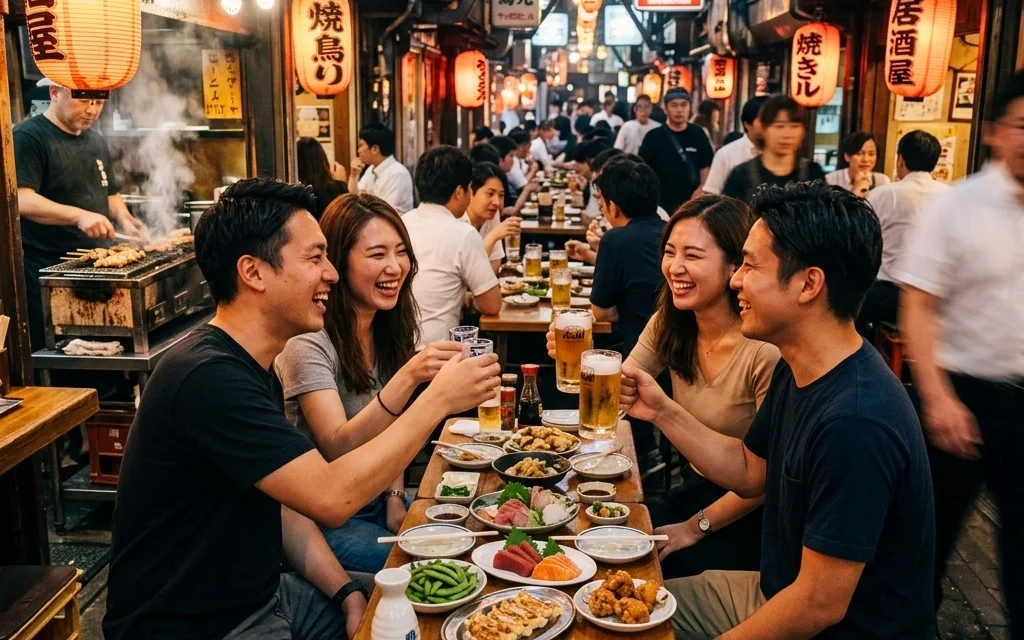
Welcome to Day 4 of our 14-day culinary deep dive into Tokyo! If you’ve been following along, we’ve already navigated the neon-soaked themed cafes of Akihabara and the refined elegance of Ginza’s sushi scene. But today? Today we’re getting down to the real soul of Tokyo. We’re talking about the smoke-filled, laughter-heavy, sake-pouring heart of the city: the Izakaya.
If you’ve never been to an Izakaya, imagine a Spanish tapas bar met a British pub, but they both decided to move to Japan and focus on high-quality charcoal-grilled meats and ice-cold beer. It’s not just a place to grab a bite; it’s a cultural institution that will fundamentally shift how you think about dining out.
The "Stay-Sake Shop" Philosophy
The word Izakaya literally translates to "stay-sake shop" (i to stay, zakaya sake shop). Historically, these were places where you could buy sake and sit down to drink it. Over time, owners started serving small snacks to keep the customers from falling off their stools, and the modern Izakaya was born.
In most Western cultures, we’re taught that dinner is a linear event. You sit down, you order an appetizer, a main, and maybe a dessert. You have a conversation with your table mates, pay the bill, and leave. Tokyo’s Izakaya culture throws that script out the window. Here, the food arrives as it’s ready, the drinks flow constantly, and the boundary between your table and the next one often dissolves after the third round of highballs.
Why the Izakaya Experience is a Game-Changer
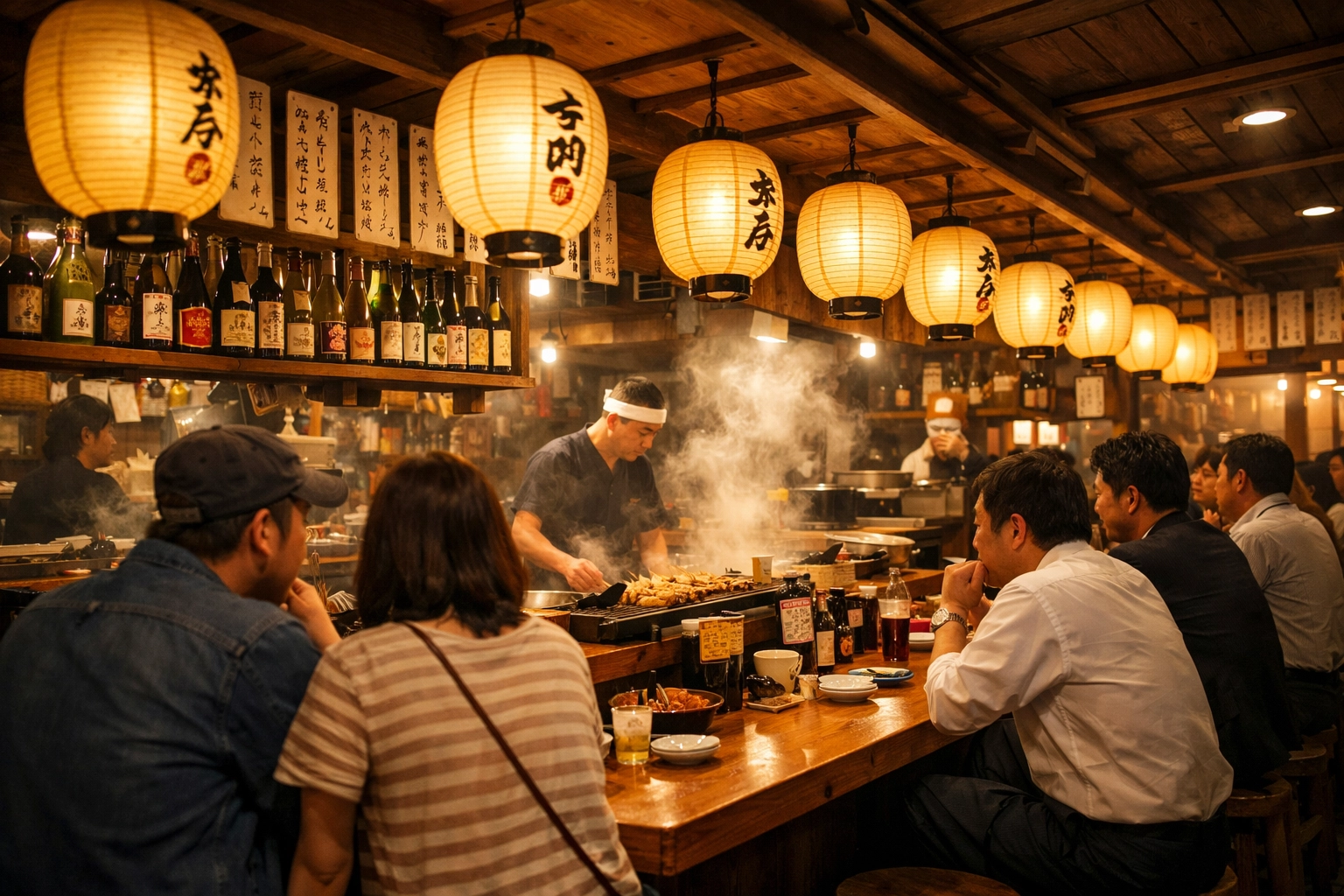
What makes an Izakaya so special is the atmosphere. After a long day of exploring, and hopefully capturing some incredible shots with your essential photography gear, stepping into an Izakaya feels like a warm hug. It’s loud, it’s vibrant, and it’s unapologetically casual.
In a city known for its rigid etiquette and quiet public spaces, the Izakaya is the "safety valve." It’s where salarymen loosen their ties, where students celebrate, and where travelers find themselves sharing a plate of yakitori with a local who wants to practice their English.
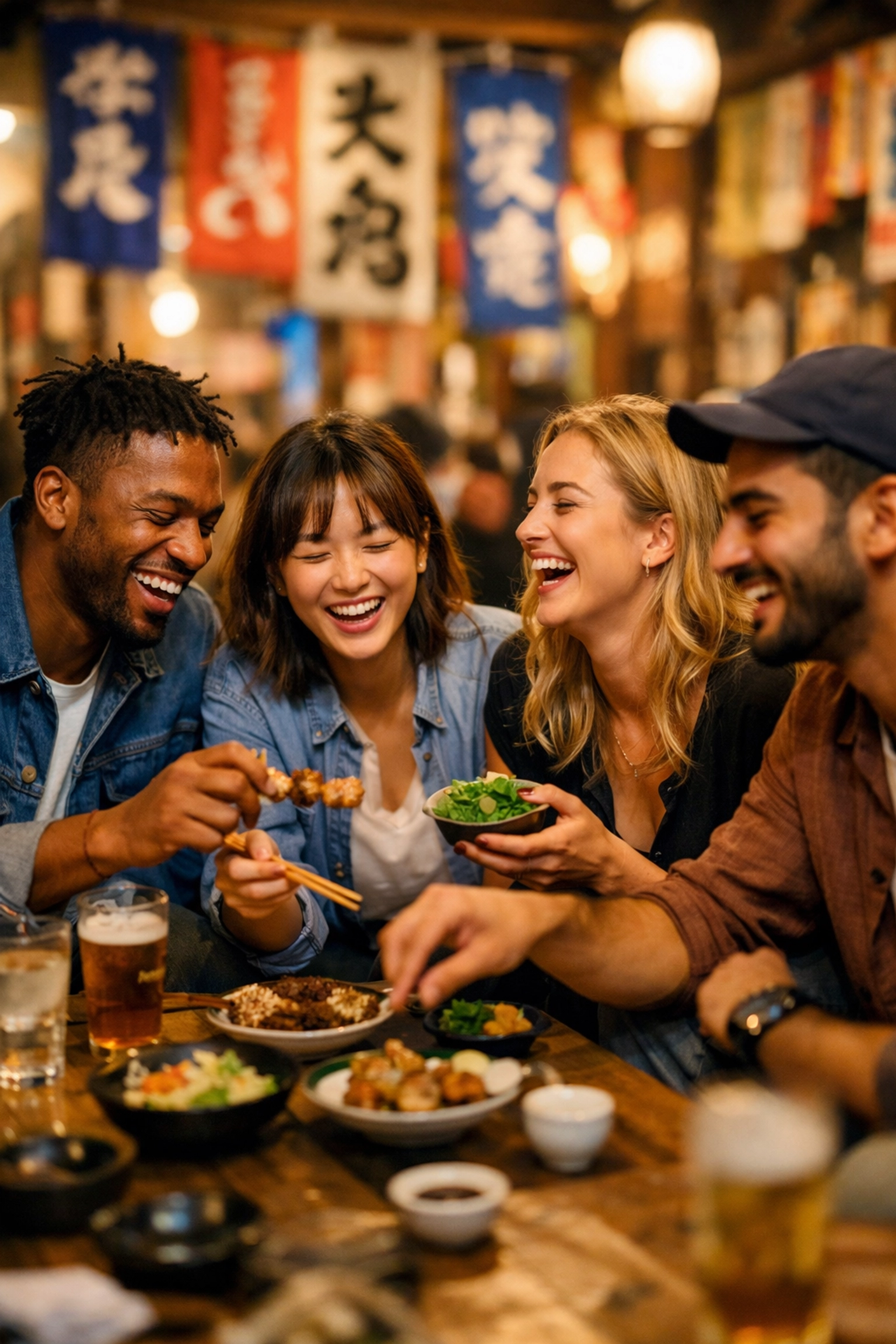
One of the biggest shifts for a first-timer is the shared-plate model. You don't order a "meal." You order a table-full of flavors. This communal style of eating forces you to engage with your companions. You’re not just eating near each other; you’re experiencing the meal together.
If you’re feeling a bit overwhelmed by the sheer number of options in Shinjuku or Shibuya, I highly recommend booking a food tour through Viator. Having a local guide navigate the hidden "Yokocho" (alleys) can take the pressure off and ensure you find the absolute best hidden gems.
The Rituals You Need to Know
Before you dive headfirst into a plate of karaage (Japanese fried chicken), there are a few local customs that make the experience smoother.
- The Oshibori: As soon as you sit down, you’ll be handed a wet towel. Use it. It’s for your hands, but let’s be honest, on a humid Tokyo night, a cold oshibori on the back of the neck is pure bliss.
- The Otōshi: You might notice a tiny dish appear on your table before you’ve even ordered. This is the otōshi, a mandatory snack that serves as a cover charge. It’s usually something seasonal and delicious, don't fight it, just enjoy it.
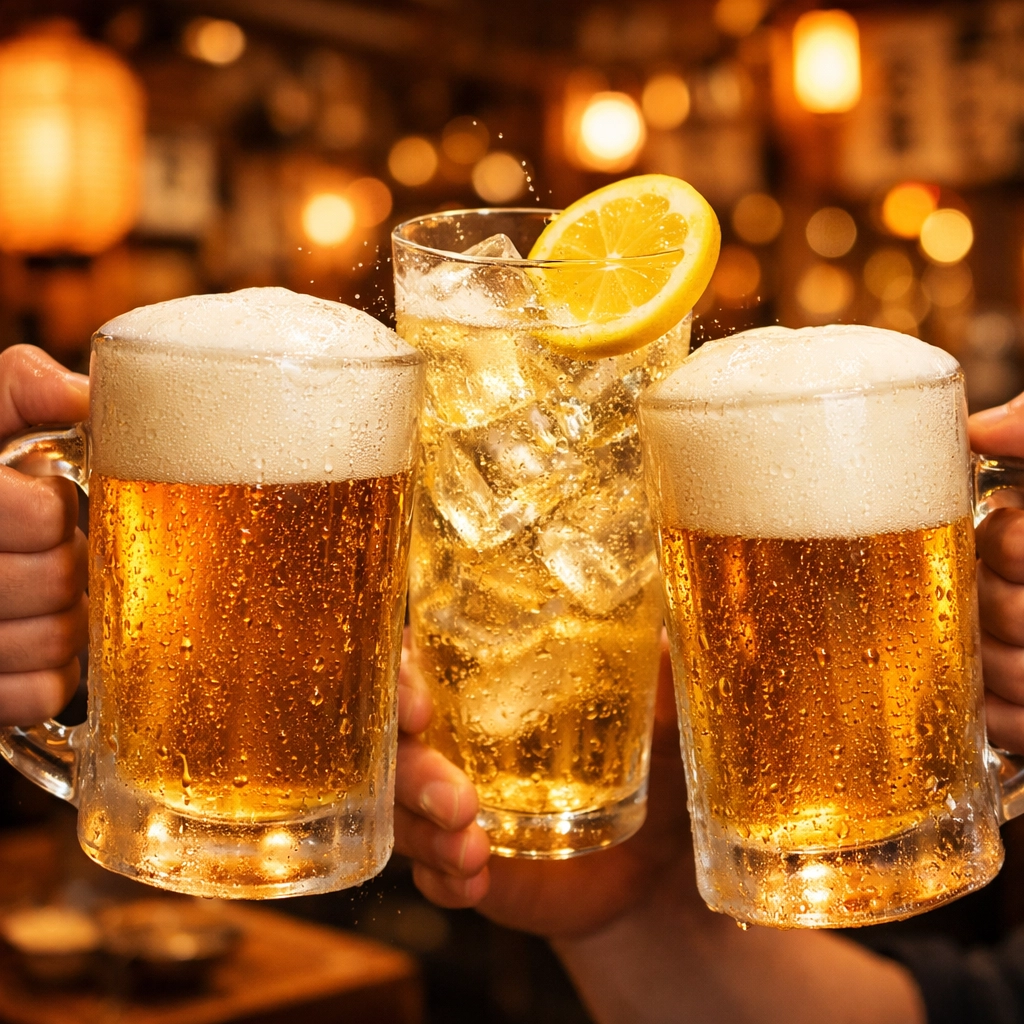
- Drink First, Think Later: It is customary to order your drinks first. "Nama-biiru" (draft beer) is the universal starting point. Once the drinks are on the table, you can take your time with the food menu.
- The "Kanpai!": You don't drink until everyone has a glass and you've shouted "Kanpai!" (Cheers!). It’s the official start of the festivities.
What to Order: The Izakaya Essentials
If the menu looks like a novel, don't panic. Most Izakayas have pictures, and the staff are incredibly patient. Here are the "must-haves" that define the culture:
- Yakitori: Skewered chicken grilled over binchotan charcoal. Try the negima (chicken and scallion) or tsukune (chicken meatball).
- Karaage: Possibly the best fried chicken on the planet. Crispy, ginger-soy marinated, and dangerously addictive.
- Sashimi Moriawase: A platter of the freshest seasonal fish. If you want to see how these looks through a professional lens, check out some of the food photography over at Edin Chavez’s personal site.
- Agedashi Tofu: Deep-fried tofu served in a savory dashi broth. Even meat-lovers swear by this one.
- Highballs: While sake is the namesake, the Whisky Highball is the king of the modern Izakaya. It’s refreshing, bubbly, and pairs perfectly with salty food.
Capturing the Vibe (The Photographer’s Perspective)
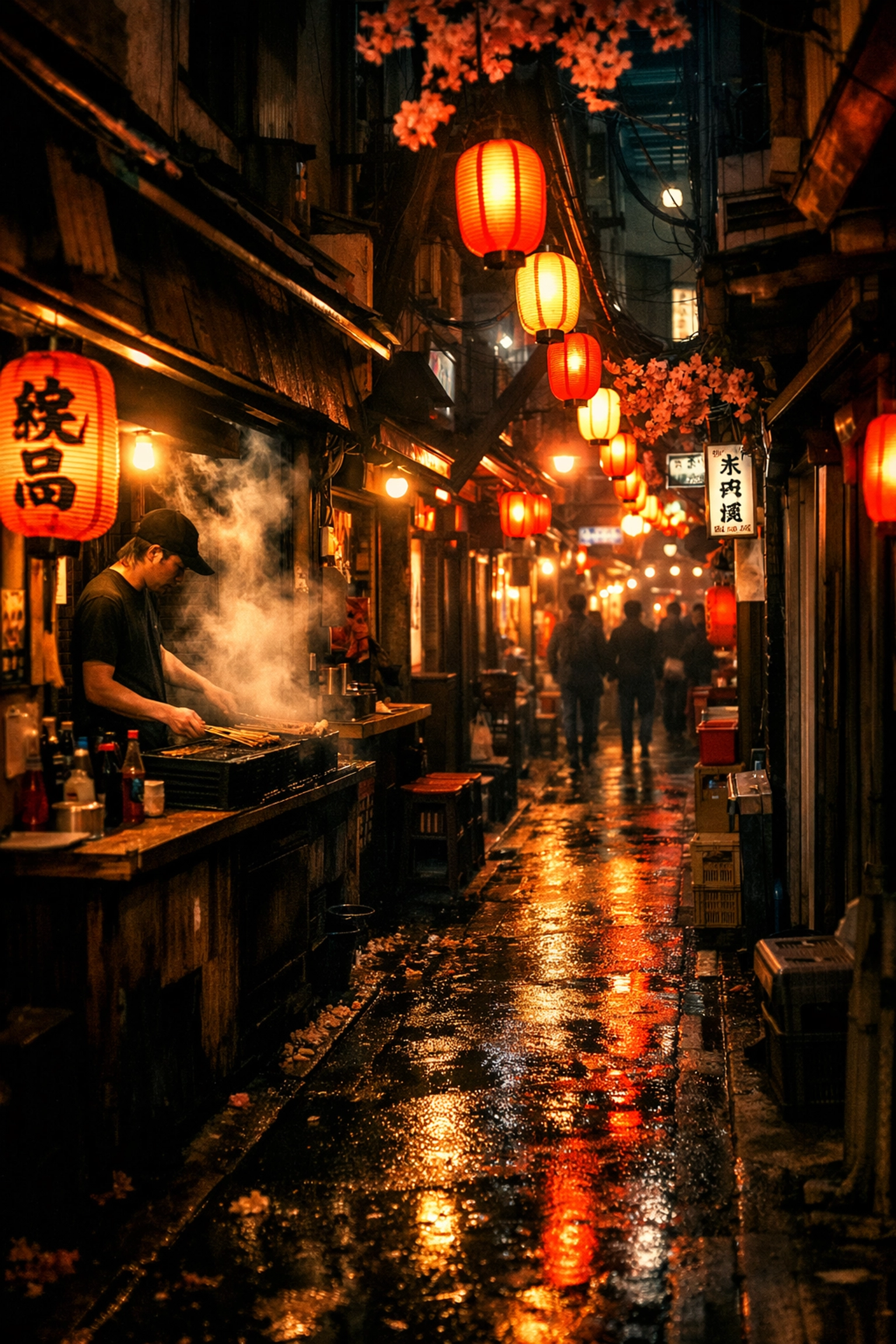
From a photography standpoint, Izakayas are both a dream and a challenge. They are often dimly lit with warm, orange-toned lanterns and filled with steam and smoke. It’s the perfect place to test your low-light skills. If you’re looking to upgrade your kit for travel, definitely take a look at our camera reviews for 2024.
The "Yokocho" alleys, like Shinjuku’s Omoide Yokocho (Memory Lane), are iconic for a reason. The tight spaces and layers of signs create incredible depth in your photos. Just remember to be respectful, always ask before taking a close-up photo of a chef or a patron. Most are happy to oblige if you’re friendly!
The Reassuring Reality of Tokyo Dining
I know what you might be thinking: "Is it going to be too expensive?" or "Will I be able to communicate?"
Here’s the reassuring part: Tokyo is one of the most hospitable cities in the world. Even if your Japanese is limited to "Arigato," you will find your way. Izakayas range from "standing bars" (Tachinomiya) where you can grab a drink and a snack for under $10, to more elaborate spots. Regardless of the price point, the quality of food in Japan is consistently high. You’re more likely to have a life-changing meal in a tiny basement Izakaya than in many five-star restaurants elsewhere.
If you’re planning a larger trip and want to mix some city vibes with coastal relaxation, check out our guide on Miami’s hidden speakeasies for a different kind of nightlife inspiration. But for now, let's stay focused on the magic of Tokyo.
Why You Should Book a Tour
If it's your first time in Japan, the Izakaya scene can feel a bit like an "insiders only" club. Many of the best spots are tucked away on the fourth floor of non-descript buildings or hidden behind heavy wooden doors.
This is where a guided food tour becomes your best friend. A guide won't just take you to eat; they’ll explain the history of the neighborhood, introduce you to the shop owners, and order things you’d never find on your own (like stingray fin or fermented soy beans, trust me, try it once!). It takes the guesswork out of the evening so you can focus on the "stay-sake" part of the Izakaya philosophy.
Final Thoughts
Tokyo’s Izakaya culture is more than just a way to eat; it’s a way to exist. It teaches you to slow down, to share, and to find beauty in the chaotic, smoky, and delicious moments of life. By the time you leave your first Izakaya, you won’t just be full; you’ll have a new perspective on what a night out should feel like.
Stay tuned for Day 5, where we’ll be heading to the Harajuku district to see if the street food is really as wild as they say (Spoiler: It is). In the meantime, if you need more inspiration for your next trip, check out our photography booking experiences to see how we can help you capture your journey.
And hey, if you’re looking for some high-end art to fill those empty walls back home after being inspired by Tokyo’s aesthetics, take a look at the fine art prints over at Edin Fine Art.
Now, go find a lantern-lit alley, grab a stool, and get ready for the best meal of your life. Kanpai!













