Welcome to Day 1 of our 14-day deep dive into the culinary heartbeat of Japan. If you’ve been following our journey at Photoguides, you know we’re obsessed with capturing the soul of a destination. Usually, that’s through a lens, but today, we’re doing it through our stomachs.
Look, we all love a fancy Ginza dinner with more courses than we have fingers, but if you’re only eating at places with white tablecloths and a three-month waiting list, you’re missing the real Tokyo. The street food scene here isn’t just about "cheap eats": it’s a sensory explosion that changes the way you interact with the city. It’s loud, it’s smoky, it’s occasionally confusing, and it’s the most authentic way to see Japan.
In this first installment of our Tokyo food series, we’re breaking down why the street food here will fundamentally shift your travel perspective and, more importantly, exactly what you need to put in your mouth first.
The "Street Food" Mindset: Why It Changes You
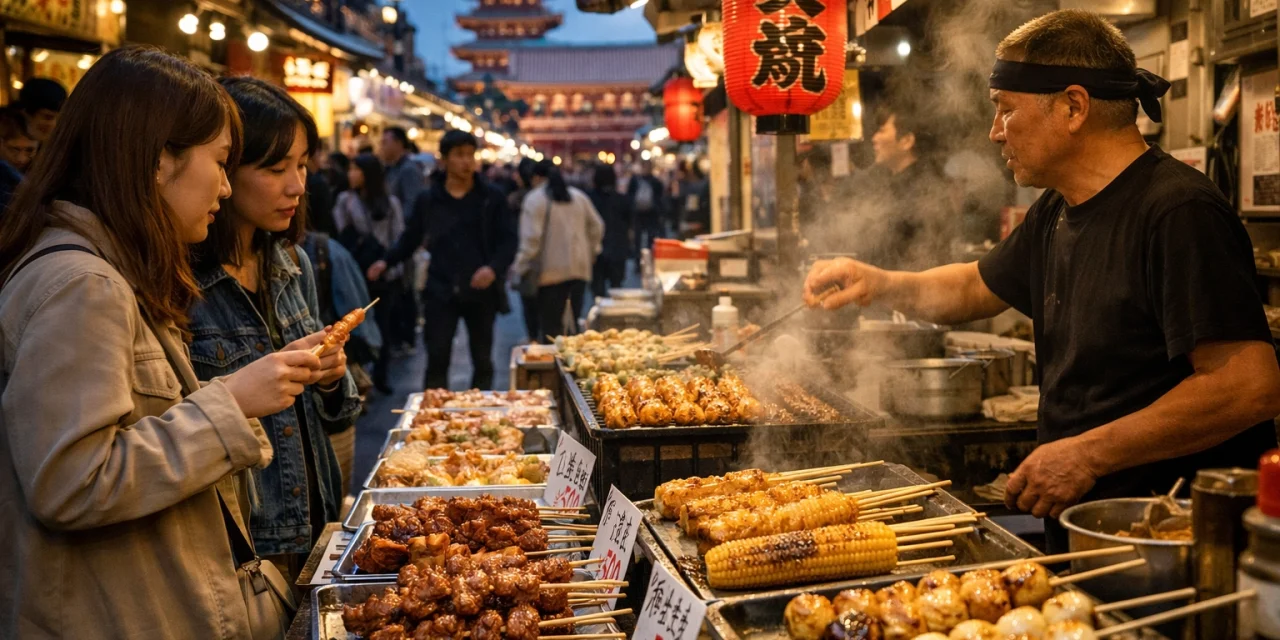
In many Western cities, street food is a convenience: a quick hot dog between meetings. In Tokyo, it’s a craft. When you stand at a tiny stall in the Tsukiji Outer Market or navigate the neon-lit chaos of Ameyoko, the barrier between you and the culture vanishes.
You aren't just a "customer" hidden behind a menu; you are an observer of a centuries-old tradition. You see the flick of the wrist as a chef flips takoyaki, the precision of the knife cutting through tamagoyaki, and the intense focus on a grill master’s face as he fans the flames of a yakitori skewer. It forces you to slow down, even in a city that moves at light speed.
Traveling this way makes you realize that the best parts of a city aren't found in the monuments, but in the steam rising from a ramen stall at 11:00 PM. For those of us who live for the shot, it’s also a goldmine for street photography. If you’re looking to level up your gear before you go, check out our essential photography gear guide to make sure you can capture those low-light market vibes perfectly.
What to Order First: The "Big Five" of Tokyo Street Food
If you’re standing in the middle of a bustling market and feeling overwhelmed by the smells and the Kanji signs, don’t panic. Start with these classics.
1. Takoyaki (Octopus Balls)
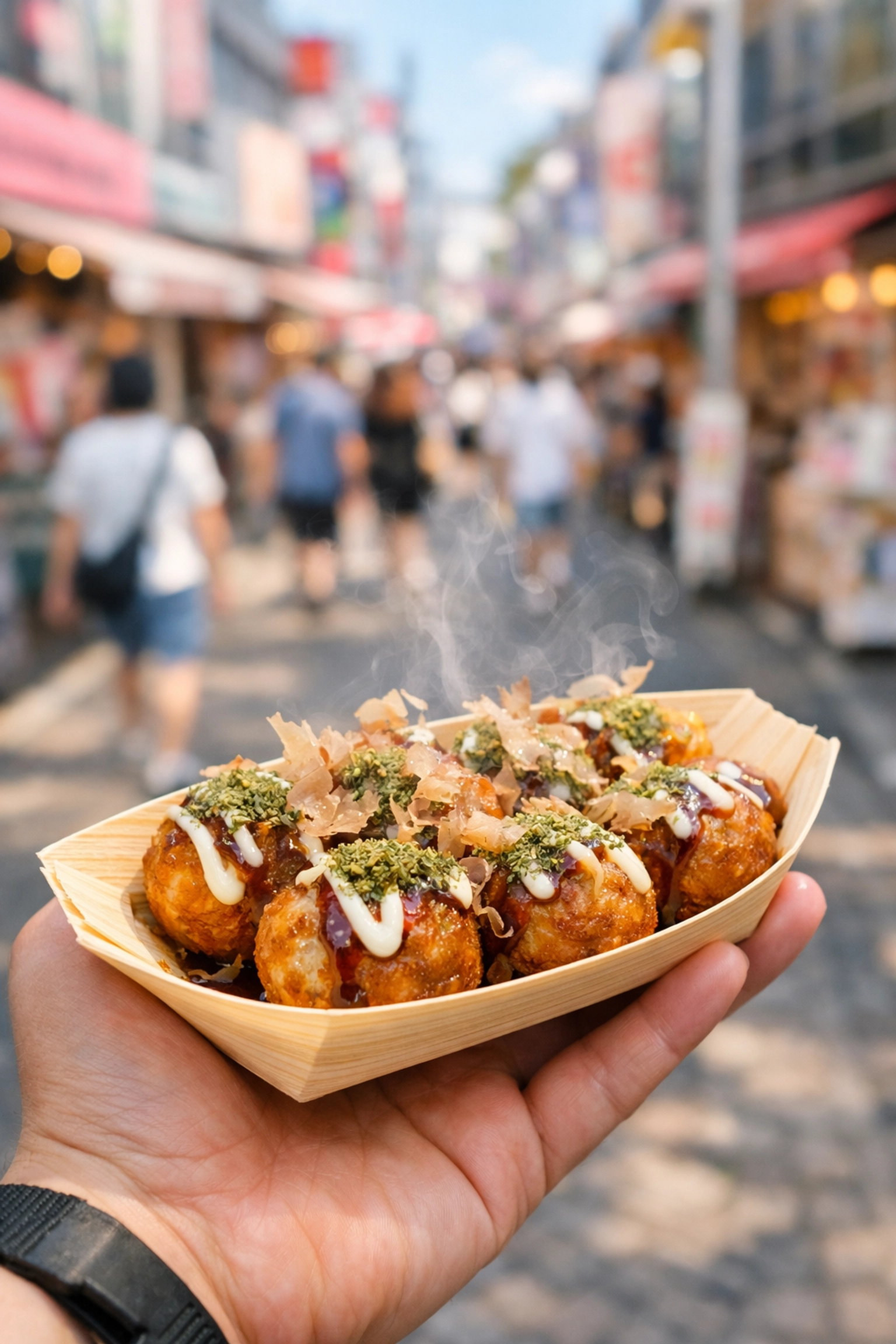
This is the quintessential street snack. Imagine a savory, batter-based ball filled with minced octopus, pickled ginger, and green onion. It’s cooked in a special molded pan that looks like a giant egg carton.
- The Experience: They are topped with takoyaki sauce (similar to Worcestershire), mayo, and bonito flakes that "dance" from the heat.
- Pro Tip: These are molten lava on the inside. Do not, under any circumstances, pop the whole thing in your mouth immediately unless you want to lose your taste buds for the rest of the trip.
2. Yakitori (Grilled Chicken Skewers)
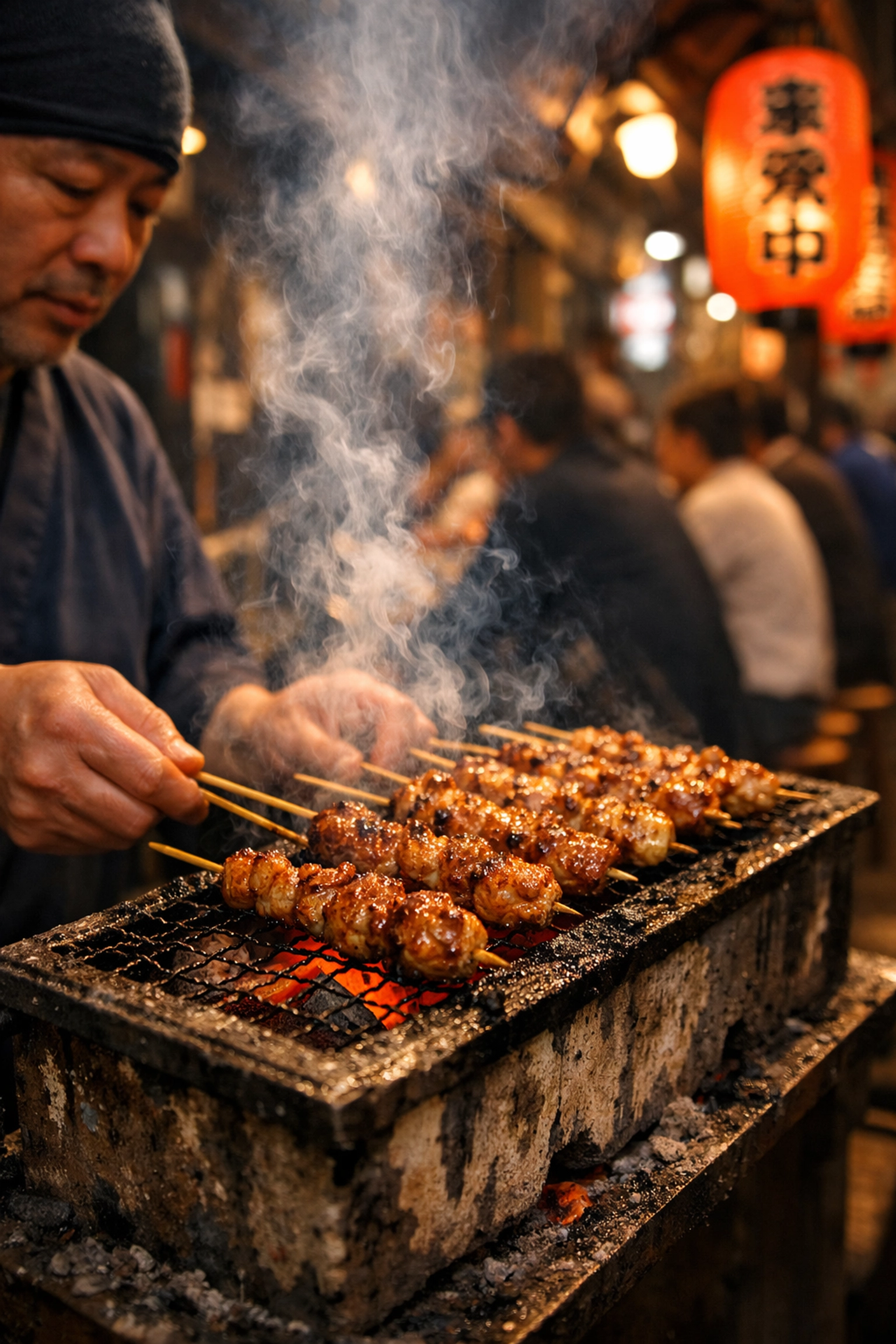
Simple, salty, and perfect. You’ll smell the charcoal before you see the stall. You can get everything from breast and thigh to more adventurous bits like skin or heart.
- The Experience: Order a mix of shio (salt) and tare (sweet soy glaze). It’s the ultimate "walking food."
3. Tamagoyaki (Rolled Omelette)
You might think, "It’s just an egg," but you’d be wrong. In the Tsukiji Outer Market, vendors have been making these for generations. It’s a sweet and savory rolled omelette served on a stick.
- The Experience: It’s fluffy, juicy, and usually costs about 100-200 yen. It’s the perfect breakfast-on-the-go while you’re hunting for the perfect sunrise shot.
4. Okonomiyaki (Savory Pancake)
Often called "Japanese Pizza," though that’s a bit of a stretch. It’s a savory pancake filled with cabbage and whatever protein you choose (shrimp, pork, squid).
- The Experience: It’s hearty and messy. It’s the kind of food that makes you feel like a local, especially when you’re sitting on a plastic stool in a cramped alleyway.
5. Gyoza (Dumplings)
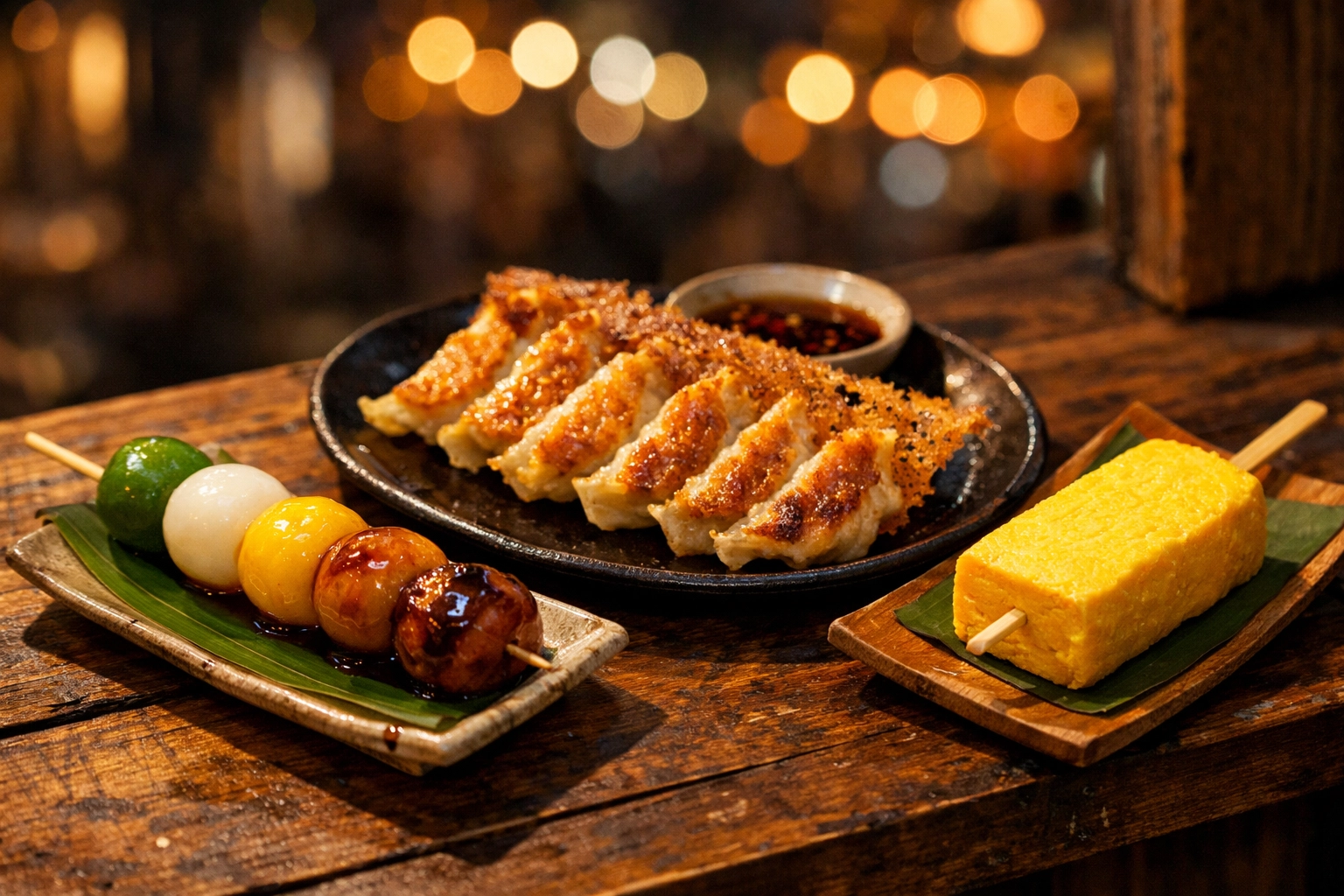
While technically a staple in many restaurants, you’ll find incredible gyoza stalls where the bottoms are fried to a perfect crisp while the tops remain soft and steamed.
Where to Start Your Culinary Pilgrimage
Tsukiji Outer Market
While the famous inner wholesale market moved to Toyosu, the Outer Market is still the king of street food. This is where you go for the freshest seafood, the best tamagoyaki, and high-end ingredients. It’s a labyrinth of narrow paths that are a dream for any photographer. If you want to make sure you're hitting the right stalls without getting lost in the shuffle, I highly recommend booking a professional food tour through Viator. Having a guide who knows the vendors by name changes the experience from "tourist" to "guest."
Ameyoko Market (Ueno)
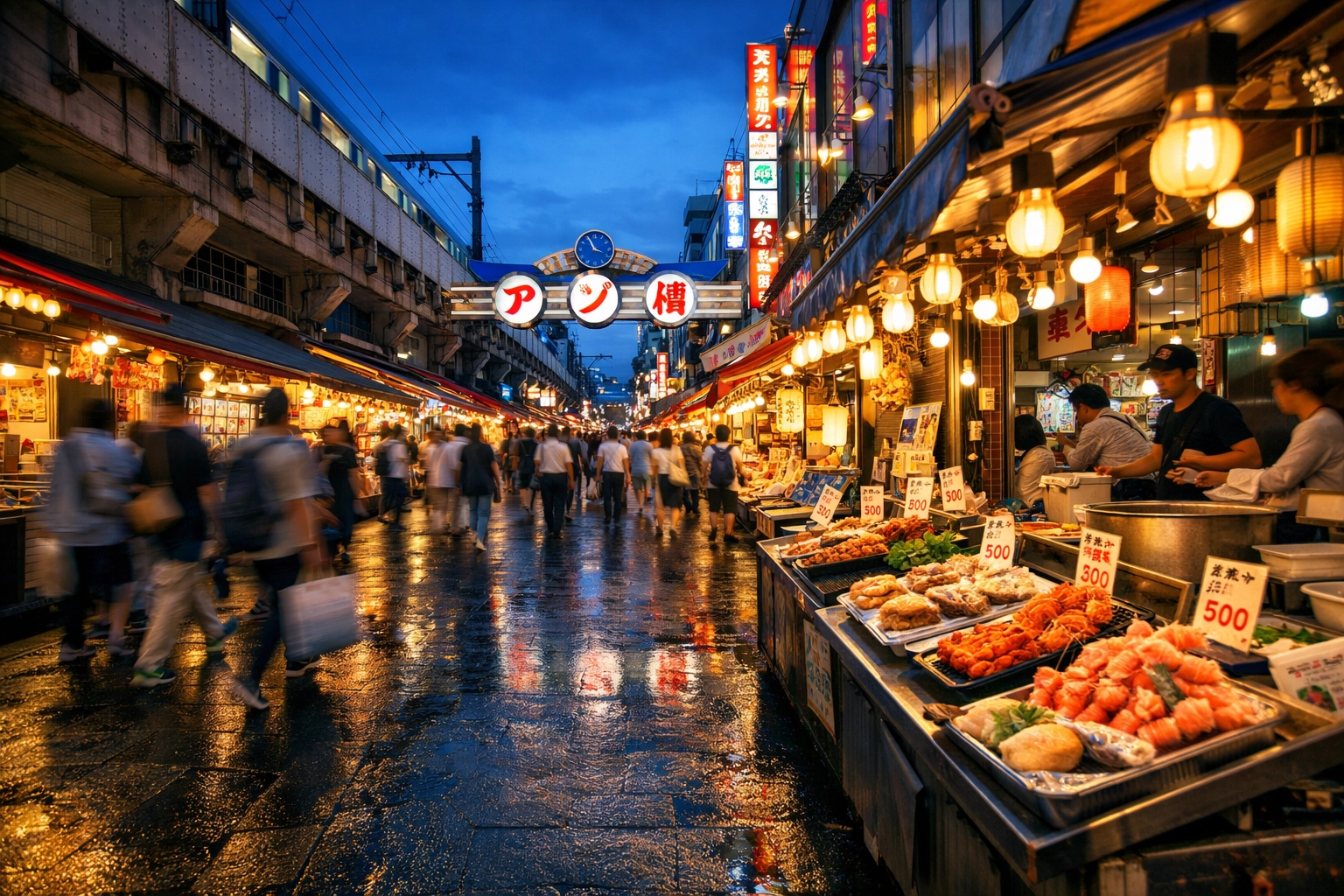
Located under the elevated train tracks between Ueno and Okachimachi stations, Ameyoko is gritty, loud, and wonderful. It’s the place to find "cheap eats" and a more international vibe, with plenty of kebab stalls mixed in with traditional Japanese fare.
Capturing the Flavor: A Note for Photographers
Eating is only half the fun. Capturing the steam, the glow of the lanterns, and the texture of the food is a challenge every traveler should take on. If you’re worried about your skills, check out our photography booking experience to learn how to document your travels like a pro.
I’ve spent years traveling with Edin Chavez, and he always says that the best photos are the ones that tell a story. A photo of a half-eaten skewer against a backdrop of blurry neon lights tells a much better story of Tokyo than a generic shot of the Tokyo Tower. For more inspiration on capturing urban life, you can see some of Edin’s world-class work at Edin Fine Art.
How to Navigate Like a Local
- Don’t Walk and Eat: In Japan, it’s generally considered impolite to walk while eating. Most stalls will have a small area to stand nearby, or they’ll expect you to finish your snack right there.
- Trash is Gold: Finding a trash can in Tokyo is like finding a shiny Pokemon. Most street food vendors will take your trash back if you give it to them after you've finished.
- Cash is King: While Japan is becoming more card-friendly, many of the best street stalls are cash only. Keep those 100-yen coins handy!
Why You Should Book a Tour
I know, I know: you’re an "independent traveler." You want to discover things for yourself. But Tokyo is a city of layers. Some of the best food is hidden in basements or behind unmarked doors. A food tour doesn't just feed you; it teaches you the etiquette, the history, and the "why" behind what you’re eating.
Whether you want to explore the neon lights of Shinjuku or the traditional vibes of Asakusa, Viator has a massive selection of food tours that cater to every palate. It’s the best way to ensure your first night in Tokyo isn’t spent staring at a vending machine in confusion.
What's Next?
This is just the beginning of our 14-day Tokyo feast. Tomorrow, we’re heading to Akihabara to explore the weird and wonderful world of themed cafes. Think owls, maids, and enough neon to power a small country.
In the meantime, if you're planning your trip and need a break from the research, why not look into some cheap weekend getaways or check out our camera reviews for 2024 to make sure you're packing the right gear for your Japanese adventure.
For more travel tips and deep dives into the world of photography and food, keep an eye on the Edin Chavez Blog.
Tokyo is waiting, and it’s delicious. Go get a skewer of something you can’t pronounce: I promise you won’t regret it.