Listen, if you’ve ever found yourself standing in the middle of Shinjuku Station, spinning in circles while staring at a Google Map that seems to be mocking you, you know that Tokyo is a lot. It’s beautiful, it’s neon, and it’s arguably the food capital of the planet. But it’s also overwhelming. With over 160,000 restaurants, you could eat at a different spot every meal for the rest of your life and still not see it all.
That’s where the food tour comes in.
Welcome to day one of our 14-day deep dive into the culinary soul of Tokyo. I’m Penny, and here at Photoguides, we believe that the only thing better than a perfect photo is a perfect meal (and maybe a camera that doesn't run out of battery at the exact moment the light hits the ramen steam). Whether you’re a pro looking to fill your portfolio with high-end sushi shots or a traveler just looking for the best gyoza in the city, choosing the right tour is the difference between a "tourist trap" and a "core memory."
Before we dive into the neighborhoods, do yourself a favor: book your food tour through Viator here. It’s the easiest way to ensure you actually get a seat at those tiny, six-person izakayas that don't take reservations from foreigners.
The Neighborhood Breakdown: What’s Your Flavor?
Tokyo isn't just one city; it’s a collection of villages that grew into each other. Each neighborhood has its own "taste." Here is how to pick your tour based on what you actually want to put in your mouth.
1. Akihabara: Themed Cafes and Electric Vibes
If you like your coffee served by a maid or your lunch accompanied by a chorus of J-pop, Akihabara is your spot. It’s the heart of "Otaku" culture. While some call it "weird," we call it "highly photogenic."
Tours here usually focus on the experience rather than just the calories. You’ll visit themed cafes where the food is shaped like bears or anime characters. It’s fun, it’s quirky, and it’s a must-do if you want to see the "Electric Town" side of Japan. Just remember to bring your essential photography gear because the lighting in these cafes is… let's just say "dynamic."
2. Ginza: The High-End Sushi Sanctuary
Ginza is where you go when you want to feel like a James Bond villain who appreciates a fine omakase. This is the home of Michelin stars and white-glove service. A food tour in Ginza is less "walking through alleys" and more "entering hallowed temples of raw fish."
If you’re looking to understand the history of Edomae sushi and don't mind spending a bit more for the privilege, look for a Ginza tour. It’s a great place to practice your macro photography on a piece of Otoro that costs more than your first car. For some inspiration on how to capture these high-end vibes, check out Edin Chavez’s Fine Art.

3. Harajuku: Street Food and Sugar Highs
Harajuku is the undisputed king of street food. We’re talking giant rainbow cotton candy, crepes stuffed with entire slices of cheesecake, and long sticks of fried cheese. It’s vibrant, loud, and very "Instagrammable."
A Harajuku tour is perfect for families or anyone with a serious sweet tooth. It’s casual, cheap, and you’ll walk away with a sugar crash that will make you sleep for 12 hours. It’s the polar opposite of Ginza, and that’s why we love it.
4. Tsukiji Outer Market: The Classic Morning Ritual
Even though the inner wholesale market moved to Toyosu, the Tsukiji Outer Market is still the place to be for breakfast. We’re talking tamagoyaki (rolled omelet) on a stick, grilled scallops with sea urchin, and the freshest tuna bowls you’ll ever have at 8:00 AM.
A guided tour here is essential because the market is a maze. A good guide will show you which stall has the best blow-torched Wagyu and which one is just selling overpriced tourist kitsch. Since you’ll be there in the morning light, it’s the perfect time to test out some sky overlays if you're editing your market shots later.
Comparison: The Big Players
When you're looking on Viator, you’ll see a few names pop up repeatedly. Here’s the lowdown on the big three styles of tours:
| Tour Type | Best For | Vibe | Price Range |
|---|---|---|---|
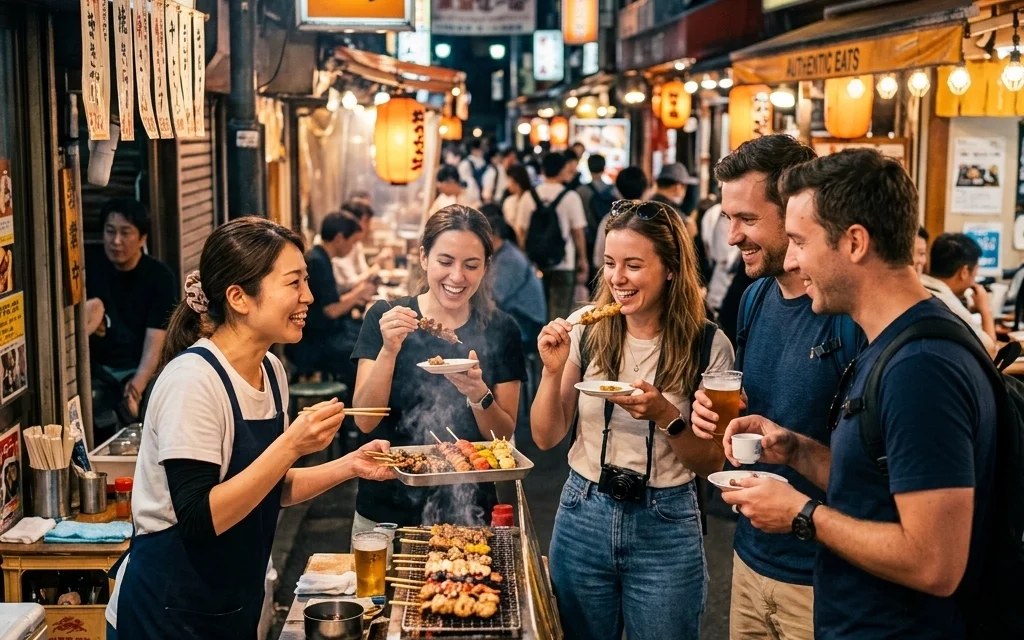
| The "Hidden Gem" Night Tour | Shinjuku/Shibuya Izakayas | Dark alleys, beer, yakitori, local secrets | $$$ |
| The "All-Day" Market Walk | Tsukiji / Toyosu | Early morning, fresh seafood, history | $$ |
| The "Cultural Hybrid" | Asakusa / Old Tokyo | Traditional sweets, tempura, temple visits | $ – $$ |
Ninja Food Tours is fantastic for those who want to feel like they’ve been initiated into a secret society of ramen lovers. They focus on the "back-alley" spots that you would never find on your own.
Arigato Japan is another heavy hitter. They lean more into the storytelling and cultural context of the food. If you want to know why you’re dipping your noodles into that specific sauce, go with them.

Why You Actually Need a Tour (And Not Just a Blog Post)
I know what you’re thinking. "Penny, I have a phone. I have Yelp. I can find my own food."
Sure, you can. But in Tokyo, the best places are often on the 4th floor of an unmarked building or tucked behind a nondescript curtain (noren). Many of the legendary local spots don't have English menus, and some are "members only" or simply don't have the capacity to handle someone who doesn't know the etiquette.
A tour guide acts as your "fixer." They handle the ordering, the payment, and the "oops, I didn't know I wasn't supposed to stick my chopsticks upright in the rice" moments. It’s a reassuring photography booking experience for your stomach. Plus, you’ll meet other travelers. Some of my favorite travel stories started over a shared plate of Takoyaki in a rainy Shibuya alley.
Photography Tips for Foodies
Since we are Photoguides, I’d be remiss if I didn't give you a few tips on how to shoot your dinner without annoying the chef:
- Turn off the flash. Seriously. It’s disrespectful in many Japanese restaurants and it makes high-quality sushi look like plastic.
- Ask before you shoot. Most chefs love it if you take a photo of the food, but some don't want their faces in the shot. A quick "Sumimasen, shashin ok?" goes a long way.
- Speed is key. In Japan, food is served at the "perfect" temperature. If you spend five minutes styling your ramen, the noodles will get soggy, and the chef will be heartbroken. For more tips on fast-paced shooting, check out our educational category.
- The "Top-Down" isn't always best. For things like ramen or towering parfaits, try a 45-degree angle to show the depth and layers.

Final Thoughts: Just Eat the Thing
At the end of the day, the best Tokyo food tour is the one that gets you out of your comfort zone. Whether you’re eating fermented soybeans (Natto) in a traditional breakfast spot or biting into a $50 melon in Ginza, just go for it.
Tokyo is a city that rewards the curious. It’s a place where you can find world-class dining in a subway station and life-changing coffee in a 100-year-old wooden house.
Ready to start your adventure? Don't wait until you arrive to find out everything is sold out. Check out the top-rated Tokyo food tours on Viator and lock in your spot.
Stay tuned for Day 2, where we’re heading to the neon-soaked streets of Shinjuku to find the best Golden Gai izakayas. Until then, keep your shutter speed high and your appetite higher. For more reviews on the latest tech to document your trip, see our camera reviews 2024.
If you’re looking for more travel inspiration while you plan your Japan trip, why not check out some cheap weekend getaways or dive into our blog reviews to see where we're heading next?
Happy eating!