
Category: Photo Guides
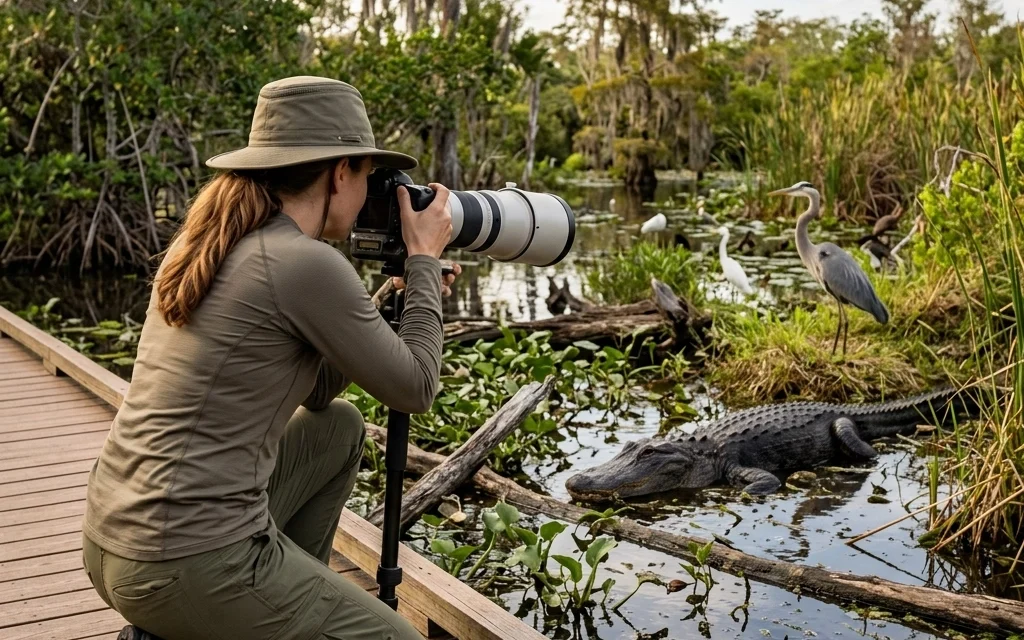
If you’ve ever stood on a boardwalk in the Florida Everglades at sunrise, you know the feeling. The air is thick with humidity, the sky is turning a bruised shade of purple and gold, and the only sound you hear is the distant, prehistoric grunt of an alligator or the frantic splash of a heron grabbing its breakfast. It’s a photographer’s playground, but it can also be incredibly intimidating if you don’t have a plan.
The Everglades covers over 1.5 million acres. That is a massive amount of sawgrass, mangroves, and swamp to navigate. Without the right knowledge, you might spend your whole day driving around looking at trees instead of capturing the world-class wildlife shots you came for.
I’ve spent countless hours trekking through these marshes, and I’ve put together this guide to help you skip the learning curve and start nailing your shots from day one. Whether you’re a seasoned pro or just getting started, this is everything you need to succeed in the River of Grass.
Why the Everglades?
The Everglades is one of the most unique ecosystems on the planet. It’s the only place in the world where alligators and crocodiles coexist. It’s a stopover for hundreds of species of migratory birds, and it’s home to the elusive Florida panther.
For a wildlife photographer, the "River of Grass" offers a variety of textures and subjects that you simply won't find anywhere else. The light here has a soft, filtered quality during the golden hours that makes every feather and scale pop. But more than that, it’s about the accessibility. Some of the best spots are surprisingly easy to reach if you know where to look.

Timing Your Visit: The Dry Season vs. The Wet Season
If you want the best possible results, timing is everything. In Florida, we don’t really have four seasons; we have the "Dry Season" and the "Wet Season."
The Dry Season (November – April)
This is the "Golden Age" for Everglades wildlife photography. As the water levels in the marshes drop, the wildlife is forced to congregate around the remaining deep-water holes. This means you’ll find dozens of alligators and hundreds of birds all packed into small, accessible areas. The weather is also much more pleasant: less humidity and, most importantly, fewer mosquitoes.
The Wet Season (May – October)
While the park is lush and green during the summer, the wildlife disperses because water is everywhere. Plus, the heat and insects can be brutal. However, if you are into dramatic landscapes, the summer afternoon thunderstorms provide some of the most epic lightning and cloud formations you’ll ever see.
If you’re serious about building a portfolio of bird and reptile shots, stick to the dry season. If you want a deep dive into the specific spots that work best during these windows, check out our Everglades Photography Guide for a localized breakdown.
Top Locations You Can't Miss
You could spend weeks exploring, but if you have limited time, focus on these heavy hitters:
- Anhinga Trail (Royal Palm): Located near the Homestead entrance, this is arguably the best spot for close-up wildlife. The animals here are very used to humans, meaning you can often get incredible shots of alligators and anhingas with a shorter lens.
- Shark Valley: This is famous for its 15-mile loop. You can rent a bike or take a tram. It’s a literal gauntlet of alligators sunning themselves right next to the path.
- Flamingo: This is at the very end of the park road. It’s remote, but it’s the best place to find the American Crocodile and West Indian Manatees. The light at the Flamingo marina during sunset is pure magic.
Essential Gear for the Everglades
You don’t need the most expensive kit in the world to get great shots, but you do need the right kit.
Lenses
For bird photography, reach is king. I recommend a lens in the 100-400mm or 200-600mm range. Birds like the Roseate Spoonbill or the Great Blue Heron are majestic, but they don't always want you standing right next to them. If you’re looking to upgrade, take a look at our camera reviews 2024 to see which bodies and lenses are currently leading the pack for wildlife.
Don't forget a wide-angle lens (16-35mm) for those massive Florida sunrises. The sky is a huge part of the Everglades story.
Support
A sturdy tripod or monopod is essential, especially when you’re using those heavy telephoto lenses. If you're shooting at sunrise, you’ll be working with lower shutter speeds, and you’ll want that stability. Check out our list of essential photography gear for my top tripod recommendations.
Protection
The Everglades is harsh. It’s salty, it’s humid, and it rains unexpectedly. Bring a high-quality rain cover for your camera and plenty of lens cloths. I also highly recommend a circular polarizer to cut the glare off the water: it makes a world of difference when you're trying to see "through" the surface to photograph a submerged alligator.

Mastering Your Camera Settings
Wildlife moves fast. One second a heron is perfectly still, and the next, it’s lunging for a fish.
- Shutter Speed: Keep it high. For birds in flight, you want at least 1/1200s or 1/2000s. Even for a "still" alligator, a faster shutter speed helps compensate for any hand-shake when you're zoomed in at 600mm.
- Aperture: I usually shoot wide open (f/4 or f/5.6) to create that creamy, blurred background (bokeh) that makes the subject stand out from the busy sawgrass.
- Focus Mode: Use Continuous Autofocus (AF-C or AI Servo). If you have a modern mirrorless camera with Animal Eye Tracking, turn it on! It’s a game-changer for getting those tack-sharp eyes.
For more technical breakdowns, our educational category has some great deep-dives on mastering manual mode in the field.
Composition and Ethics: Telling the Story
It’s easy to just take a "portrait" of a bird, but the best photos tell a story. Try to capture behavior: preening, hunting, or interacting with other animals.
Get Low: Don't just shoot from eye level. If you can safely get lower to the ground, your perspective will be much more intimate. It puts the viewer in the animal's world.
Respect the Wildlife: This is the most important rule. Never feed the animals or "flush" a bird just to get a flight shot. Not only is it illegal, but it's also stressful for the animals. A stressed animal won't give you a natural-looking photo. Stay at least 15-20 feet away from alligators (they are faster than they look, trust me).
If you’re looking to turn your passion into a professional gig or just want to see how the pros do it, browsing Edin Fine Art can give you some great inspiration on how to frame these wild subjects as fine art.

Pro Tips for Success
- Polarizers are Magic: As mentioned before, the water in the Everglades can be very reflective. A polarizer allows you to see the textures under the water and saturates the deep greens of the mangroves.
- Check the Tide: If you’re shooting near the coast (like Flamingo or the 10,000 Islands), the tide matters. Wading birds love low tide because it exposes the mudflats where they feed.
- Bug Spray and Sunscreen: It sounds basic, but a miserable photographer is a bad photographer. If you’re swatting flies every two seconds, you’re going to miss the shot.
Elevate Your Game
The Everglades is a place of endless mystery and beauty. Every time I go, I see something I’ve never seen before. But because it’s so vast, it really helps to have a roadmap.
If you want the exact GPS coordinates of my favorite hidden spots, gear checklists, and advanced shooting techniques specifically tailored for this park, you have to grab the Everglades Photography Guide. It’s the culmination of years of shooting in this environment, packed into a format that you can take with you on your phone or tablet.
For more tips on gear and techniques, don't forget to visit Shut Your Aperture, where we talk shop about all things photography.

Final Thoughts
Wildlife photography in the Everglades is about patience and persistence. Some days you’ll come home with nothing but mosquito bites; other days, you’ll capture a once-in-a-lifetime shot of a panther crossing a trail or a spoonbill in perfect light.
The key is to keep showing up. The more you visit, the more you’ll start to understand the rhythms of the swamp. You’ll learn when the birds are going to fly and where the gators like to sun themselves.
Ready to book your trip? If you're coming from out of town and want a seamless experience, check out our photography booking experience to see how we can help you plan your ultimate Florida photo safari.
See you out in the marsh! Grab your long lens, head to Edin Chavez’s blog for more inspiration, and let's go make some art.













