
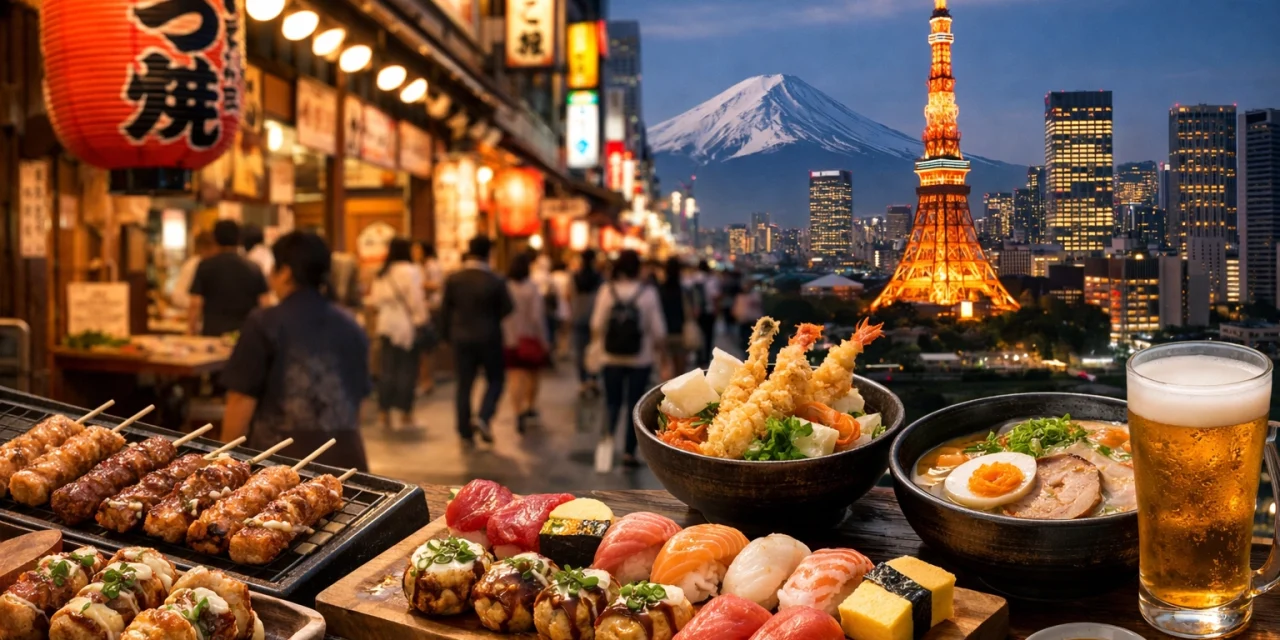
Listen, I get it. Touching down in Tokyo for the first time is a sensory overload of the best kind. The lights are brighter, the trains are quieter, and the smell of dashi and toasted sesame oil seems to follow you everywhere. If you’re anything like me, your primary motivation for traveling isn't just to see the sights, it’s to eat them.
Tokyo is a culinary beast. It has more Michelin stars than any other city on the planet, yet some of the best meals I’ve ever had cost less than a cup of coffee back home. Whether you’re rolling in yen or counting your coins, navigating this city’s food scene requires a game plan. At Photoguides, we’re all about capturing the moment, and trust me, you’re going to want to capture every single bite of this 14-day culinary journey.
Before we dive into the delicious madness, if you want to make sure you don’t miss the hidden gems tucked away in basement alleys, I highly recommend booking a food tour through Viator. It’s the easiest way to skip the "I don't know what I'm ordering" anxiety and get straight to the "oh my god, this is incredible" part.
The Budget Ninja: Living Large on $5 to $15
You don’t need a fat wallet to eat like a king in Tokyo. In fact, some of the city's most iconic flavors are found in the most humble places.
The Magic of the Conbini
Don’t scoff at the convenience stores. 7-Eleven, Lawson, and FamilyMart are the holy trinity of budget travel. We’re talking about high-quality onigiri (rice balls) for about $2, fluffy egg salad sandwiches that have literally inspired cult followings, and piping hot fried chicken (Famichiki, anyone?) for less than $3. For a quick breakfast or a late-night snack after a long day of shooting with your essential photography gear, the conbini is your best friend.
Standing Sushi and Ramen Ratios
In places like Shinjuku and Shibuya, look for "standing" sushi bars. By removing the chairs, they lower the overhead and pass the savings to you. You can get incredibly fresh nigiri for a fraction of the price of a sit-down spot.
Then there’s the ramen. You can find a soul-warming bowl of tonkotsu or shoyu ramen for under $10. If you’re feeling fancy but frugal, head to Ginza Hachigo, where you can actually get Michelin-starred ramen for under $15. Just be prepared to wait: or better yet, book a guided ramen tour to find the spots only the locals know about.

Street Food Soul: Harajuku and Tsukiji
If you want to eat with your hands and soak in the atmosphere, Tokyo’s street food districts are calling your name.
Harajuku’s Sugar High
Takeshita Street is famous for its "Kawaii" culture, but it’s also the epicenter of Tokyo’s crepe obsession. Think paper-thin pancakes stuffed with cheesecake, fresh fruit, and enough whipped cream to sustain a small village. It’s colorful, it’s loud, and it’s perfectly Instagrammable. While you're there, grab some "Longer Than Long" fries or a rainbow grilled cheese. It’s whimsical, a bit chaotic, and 100% worth the calories.
The Tsukiji Outer Market Experience
The inner wholesale market moved to Toyosu, but the Tsukiji Outer Market is still the place to be for seafood lovers. This is where you go for $5 tamagoyaki (sweet rolled omelet) on a stick, grilled scallops topped with sea urchin, and tuna bowls so fresh they practically glow.
Pro tip: Arrive early. By noon, the crowds are thick enough to make a tripod useless. To navigate the maze and find the best fatty tuna without getting lost, a guided tour of Tsukiji is a total game-changer.

The Mid-Range Mastery: Izakayas and Themed Delights
When you’re ready to sit down, grab a drink, and really soak in the Tokyo vibe, it’s time for the mid-range gems.
Akihabara’s Themed Extravaganza
Akihabara isn't just for tech geeks and gamers; it’s home to some of the most unique dining experiences in the world. Maid cafes are the classic choice, where your omelet rice comes with a side of "moe" (cute) drawings in ketchup. But there’s also owl cafes, cat cafes, and even vampire-themed restaurants. You’re paying for the experience as much as the food, but at $20-$40 per person, it’s a memory you won’t soon forget. Check out some photography booking experiences if you want a pro to help you capture these quirky interiors.
Salaryman Style in Shinjuku’s Omoide Yokocho
Affectionately known as "Piss Alley" (don't worry, it's much cleaner than it sounds), this narrow lane near Shinjuku Station is packed with tiny yakitori stalls. You sit on a stool, elbow-to-elbow with salarymen finishing their workdays, and watch smoke rise from the charcoal grills. For about $30, you can get a mountain of skewers and a couple of cold beers. It’s the ultimate "Old Tokyo" vibe.
To find the best stalls that won't mind you snapping a few photos, consider a night food tour.

High-End Elegance: The Ginza Splurge
If you’ve saved your pennies (or yen) for one big meal, Ginza is the place to spend them. This is the land of white-glove service and culinary perfection.
High-End Sushi (Omakase)
In Ginza, sushi isn't just food; it’s an art form. Booking an "Omakase" (I’ll leave it to you) meal means putting your dinner in the hands of a master chef. You’ll be served piece by piece, with fish sourced that morning from the market. It’s expensive: expect to pay $150 to $500 per person: but it’s a religious experience for your taste buds.
Kaiseki Dining
For a broader look at Japanese tradition, try Kaiseki. This is a multi-course dinner that emphasizes seasonality and presentation. Each dish is a miniature landscape on a plate. It’s the kind of meal that makes you want to browse Edin Chavez’s fine art for inspiration on how to frame such beauty.
Even for high-end dining, Viator offers premium food experiences that can help you secure those hard-to-get reservations at world-renowned spots.

Photographing Your Food: A Quick Guide
Since you’re here at Photoguides, I can’t let you go without a few tips on how to make your followers jealous. Food photography in Tokyo can be tricky because many spaces are tight and lighting can be dim.
- Natural Light is King: If you’re at a cafe, try to grab a seat by the window. Soft, side-lighting makes textures pop.
- The "Flat Lay" vs. The "Hero Shot": For ramen, a top-down "flat lay" works great to show the arrangement of toppings. For a tall stack of Harajuku crepes, go for the 45-degree "hero shot" to emphasize the height.
- Respect the Chef: In high-end spots, always ask before taking photos. Some chefs prefer you focus on the food while it's at its peak temperature rather than fiddling with your lens.
- Gear Matters: You don't need a massive rig. A fast prime lens (like a 35mm or 50mm) is perfect for those low-light izakayas. Check out our camera reviews to see what we're currently carrying in our bags.

Final Thoughts: Tokyo is a Feast
Whether you’re eating a $2 onigiri on a park bench in Ueno or a $300 sushi dinner in a Ginza basement, Tokyo treats food with a level of respect you won’t find anywhere else. It’s a city that rewards the curious and the hungry.
Don't be afraid to walk into a place where you can’t read the sign. Don't be afraid to try the mystery skewer. And most importantly, don't forget to book a food tour to really get under the skin of this incredible city.
For more travel inspiration, check out our thoughts on Dominican Republic vs Cancun or find some cheap weekend getaways closer to home. And if you’re looking for more photography tips, head over to Edin’s personal blog.
Now, get out there and start eating. Tokyo isn't going to devour itself!













