
Category: Foodies
Welcome to day four of our 14-day culinary deep dive into Tokyo. If you’ve been following along, your memory cards are probably starting to fill up and your waistband is likely feeling the tension. Today, we’re hitting the holy grail of Japanese food culture: Tsukiji.
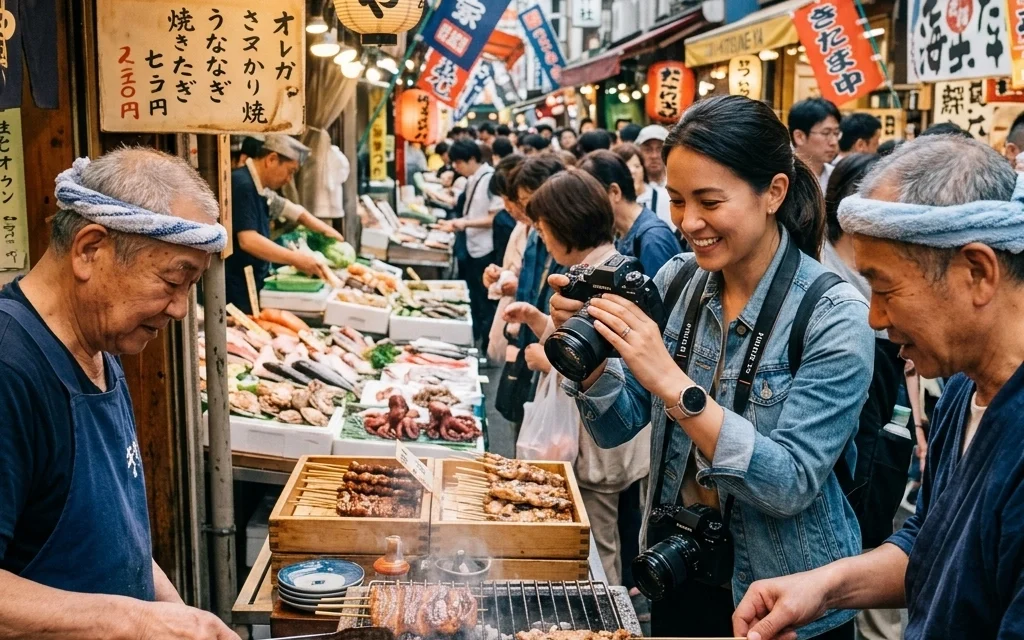
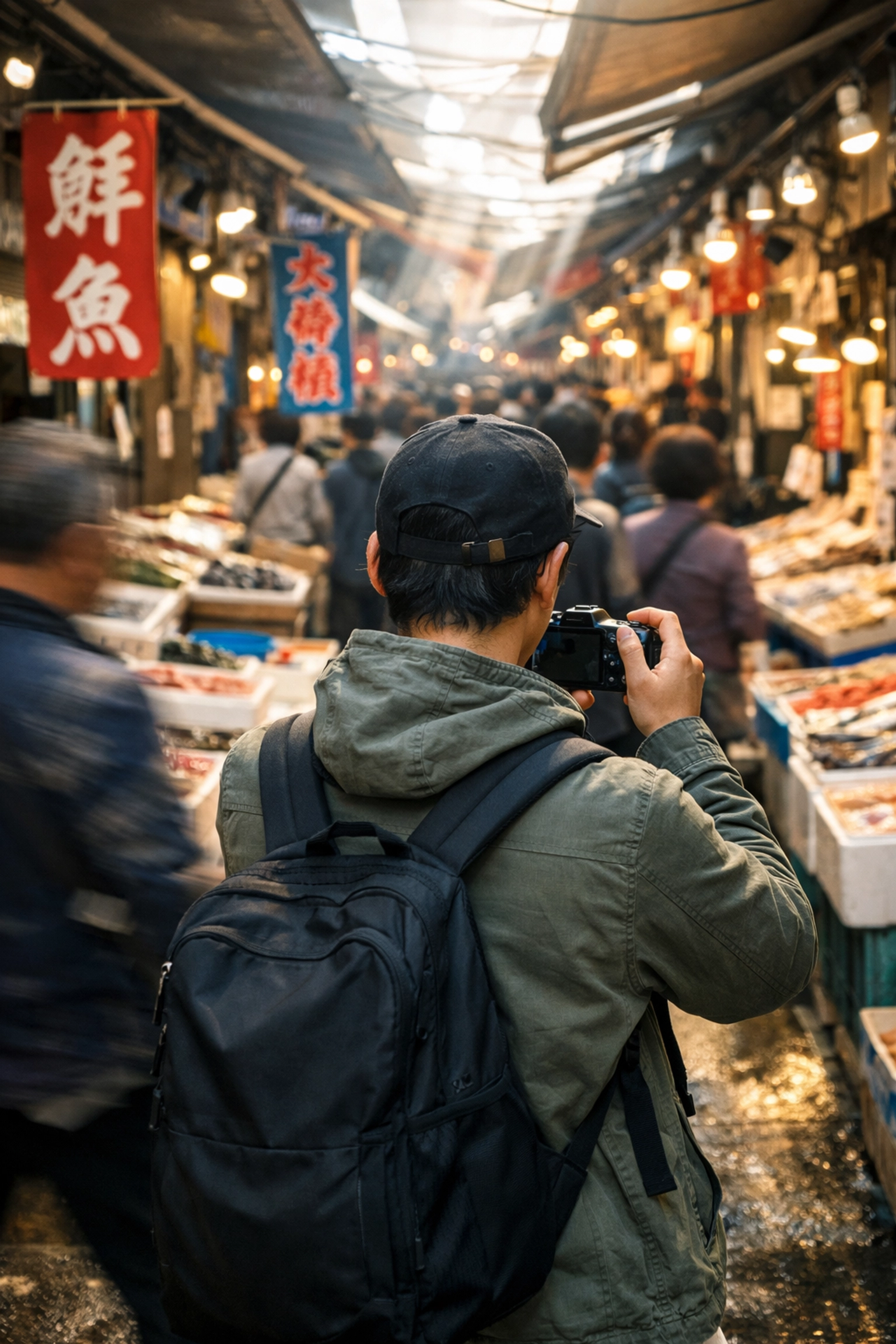
Now, I know what you’re thinking. “Edin, didn’t the famous fish market move?” Yes, the inner wholesale market: where the giant tuna auctions happen: migrated to Toyosu back in 2018. But for us photographers and foodies, the Tsukiji Outer Market remains exactly where it needs to be. It’s a labyrinth of over 400 stalls, narrow alleys, and steam-filled corners that look just as good through a viewfinder as they taste on a plate.
If you’re looking to capture the grit and the glory of Tokyo’s seafood scene while eating the best meal of your life, grab your camera and let’s get into it.
The Early Bird Gets the Shot (and the Fatty Tuna)
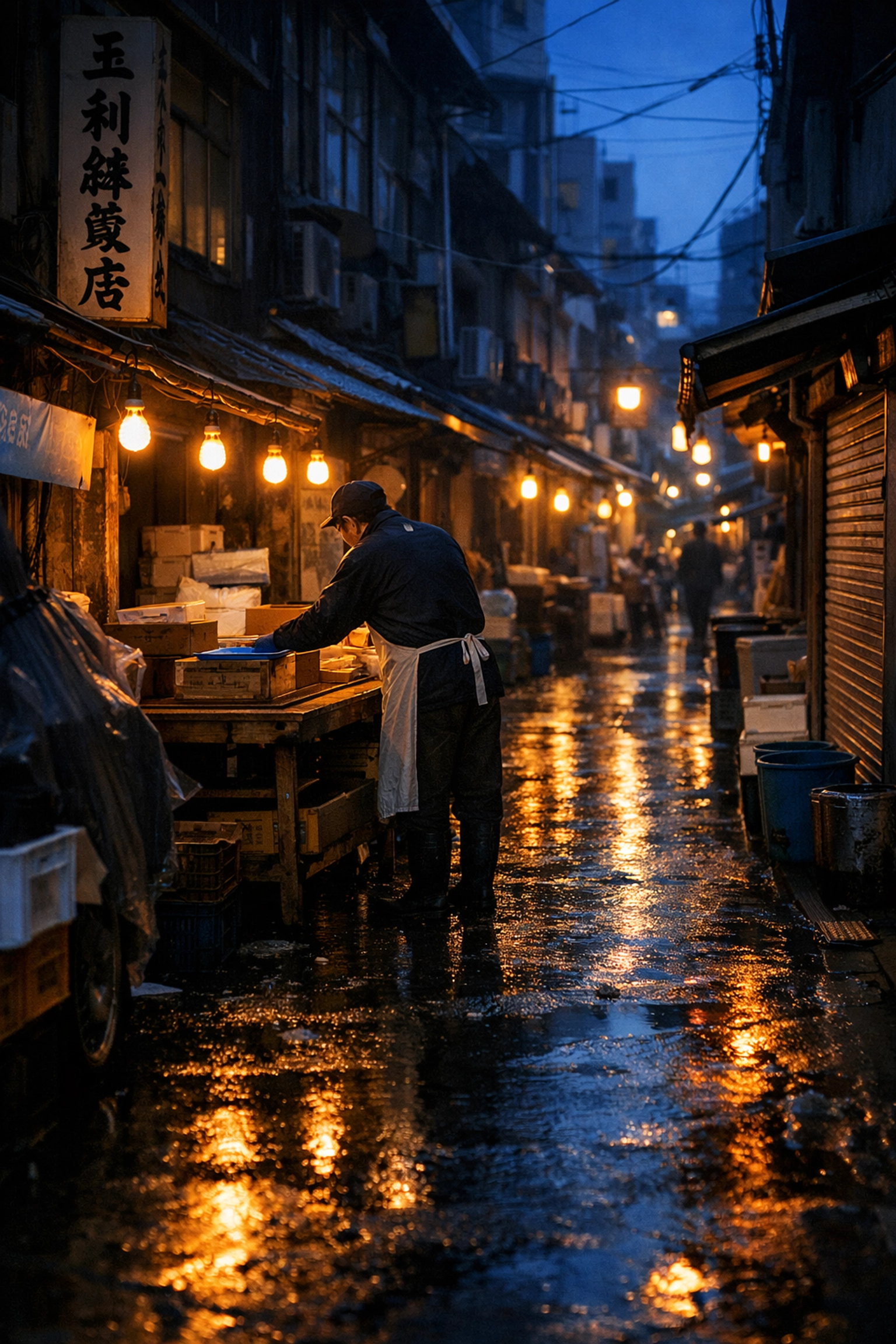
If you want the "authentic" vibe without a thousand selfie sticks in your frame, you need to arrive early. I’m talking 4:30 AM early. At this hour, the market is waking up, the blue-hour light is hitting the wet pavement, and the vendors are at their most focused. It’s the perfect time to test out your low-light capabilities. If you’re wondering if your current setup is up to the task, check out our camera reviews 2024 to see which sensors handle those dark Tsukiji alleys best.
By 8:00 AM, the crowds arrive, and the market transforms into a vibrant, chaotic symphony of smells and colors. This is when you switch from "moody street photography" to "action food photography."
1. The Tuna Gauntlet: Maguroya Kurogin
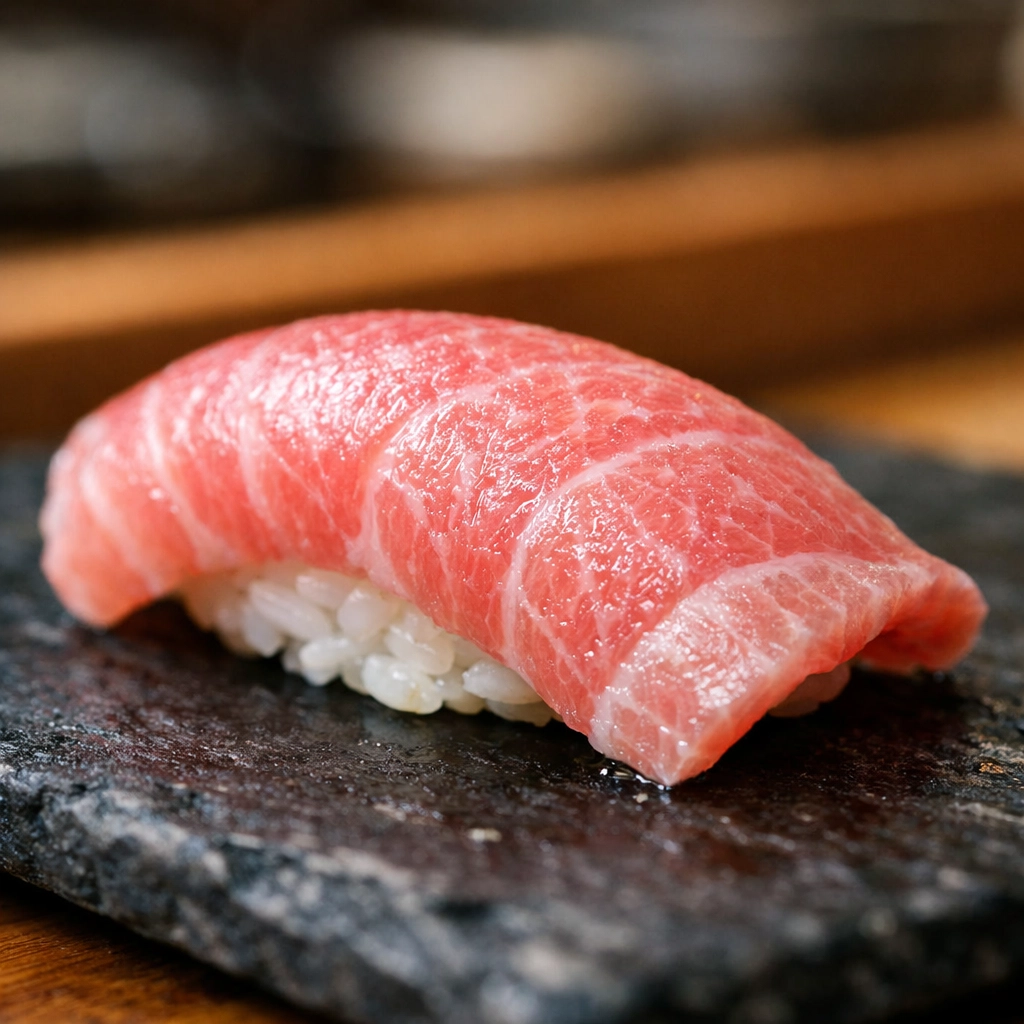
You cannot go to Tsukiji and skip the tuna. That’s like going to Paris and ignoring the tower. Your first stop should be Maguroya Kurogin. They specialize in different cuts of bluefin tuna, and the visual gradient of the meat: from the deep red of Akami (lean) to the pale, marbled pink of Otoro (extra fatty): is a dream for color grading.
The Bite: Order a mixed bowl or a few pieces of Nigiri.
The Shot: Get a macro shot of the marbling on the Otoro. The way the fat glistens under the market lights is pure food porn. For a vintage look on these high-detail shots, I often use a module-8-lens-adapter to soften the digital sharpness and give it a cinematic feel.
2. The Showstopper: Grilled Fatty Tuna Skewers at Tonboya
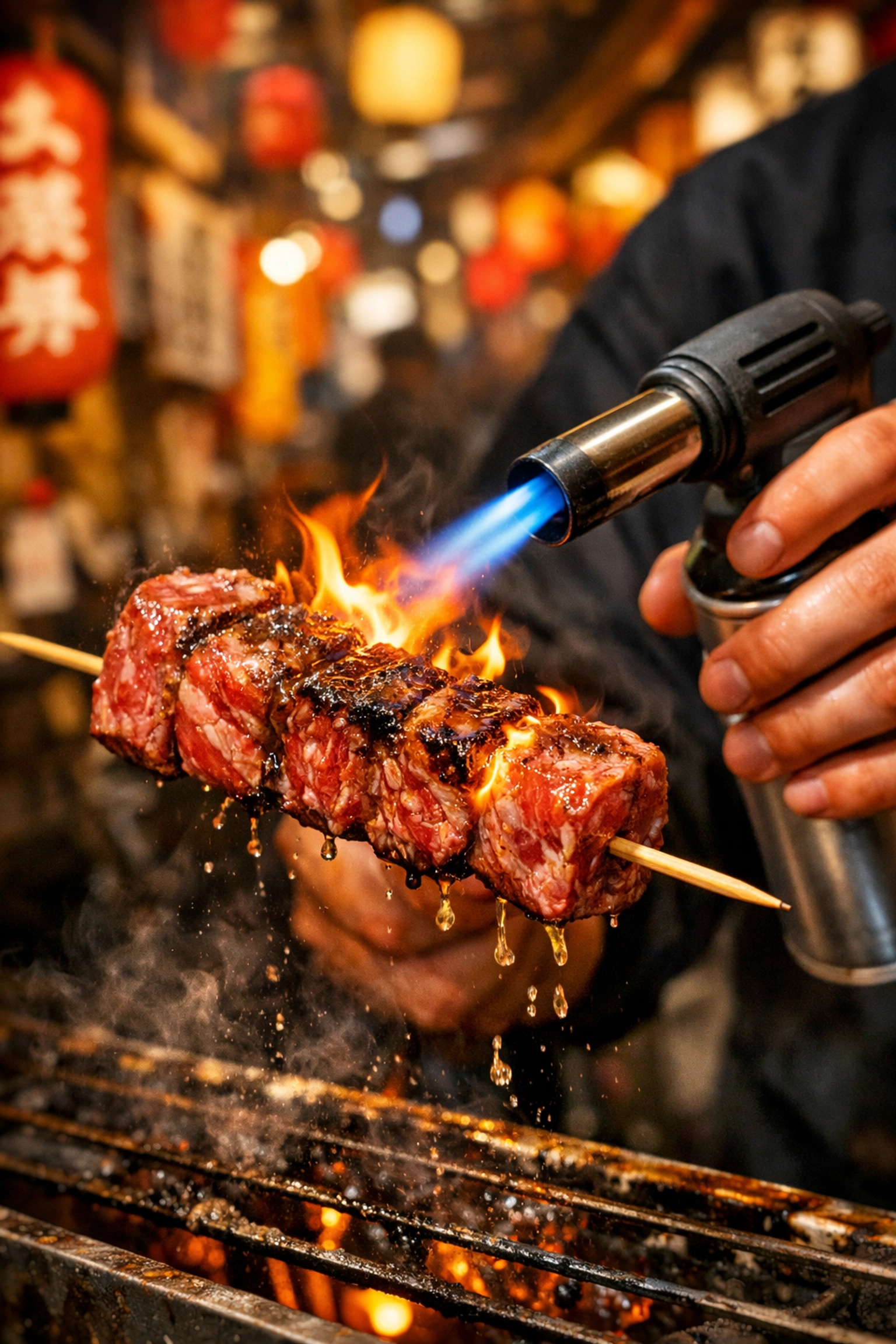
If you like a bit of drama in your photos, head to Tonboya. They take massive chunks of fatty tuna, skewer them, and hit them with a blowtorch right in front of you.
The Bite: The Otoro skewer. It’s seared on the outside, melting on the inside, and finished with a dash of soy sauce.
The Shot: Use a fast shutter speed or burst mode to capture the flames dancing off the fish. The orange glow against the darker background of the stall makes for a high-contrast, high-energy image. This is a great place to practice your timing: wait for the moment the soy sauce hits the hot fish and creates that puff of steam.
3. Luxury on a Stick: A5 Wagyu at Tsukiji Ihachi
I know, it’s a fish market. But Japan doesn’t play when it comes to beef. Tsukiji Ihachi serves up A5 Wagyu skewers that will make you rethink everything you know about steak.
The Bite: A5 Wagyu Steak skewer. It’s expensive for a snack (around 3,000 yen), but it’s a fraction of what you’d pay in a Ginza steakhouse.
The Shot: Capture the chef’s hands. There’s a beautiful story in the precision of a Japanese chef’s movements. If you’re looking to improve your storytelling, I’ve shared some wedding photography insights that actually apply perfectly to street food: it’s all about capturing the emotion and the process.
4. The "Instagrammable" Icon: The Uni Bun
At Maruichi Hamada Shoten, they serve something that looks like it belongs in a sci-fi movie: the Uni Bun. It’s a pitch-black steamed bun (colored with squid ink) topped with a generous portion of bright orange sea urchin.
The Bite: The contrast between the savory black bun, the creamy white sauce inside, and the briny uni is wild.
The Shot: This is a "flat lay" or a "hand-held" hero shot. Hold the bun against a neutral wooden background or a colorful market sign. The black-and-orange color palette is incredibly striking.
5. The Rhythm of the Omelet: Tsukiji Yamacho
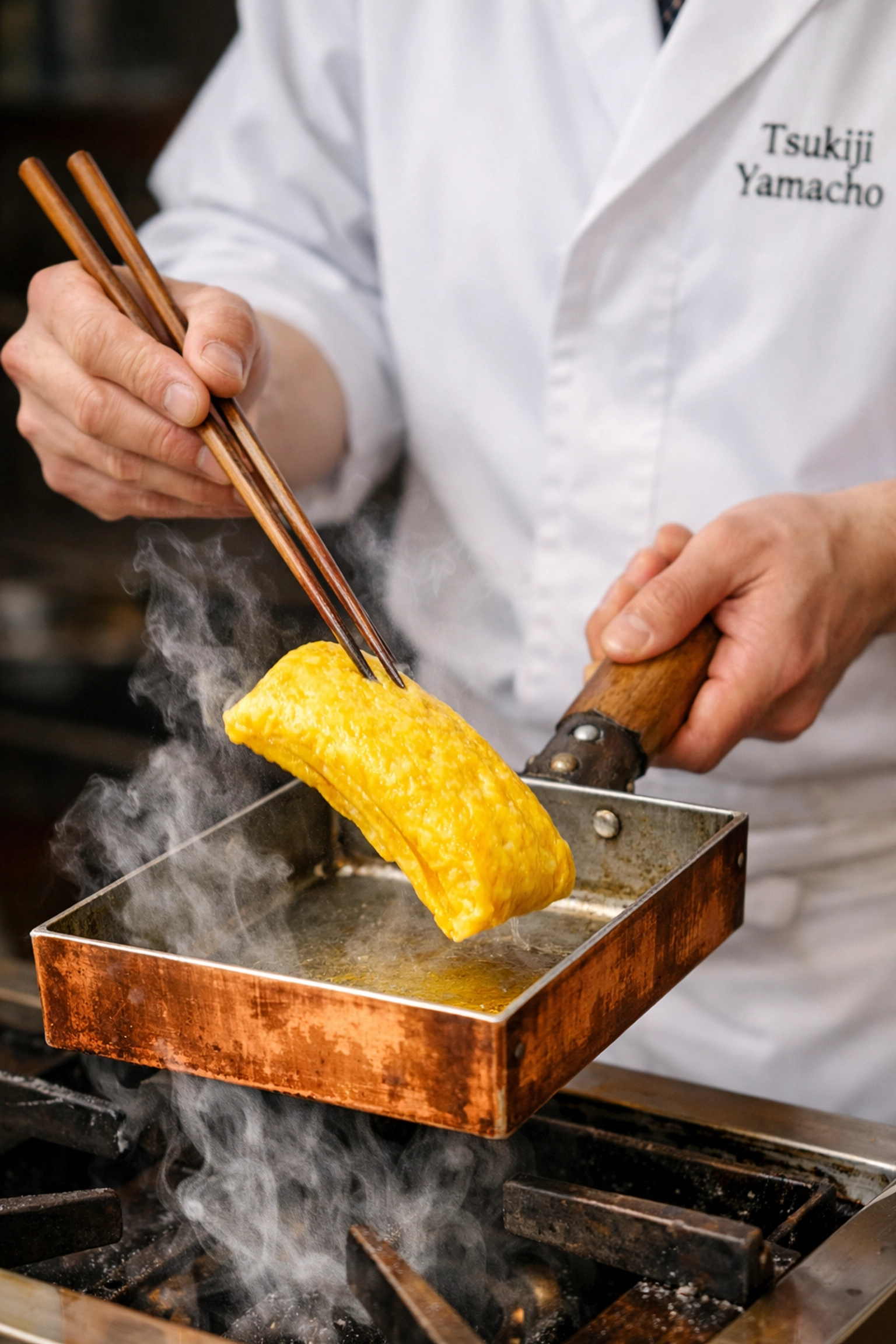
Watching the chefs at Tsukiji Yamacho make Tamagoyaki (sweet rolled omelet) is hypnotic. They use rectangular pans and square chopsticks to flip layers of egg with a rhythm that’s basically percussion.
The Bite: A stick of warm, sweet egg for just 200 yen. It’s the perfect palate cleanser between all the raw fish.
The Shot: Go for a wide aperture (low f-stop) to blur the background and focus on the steam rising from the yellow egg. It’s a simple, reassuring image that captures the "heart" of the market.
Don’t Get Lost in the Sauce (Or the Alleys)
Tsukiji is overwhelming. It’s loud, it’s crowded, and it’s easy to miss the best spots if you’re too busy checking your GPS. Honestly, if you want to actually enjoy the food while getting the shots you need, I highly recommend booking a local guide. They know the vendors, they know the history, and they know which stalls don't mind a professional camera in their face.
You can book a highly-rated food tour through Viator here. It takes the stress out of navigating so you can focus on your composition. Plus, having a guide means someone else can hold your reflector while you eat!
Photography Gear for Tsukiji
You don’t want to be lugging a massive tripod through these crowds. You’ll be "that guy," and nobody likes "that guy." Keep it light. A 35mm or 50mm prime lens is your best friend here. It’s wide enough to capture the stalls but fast enough to handle the dim lighting.
I always tell people to check their kit before a big trip like this. Take a look at my essential photography gear list to make sure you aren't missing the basics, like extra batteries or high-speed SD cards. The last thing you want is a "Memory Card Full" message right as a chef starts torching a giant tuna head.
Finishing on a Sweet Note: Taiyaki
Before you head out to edit your photos, stop by Tsukiji Sanokiya. They make Taiyaki, but instead of the traditional sea bream shape, theirs are shaped like tuna (Maguro-yaki). It’s a witty nod to the market’s history.
The Bite: The "Hon-maguro" version, which has a crispy exterior and a sweet red bean filling.
The Shot: A close-up of the "tuna" shape. It’s a great way to end a blog post or a photo series: a literal and metaphorical sweet finish.
Pro Tips for the Road
- Cash is King: Many of the best stalls don't take cards. Bring plenty of yen.
- Don't Walk and Eat: It’s considered rude in Japan. Find a spot to the side of the stall, enjoy your bite, take your photo, and move on.
- Check the Calendar: The market is generally closed on Wednesdays and Sundays. Don't show up to a ghost town!
- Respect the Vendors: Always ask (or gesture with your camera) before taking a close-up of a person. Most are happy to pose if you're polite.
If you’re looking for more inspiration for your next trip, or maybe something a bit closer to home, check out my thoughts on Miami's hidden speakeasies or dive into my fine art gallery to see how I process my travel shots.
Tsukiji is more than just a place to eat; it’s a living, breathing museum of Japanese culinary history. Whether you’re shooting on a high-end mirrorless or just your phone, the textures and flavors here are unmatched. If you want to dive deeper into photography techniques, head over to Shut Your Aperture for gear talk and community tips.
Now, go get those shots. And for the love of everything holy, eat that A5 Wagyu. You can thank me later.
For more Tokyo tips and travel guides, stay tuned to the Edin Chavez blog. Tomorrow, we’re heading to Harajuku for some street food that’s as colorful as the fashion!













