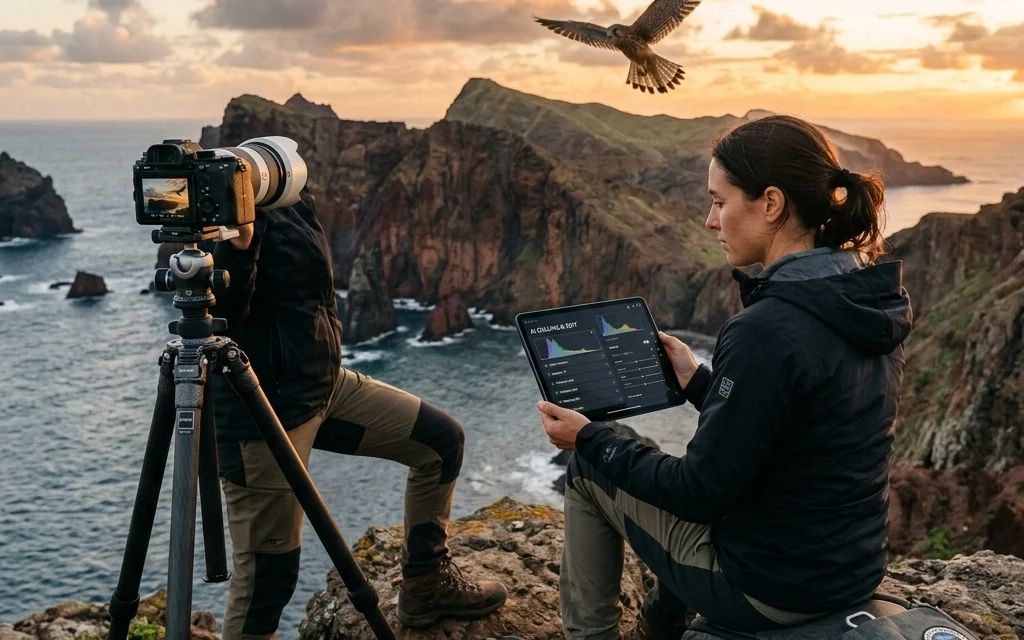
It’s May 2026, and the photography landscape looks drastically different than it did just a few years ago. If you’re still sitting at your desk for twelve hours manually culling a 3,000-image wedding gallery or spending entire weekends masking out stray hairs in Photoshop, you aren't just working hard: you’re losing precious time that could be spent behind the lens.
In my years leading Photoguides and shooting for Edin Fine Art, I’ve seen technology shift from "cool gimmick" to "absolute necessity." Today, AI isn't here to replace your creative eye; it’s here to be the best studio assistant you’ve ever had. Whether you're looking for travel photography tips or trying to stay ahead of the latest AI photography trends, mastering your workflow is the secret to staying profitable and inspired.
The 2026 Mindset: AI as Infrastructure
We’ve moved past the "is AI art?" debate and settled into a world where AI is simply infrastructure. Much like autofocus or digital sensors once were, AI tools are now the backbone of a professional photography business. In 2025 alone, photographers using AI tools saved millions of hours collectively. That is time reclaimed for family, for travel, and for finding the best photography locations around the globe.
The goal for 2026 is simple: use AI to handle the repetitive 80% of your work so you can focus your human intuition on the final 20%: the creative soul of the image.

Pre-Shoot Planning and Location Scouting
Your workflow starts long before you click the shutter. Finding "photo spots near me" used to involve hours of scrolling through Instagram and Google Earth. Now, AI-integrated scouting tools have changed the game.
VSCO Canvas has become a staple for mood boarding and pre-visualization. It allows you to use regional prompting to see how a specific lighting setup or color grade might look on your subject before you even arrive at the studio. For those looking for the best photography locations, AI-powered maps can now predict exactly how light will interact with specific architecture or landscapes based on real-time atmospheric data.
If you are planning a trip and weighing options like Dominican Republic vs Cancun, AI tools can now analyze years of weather patterns and social data to tell you the best window for crowd-free shooting.
The Death of the "Culling Hangover"
Culling: the process of selecting the best images from a shoot: used to be the most dreaded part of the job. In 2026, tools like AfterShoot have essentially eliminated the "culling hangover."
These platforms don't just look for "sharpness" and "open eyes" anymore. They have learned to understand emotional impact. They can group similar shots, identify the "hero" image based on your past preferences, and handle the boring stuff like renaming and folder organization. What used to take five hours now takes twenty minutes. This gives you more time to focus on advanced techniques, like mastering drone shots or long exposure.
AI-Powered Editing and Style Replication
Once your images are selected, the editing phase is where the real magic (and time-saving) happens.
Personal AI Editing Profiles
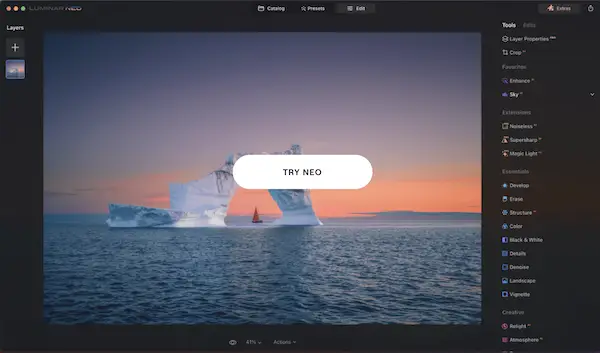
Tools like Imagen AI have matured into sophisticated personal assistants. By analyzing your previous edits, these tools create a profile that mimics your unique style: not a generic preset, but a dynamic profile that understands how you handle exposure, white balance, and contrast across different lighting conditions.
High-End Retouching
For portrait and wedding photographers, Evoto AI has become a powerhouse. It handles high-end skin retouching, body shaping, and background cleaning with a level of subtlety that used to require a professional retoucher. You can check out more on the latest wedding photography insights to see how these tools are being used to deliver galleries in record time.

The Rise of eCommerce and Product AI
If you dabble in product photography, the workflow has been completely revolutionized. Gone are the days of needing a massive studio for every single SKU. Tools like Claid.ai and Photoroom allow photographers to take a simple "packshot" and generate a high-end, lifestyle background that matches a brand's visual DNA perfectly.
| Tool | Best For | Key Feature |
|---|---|---|
| Claid.ai | High-volume catalogs | API integration for 500+ SKUs |
| Photoroom | Small business/Social | One-tap background removal and styling |
| Nightjar | Brand Consistency | Extracts visual DNA from reference images |
| Vmake | Fashion | AI-generated models for clothing flat-lays |
For those looking to build a business in this space, keeping up with camera reviews 2024 and beyond will help you choose the right gear to pair with these powerful software solutions.
Managing the "Authentic vs. AI" Balance
As we move deeper into 2026, the value of "authentic" photography is actually increasing. While AI can generate a sunset, it can't replicate the feeling of being at one of the hidden gems in Miami or capturing the raw emotion of a wedding day.
The most successful photographers in 2026 are those who use AI to enhance their reality, not replace it. We use AI to remove a distracting trash can from a beautiful street scene in Laguna Beach or to fix a sky that didn't cooperate. Speaking of which, if you need to save a shot with a dull sky, check out our sky overlays to give your images that extra punch.

Essential Gear Integration
The hardware hasn't stayed behind, either. Modern cameras and accessories are now being built with AI integration in mind. The Module 8 lens adapter, for example, allows you to get that classic cinematic look while still utilizing the advanced autofocus and tracking capabilities of modern mirrorless systems.
When you're out in the field, having the essential photography gear that plays nice with your digital workflow is key. Your gear should make it easier to get the data into your AI tools, not harder.
Leveling Up Your Business Operations
AI isn't just for pixels; it’s for people. ChatGPT and similar large language models are now essential for the "boring" side of photography.
- Client Communication: Draft professional proposals and emails in seconds.
- Marketing: Generate SEO-friendly captions and blog posts (like this one!) to stay visible.
- Planning: Ask for a 3-day itinerary for cheap weekend getaways that focus specifically on photography spots.
By automating your admin, you free up your brain to actually be creative. You can spend more time thinking about composition and lighting and less time worrying about your inbox.

Final Thoughts on the 2026 Workflow
The "Ultimate Guide" to AI in photography isn't about a single piece of software; it’s about an ecosystem. It’s about building a pipeline where your creative vision is the driver and AI is the engine.
As you look for your next photography booking experience, remember that your value as a photographer in 2026 is your perspective. AI can't see the world the way you do: it can only help you show that world to others faster and more beautifully.
Embrace these tools, experiment with the latest reviews, and don't be afraid to let the machines do the heavy lifting. The future of photography is fast, it's intelligent, and most importantly, it’s still in your hands.
For more deep dives into techniques and gear, make sure to visit Shut Your Aperture and stay tuned for the rest of our 30-part series on dominating the photography world this year.