
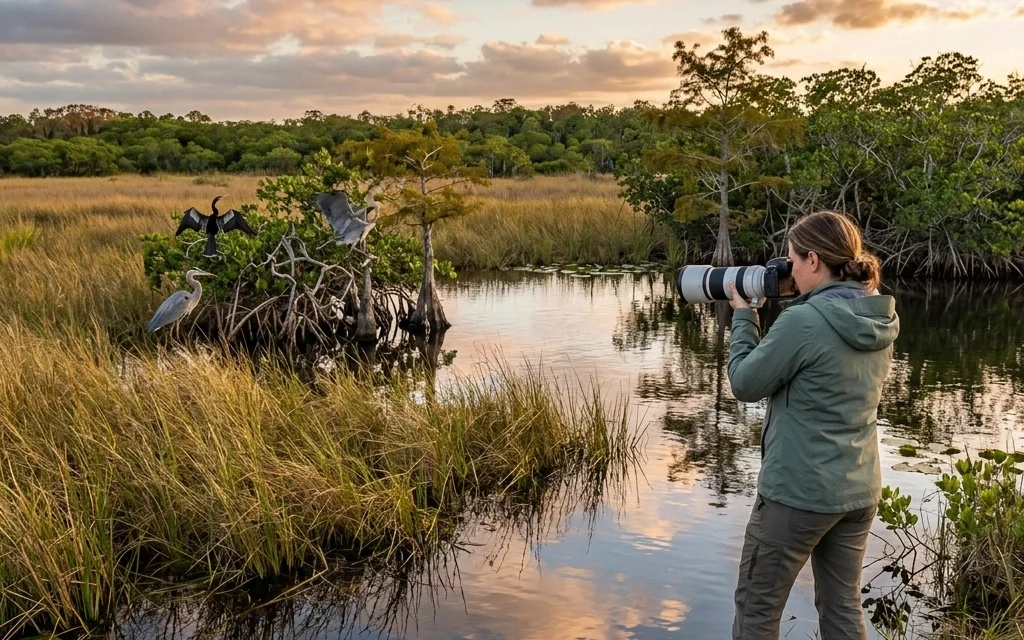
If you’ve ever stood on a boardwalk in South Florida as the sun begins to peek over the sawgrass, you know there is a certain magic to the Everglades that you just can't find anywhere else. It’s quiet, yet teeming with life. It’s expansive, yet full of intimate details. For a photographer, the Everglades isn't just a national park; it’s a living, breathing masterclass in light, patience, and biodiversity.
Whether you are looking to capture the prehistoric gaze of an American Alligator or the elegant flight of a Roseate Spoonbill, succeeding here requires more than just showing up with a camera. You need a plan. This guide is designed to give you the confidence to navigate the "River of Grass" and come home with the shots you’ve been dreaming of. And if you really want to fast-track your success, don't forget to grab the comprehensive Everglades Photography Guide which dives even deeper into the secret spots and technical settings I use every day.
Why the Everglades is a Photographer’s Paradise
The Everglades is one of the most unique ecosystems on the planet. Unlike the dramatic peaks of the Rockies or the rugged cliffs of the Pacific coast, the beauty here is subtle. It’s in the way the cypress trees silhouette against a pastel sunrise and the way the reflection of a Great Blue Heron perfectly mirrors the sky in the still water.
Because the landscape is so flat, the sky becomes a primary character in your photos. This makes it a fantastic place to practice your composition and use of light. It’s a place where you can spend the morning shooting wide-angle landscapes and the afternoon zoomed in on a nesting bird. If you're looking for more inspiration on how to capture these moments, I always recommend checking out Edin Chavez's blog for a look at how professional fine art is born in the wild.

Timing is Everything: The Dry Season Advantage
In most parts of the world, photographers chase the seasons for changing leaves or snow. In the Everglades, we chase the water levels.
The Dry Season (November to April) is the undisputed champion for wildlife photography. As the water levels across the marsh drop, the fish are forced into deeper "alligator holes" and canals. Where the fish go, the birds and predators follow. This concentration of wildlife is what makes the Everglades famous. You’ll see dozens of species huddled together, providing endless opportunities for action shots.
The Wet Season (May to October) is much tougher. The mosquitoes are legendary, and the wildlife disperses as the park floods. However, if you are a landscape lover, this is when the clouds are at their most dramatic. The daily thunderstorms provide incredible sky patterns that are perfect for those moody, atmospheric shots. If you’re planning a trip during this time, make sure your photography booking experience includes a guide who knows how to keep you dry and safe!
Essential Gear for the Swamp
You don’t need the most expensive kit to get great shots, but you do need the right tools for the environment. The Everglades can be harsh, heat, humidity, and salt spray are all factors.
- Lenses: You’ll want a mix. A 16-35mm or 24-70mm is great for those wide-open vistas at Pahayokee Overlook. However, for wildlife, a 100-400mm or a 600mm prime is the gold standard. Birds in the Everglades are often surprisingly habituated to people, but you still want that reach to capture the details of their feathers without disturbing them.
- Stability: A sturdy tripod is a must for sunrise and sunset. Just be careful on the boardwalks; they can vibrate when other visitors walk by. For more tips on what to pack, check out our list of essential photography gear.
- Filters: A circular polarizer is your best friend. It helps cut the glare off the water and makes the greens of the sawgrass pop.
- Protection: Bring a rain cover for your camera and plenty of lens wipes. The humidity can cause fogging when you move from an air-conditioned car to the humid outdoors.
For a deeper dive into the latest tech that works best in these conditions, take a look at the camera reviews on Shut Your Aperture.

Top Locations for Your Shot List
The Everglades is massive, and you could spend weeks exploring it. If you’re on a tighter schedule, these are the locations you simply cannot miss:
The Anhinga Trail (Royal Palm)
This is the "Old Faithful" of the Everglades. It’s a short, paved trail and boardwalk that is absolutely packed with wildlife. You’ll see alligators lounging just feet away and Anhingas drying their wings in the sun. It’s the best place for beginners to get comfortable with wildlife distances.
Shark Valley
Located on the Tamiami Trail, Shark Valley offers a 15-mile loop. You can rent a bike or take the tram. The observation tower at the halfway point gives you a 360-degree view of the glades. It’s a prime spot for sunset photography.
Pahayokee Overlook
If you want to capture the "River of Grass" in all its glory, this is the place. The boardwalk leads to a raised platform that looks out over a sea of grass punctuated by "islands" of cypress trees. It’s my favorite spot for a sunrise silhouette.
Flamingo
At the very end of the main park road lies Flamingo. This is where the freshwater meets the saltwater of Florida Bay. It’s one of the few places in the world where you can see both alligators and American Crocodiles. The light over the bay at sunset is often spectacular.

Pro Tips for Capturing Wildlife
When you're out there, it’s easy to get "shutter happy" and just blast away. But to get those "wow" shots: the ones you see in Edin Fine Art: you need to think about a few key things:
- Eye Level is Buy Level: Don’t just shoot from a standing position. Get low. If you’re shooting an alligator or a wading bird, getting down to their eye level creates a much more intimate and powerful connection in the photo.
- Watch the Background: The swamp can be messy. Tangled branches and brown water can distract from your subject. Look for "clean" windows of light or move your body a few inches to the left or right to find a simpler background.
- Patience Wins: Don't just snap a photo of a bird and walk away. Sit with it. Wait for it to hunt, to preen, or to take flight. The best action shots happen when you anticipate the movement.
Safety and Ethics in the Wild
We are guests in their home. The Everglades is a delicate ecosystem, and as photographers, we have a responsibility to protect it.
- Keep Your Distance: National Park regulations require you to stay at least 15 feet away from wildlife, but more is always better. If a bird stops what it’s doing and looks at you, you’re too close.
- Never Feed the Animals: This is a huge issue in Florida. Fed wildlife becomes aggressive and usually has to be removed or euthanized. Let’s keep them wild.
- Stay on the Path: It’s tempting to wander into the grass for a better angle, but the limestone underneath can be full of "solution holes" that can snap an ankle, not to mention the hidden inhabitants of the tall grass.

Level Up Your Everglades Game
If you’ve read this far, you’re clearly serious about your photography. The Everglades is a rewarding but challenging place to shoot. I’ve spent years learning the tides, the light patterns, and the behavioral quirks of the animals here so that you don’t have to learn the hard way.
That’s exactly why I put together the Everglades Photography Guide. It’s a digital roadmap that tells you exactly where to go, what time to be there, and what settings to use to get professional-grade results. Think of it as having a pro sitting right next to you in the swamp.
Whether you're visiting for a weekend or you're a local looking to see the park through fresh eyes, the Everglades will never cease to amaze you. Grab your gear, respect the wilderness, and go capture something beautiful.
See you out there in the sawgrass!













